A recent study from Ultra surveyed 2,000 gamers across the US and UK to gauge their stance on blockchain technology, NFTs, and cryptocurrency in gaming. The results paint a picture of cautious curiosity mixed with outright skepticism.

Blockchain sounds fine until you mention NFTs
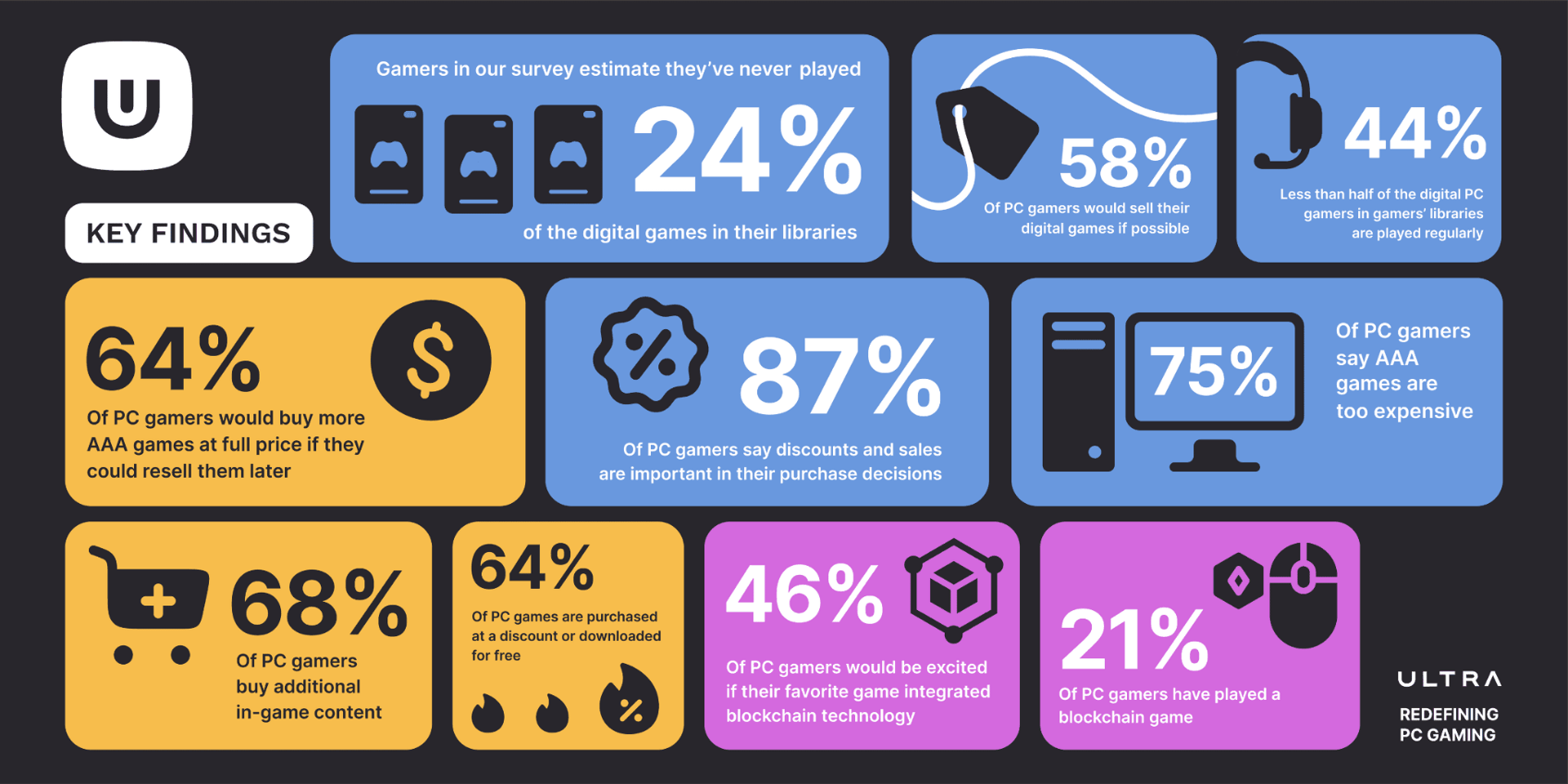
46% of respondents said they're excited about blockchain features in their favorite games. That number collapses to 19% when the words "NFTs" or "cryptocurrency" enter the conversation. 43% stayed neutral, and 11% admitted they find blockchain integration annoying.
Gamers buy digital goods, just not NFTs
68% of those surveyed have purchased in-game content before, proving there's an appetite for digital ownership. 26% said they'd buy limited edition in-game items. But interest in NFTs specifically? Much lower. The gap suggests gamers are comfortable spending money on cosmetics and DLC, but NFTs carry baggage that hasn't been shaken off.
Crypto rewards are a harder sell than in-game currency
34% of players like the idea of earning in-game currency through gameplay. That drops to 18% when the reward is cryptocurrency instead. The hesitation likely stems from years of play-to-earn controversies and the general perception that crypto in games means exploitation, not fun.
Nicolas Gilot, co-CEO of Ultra, pointed to the findings as proof that a meaningful slice of gamers are open to blockchain's potential. He acknowledged the industry's struggles, blaming insular communities that preach to the converted instead of reaching new audiences. Ultra's pitch is straightforward: use blockchain to solve distribution and ownership problems in PC gaming without forcing crypto down players' throats.

Tokenized games
Reselling digital games is the real hook
Ultra's angle is tokenized games — turning digital purchases into tradable assets. 58% of respondents said they'd sell their digital games if they could, and 64% would rebuy titles at full price if reselling was an option later. That's a bigger win than NFT collectibles or crypto rewards. Gamers want practical benefits, not speculative investments.
The data shows blockchain has a foot in the door, but only if it solves real problems instead of adding buzzwords. NFTs and crypto still trigger skepticism. Ownership and resale rights? Those might actually land.