

"Memory is too expensive, so I made my own." That's the premise behind one of the most delightfully impractical hardware projects to surface recently, and the creator's own description of the result says it all: the world's worst USB drive.
Here's the thing though. Worst by every measurable metric, sure. But also one of the most genuinely impressive pieces of DIY engineering you'll see this year.

Use code TRYHARD33 at checkout to redeem this offer before code expires again.
Get 33% Off GAMES+ Subscription
What magnetic-core memory actually is
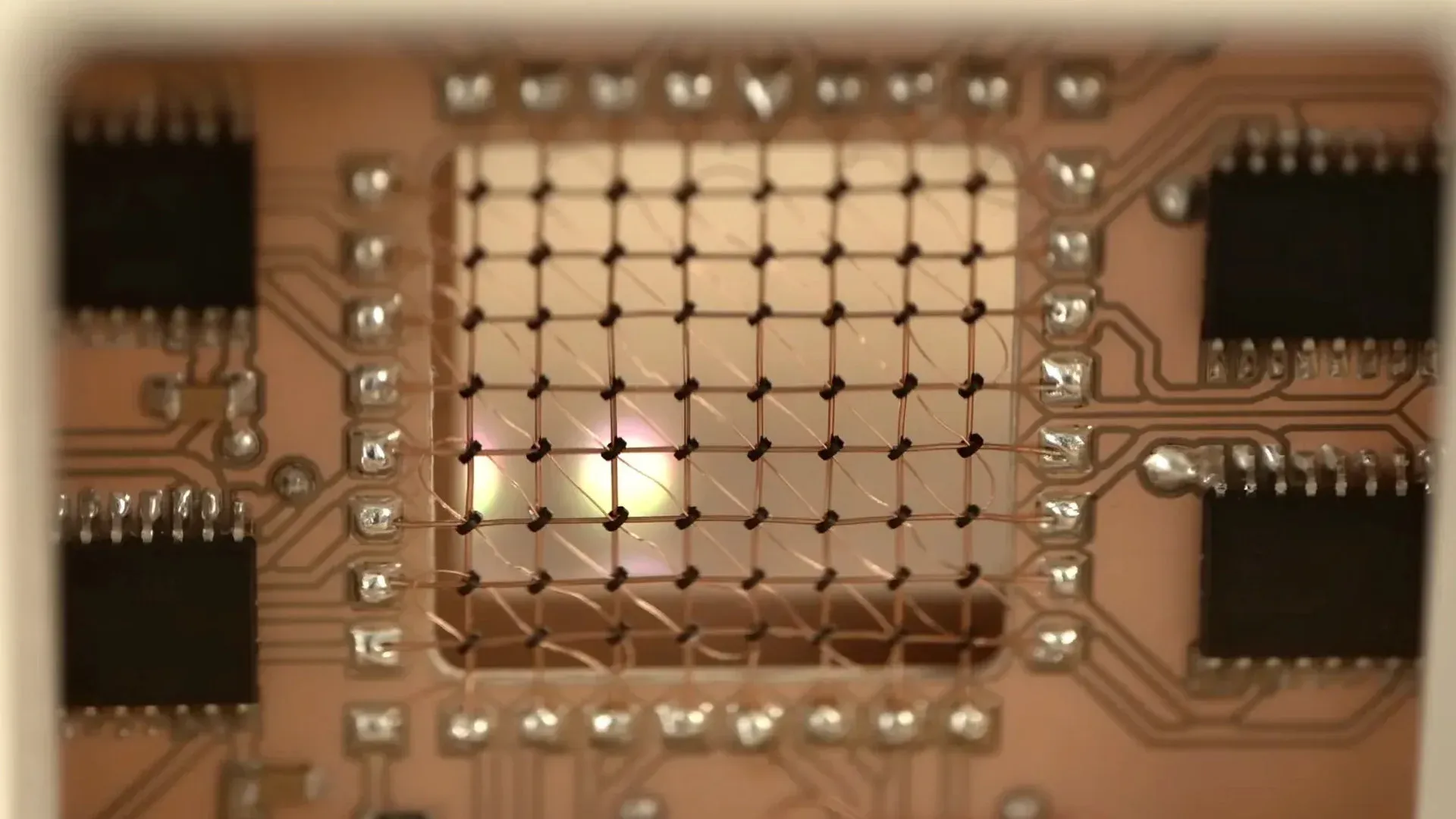
Tech YouTuber polymatt recently documented the full build process for a USB storage device that ditches NAND flash entirely in favour of magnetic-core memory, a storage technology that peaked in the 1950s and 60s. The concept is straightforward in theory and extraordinarily fiddly in practice: tiny rings of ferrimagnetic material, each threaded with multiple wires, store binary data based on their magnetic polarity. A generated magnetic field flips a ring's polarity to represent either a 0 or a 1. No power needed to hold the state, which technically makes this non-volatile storage, the same classification as the NAND flash inside your SSD.
The technology powered some of history's most significant computers. ENIAC, the IBM 704, and the Apollo Guidance Computer all relied on magnetic-core memory at various points. IBM's 1957 magnetic-core unit held 147,456 bits of data, though it weighed several hundred kilograms and cost approximately $6,000 per month to rent.
Polymatt's version stores 64 bits. Sixty-four.
The gap between then and now is almost absurd
To put that in perspective: the Espressif ESP32 microcontroller polymatt used just to handle the USB interface and read/write management of the device has embedded flash storage that dwarfs the magnetic-core array by millions of times over. The controller is a support act with more storage capacity than the headline act it exists to serve.
What most players miss in conversations about storage is how alien the physical reality of older technology actually was. Modern SSDs are a handful of chips on a PCB, invisible and interchangeable. Magnetic-core memory is a visible, physical grid of tiny ceramic rings, each one a discrete unit of information you can point to and say "that one holds a 1 right now." There's something almost game-inventory-like about it: a finite, inspectable list of slots, each with a clear state.
The build itself was genuinely difficult. Threading wires through ceramic rings small enough to store only 64 of them in a USB-sized device is the kind of work that makes you appreciate why the industry moved on. But it also makes the finished object feel like something worth preserving rather than discarding.
Why this matters in a world where storage is getting scarce
The timing of this project is not accidental. AI data centres are currently consuming NAND flash at a rate that has pushed retail SSD prices higher and squeezed consumer supply. Silicon Motion recently stated that the retail SSD market has "almost disappeared" as NAND production flows toward AI infrastructure and OEM deals rather than the drives that end up in gaming PCs.
Against that backdrop, engineers looking backward at pre-silicon storage solutions starts to feel less like a novelty and more like a symptom of a real supply problem. Nobody is seriously proposing magnetic-core memory as a solution to anything in 2026. But the fact that a hobbyist is building USB devices from 1950s components while the modern storage market tightens is a neat bit of accidental commentary.
Polymatt's build won't help you load games faster or store your save files. For that, you'll want to check out our gaming guides for tips on managing storage-heavy titles efficiently. But as a physical demonstration of where computing came from, and a reminder that every bit of data has always been, at some level, a physical thing with a state, it's hard to beat.
The project is fully documented on polymatt's YouTube channel, and the video is worth the full runtime even if you have zero interest in building your own. Which, admittedly, after watching it, you might develop. The WoW Midnight Devourer Demon Hunter PvP guide will still be there when you resurface from a three-hour deep dive into ferrimagnetic ring theory.
Scaling from 64 bits to 1 GB of magnetic-core storage would require exactly 16 million rings. Someone will probably try it eventually.