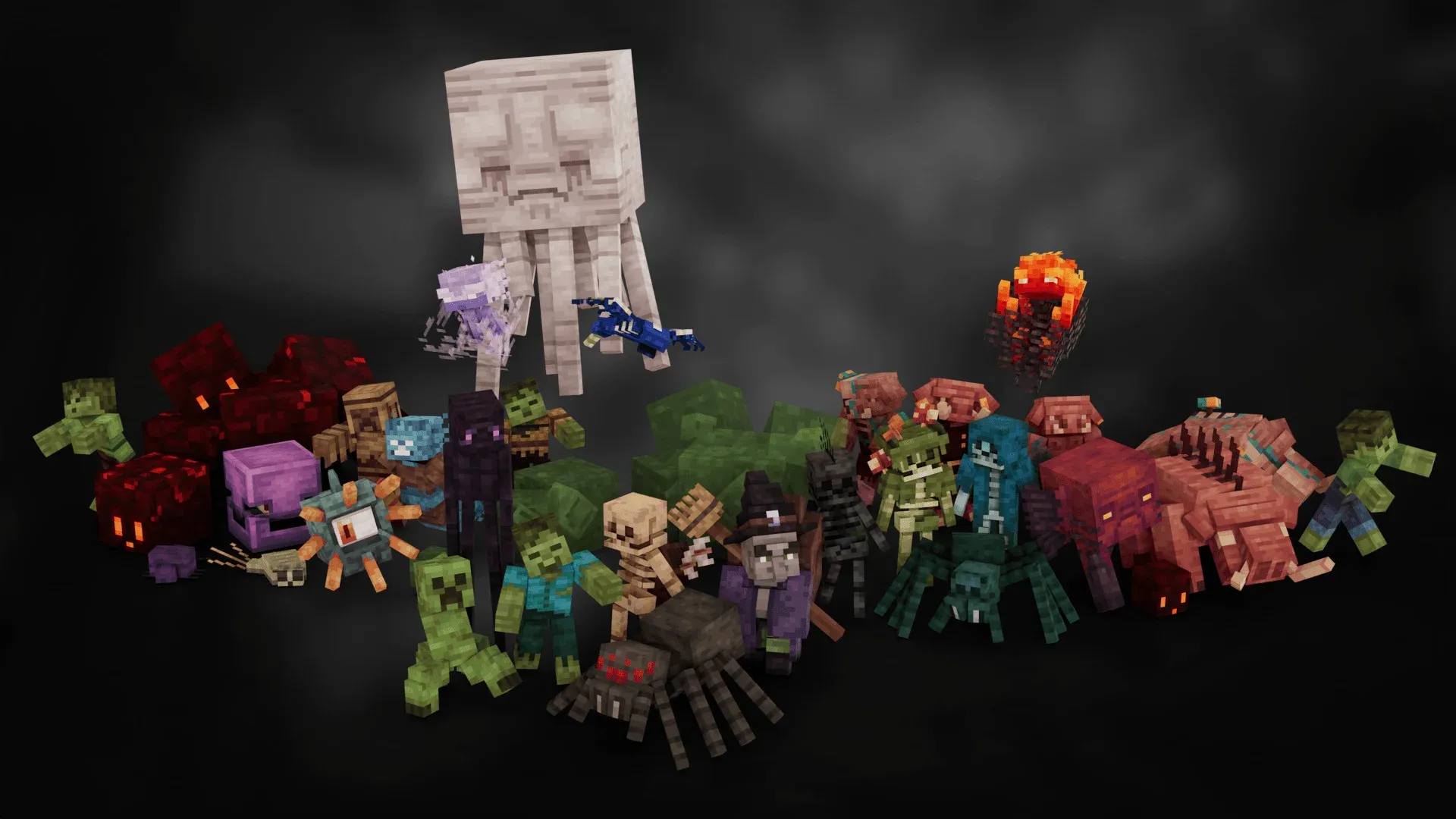


Minecraft has always been more than just blocks and biomes. The world breathes because of its mobs, and after more than a decade of updates, that roster has grown into something genuinely staggering.
Whether you're a returning player trying to remember what a Breeze actually does or a newcomer figuring out why a Creeper just ended your afternoon, understanding Minecraft's mob system is foundational to surviving and thriving in the game. The official Minecraft articles page keeps players updated as new creatures enter the game, and the list keeps growing.
Three categories, hundreds of encounters
Minecraft sorts its creatures into three behavioral groups: passive, neutral, and hostile. The framework is straightforward, but the depth within each tier is where complexity lives.
Passive mobs never turn aggressive. Think pigs, cows, chickens, sheep, and the fan-favorite axolotl. They're here to be bred, tamed, or simply observed as you explore. Pandas, parrots, and tropical fish round out this category. These creatures populate the world without ever threatening your survival.
Neutral mobs demand respect. A wolf leaves you alone until provoked. Bees pollinate peacefully until their nest gets raided. Piglins in the Nether will barter if you wear gold armor, but arrive bare and they'll swarm you instantly. The Enderman stands as the game's most recognizable neutral mob, docile until you lock eyes with it.
The hostile category is where Minecraft tests your nerve.
The hostile side of the Overworld and beyond
Zombies and skeletons form the baseline threat, emerging in darkness and turning every night into a tactical challenge. Creepers stay iconic for good reason, approaching in silence before detonation. Witches, phantoms (which spawn when you neglect sleep), and pillagers compound the surface-level dangers.
Head underground and the threats evolve. Cave Spiders deal more damage than regular spiders and inflict poison. The Warden, added in the Wild Update, ranks as Mojang's most intimidating creation. It navigates by sound and vibration alone, and its damage output forces even maxed-out players to rethink engagement entirely.
The Nether introduces its own hazards. Ghasts fire explosive projectiles from range. Blazes defend fortress structures. The Piglin Brute stands out as an upgraded Piglin variant that ignores gold armor completely and attacks immediately. It's a textbook case of Mojang designing a mob to counter established player strategies.
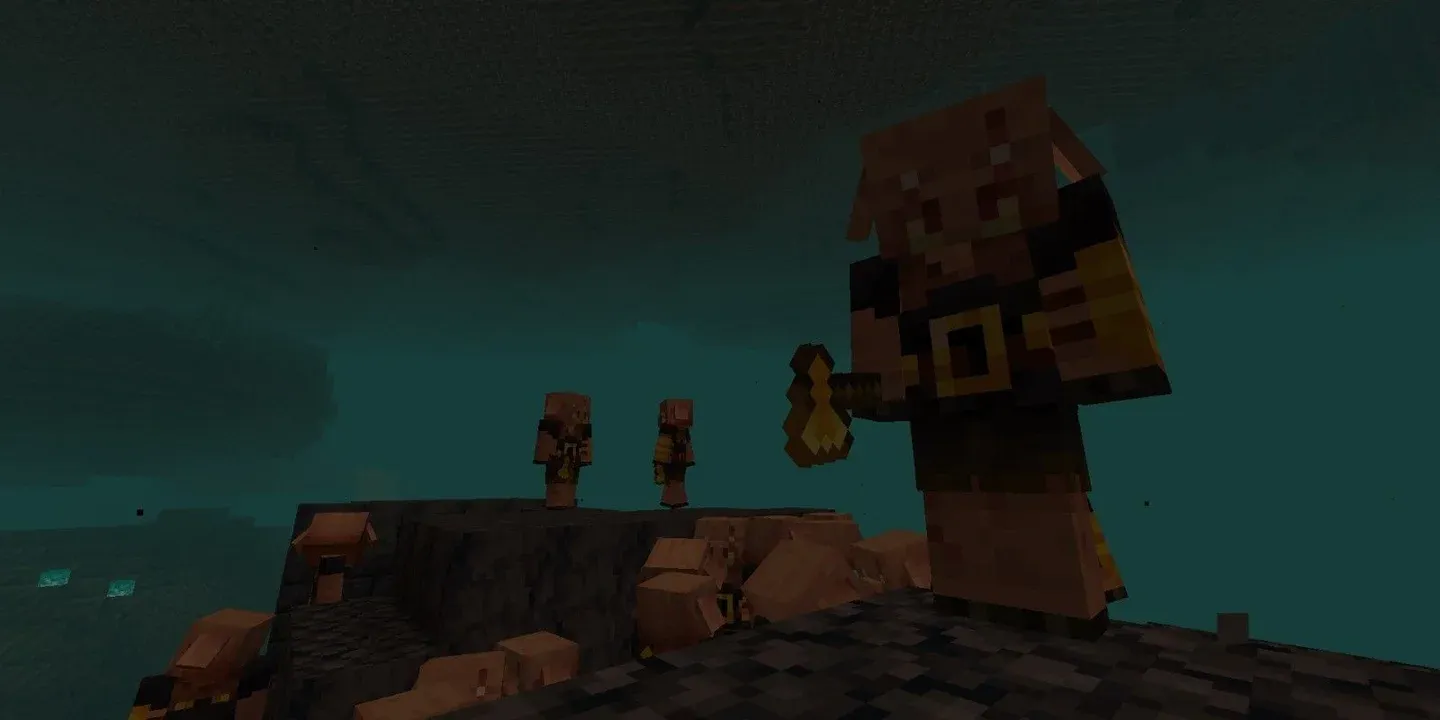
Piglin Brutes show no mercy
New mobs keep reshaping the meta
Mojang's yearly update schedule ensures the mob lineup stays in flux. The Armadillo, selected through community voting, introduced a new passive creature to savanna biomes and enabled wolf armor crafting. The Bogged, a skeleton that shoots poison arrows, debuted in the Tricky Trials update alongside the Breeze, a wind-based hostile that deflects projectiles and can reactivate trial spawners.
Minecraft Live is scheduled for later this year, and speculation points toward another round of mob additions or potentially a fresh community vote. The Tiny Takeover update, centered on baby mob variants, has already generated significant player interest.
The mob ecosystem in Minecraft isn't just a list of enemies and animals. It's a design philosophy. Every creature tells you something about the biome it lives in, the risk level of the area, and what resources you can extract from the encounter if you play it smart. That's what keeps players coming back after all these years. Make sure to check out more: