

Thunder Lotus, known for the narrative-driven management sim Spiritfarer, is returning to its action roots with At Fate’s End. While Spiritfarer offered a slower, more reflective experience, At Fate’s End integrates that character-focused storytelling into a dynamic action-adventure framework. The result is a game that combines hand-drawn animation, tactical combat, and narrative-driven decision making in a fantasy setting centered on family and legacy.
A hands-on demo revealed roughly an hour and a half of the early game, providing insight into how the studio balances its visual style, narrative depth, and combat systems. Players take on the role of Shan, the youngest member of the Hemlock clan, who inherits the God Sword Aesus after returning home from self-imposed exile. Shan’s journey is as much about reconnecting with her estranged siblings as it is about collecting legendary swords.
Use code TRYHARD33 at checkout to redeem this offer before code expires again.
Get 33% Off GAMES+ Subscription
Family Dynamics at the Core of Gameplay
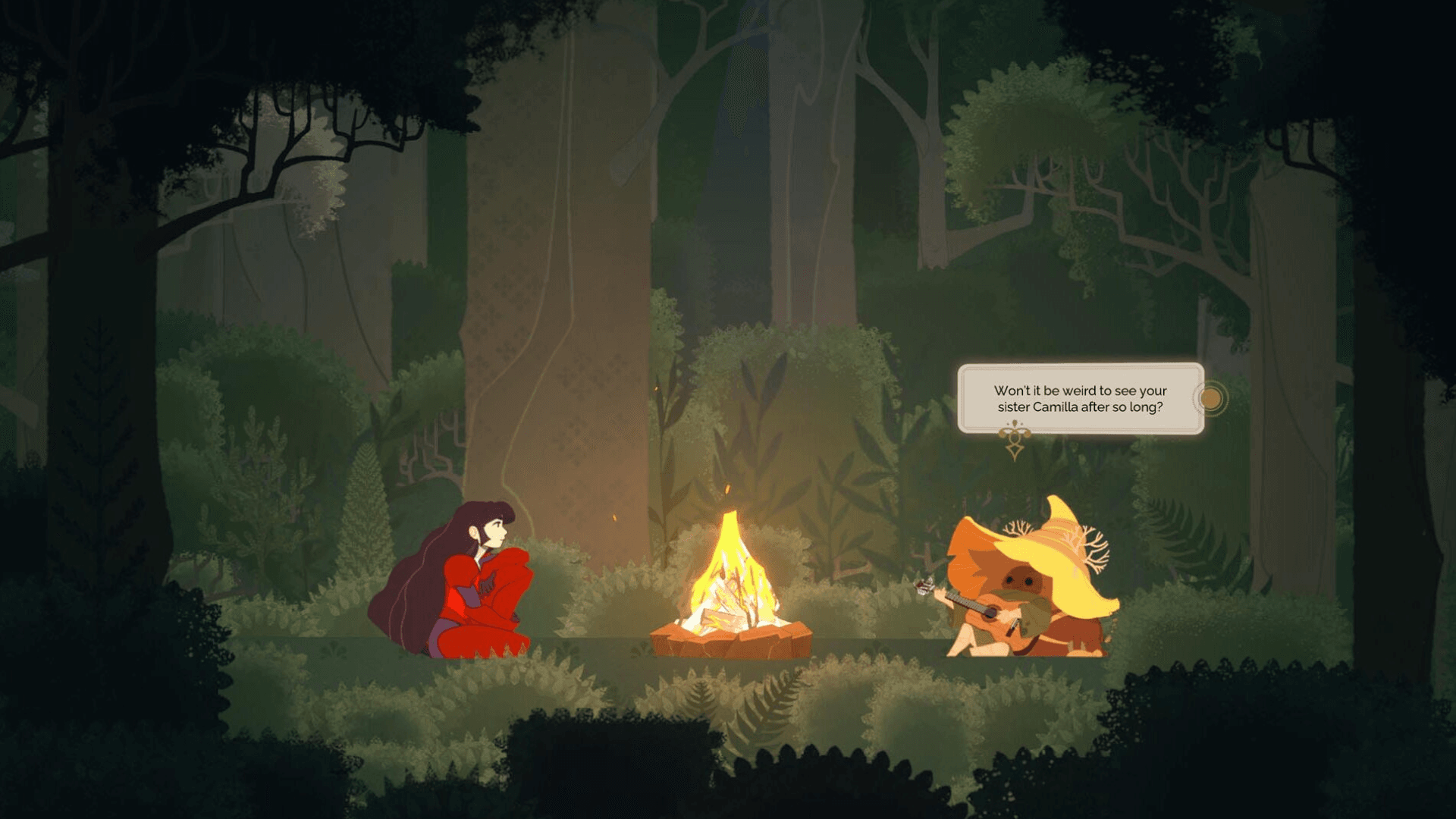
Shan’s story begins with her return to the family estate following her mother’s death. Her oldest sister, Camilla, greets her with teasing remarks and a mixture of familiarity and tension, establishing a realistic sibling dynamic that grounds the otherwise fantastical premise. This approach emphasizes character relationships over simple combat objectives. Players are not merely defeating opponents—they are navigating the emotional complexities of a talented but fractured family.
Exploration plays a key role in understanding these relationships. Players can move freely around the Hemlock estate, interact with characters, and collect information cards. These cards store facts about characters and events, which players can later use to inform dialogue and combat decisions. For example, learning about Camilla’s struggles as a de facto leader allows players to make more strategic or empathetic choices during duels, directly affecting the outcome of battles.
Combat Focused on Strategy and Positioning
Combat in At Fate’s End is deliberate and tactical. Players can attack in any direction using the right thumbstick, targeting enemy shields with rotating or stationary gaps. Timing and positioning are central to success, rather than quick reflexes alone. Players also have the option to pause combat at any moment using a trigger input, allowing them to plan movement or activate special abilities, such as dashes or ranged attacks.
Each sibling encounter includes multiple phases of combat, interspersed with dialogue. Choices made during these exchanges can affect health bars, creating a direct connection between narrative knowledge and combat effectiveness. This system encourages players to pay attention to character details, blending story and gameplay in a meaningful way.
Tarot Mechanics and Ability Customization
A standout feature is the tarot card-based ability system. Each sibling is tied to a major arcana card, which grants Shan specific abilities. For instance, Camilla is associated with The Chariot, providing a dash across the battlefield, while its reversed form, Vehemence, enables a double jump. Roman, another sibling, is linked to The Devil, showcasing dramatic visual effects and combat options during encounters.
These tarot mechanics extend beyond combat, adding thematic layers to the story. Upright and reversed cards not only affect gameplay but also reflect the emotional dynamics of Shan’s relationships with her siblings. This integration of narrative and mechanics reinforces the game’s focus on both strategy and storytelling.
Visual Style and Animation
Hand-drawn animation remains central to Thunder Lotus’ identity, and At Fate’s End demonstrates the studio’s commitment to detailed character work and expressive motion. Shan’s long hair, for example, flows with secondary motion that accentuates her actions, creating a clear and dynamic silhouette. Small animation details, such as Shan standing up after a defeat or shifting her gaze during exploration, add to the sense of realism and polish. These visual elements help make even routine gameplay moments engaging.
The studio’s approach emphasizes traditional artistry over simulated physics, maintaining clarity and visual appeal in every scene. Character designs are distinct and expressive, supporting both combat readability and narrative immersion.
Launch and Platform Details
At Fate’s End is scheduled to release later in 2026 for PC and Xbox Series X|S. It will be available via Xbox Play Anywhere and will launch on day one with Xbox Game Pass Ultimate and PC Game Pass. Developed by the team behind Spiritfarer, the game blends tactical action, narrative depth, and visual storytelling, offering players a unique approach to the action-adventure genre.
Make sure to check out our articles about top games to play in 2026:
Best Nintendo Switch Games for 2026
Best First-Person Shooters for 2026
Best PlayStation Indie Games for 2026
Best Multiplayer Games for 2026
Most Anticipated Games of 2026
Top Game Releases for January 2026
Frequently Asked Questions (FAQs)
What platforms will At Fate’s End be available on?
The game will launch on PC and Xbox Series X|S and will be part of Xbox Play Anywhere, allowing cross-play between platforms.
When is At Fate’s End releasing?
The game is scheduled for release later in 2026.
Is At Fate’s End more story-driven or action-focused?
The game blends both elements. Narrative exploration and character interactions inform combat, creating a strategy-based action experience.
What is unique about the combat system?
Combat relies on positioning, directional attacks, and the use of special abilities tied to tarot cards. Dialogue choices during duels can also affect health and outcomes.
Does the game include multiplayer?
At Fate’s End is a single-player experience focused on story and strategic combat.
What kind of visual style does the game use?
The game features hand-drawn 2D animation, emphasizing expressive character designs and detailed movement throughout combat and exploration sequences.
Are there RPG elements in the game?
Yes. Players collect swords, unlock abilities through tarot cards, and make narrative choices that affect outcomes, creating a tactical RPG-style layer within the action-adventure framework.
Can narrative choices affect combat?
Yes. Understanding characters through exploration and information collection can influence dialogue during duels, which in turn can impact health bars and combat outcomes.