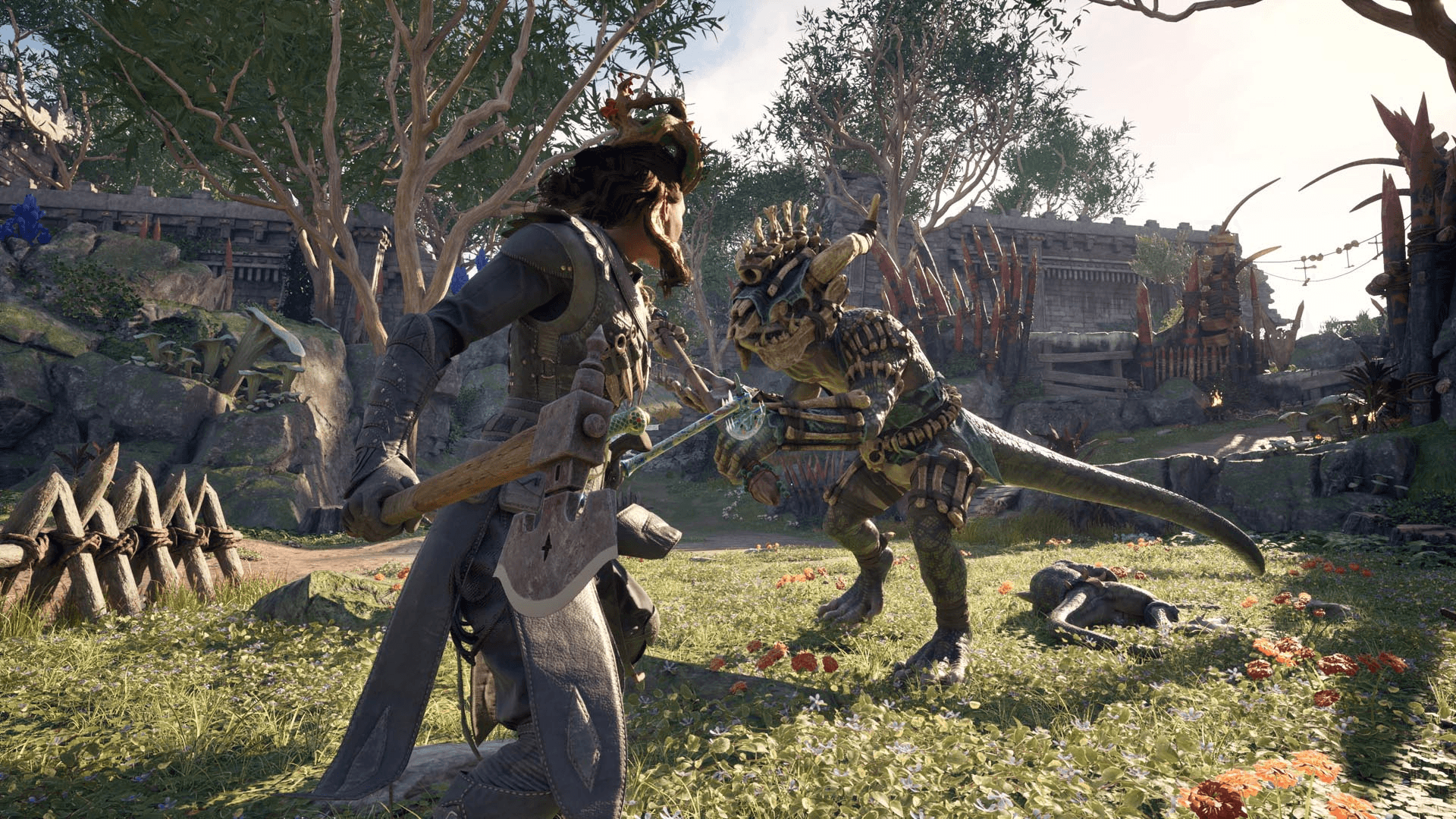

Avowed, developed by Obsidian Entertainment and released in February 2025, breaks from standard RPG romance design. The studio built something closer to an emotional arc than a dating sim. Game director Carrie Patel has said the team wanted relationships to grow from character development, not approval meters or flirt prompts. The result is a romance that happens because of the story, not alongside it. You won't find dialogue wheels with heart icons or affection scores ticking up in the background. Instead, the game lets a relationship form when it makes sense for the people involved.
Most Western RPGs give you a roster of romance options, branching dialogue trees, and systems that track how much each companion likes you. Avowed has one romance, and it's with Kai. His story centers on grief, guilt, and learning to move forward after loss. The romantic element isn't about attraction or charm — it's about helping him process unresolved trauma. Players who engage with his arc unlock a quiet moment that reflects where both characters have ended up emotionally. It's understated, and that's the point.

Use code TRYHARD33 at checkout to redeem this offer before code expires again.
Get 33% Off GAMES+ Subscription
Romance in Western RPGs: A Brief Overview
BioWare set the template for romance in Western RPGs with Baldur's Gate II: Shadows of Amn, then refined it across Mass Effect and Dragon Age. Those games let you pursue multiple companions, often with quests or approval thresholds attached. The model gives players control and adds drama between missions, but it can also turn relationships into checklists. You say the right things, give the right gifts, and unlock the romance scene. Even when it works, the focus stays on player agency over character depth. The companion becomes a goal to achieve rather than a person with their own arc.
Other studios adopted similar systems. Cyberpunk 2077 and Baldur's Gate 3 both use approval ratings and dialogue choices to gate romantic outcomes. These methods can create fun interactions, but they rarely connect to emotional storytelling the way Avowed does. The difference is structural: romance as a feature versus romance as part of someone's story.
Kai's Story and Emotional Development
You play as an envoy from the Aedyran Empire investigating a plague called the Dreamscourge in the Living Lands. You recruit four companions, bringing two along at a time. Kai is the first major companion you meet, and his story becomes the backbone of the game's romantic thread. Voiced by Brandon Keener, Kai is an aumauan mercenary who deserted the Rauatai Navy and carries unresolved feelings about Tama, the late leader of his mercenary squad. His past weighs on him, and he hasn't figured out how to let it go.
The romance develops as you help Kai work through that baggage. Through fireside conversations and story missions, he opens up about Tama and his inability to process loss. If you guide him through it, you unlock a quiet acknowledgment of mutual affection. There's no cinematic kiss, no sex scene, no dramatic gesture. The moment is tied to Kai's growth — he's finally ready to form a connection after confronting what he couldn't before. The game treats it as a natural outcome of his arc, not a reward for hitting dialogue checkpoints.
Subtlety and Integration in Game Design
Avowed doesn't use flirt buttons or affinity meters. Patel has explained that removing those mechanics lets the romance feel surprising and earned. It emerges when you engage with Kai in ways that align with his story, not when you game the system. By stripping out mechanical incentives, the game ties romantic outcomes to narrative investment. You're not optimizing for a relationship — you're participating in one. The epilogue briefly notes that Kai has found a new chance at love with the envoy, framing it as the culmination of his personal journey rather than a trophy for player strategy.
This design choice reflects a shift in how RPGs handle romance. Instead of treating it as an optional side activity, Avowed uses it as a narrative tool that deepens character work. The game only has one romantic arc, but its impact is stronger because it's woven into the main story and built on emotional authenticity rather than player choice for its own sake.
Make sure to check out our articles about top games to play in 2026:
Best Nintendo Switch Games for 2026
Best First-Person Shooters for 2026
Best PlayStation Indie Games for 2026
Best Multiplayer Games for 2026
Most Anticipated Games of 2026
Top Game Releases for January 2026
Frequently Asked Questions (FAQs)
Does Avolved have a traditional romance system?
No. The game skips multiple romance options, approval meters, and explicit romance mechanics. Romance happens organically through the story, specifically with Kai.
Who can players romance in Avowed?
Kai is the only romance option in Avowed. The relationship is tied to his personal arc and past trauma, not traditional flirtation systems.
Is there a sex scene or explicit content in the romance?
No. The romance is subtle and focuses on emotional connection. The game includes dialogue and an epilogue mention, but no explicit scenes.
How does the romance affect gameplay?
Romance in Avowed doesn't provide gameplay benefits. It's a narrative element that highlights character development and emotional resolution.
Do player choices influence the romance?
Yes, to a degree. Engaging with Kai's storyline and making choices that support his growth allows the romance to emerge by the end of the game. There are no mechanical indicators tracking this progress.
Why did Obsidian choose this approach to romance?
The studio wanted relationships that feel genuine and tied to the story rather than optional systems or mechanical rewards. This approach lets romance emerge naturally from character development instead of player strategy.