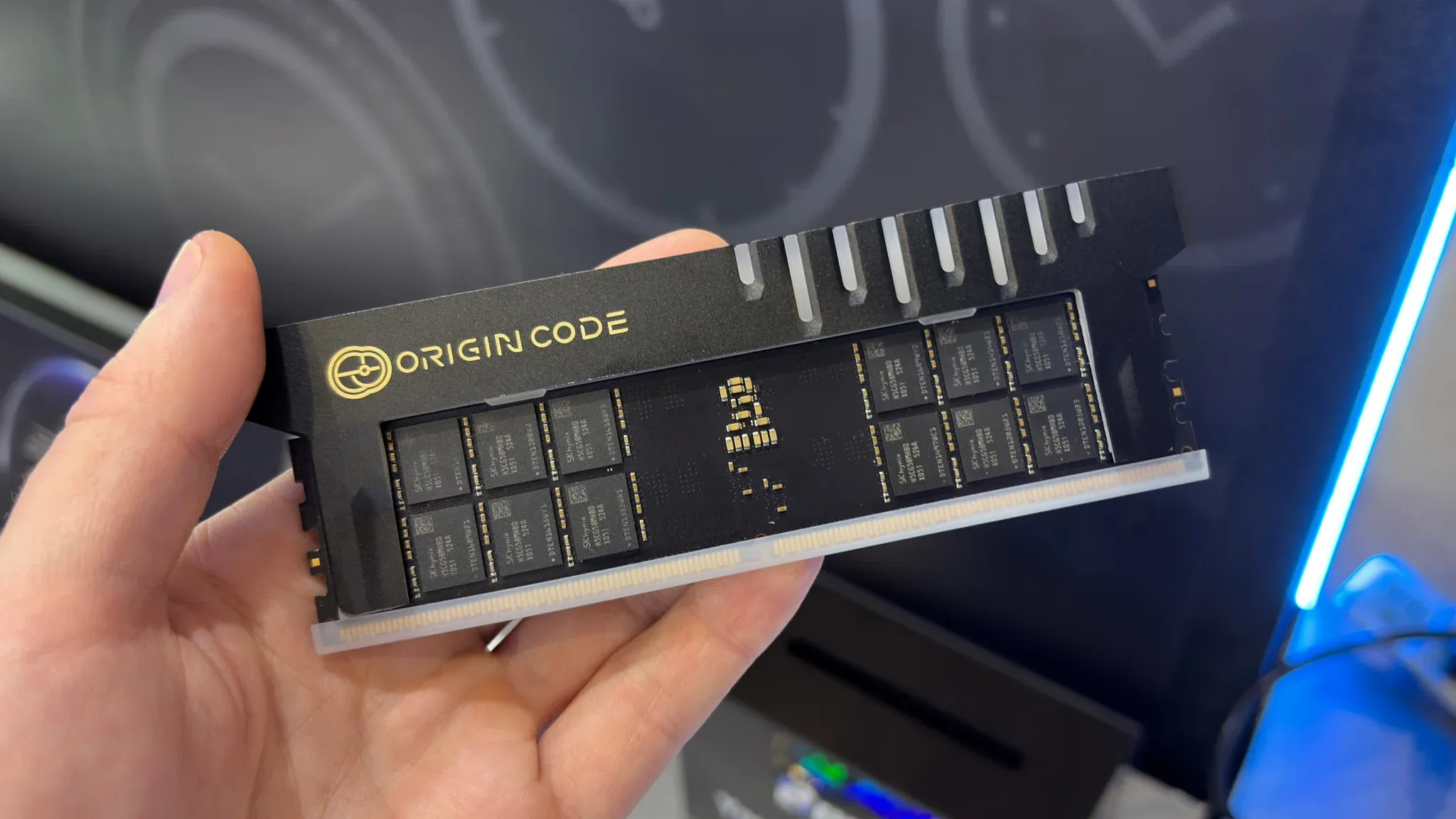


Biwin just walked into Computex 2026 and announced memory specs that read like someone dared an engineer to ignore every economic constraint on the planet. The company's new Origin Code DDR5 lineup tops out at a staggering 256 GB capacity running at DDR5-8000 CL42, which is the kind of spec sheet that makes most mainstream gaming rigs feel like museum pieces.

Use code TRYHARD33 at checkout to redeem this offer before code expires again.
Get 33% Off GAMES+ Subscription
What Biwin is actually announcing
The Origin Code range is positioned as an extreme-tier DDR5 offering, targeting enthusiasts and high-end workstation builders who want both raw speed and massive capacity in the same kit. Hitting DDR5-8000 at CL42 timings is aggressive. Most DDR5 kits in active circulation sit between DDR5-6000 and DDR5-7200 for gaming builds, so pushing past 8000 MT/s puts Origin Code in a very thin slice of the market.
Here's the thing: 256 GB of DDR5 in a single kit isn't something most gamers will ever need. Even the most demanding open-world games with aggressive asset streaming rarely push past 32 GB of system memory under normal conditions. But that's not really the point.
The gap between what gamers need and what this exists to prove
Products like Origin Code serve a dual purpose. They exist for the small number of users running memory-intensive workloads alongside gaming, think video editors, 3D artists, and streamers running multiple applications simultaneously. But they also function as a proof of concept, a public demonstration that Biwin's manufacturing and binning processes can hit targets that competitors haven't reached yet.
The key here is that DDR5-8000 CL42 isn't just a headline number. Latency matters as much as raw transfer speed for gaming performance, and CL42 at that frequency is a respectable balance. Looser timings at high speeds often cancel out the bandwidth gains for latency-sensitive workloads, so the fact that Biwin is quoting CL42 rather than something in the CL50 range suggests these aren't just binned-for-show samples.
DDR5 heat spreader detail
Computex as the launch platform
Announcing at Computex 2026 makes sense for Biwin. The show has become the primary stage for memory manufacturers to push boundaries, and this year has already seen several companies unveil next-generation component specs. Positioning Origin Code here puts it directly in front of system integrators, reviewers, and enthusiasts who will actually evaluate whether the specs hold up outside a controlled demo environment.
Pricing and wide availability details haven't been confirmed yet, which is standard for Computex reveals at this tier. Extreme-spec memory kits like this typically arrive with equally extreme price tags before gradually becoming more accessible as yields improve and competition responds.
For PC builders keeping an eye on the high-end memory market, you'll want to watch how Origin Code performs once independent testing begins. Manufacturer specs at trade shows and real-world benchmark results don't always agree, especially at the outer edges of what DDR5 can currently do. Check out our game reviews to see how memory-intensive titles are performing on current hardware configs while Origin Code makes its way to market.
What this means for the broader DDR5 market
The DDR5 transition has been slower than many anticipated. A meaningful chunk of gaming PCs still run DDR4, partly due to cost and partly because DDR5 platform adoption required new motherboards and compatible processors. Products pushing 256 GB at DDR5-8000 don't change that equation overnight, but they do signal where the ceiling is moving.
Manufacturers hitting these numbers now means more achievable mid-range DDR5 speeds become cheaper to produce over the next 12 to 18 months. The trickle-down effect on mainstream 32 GB and 64 GB DDR5 kits is the part that actually matters for most builders.
For anyone building or upgrading a high-end gaming rig and wanting to understand how memory choices affect real performance, our gaming guidcover the practical side of PC hardware decisions as the DDR5 market continues to mature.