Caves of Qud, the deeply systemic roguelike RPG that spent years in early access building one of the most complex simulations in gaming, landed on Nintendo Switch in February 2026. By every conventional measure, it should not exist on that hardware. That's exactly why it does.
The dev who likes problems that shouldn't be solvable
Brian Bucklew, co-creator of Caves of Qud and co-founder of Freehold Games, was refreshingly blunt when asked about the decision. "I'm not sure it's a rational decision," he told PC Gamer. "I think we are interested in solving impossible problems in general, and the idea of making Caves of Qud work on Switch , initially, making Caves of Qud work on gamepad , that doesn't seem like something that should happen. But the challenge entices me to do it."
Here's the thing: the skepticism was legitimate. Caves of Qud defaults to using a significant chunk of the keyboard. Its procedural generation systems are notoriously CPU-hungry. The Switch 1 runs on hardware that's nearly a decade old at this point. Getting a game this dense to run acceptably on that chip required months of dedicated performance work from the team.
How the Steam Deck paved the way
The Switch port didn't appear out of nowhere. In 2024, months before Caves of Qud finally exited early access after years of development, Freehold shipped a major UI and control overhaul that made the game genuinely playable on Steam Deck. The new gamepad binding scheme used smart shortcuts and button combinations to replace what would otherwise require digging through multiple menus.
That redesign turned out to be the foundation everything else was built on. Bucklew noted that an early design decision, made without the Switch in mind at all, ended up being the key reason a gamepad port was even feasible.
"We accidentally made a choice to collapse [the way] older roguelikes would have 20 different keybinds on different letters," he said. Rather than following the NetHack model of 70-plus keyboard shortcuts, he and co-founder Jason Grinblat built Qud's interactions around menus. "We barely fit onto gamepad, but we do, because of that decision."
danger
The Switch version was released digitally only via the Nintendo eShop, with no physical cartridge release.
The market nobody believed existed
Bucklew's motivation wasn't purely technical. He had a genuine theory to test: that the assumption "systemic games don't sell on Switch" was never actually proven, just repeated.
"People think that there is not a market for systemic games on Switch," he said. "I think a lot of people might think a game like Caves of Qud would not succeed, but there aren't any, right? So on what basis are you making that claim, especially for a device that has as many users out there?"
The results backed him up. At its peak, Caves of Qud reached the top 5 of the Switch's combined 'Physical + Digital' sales chart. That ranking covers everything sold on the platform, including cartridges, which makes the achievement more notable given that Qud launched digitally only. Bucklew declined to share specific unit numbers, but confirmed the game has continued selling steadily after dropping out of those top rankings.
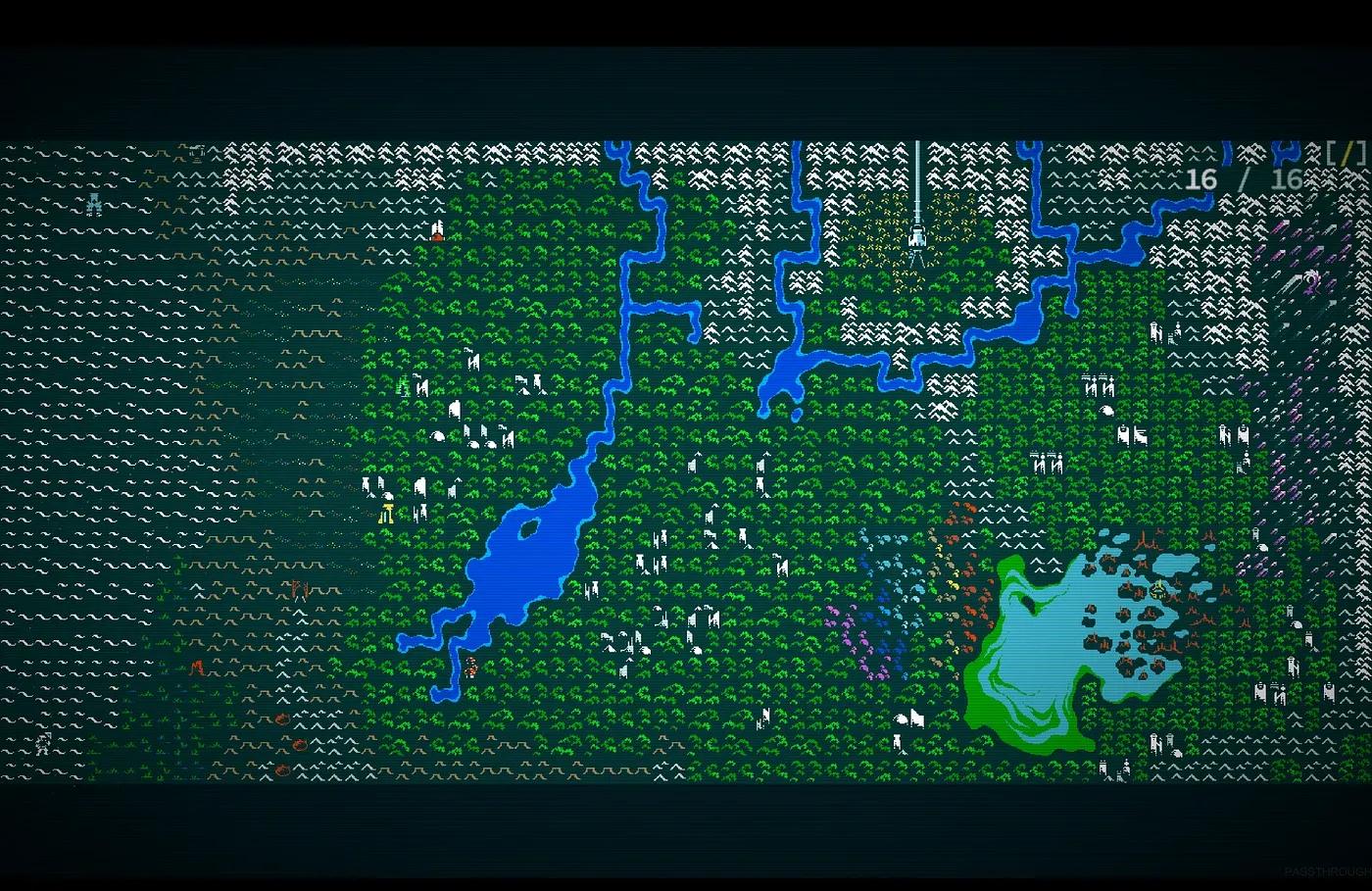
Procedural world map in Qud
The next impossible port: phones
Freehold is already moving on to the next challenge. The team is now working on a mobile version of Caves of Qud, targeting both portrait display layouts and touch inputs. That means rethinking a UI that was already pushed to its limits fitting onto a Switch screen.
"We don't know if we'll be able to pull off a nice Qud portrait design, but signs look pretty good," Bucklew said. Performance, at least, should be less of a headache this time. Modern smartphones are considerably more capable than the Switch 1's CPU, and Freehold already did the hard optimization work to hit acceptable frame rates on that older hardware.
The philosophical argument is the same one Bucklew made for Switch. "People make claims like 'oh, people don't want to play big RPGs on their phone.' Are there any actual examples of a phone-first design big RPG? Maybe single digits. Not very many, right?" He pointed out that big studios have rational reasons to avoid that risk, but a small studio with a stable game and 20 years of development behind it is in a different position entirely. "We can take these risks."
What this means for complex games on portable hardware
The broader implication here is worth paying attention to. Caves of Qud is about as demanding as PC-native games get in terms of interface complexity and systemic depth. If Freehold can make it work on Switch and potentially on phones, it challenges a comfortable assumption the industry has held for years.
The key here is that the work wasn't just a straight port. It required rethinking controls, spending months on performance optimization, and trusting that an audience exists even when nobody had tested the hypothesis. For indie studios sitting on complex, keyboard-heavy games, that's a meaningful data point. Make sure to check out more: