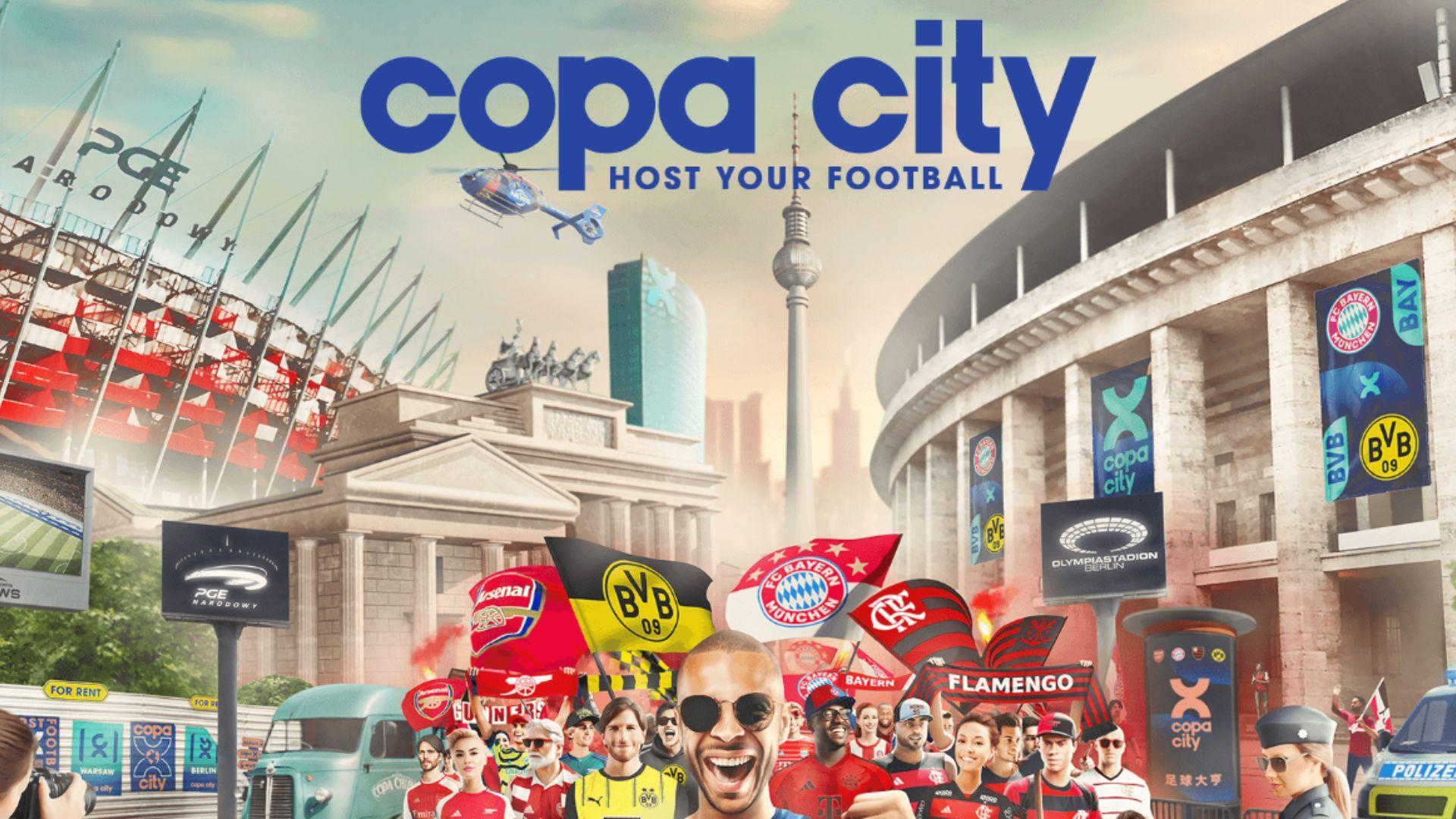


Most football games focus on what happens once the referee blows the whistle. Copa City, the upcoming soccer stadium tycoon simulation from Triple Espresso S.A., shifts attention to everything that happens before that moment. Instead of managing players on the pitch, players are responsible for the city that surrounds the stadium, the fans who flood into it, and the logistics that make a major match possible at all.
The idea comes from studio co-founder Dominik Ebebenge, who spent nearly a decade working at Legia Warsaw in Poland, eventually becoming Head of Sport. His experience organizing real-world matchdays informs Copa City’s emphasis on preparation, crowd control, staffing, and urban planning. The game frames players as “City Captains,” tasked with shaping how entire districts respond when tens of thousands of supporters arrive at once.
Rather than simulating football itself, Copa City builds a management game around the stress, timing, and coordination required to host elite-level fixtures. It’s positioned somewhere between a city builder and a sports management sim, but with a focus on events rather than long-term urban development or team tactics.

Use code TRYHARD33 at checkout to redeem this offer before code expires again.
Get 33% Off GAMES+ Subscription
Countdown-Based Management Instead of Season Sims
Copa City doesn’t follow the traditional loop of season progression found in games like Football Manager. Each scenario centers on a fixed match date, usually with a two-week preparation window. Lead Game Designer Karol Leśniewicz describes this structure as a race against time. The match cannot be delayed, so every decision has to fit within that shrinking timeline.
Players start by recruiting staff such as stewards, security, and volunteers, while also launching marketing campaigns to attract the right mix of supporters. Ticket pricing, premium seating, and target demographics affect how profitable and manageable the crowd becomes. These early choices determine what kinds of fans arrive and how demanding they are once they reach the city.
As the clock ticks down, preparation expands into citywide planning. Players place fanzones, food areas, entertainment hubs, and transport access points across multiple neighborhoods. Different supporter groups respond differently to their surroundings, which means families, tourists, and hardcore fans need to be guided into environments that fit their expectations. Poor placement leads to congestion, dissatisfaction, and revenue loss, while smart planning keeps the city functioning smoothly.
The game is designed around short-term goals that unlock new facilities, offering a steady sense of progression even though everything leads to a single final moment: matchday.
Urban Logistics and Crowd Flow Take Center Stage
One of Copa City’s defining features is its focus on movement. It’s not enough to place services around the stadium. Players must design marching routes for supporters, manage transport bottlenecks, and ensure rival fanbases don’t collide in unsafe ways. City layouts impose real constraints, forcing players to adapt their plans to existing streets and districts rather than building everything from scratch.
As preparations advance, additional systems become available, including surveillance infrastructure such as drone monitoring stations. These tools don’t just add security, they influence how tension and behavior evolve within large crowds. The challenge is less about punishment and more about maintaining order through smart design and planning.
Visiting teams also introduce complications. They arrive with special demands, from training sessions that disrupt public areas to promotional requests tied to star players. Copa City reflects the competitive side of football hosting, allowing players to decide how accommodating or strategic they want to be, though the game keeps those interactions focused on logistics and reputation rather than outright hostility.
When matchday finally arrives, the reward is seeing thousands of simulated fans converge on the stadium, visually representing every decision made along the way. Instead of controlling the match, players watch their planning either succeed or unravel under pressure.
Representing Fan Culture Without Leaning on Violence
Real-world football culture includes intense rivalries and, at times, disorderly behavior. Copa City approaches this carefully. While supporters can still cause problems, the developers intentionally avoid portraying explicit violence. Instead, tension is expressed through crowd behavior, emotional escalation, and logistical strain.
Leśniewicz explains that the team focused on how atmosphere builds rather than how fights break out. This approach aligns with licensing partners and age ratings while keeping the experience centered on management rather than confrontation.
Authentic chants help sell the atmosphere, but including them required heavy filtering. Many real chants rely on copyrighted songs or offensive language, so the developers worked with clubs, translators, and legal teams to select versions that fit the game’s tone. The result is an environment that feels recognizably football-focused without crossing into material that would clash with the game’s broader audience.
Cities as Playable Systems, Not Just Backdrops
Copa City extends well beyond the stadium gates. Players operate in condensed but recognizable versions of real cities such as Berlin and Warsaw, with more locations planned. These spaces aren’t cosmetic. Each district introduces different logistical challenges tied to tourism, transport, density, and amenities.
Favoring one side’s supporters too heavily can destabilize the event. If one fanbase gets overcrowded into underdeveloped neighborhoods while the other enjoys premium services, dissatisfaction can escalate to the point where the visiting team pulls out entirely. That outcome leads to financial and reputational damage, reinforcing the idea that balance is central to event management.
Ebebenge emphasizes that while Copa City is about soccer, its systems mirror other large-scale events like music festivals or conventions. Feeding crowds, managing access, and coordinating services are universal problems, making the game approachable even for players who aren’t deeply invested in football culture.
A Different Angle on Sports Simulation
Where most sports games focus on athletes and tactics, Copa City focuses on infrastructure, planning, and business operations. It compresses real-world event management into a playable structure that mixes city-building logic with sports presentation.
The result is a simulation about what enables football rather than what happens during it. Players who enjoy tycoon games, urban planning, or behind-the-scenes sports operations will find a different kind of challenge here, one built around deadlines, logistics, and public behavior instead of scorelines and formations.
Copa City is scheduled to release March 26 on the Epic Games Store, offering a management-driven take on soccer that begins long before kickoff.
Make sure to check out our articles about top games to play in 2026:
Best Nintendo Switch Games for 2026
Best First-Person Shooters for 2026
Best PlayStation Indie Games for 2026
Best Multiplayer Games for 2026
Most Anticipated Games of 2026
Top Game Releases for January 2026
Frequently Asked Questions (FAQs)
What kind of game is Copa City?
Copa City is a soccer stadium tycoon simulation focused on event management, city logistics, and fan planning rather than playing football matches.
Do players control the actual soccer matches?
No. Players prepare the city and stadium for the match, but gameplay ends at kickoff. The focus is on organization, crowd flow, and infrastructure.
Which clubs are featured in Copa City?
The game includes licensed teams such as Bayern Munich, Borussia Dortmund, Arsenal, Flamengo, and Beşiktaş, with more expected over time.
How long does each scenario take in Copa City?
Each scenario centers on a fixed match date, usually with a two-week in-game preparation period where players must complete all planning before kickoff.
Is Copa City more like a city builder or a sports game?
It blends both, but leans closer to a tycoon and city management experience with a football theme rather than a traditional sports simulation.
When and where does Copa City release?
Copa City launches on March 26 and will be available on the Epic Games Store.