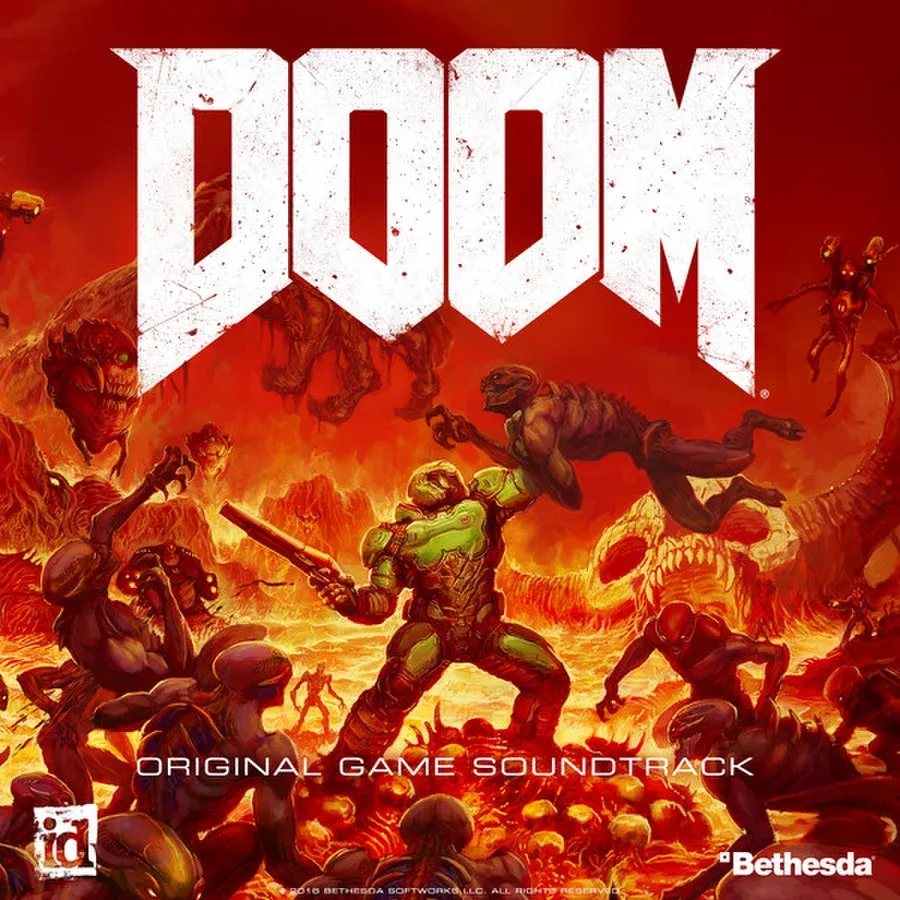


Robert Caskin 'Bobby' Prince III, the composer whose music defined the sound of early PC gaming, has died at the age of 81. Prince scored the original Doom, Wolfenstein 3D, Duke Nukem 3D, and a string of other landmark titles that shaped how millions of players first experienced video game music.

Use code TRYHARD33 at checkout to redeem this offer before code expires again.
Get 33% Off GAMES+ Subscription
A career that started as a hobby and became history
Prince came to video game music later than you might expect. Before picking up a tracker and composing for id Software and Apogee Software in the early 1990s, he had served as a platoon leader during the Vietnam War and built a career in counselling and law. Music was a passion that gradually became a profession, and the games industry was lucky it did.
His work spanned roughly 17 projects with Apogee and 3D Realms alone between 1991 and 1996, covering everything from the cheerful platformer Cosmo's Cosmic Adventure to the dark, punishing corridors of Doom. That range tells you everything about what made him special: he could shift registers completely, from bright and bouncy to heavy and foreboding, and make both feel completely natural.
Here's the thing about what Prince was doing technically. He was composing all of this on an AdLib sound card with severely limited instrument options. The fact that the Doom soundtrack still hits as hard as it does, three decades later, is a reminder of how much craft was going into those early compositions.
What the people who worked with him said
John Romero, co-designer on the original Doom, shared his reaction on social media: "Everyone at Romero Games is deeply saddened to learn of the passing of Bobby Prince. He left an incredible mark on games and on my life."
George Broussard, co-founder of Apogee and 3D Realms, wrote a detailed tribute that captured what it was like to actually work alongside Prince. Broussard described him as someone who would fly into the office for a week at a time on larger projects, walking the floor with a recorder to capture sounds and talk to team members about what the music needed to feel like. On Duke Nukem 3D specifically, Prince treated it like a proper production, not a remote contract.
Broussard's tribute put it plainly: "He was essentially the Hans Zimmer of early shareware games."
What most players miss when they think about Prince's catalogue is the sheer variety. The period-appropriate WWII film score energy of Wolfenstein 3D sits in a completely different emotional register from the relentless, almost metal-adjacent aggression of Doom's combat tracks. Both came from the same person working in the same constrained format.
The Doom soundtrack's place in recorded history
The original Doom soundtrack was selected for inclusion in the National Recording Registry, one of 25 titles inducted as audio works "worthy of preservation for all time based on their cultural, historical or aesthetic importance in the nation's recorded sound heritage." That's not a gaming award. That's a cultural institution recognizing that what Prince did in 1993 belongs in the same conversation as any other significant recorded music.
For players who grew up with Doom, that recognition probably feels obvious. The music was never background noise. It was part of the texture of the game, something that made the experience feel urgent and dangerous in a way the technology alone couldn't have achieved.
The Doom series has continued evolving, with Doom: The Dark Ages arriving as the latest entry. If you're playing through it now, our best builds and upgrade paths guide for Doom: The Dark Ages is worth bookmarking.
Three decades of influence, still counting
Prince's music reached players through shareware distribution at a time when most people encountered games through floppy disks passed between friends. That context matters. The Doom soundtrack didn't have a marketing campaign behind it. It spread because people heard it and couldn't stop thinking about it. Broussard's description of Prince's work as "sticky" is exactly right.
The composers working on games today, the ones scoring AAA releases with full orchestras and adaptive audio systems, are building on a foundation that people like Prince laid when the tools were primitive and the audience was still figuring out what games even were.
Prince is survived by his legacy across dozens of titles and the ears of an entire generation of players who couldn't tell you the composer's name but can hum every note. For more gaming coverage, check out our gaming guides for the latest across current releases.