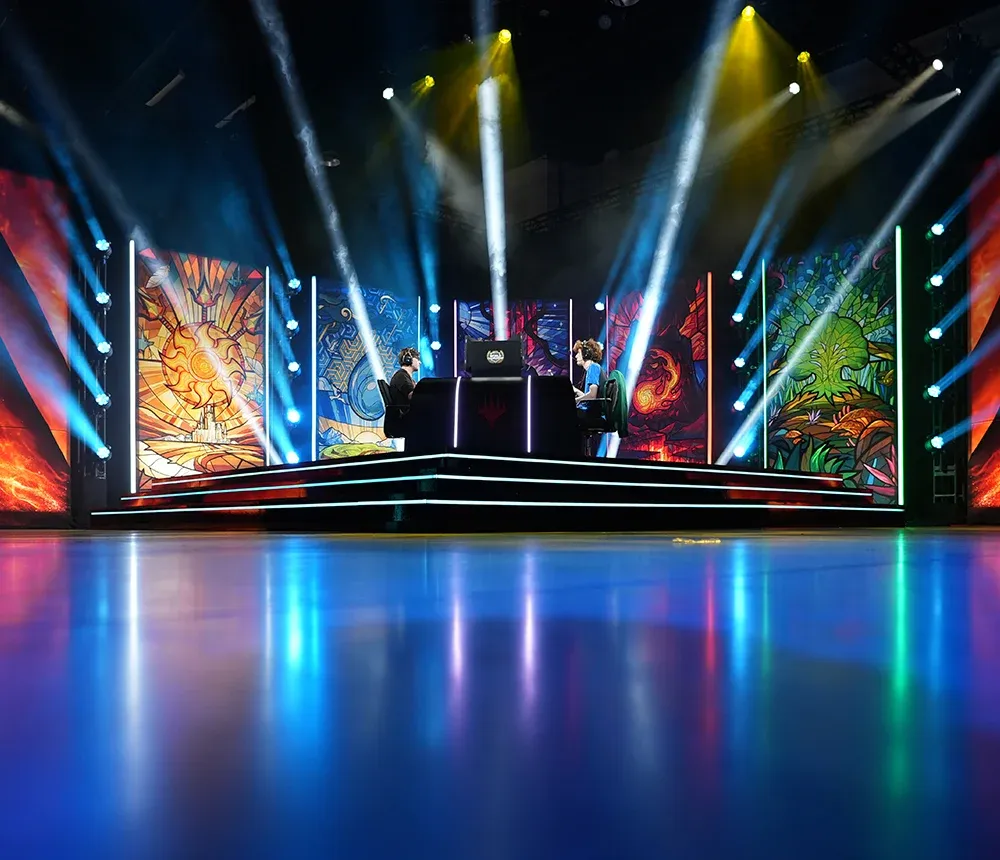


Picture a League of Legends arena event: fog machines, stadium screens, dramatic walk-out music, a six-figure daily production budget. Now picture the scrappy tournament streams from a decade ago where the audio cut out twice and the caster was practically screaming over crowd noise. Here's the thing: a lot of people remember the second version more fondly.
That tension is now a full-blown conversation inside the esports industry. Max "KEG" Tompkins, a caster for Marvel Rivals, recently put it bluntly: "people gotta realize that making esports shows perfect, sterile, and soulless does more harm than most mistakes or issues you could cause live on air." That quote has been circulating through esports circles, and it landed because a lot of people already felt it.

Use code TRYHARD33 at checkout to redeem this offer before code expires again.
Get 33% Off GAMES+ Subscription
When the polish started outrunning the passion
Major League of Legends arena events now run anywhere from $75,000 to $200,000 per day in production costs. That number explains a lot about why broadcasts look the way they do: every segment timed, every transition rehearsed, every moment engineered for maximum spectacle. The problem is that engineered spectacle and genuine excitement are not the same thing, and audiences can feel the difference.
The Overwatch League's early seasons are the clearest counterexample. Blizzard built a franchised circuit with hometown teams and mainstream ambitions, but the broadcasts still carried something real. Viewers felt like they were watching something being built in real time, not consuming a finished product. That collaborative energy, however imperfect technically, is what made people tune in week after week.
The Call of Duty League's 2022 Grand Finals in Los Angeles leaned hard the other way. Fog effects, massive entrance sequences, stadium-scale production. Impressive to look at, but the distance it created between players and audience was noticeable. The community's shared passion for competition got buried under the spectacle.
The FGC pressure test
The Fighting Game Community is feeling this tension more acutely than most. External organizations scaling up FGC events have introduced content creator showmatches featuring personalities who don't actively compete in fighting games. For a community that has always been defined by merit-based competition and raw skill, that shift hits differently.
The concern isn't growth itself. Bigger prize pools, better venues, wider audiences: those are fine. The concern is that events are being reshaped for an audience that doesn't actually exist yet, while the existing audience that built these communities watches their culture get smoothed out.
What the money actually demands
Tournament organizers aren't chasing polish for its own sake. When your event costs six figures per day to run, you need corporate sponsorship, and corporate sponsorship comes with expectations about presentation. That's the bind. The financial reality of operating at scale pushes productions toward the kind of broadcast language that mainstream sports use, because that's what sponsors recognize and feel comfortable backing.
Intel Extreme Masters Beijing 2026 is a good example of how major events require substantial investment that shapes every production decision made around it. The money and the creative vision are not always pointing in the same direction.
What most players miss in this debate is that authenticity doesn't require low budgets. It requires prioritizing the community's actual experience over the perception of legitimacy. Those are different problems with different solutions, and right now the industry is solving the second one while ignoring the first.
For readers who want to understand the competitive scene better before the next major tournament cycle, our gaming guides cover the strategic side of the games at the center of this conversation. And if you want a sense of how individual games are landing with players right now, our game reviews section tracks the titles driving competitive viewership.
The next round of major tournaments will be a real test. If the loudest voices in this conversation get any traction, expect at least some organizers to experiment with pulling back on the production theater and letting the competition breathe. Whether that experiment happens at a tier-one event or a grassroots circuit first is the question worth watching.