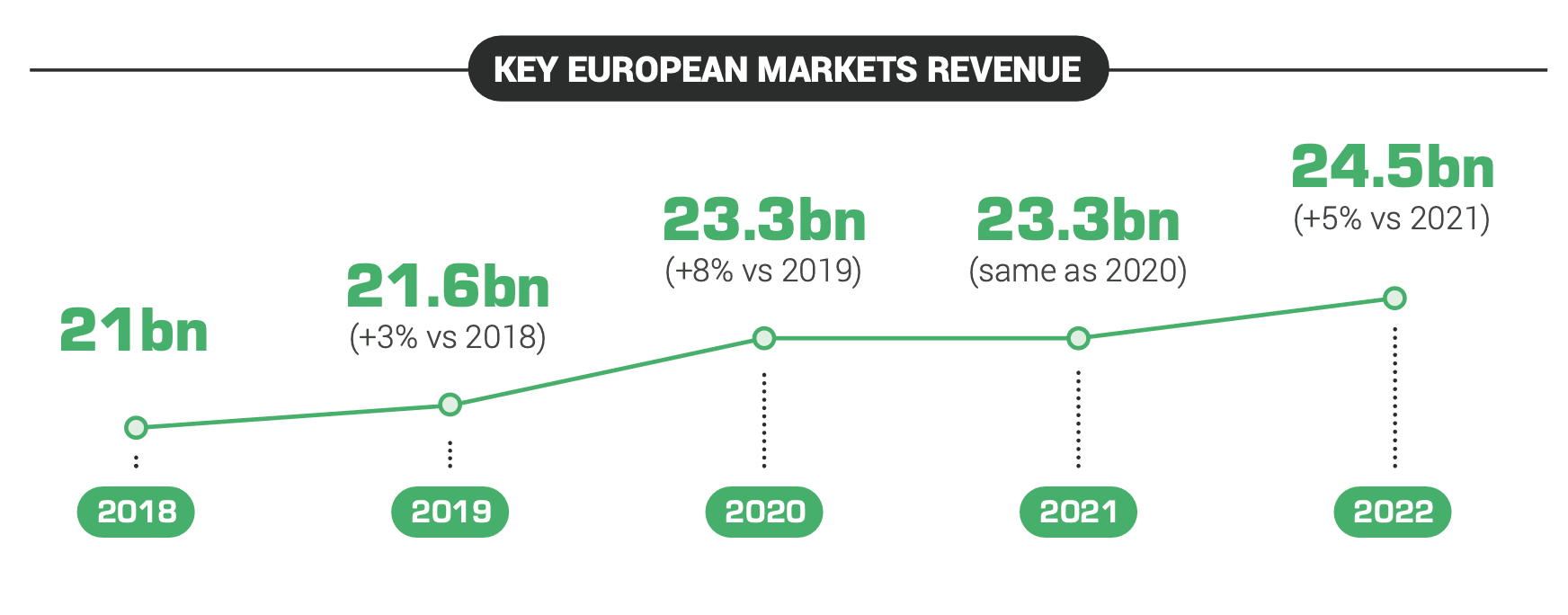
The European gaming industry posted strong numbers in 2022, growing 5% to $24.5 billion despite broader economic headwinds. The data, drawn from GSD, Gametrack, and EGDF-VGE reports, shows a sector that expanded revenue, diversified its player base, and added jobs at a pace that outstripped most other entertainment categories.
Market Overview
1. Record-Breaking Revenues
European gaming revenue hit $24.5 billion in 2022, up 5% year-over-year. That growth came while inflation and supply chain issues hammered other industries, suggesting gaming has become recession-resistant in ways it wasn't a decade ago.
2. Platform Preferences
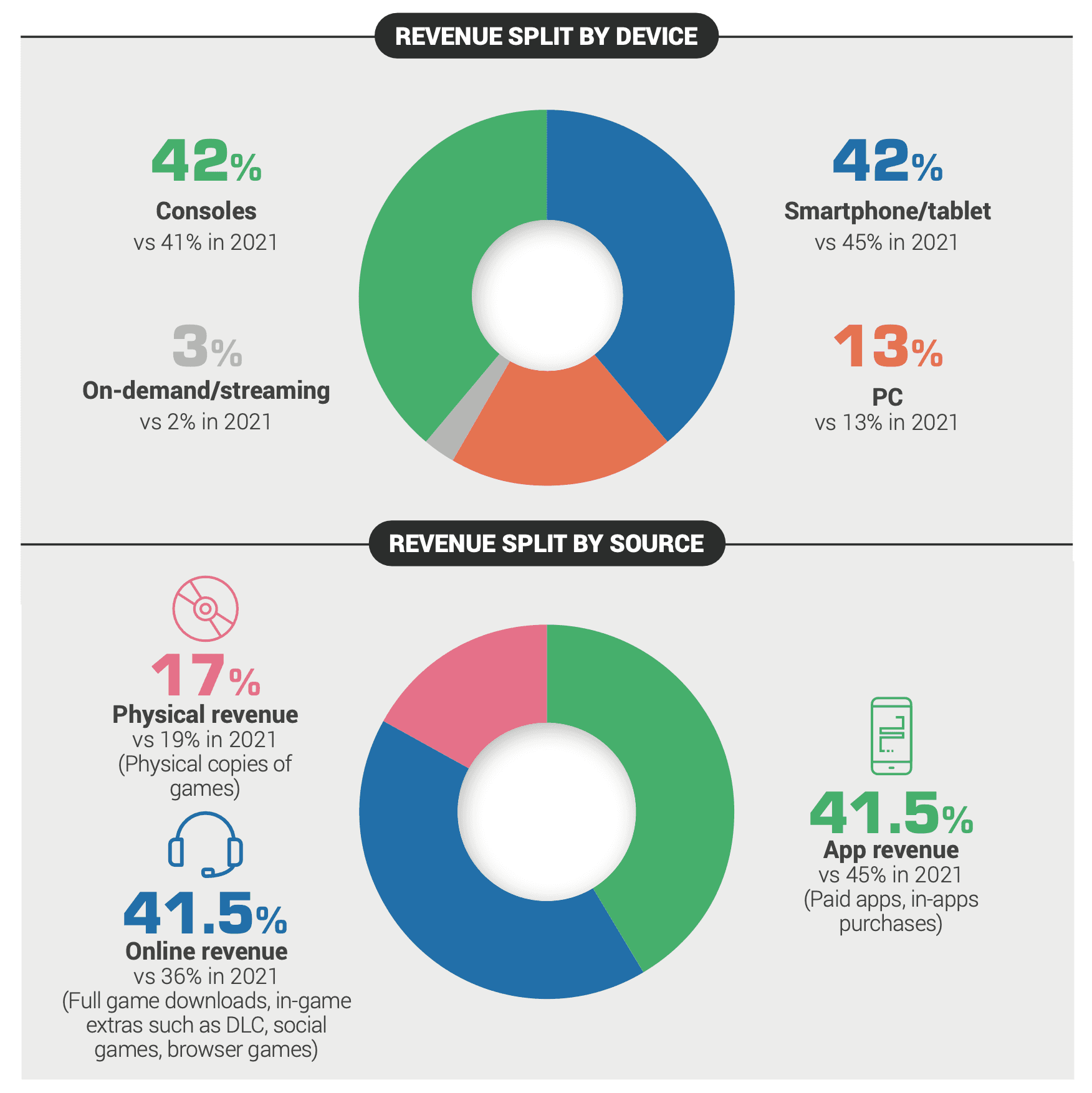
Console gaming held 42% of total revenue in 2022, up from 41% the year before. Mobile gaming matched that at 42%, down slightly from 45% in 2021. PC accounted for 13%, while streaming services climbed to 3% from 2%.
3. Sales Trends
Digital sales continued their march. Online game purchases made up 41.5% of revenue, up from 36% in 2021. In-game mobile spending held at 41.5%, down from 45%. Physical game sales dropped to 17% from 19%, a trend that shows no sign of reversing.
4. Workforce Expansion
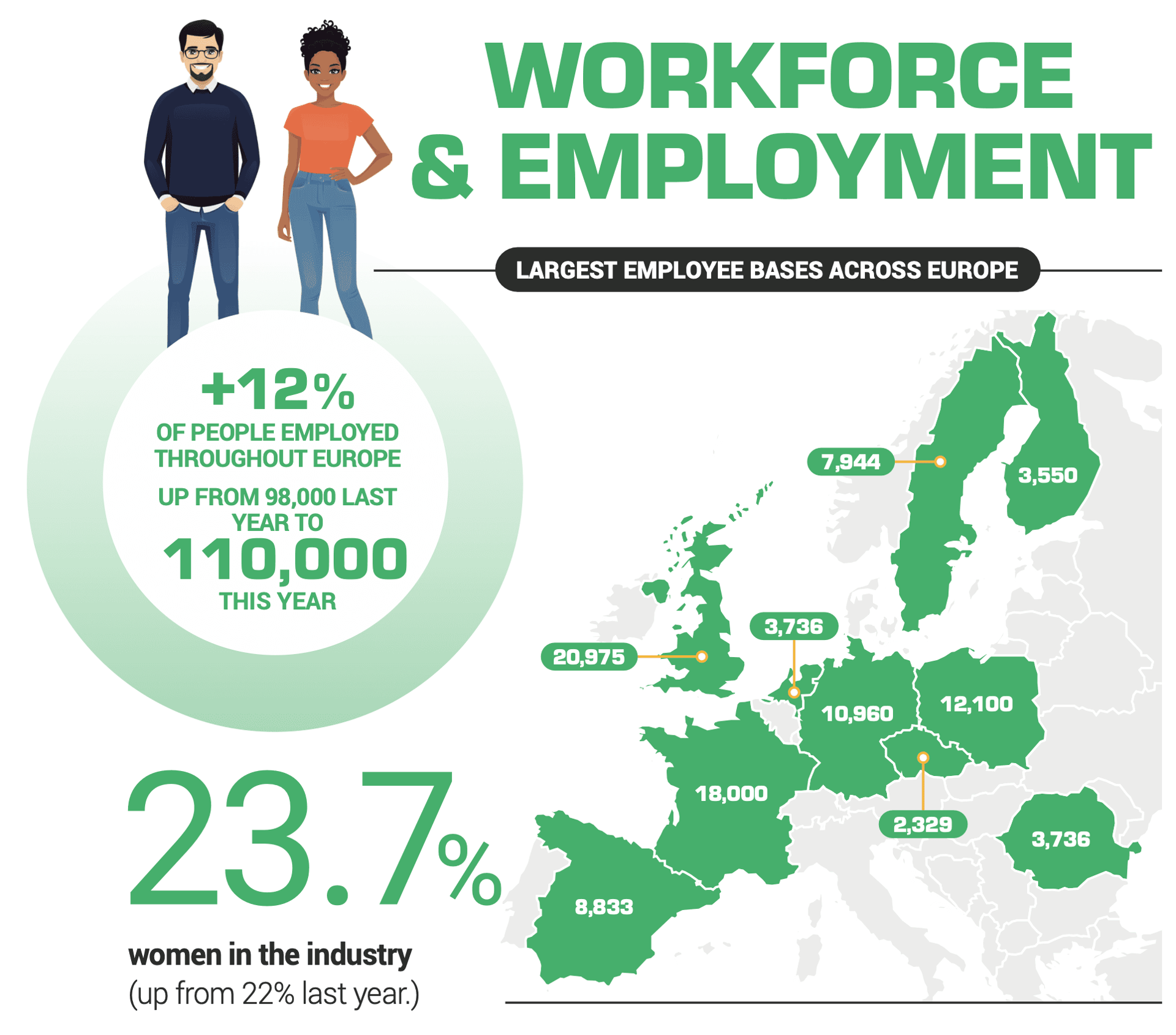
The European gaming sector employed 110,000 people in 2022, up 12% from the previous year. Women now represent 23.7% of the workforce, a meaningful increase that still leaves the industry with work to do on gender parity.
Demographics
1. Widespread Gaming Popularity
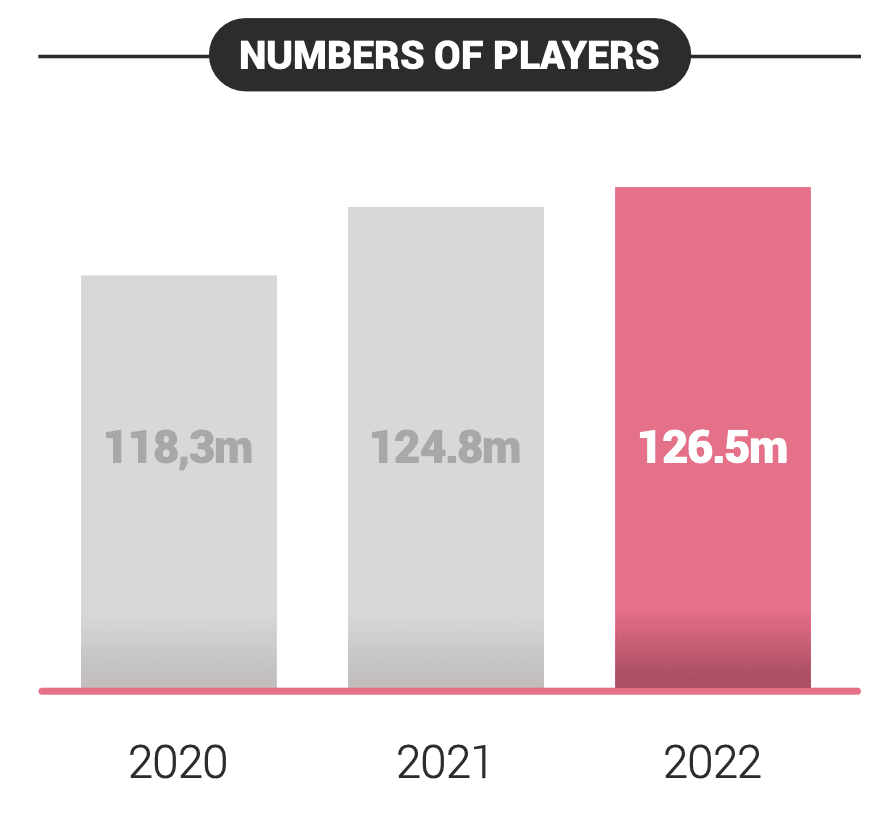
53% of Europeans played video games in 2022, totaling 126.5 million people. That's more than half the continent, which makes gaming one of the most popular forms of entertainment in the region.
2. Age Groups
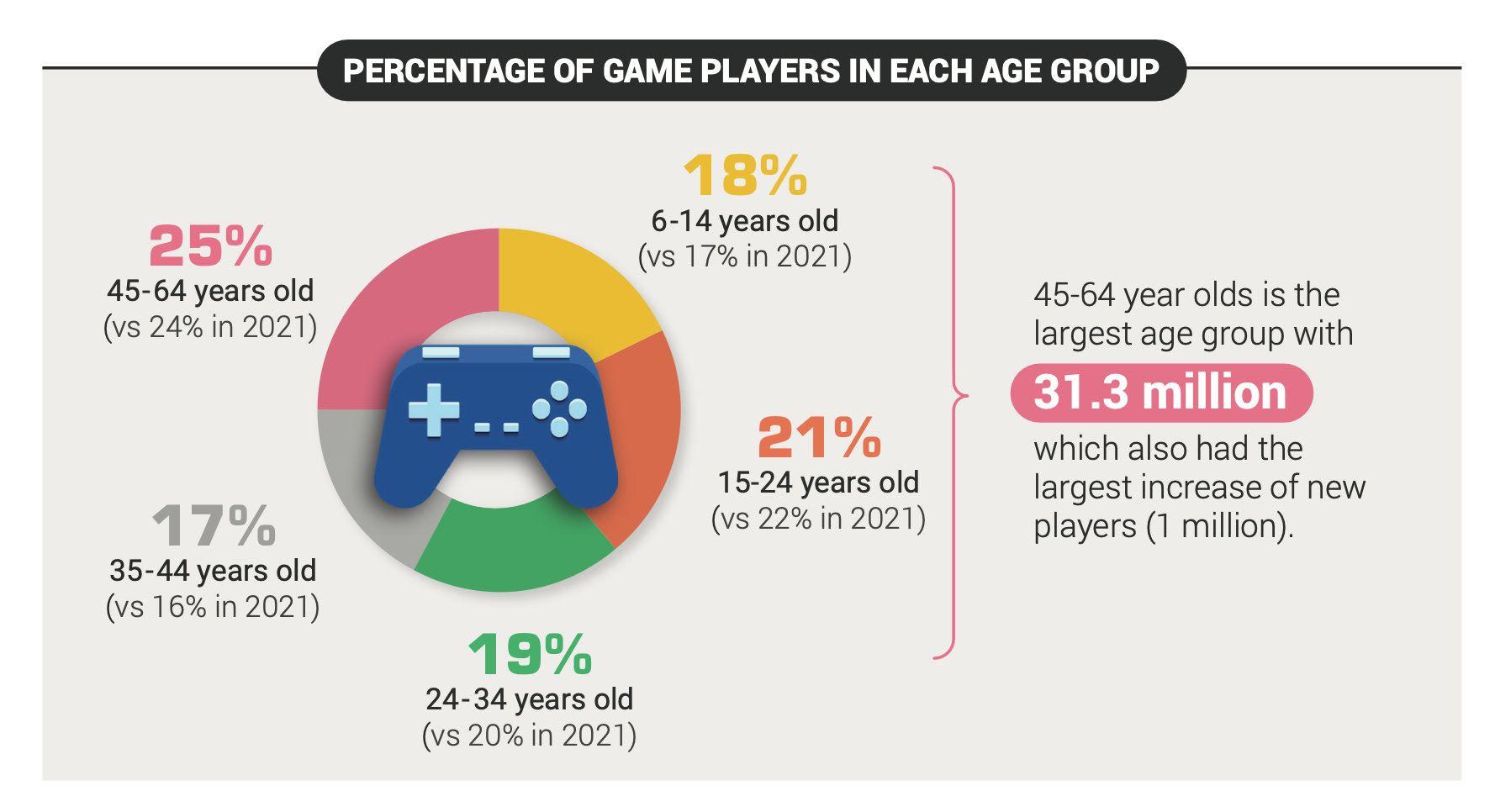
The 45-64 age bracket made up 25% of European gamers, the largest single demographic. That's followed by 15-24 (21%), 25-34 (19%), 6-14 (18%), and 35-44 (17%). The average European gamer is 32 years old, which kills the idea that gaming is primarily for kids.
3. Platform Preferences Revisited
Mobile gaming jumped to 68% adoption in 2022 from 63% in 2021. Consoles rose to 58% from 54%, while PC gaming dipped to 48% from 52%. The shift toward mobile is consistent with global trends, though Europe's console market remains stronger than most regions.
Final Thoughts
The 2022 numbers show an industry that's growing, diversifying its audience, and creating jobs. For web3 gaming, this data matters because it confirms there's a massive, engaged player base that spans age groups and platforms. The rise in digital sales aligns with blockchain's potential for true asset ownership, and the industry's resilience suggests room for new models that challenge traditional publishing. Web3 gaming has a real opportunity here if it can deliver experiences that feel like games first and blockchain experiments second.
For more detailed information, you can access the full report on the Video Games Europe website.
Disclaimer: This article is based on the data available up to September 2023, and any subsequent developments in the European gaming industry are not covered in this report.
Share this article and tag us on any of our socials to let us know.