
High On Life 2, developed by Squanch Games, introduces a new layer of gameplay by integrating skateboarding into its first-person shooter mechanics. The sequel, launching February 13, 2026, for Xbox Series X and Series S and Xbox on PC, also releases on day one with Game Pass Ultimate, including support for Xbox Play Anywhere. Chief Design Officer Erich Meyr discussed how the team approached combining skateboarding with traditional FPS gameplay while maintaining accessibility and flow.
Integrating Skateboarding into Gameplay
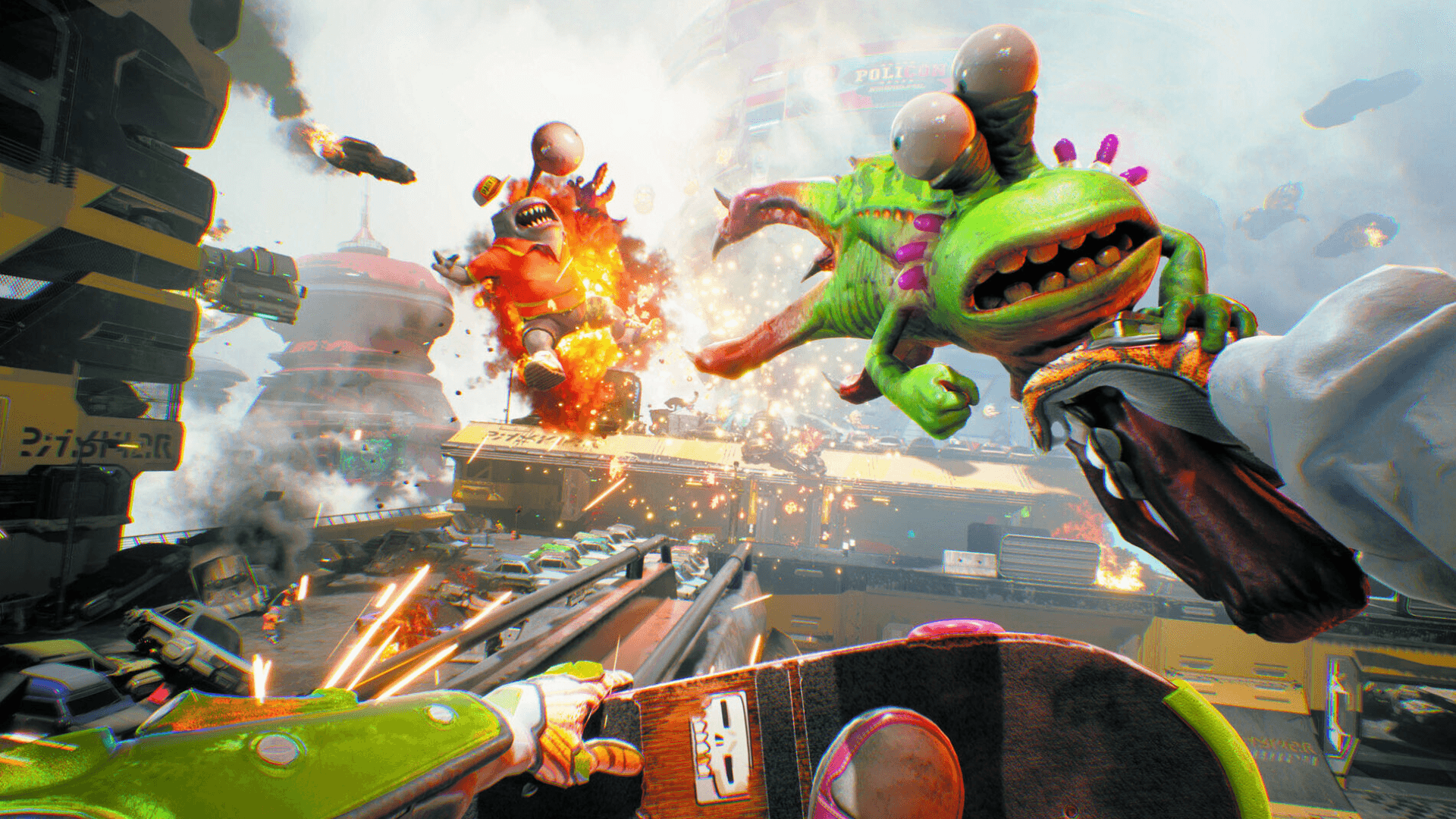
The idea for skateboarding in High On Life 2 traces back to concept sketches from the first game, where a bounty hunter was shown riding an alien creature. While that mechanic was not implemented initially, the concept evolved into a skateboard that serves both as a traversal tool and a combat extension. The skateboard effectively replaces the sprint mechanic, allowing players to navigate levels more quickly, grind rails, jump across obstacles, and even use the board as a projectile. This addition not only increases agility but also adds depth to combat encounters without disrupting the core FPS experience.
The design challenge was to balance speed and player control. Early iterations allowed independent aiming while skating, which created interesting combat possibilities but also led to collisions and navigation issues. The team ultimately locked player movement to the viewpoint while skating, with free look allowed during grinds. This approach ensured the skateboard supported both traversal and combat while maintaining a clear line of sight and spatial awareness.
Inspirations and Development Approach
The development team drew inspiration from both traditional skateboarding games and other action titles. While the Tony Hawk's franchise provided guidance for environmental features like half pipes, ramps, and grindable surfaces, its control system was not directly transferable to a first-person perspective. The team also leveraged experience from Sunset Overdrive, emphasizing fluid movement and environmental exploration, and incorporated ideas from indie titles such as Griptape Backbone and Echo Point Nova for first-person board visibility and alternate movement mechanics.
Designers focused on creating environments that naturally supported skating while integrating combat. Objects like ramps, rails, and vertical structures were placed to maintain flow without overwhelming players, and level layouts were tested to balance speed with narrative pacing. The skateboard’s presence encouraged experimentation, as players could discover advanced techniques and integrate them into combat without heavy tutorials.
Skateboarding in Combat and Exploration
Skateboarding in High On Life 2 affects both movement and combat scenarios. Grinding across rails or using environmental features allows players to reach otherwise inaccessible areas and engage enemies in creative ways. Boss encounters are designed around movement, with arenas that resemble skateparks and encourage continuous motion. The skateboard amplifies combat strategies by giving players mobility and offensive options, such as bouncing off enemies or using the board to attack directly.
Despite the added mobility, the core FPS mechanics remain intact. Weapons maintain responsiveness, and aim assist is calibrated to account for the increased speed. Story pacing is preserved through environmental design and narrative cues, ensuring that players experience key dialogue and events even while moving quickly across levels.
Focus on Player Discovery
High On Life 2 emphasizes organic learning over extensive tutorials. Players are introduced to essential skateboard mechanics early, while advanced features are discovered through play. This approach encourages exploration and experimentation, allowing the skateboard to feel like a natural extension of player movement. The development team noted that players quickly adapted to combining skating with shooting, demonstrating the mechanic’s seamless integration into the game’s structure.
Launch Information
High On Life 2 will be available on February 13, 2026, for Xbox Series X|S and Xbox on PC. It is available on day one with Game Pass Ultimate and supports Xbox Play Anywhere. Pre-ordering the game grants access to a cosmetic “I Pre-Ordered High On Life 2” hat for select weapons.
By introducing skateboarding as a key traversal and combat element, High On Life 2 expands the first-person shooter genre while preserving its humor, story, and core mechanics. The combination of speed, mobility, and combat innovation offers a fresh take on FPS design.
Make sure to check out our articles about top games to play in 2026:
Best Nintendo Switch Games for 2026
Best First-Person Shooters for 2026
Best PlayStation Indie Games for 2026
Best Multiplayer Games for 2026
Most Anticipated Games of 2026
Top Game Releases for January 2026
Frequently Asked Questions (FAQs)
What platforms is High On Life 2 available on?
High On Life 2 launches on Xbox Series X|S and Xbox on PC. It also supports Xbox Play Anywhere and is available on Game Pass Ultimate from day one.
How does skateboarding work in High On Life 2?
The skateboard replaces the sprint button, allowing players to move faster, grind rails, jump over obstacles, and use the board as a weapon. Movement is locked to the player’s viewpoint while skating, with free look enabled during grinds.
Do I need prior skateboarding game experience to enjoy it?
No. The game provides basic tutorials, but most mechanics are designed for discovery through play, making it accessible to players unfamiliar with skateboarding games.
Does skateboarding affect combat?
Yes. Players can integrate skating into combat, using environmental features for mobility and attacking enemies with the board directly. Boss encounters are also designed to take advantage of movement.
When is the official release date?
High On Life 2 launches on February 13, 2026. Pre-orders include a cosmetic in-game item.
Can the skateboard skip story elements?
Developers designed levels to guide players through key moments, ensuring narrative beats are not missed, even with the increased traversal speed.