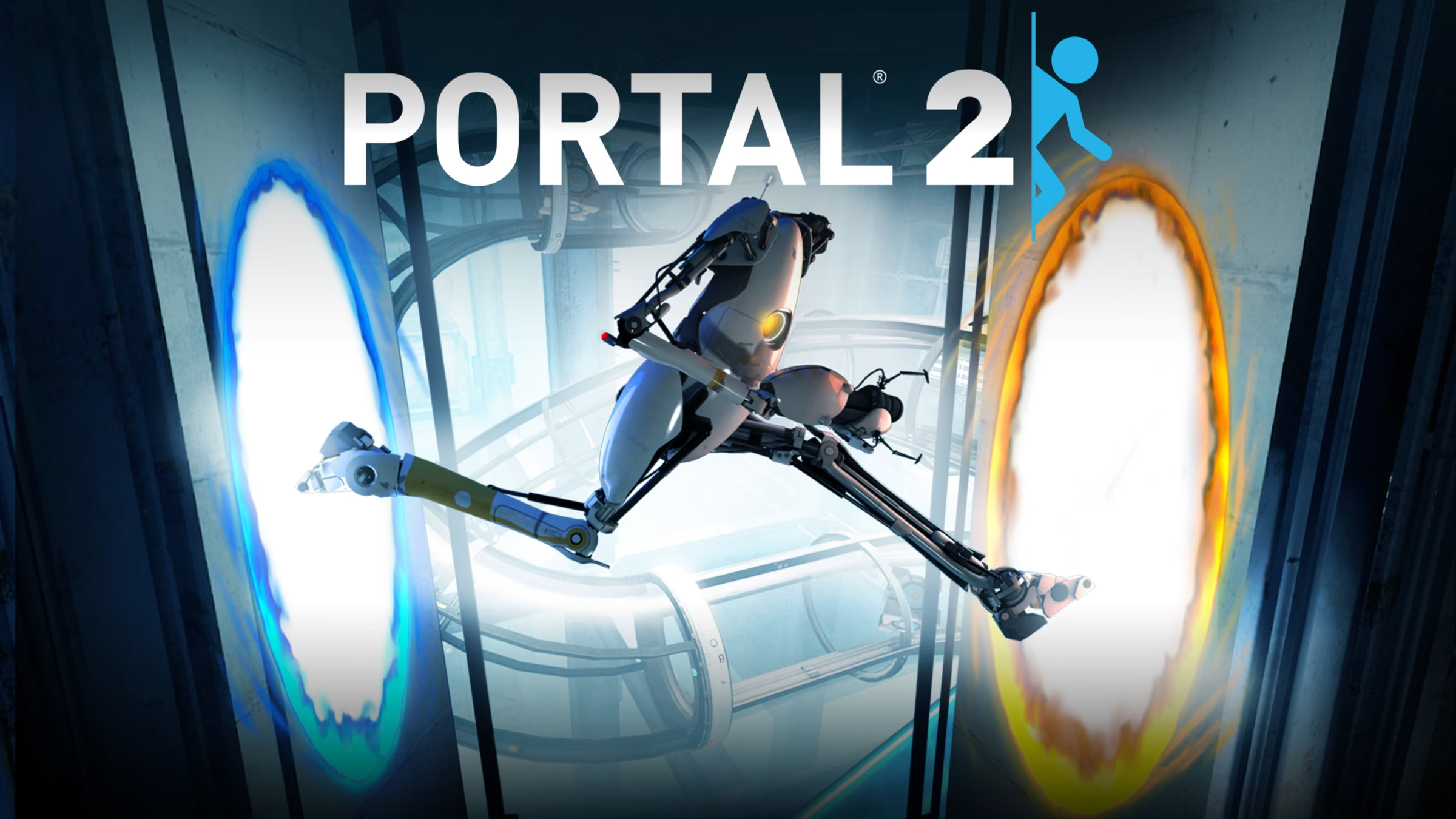


There's a specific kind of trap that catches the most successful people in creative industries. You build enough of a reputation that nobody around you wants to tell you your idea is bad. Gabe Newell hit that wall sometime around Portal 2, and his response was to walk away from hands-on game development entirely.
That's the story from Josh Weier, the project lead designer on Portal 2, who discussed what it was actually like working alongside Newell during development in a Kiwi Talkz podcast interview.
The yes-people problem that pushed Newell out
Weier's account is pretty specific. Newell genuinely wanted to be a creative contributor on projects, not just the guy signing off from the top floor. The problem was that his position made honest collaboration nearly impossible.
"He always wanted to be part of the team, but being Gabe and being in his position, that never really worked," Weier recalled. "Because people would be like, 'Whatever you say', and he was more like, 'No no no, I want to be part of the team and come up with ideas.' That was really hard for people, so I think there was a period where he stepped back and was like, 'Alright I guess I'm just not going to be able to interact with everyone that way.'"'
That's a remarkably self-aware decision. Most executives in his position would either not notice the dynamic or actively enjoy it. Newell apparently found it frustrating enough to remove himself from the equation.
What this means for how Valve actually operates
Newell is credited as a producer on Portal 2, which shipped in 2011. Look at his credits on Valve releases after that point and the pattern Weier describes becomes visible. His name appears in broad company credits rather than specific design or production roles. The hands-on work moved to other people.
This lines up with what most players already understood about Valve's structure: the studio operates without traditional management hierarchies, with teams forming organically around projects. That model works well when everyone can push back freely. It breaks down when one person carries enough institutional weight that disagreement feels professionally risky, even if nobody explicitly makes it so.
The comparison that comes to mind is George Lucas during the Star Wars prequel era, where the absence of genuine creative friction produced results that divided audiences. Newell seems to have recognized that dynamic before it became a problem, which is arguably the more impressive move.
The gap between wanting to collaborate and actually being able to
There's something genuinely unusual about this story. Newell didn't step back because he lost interest or because the business side of running Steam consumed his time (though it certainly did). He stepped back because the social dynamics of his own success made meaningful creative contribution impossible.
Weier's full comments in the Kiwi Talkz interview provide additional context about how this dynamic played out during Portal 2's development specifically.
What makes Valve's output interesting is that the games it does release, Half-Life: Alyx being the most recent major example, still carry a distinct creative identity. Whether that identity survives long-term without Newell in the room arguing for ideas, only to have everyone nod along, is a question the studio has apparently been living with for over a decade. For more on how game studios handle creative leadership, make sure to check out more: