
A sales expert has a clear message for developers eyeing that $70 price tag: unless your name is Nintendo, think twice.
Tom Kaczmarczyk, founder and CEO of business intelligence company IndieBI, made the case at a Digital Dragons Conference panel this week. His slide on the topic asked directly, "Is '$69.99' a good pricing strategy?" and answered itself in parentheses: “(not unless you're Nintendo).”
Why pricier games make more money, but not always more sales
Here's the thing: Kaczmarczyk's data does show a general trend where more expensive games generate higher overall revenue. His rule of thumb for clients is that if you're torn between two price points, defaulting to the higher one is probably the better call. More expensive games tend to make more money overall, he explained.
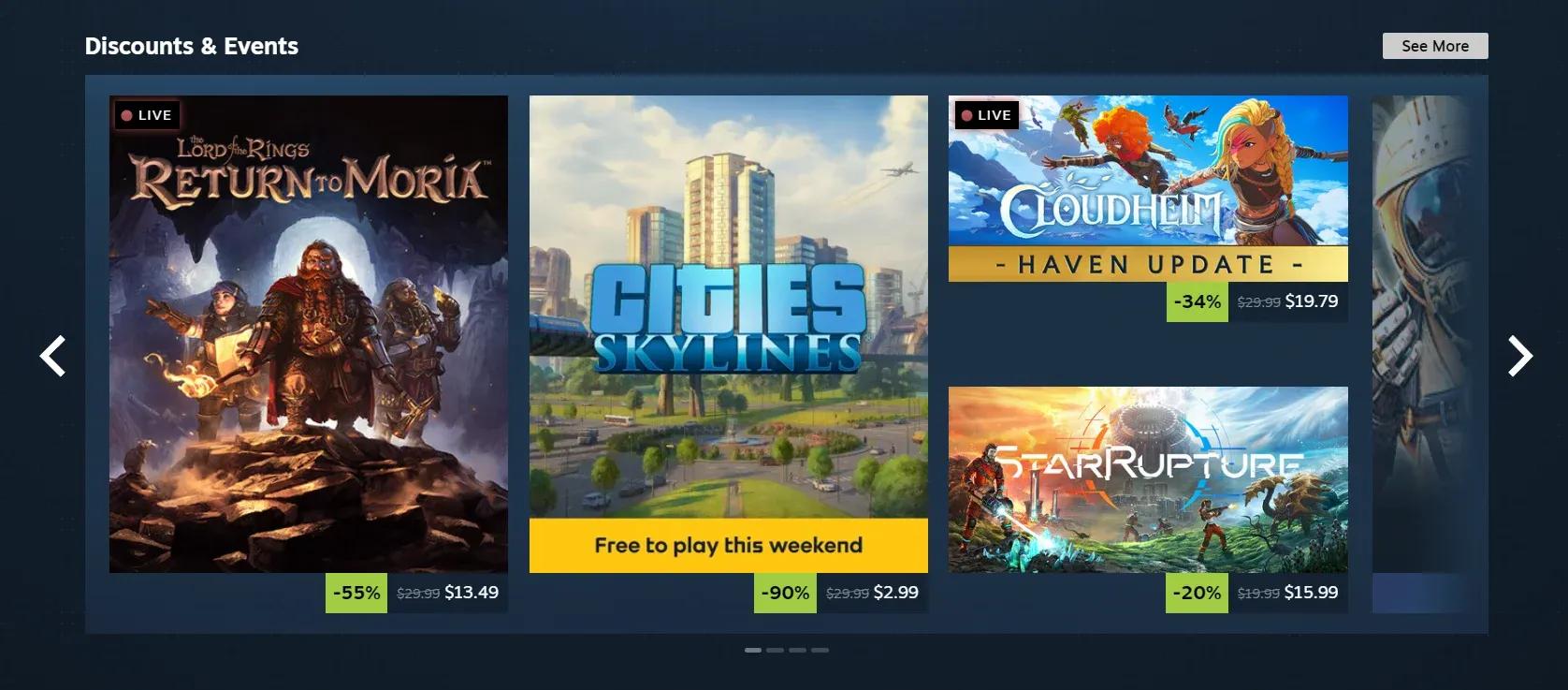
But the correlation is not clean. The pattern breaks down once discounts enter the picture. Higher-priced games that land on Steam sales rarely outcompete the platform's genuinely deep discount deals. Charge $70 at launch, slash it to $35 during a seasonal sale, and you haven't necessarily beaten the game that launched at $30 and stayed there.
What most players miss is that the $70 ceiling isn't really about what players are willing to pay at launch. It's about what happens six months later when the Steam sale hits and your game is competing against dozens of titles at similar discounted prices.
Steam pricing strategy options
The Nintendo exception that proves the rule
Nintendo has already pushed past $70 with several Switch 2 titles, and the backlash has been minimal compared to what any third-party developer would face for the same move. The reason is structural, not just brand loyalty.
Nintendo builds its own hardware, runs its own storefront, and almost never puts its games on meaningful sale. There is no Steam equivalent where Mario Kart World drops to $30 during a summer event. That closed ecosystem means Nintendo sets the price and the market has nowhere else to go. You want the game, you pay what Nintendo asks.
Every other developer is working inside an open market where players have hundreds of alternatives at any given price point. The customer, as Kaczmarczyk put it, "has many other options for spending their money on cheaper games."
Kaczmarczyk's advice applies specifically to developers without platform exclusivity. If your game is on Steam, Epic, or any multi-platform storefront, the $70-plus pricing logic that works for Nintendo simply does not transfer.
The discount strategy that actually works
So what does Kaczmarczyk actually recommend? Price the game at a premium, but build in a steeper discount curve over time. The logic is that a bigger nominal discount creates a stronger psychological pull during sales windows. A game dropping from $60 to $20 feels like a better deal than one dropping from $30 to $15, even if the final price is similar.
The key here is timing. Early in a game's lifecycle, while it still has cultural momentum and players are actively talking about it, those discount windows generate substantial revenue spikes. Wait too long and the game loses relevance before the sale can do its job.
This lines up with what analysts have been saying about mid-price launches too. Games like Clair Obscur: Expedition 33 launching at $50 generated strong word-of-mouth partly because players felt the price was fair relative to what they were getting. The perceived value equation matters as much as the raw number.
For players, the practical takeaway is that the $70 standard is far from settled outside of Nintendo's orbit. Developers who price aggressively without the brand equity to back it up are likely to either face immediate pushback or find themselves in a race to discount faster than they planned. Check out game reviews before committing to a full-price purchase, and if you're looking to understand which games are worth the premium, our gaming guides break down what's worth your money right now.