
Web3 gaming sits at the intersection of two massive trends: blockchain technology and an industry projected to hit $201 billion in 2023. The Konvoy Q2 2023 Gaming Industry Report breaks down where the money's flowing, which regions matter most, and what strategies actually work when you're building decentralized games. Here's what the data shows.
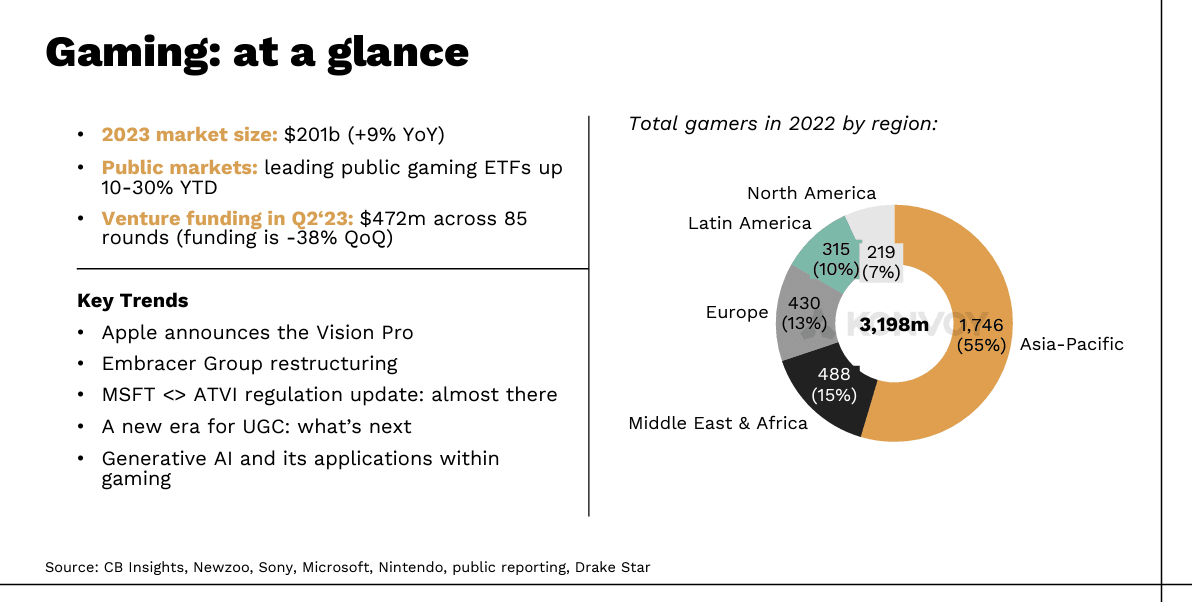
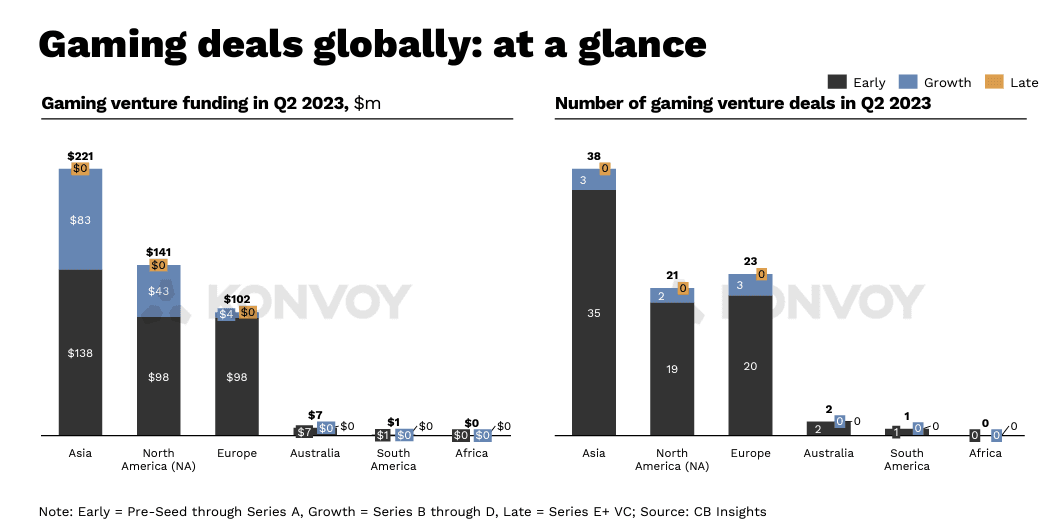
The gaming industry pulled in $472 million in VC funding across 85 deals during Q2 2023, marking a 9% year-over-year increase in total market size. Public gaming companies are sitting on $44.7 billion in cash and cash equivalents, keeping the M&A environment active. That kind of capital means studios have room to experiment with new models, and web3 mechanics are increasingly part of that experimentation.
Gaming market size predictions
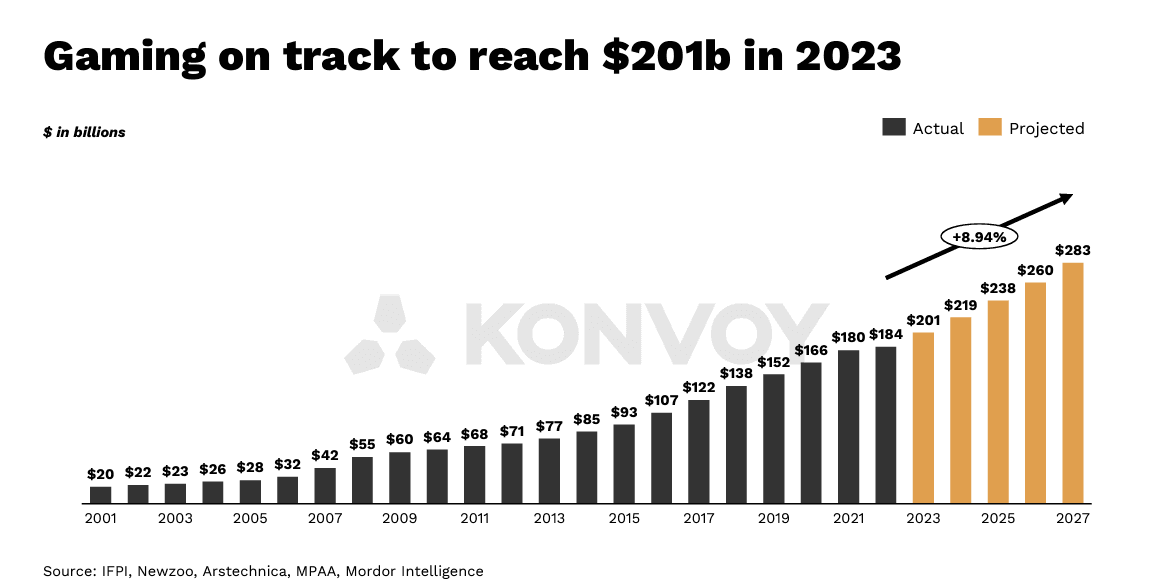
The $201 billion figure for 2023 represents steady growth, but the distribution of that growth matters more than the headline number. VC funding and deal volume show where investors see potential, and right now, that potential is concentrated in specific regions and platforms.
Web3 gaming and Asia: A lucrative combination
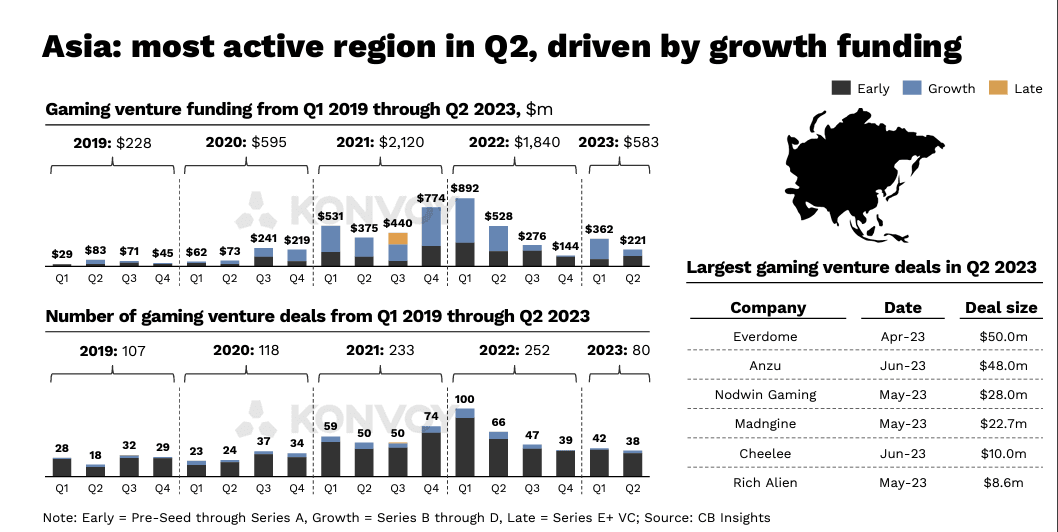
Asia received $221 million in venture funding during Q2 2023, split between $138 million for early-stage projects and $83 million for growth-stage companies. The region also led in deal volume with 38 transactions, more than any other market.
Asian gamers already use digital currencies and virtual assets at higher rates than Western audiences. That familiarity removes a major adoption barrier for web3 games. Studios targeting this demographic don't need to spend as much time explaining blockchain wallets or NFT ownership because the concepts are already normalized. The market's there, the infrastructure's there, and the cultural acceptance is there.
The mobile gaming revolution: Why web3 studios should be looking at mobile in Asia
Mobile gaming dominates in Asia. Smartphones are the primary gaming device for hundreds of millions of players, and that's not changing. Web3 studios building exclusively for PC or console are ignoring the platform where most of their potential audience actually plays.
Optimizing for mobile means more than just shrinking the UI. It means designing around shorter play sessions, touch controls, and the technical limitations of mid-range devices. But if you get it right, you're accessing a player base that's already comfortable with in-app purchases, gacha mechanics, and other monetization models that translate well to web3 economies.
AI-built games: The future for web3 studios
Generative AI can handle procedural content creation, world-building, and personalized player experiences at scale. For web3 studios working with smaller teams and tighter budgets, that's a significant advantage. AI-generated assets and environments let you build larger, more dynamic games without proportionally increasing development costs.
The technology also pairs naturally with decentralized ownership models. Procedurally generated items can be minted as unique NFTs, AI-driven NPCs can create emergent gameplay moments, and personalized content can adapt to individual player behavior. The combination of AI and blockchain mechanics creates experiences that feel more alive than static, pre-scripted content.
Web2 to web3: Established game studios enter the space
Ubisoft, Sega, and Square Enix are all testing web3 integrations with varying degrees of commitment. These studios bring established IP, existing fan bases, and production experience that most crypto-native studios lack. When a major publisher puts blockchain mechanics into a recognizable franchise, it legitimizes the technology for players who might otherwise dismiss it as a grift.
The challenge for these studios is implementation. Fans of traditional games are skeptical of NFTs and play-to-earn models, often for good reasons. Studios that treat web3 as a monetization layer bolted onto existing games tend to get backlash. The ones that succeed will integrate blockchain mechanics in ways that genuinely improve the player experience, whether that's through true item ownership, cross-game interoperability, or decentralized governance.
Final thoughts
The data points to a clear strategy for web3 game studios: build for mobile, target Asian markets, use AI to scale content creation, and learn from what established publishers are doing (both their successes and their mistakes). The gaming industry's growth creates space for experimentation, but only if studios focus on regions and platforms where players are already receptive to blockchain mechanics.
Share this article and tag us on any of our socials to let us know.
