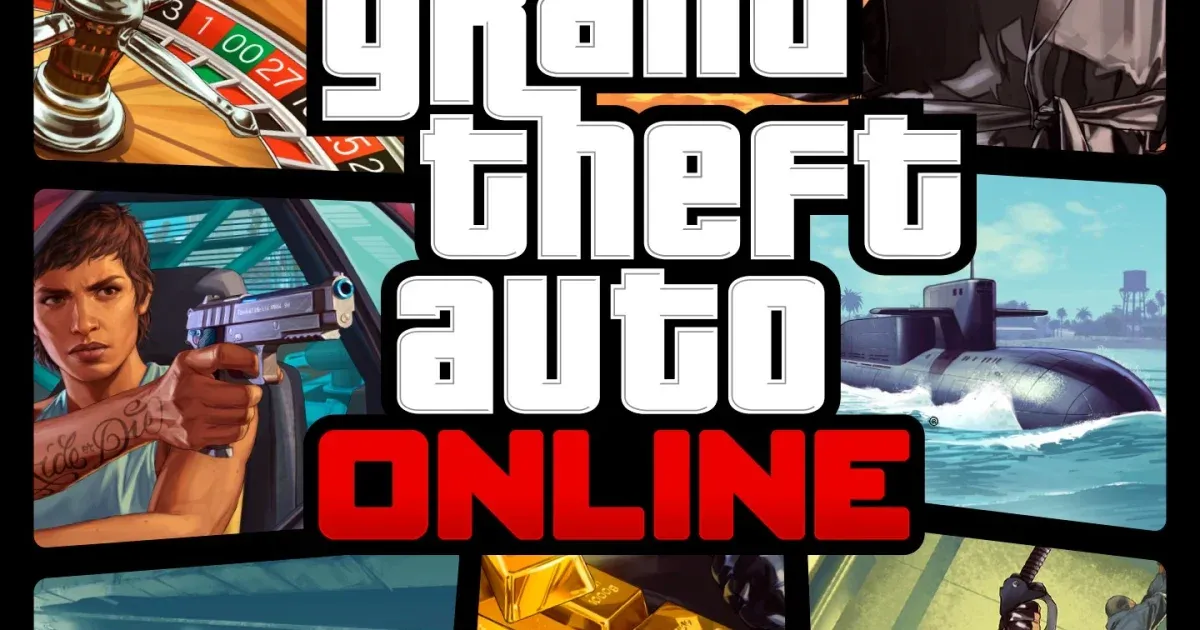


Leaked data from hacker group ShinyHunters dropped a number that should make every live-service developer's jaw hit the floor: Grand Theft Auto Online has averaged around $1.3 million per day over the last six months. Since launching in 2013, the game has generated approximately $5 billion in Shark Card sales alone. And with GTA 6 targeting a November release, Rockstar Games now faces a problem entirely of its own making.
The numbers that make this so awkward
Consider what $1.3 million per day means for a game that first appeared on Xbox 360 and PS3 more than a decade ago. Most live-service titles from that generation are either shuttered or limping along with minimal support. GTA Online is, by virtually every metric, stronger now than at any point in its history.
The latest major content drop, A Safehouse In The Hills, pulled back players who'd stepped away. It introduced luxury mansions, advanced the GTA V storyline by bringing back Michael from the single-player campaign, and landed well with the community. That caliber of update only works because Rockstar has spent 13 years gathering player data, building content libraries, and refining systems. GTA 6's multiplayer won't have any of that infrastructure on launch day.
Take-Two CEO Strauss Zelnick addressed the situation head-on during a February earnings call: "I have every reason to believe we'll continue to support GTA Online. There's a great community that loves it, that stays engaged."
That's not corporate spin. It's acknowledgment of a game that continues generating massive revenue.
Why GTA 6 starts at a structural disadvantage
GTA 6's multiplayer mode isn't just competing with another popular game. It's competing with a decade of built-up content, player commitment, and financial investment.
Current GTA Online players have garages packed with vehicles, closets filled with outfits collected over years, and in-game accounts holding hundreds of millions in cash. There's virtually no path where Rockstar lets any of that carry over. Allowing veteran players with massive wealth to enter a fresh economy would shatter pricing balance, alienate newcomers, and create unsolvable design problems. GTA 6's online component will almost certainly reset everyone to zero.
For players who've spent years constructing their GTA Online empire, that's a significant barrier.
The Payday comparison deserves attention. Payday 3 launched in 2023 carrying the reputation of a beloved predecessor and immediately cratered. As of April 2026, it pulls around 400 concurrent players on Steam, while Payday 2 consistently holds around 20,000. Kerbal Space Program 2 followed the same trajectory, bottoming out near 350 concurrent players while the original routinely maintains over 15,000. Neither franchise commanded GTA's audience size, but the lesson is consistent: live-service sequels don't automatically capture their predecessor's player base.
The coexistence problem Rockstar hasn't solved yet
Rockstar's track record with GTA Online provides a blueprint. When PS4 and Xbox One versions dropped in 2014, the PS3 and Xbox 360 versions kept getting updates alongside them. The older platforms didn't receive their last major content until 2015 and weren't discontinued until 2021, nearly six years after the generational shift. When PS5 and Xbox Series X/S versions arrived in 2022, last-gen support continued running in parallel. Right now, both generations still get identical updates.
Rockstar doesn't shut things down fast. That's established behavior, not an exception.
What this suggests for the coming years is a stretch where Rockstar actively runs two separate live-service games at once. That's not a comfortable operational position for any developer. The objective will be migrating enough players from GTA Online to GTA 6's multiplayer that the newer title hits a revenue benchmark satisfying Take-Two's investors. Once that threshold is crossed, GTA Online's long-term fate becomes genuinely uncertain. It could run for years on a smaller but dedicated audience, or Rockstar could begin phasing it out around 2028. The decision will hinge entirely on where the revenue flows.
There's also the FiveM variable. The PC roleplay community built around GTA V, now operating under Rockstar's ownership, represents another substantial segment of the player base that GTA 6 will eventually need to convert once the PC version ships. That's a separate, deeply established ecosystem that won't transition smoothly.
GTA 6 will almost certainly move enormous units at launch. The anticipation is legitimate and the franchise has global reach that few properties can rival. But moving copies and sustaining a live-service economy are fundamentally different challenges. The opening week won't be the difficult part. Maintaining player engagement six months later, when GTA Online is still sitting there fully stocked with content, is where the real pressure begins.
For more on what's coming to the GTA universe and the broader gaming world, check out the latest gaming news on our site.