
An NFT grants (partial) ownership of a digital item, letting holders trade and sell both inside and outside online marketplaces for cryptocurrency. Traditional gaming usually gives players limited usage rights — essentially renting items with restrictions. While ownership of digital assets sounds valuable, most current NFT implementations don't fully deliver on the technology's potential.

I haven't actually seen any that impressed me yet. Most integrations are still just different reiterations of fusing and burning.
The search for genuinely innovative NFT integrations that improve user experiences and collectibility continues. So far, NFT integrations have focused mainly on monetization. If NFTs can evolve to deliver substantial utility and richer experiences in games, it could transform the Web3 gaming sector and potentially draw traditional gamers into the space.
Scarcity alone isn't enough. An NFT needs to contribute to gameplay or offer meaningful utility. The current shortage of projects that genuinely stand out has influenced my decision not to purchase any gaming NFTs so far.
Several Web3 gaming studios are pushing the boundaries of digital ownership and introducing innovative utility for their token holders. This week, we examined these projects and how their NFTs serve as compelling examples of enhanced user experience and collectability.
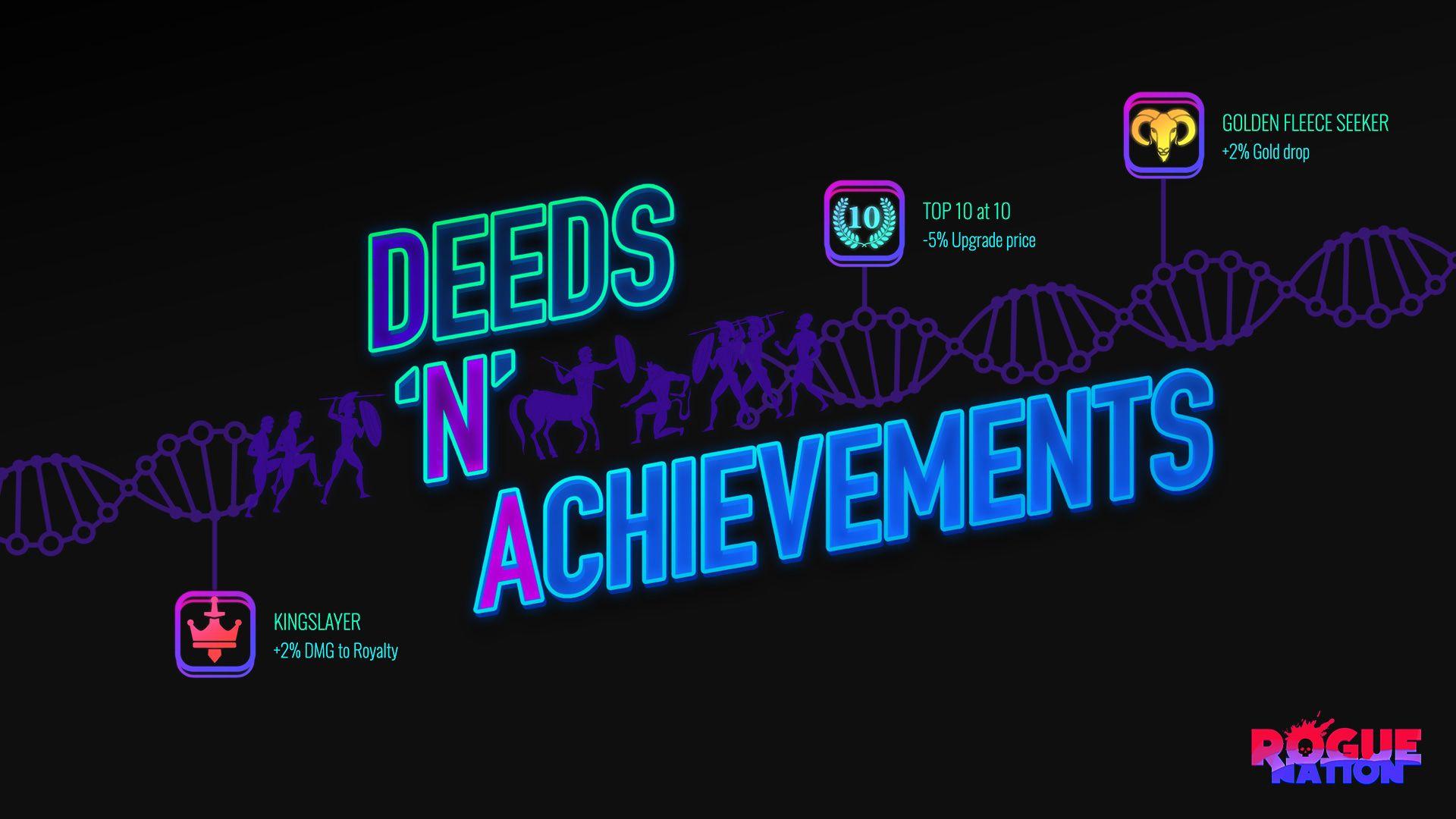
Rogue Nation's 'DnA system'
First up is Rogue Nation, a mobile roguelike using NFT characters and items that evolve through deeds and achievements (DnA). Each item starts unique and changes as players engage with the game. Achievements can alter a character's appearance and abilities, giving players "flexing rights" to showcase their accomplishments in social settings.
This system aims to create a more dynamic digital ownership experience, building deeper player attachment to their digital assets. The approach has potential to boost player engagement and retention.
Mintable Maps
Rogue Nation also introduces a distinctive approach involving players in generating additional in-game content. All game maps are procedurally generated, and players can mint these maps for replay, sale, or rental to other players. Rather than relying on user-generated content based on creative skills, unique content emerges organically through player engagement and luck as a byproduct of gameplay.
If they pair that with "you need to own/achieve x to be able to spawn y", then even better.
Doomsday's NFT Bunkers
The next NFT integration comes from Doomsday, an on-chain survival game. Doomsday's concept is best captured by this segment on their website:
The real-world location of bunkers is stored on-chain, with random impacts being calculated every 120 blocks (approximately 30 minutes) using a transparent, immutable on-chain method, each hit rendered on the tactical map. A reward of 0.01 ETH is paid to anyone who confirms an impact that hits a bunker.
Players can reinforce their bunkers, adding protection against enemy attacks. The costs for these reinforcements contribute to the prize pool. As the game unfolds, players can strategically choose to evacuate, receiving a portion of the ETH pool based on how long their bunker survived. The last surviving NFT bunker earns a share of ETH from mint fees and bunker reinforcement expenses.
Doomsday Bunker NFTs are woven into the gameplay mechanics, linking the value of digital assets to factors like supply, demand, luck, risk, and strategic decision-making within the game. Seeing similar mechanisms used in metagames for more advanced Web3 games will present intriguing use cases.

Unique NFT integrations often originate from on-chain games like Doomsday because they give developers greater freedom to experiment with dynamic and unconventional models. On-chain games cater to a specific audience of risk-takers and early adopters who embrace the excitement of these experiments, often prioritizing this thrill over extensive gameplay or conventional features.
NOR Aspect NFTs
'Aspect of The Nine' comprises a collection of nine series of NFTs. The first series started with 9 pieces. For each subsequent series, the supply increased exponentially by a factor of nine. This supply progression is illustrated below:
- Original nine: 9
- 2nd aspect of the nine: 81
- 3rd aspect of the nine: 729
The 'Aspect of The Nine' NFTs closest to the top offer the most significant utility. Higher aspects wield more substantial power and influence within NOR's economy compared to their later generational counterparts. Economic influence in NOR enables players to construct on land, sponsor players and teams, and acquire streaming rights.

NOR uses its NFTs to establish a clear division between economic involvement and gameplay, ensuring the two remain distinct and that gameplay stays equitable, free from any advantages stemming from economic factors. Similar to the concept of 'metagames' reminiscent of professional sports where all financial aspects are managed around and external to the actual games, safeguarding gameplay from undue economic influences.
This NFT collection also takes an unconventional approach to its artistic direction and the symbolism embedded in these digital assets. In the initial generation, there are 9 distinct personalities such as The Inventor, The Artist, and The Architect, with each successive generation introducing additional aspects or personality traits into the mix.
This gives room for people to self-identify with each given personality type and acts as a highly interesting version of an access pass to the ecosystem and to be a citizen of the world.
The art direction of this collection is marked by its unique and high-quality animations, which convey these distinct personalities through shapes and colors. The fusion of art and personality traits has potential to forge a stronger emotional bond between the holder and their NFT, particularly if they can resonate with a specific personality type.
Gran Saga: Unlimited Idol Tokens

A few months back, Metapixel unveiled the 'Idol and Fan Program' as part of their second community playtest for Gran Saga: Unlimited. At the heart of this program lies the innovative 'Idol Tokens,' powered by Soulbound Token Technology (SBTs). This NFT integration enabled invited creators (Idols) to bring in a select group of players (Fans) for participation, all while granting creators unique avenues to interact with their fans through distinctive in-game elements.
Metapixel's primary objective is to empower creators with the means to establish deeper connections with their followers and build robust MMORPG-passionate communities within Gran Saga, enhancing engagement and retention. Creators have suggested implementing additional features like idol-specific rewards, creator and community-generated content, and on-chain reputation systems.
I believe that the future of marketing is tighter integration of content creators with games.
Despite rumors circulating about the organization potentially shutting down, its pioneering SBT integration offers a distinctive blueprint for how creators and fans can forge deeper connections and mutually benefit, given the right incentives. This collaborative model, with potential for further innovation in various games and features, is one to watch for ongoing development and refinement.
Wreck League: NFTs and IAPs
Wreck League offers an inventive illustration of how NFTs can introduce fresh monetization approaches bridging the worlds of Web2 and Web3. Seen in its approach to building a playable roster. In contrast to traditional fighting games where players select characters from a predefined roster, Wreck League (Web3) challenges players to construct their fighters. Each Mech in the game comprises ten distinct NFT parts, which can be combined to create a single Mech (or 'Mega') NFT. These assembled Mechs can then be sold as in-app purchases (IAPs) to players of the free-to-play (F2P) version of the game, with owners receiving a 50% share of the revenue.
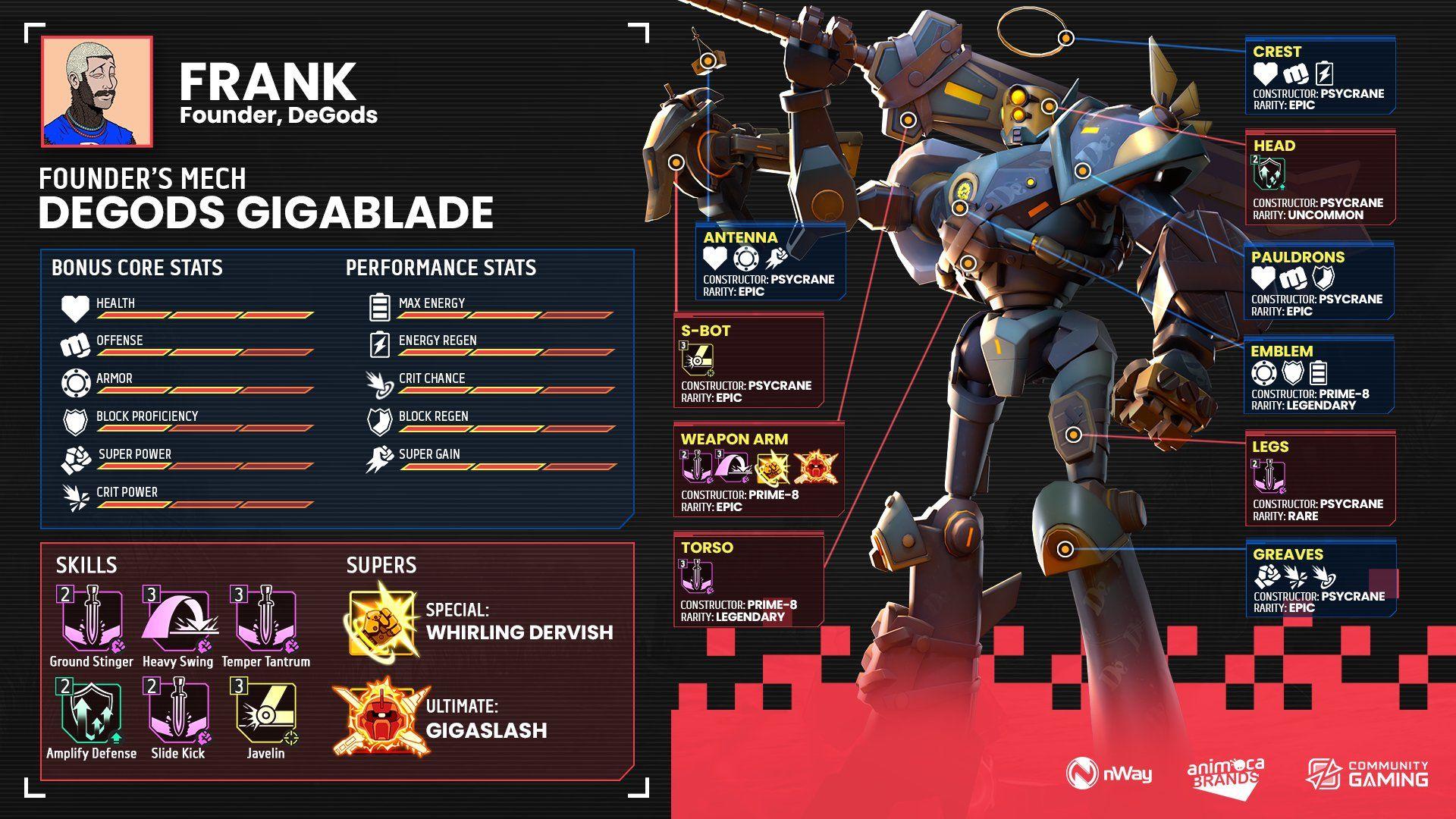
Players who understand the game's 'meta' and develop knowledge of various parts and combinations will gain a competitive advantage by identifying optimal builds.
nWay revealed in one of their recent interviews their intention to establish a resilient economic framework for the game, similar to established motorsports. If you look at motorsports, there are people who own the cars, people who give the edge in how the cars perform, professional drivers, team owners, arena owners, and tournament owners. Many different types of revenue generation happen, and there are many different types of stakeholders in the ecosystem.
Wreck League's objective is to build a network of diverse stakeholders within the game, facilitating various revenue streams and enabling the growth of a franchise built around the brand. In practice, this entails:
- Skilled players collaborating with top Mech creators.
- Arena owners partnering with tournament organizers to host events.
- Team owners scout for the most proficient players to build competitive teams.
While this revenue model remains largely untested, it offers valuable insights into the evolving landscape of Web3 monetization models.
Skyweaver Optimized Marketplace
Lastly, consider Skyweaver, a trading card game (TCG) where NFTs may not directly enhance gameplay but significantly improve marketplace functionality. Skyweaver cards are semi-fungible tokens (SFTs) utilizing the ERC-1155 protocol, with each card having its own liquidity pool on Niftyswap.

The studio's approach enhances the trading experience, particularly when dealing with bulk purchases or sales, enabling players to acquire entire decks in a single transaction. Given that TCGs revolve around individual cards (in this case, NFTs) as the core of gameplay, trading naturally becomes a central aspect. Players also have the option to retain or obtain cards to provide liquidity within the ecosystem.
The game introduces the ability to exchange silver cards for Conquest Mode tickets, which are used in reward events. Currently, these tickets can be acquired through in-app purchases (IAPs) at a discounted rate, priced at $1.5 USDC or any silver card. If silver card prices fall below $1.5 USDC, they are automatically purchased and burned on behalf of users, eliminating the need for users to navigate the marketplace.

In a genre where trading is integral, often involving substantial quantities of NFTs, ensuring a smooth marketplace experience proves necessary.
Final Thoughts
The gaming industry's exploration of NFT integration is an ongoing journey marked by both potential and challenges. While the promise of NFTs in enhancing user experiences, collectibility, and innovative monetization models is evident, the road to fully realizing this potential remains under construction.
Examples discussed in this article include:
- Rogue Nation's dynamic item evolution and mintable map system
- Doomsday's intricate gameplay integration of NFTs
- NOR's economic separation and distinct art direction
- Metapixel's creator-fan engagement SBTs
- Wreck League's unique character creation system with an innovative monetization model
- Skyweaver's optimized marketplace
They exemplify the diverse approaches and experiments underway to unlock the true value of NFTs in gaming. As the industry continues to evolve and learn from these experiences, NFTs have potential to reshape gaming by offering unique utility and transforming player engagement.
