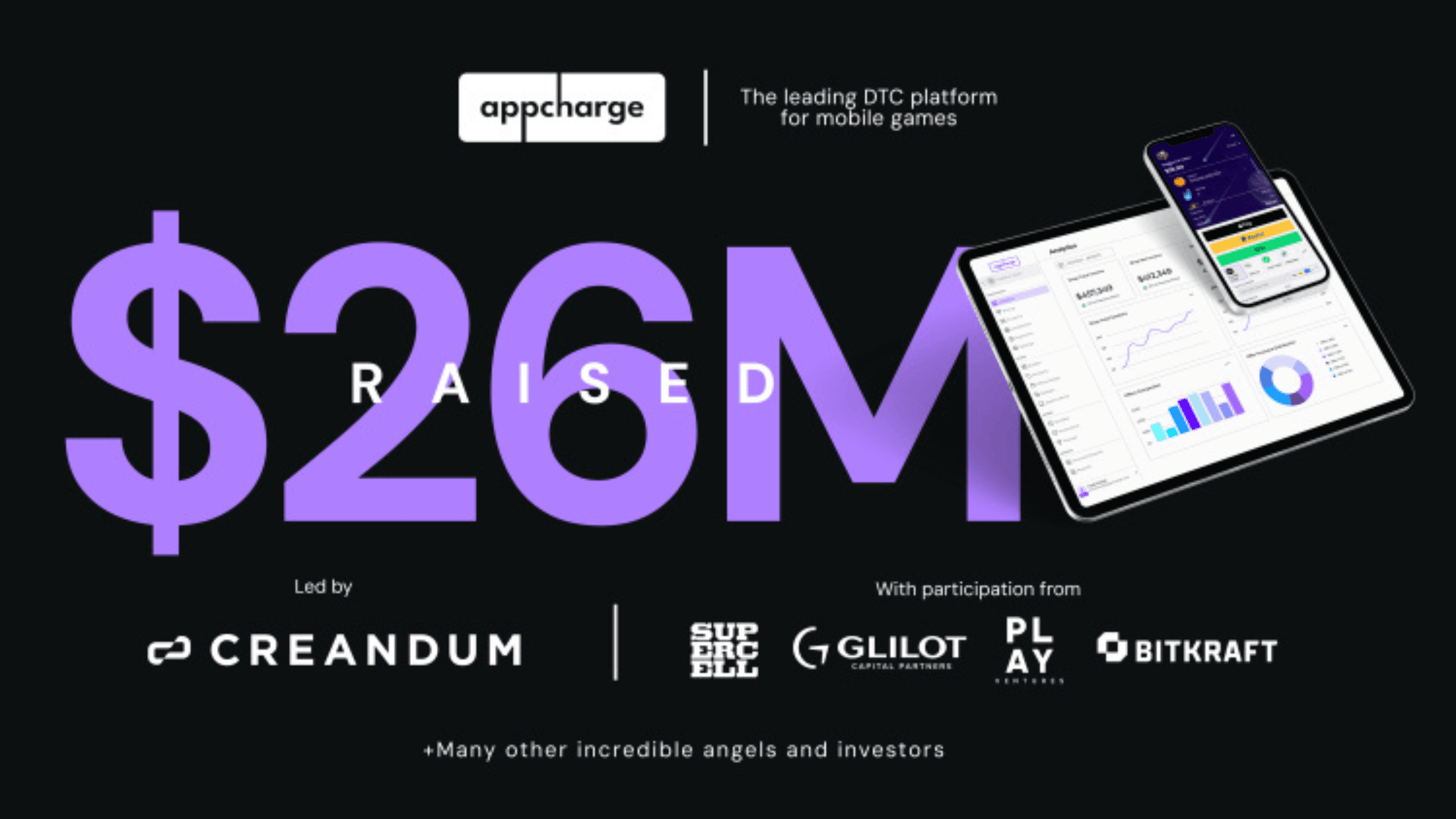


During Slush 2025 in Helsinki, AppCharge co-founders Maor Sason and Roei Barassi opened with an unexpected angle: what wasn't working, and where did they need to improve? For a company moving serious volume in gaming commerce, that level of self-criticism stood out. AppCharge has built momentum steadily rather than overnight, and the founders' habit of revisiting hard calls has defined their approach to a gaming monetization platform now handling over half a billion dollars in annual transactions.
AppCharge went live in 2022 and has since grown to nearly 120 employees spread across seven regions. Its traction in the direct-to-consumer gaming market has drawn interest from both studios and investors, but the trajectory wasn't as clean as it looks from the outside.
The founders walked through the early obstacles that shaped their pace — failed fundraising rounds, learning to navigate co-founder disagreements, and figuring out how to maintain a functional partnership under pressure.

Use code TRYHARD33 at checkout to redeem this offer before code expires again.
Get 33% Off GAMES+ Subscription
Rebuilding after rejection
AppCharge's funding timeline looks fast when you glance at the milestones, but the company's first attempt at a Series A ended with rejections across the board. Instead of immediately circling back, the team redirected energy into product metrics, team structure, and operational fundamentals.
When they re-entered the fundraising cycle months later, they brought stronger growth data and a sharper understanding of where they stood in the market. The founders said investors responded most to market size, competitive positioning, operational speed, and timing. A key validation moment came when a major studio replaced its entire in-house web store team with AppCharge after running a proof of concept.
The platform delivered better results at lower cost — the kind of evidence investors look for when evaluating gaming-commerce infrastructure. The founders' advice for others: lock down a lead investor before opening a round, don't fundraise too early, and set clear targets upfront. They noted that bouncing back from an initial rejection is especially tough in the competitive gaming and web3 commerce space.
Building a moat in a crowded commerce landscape
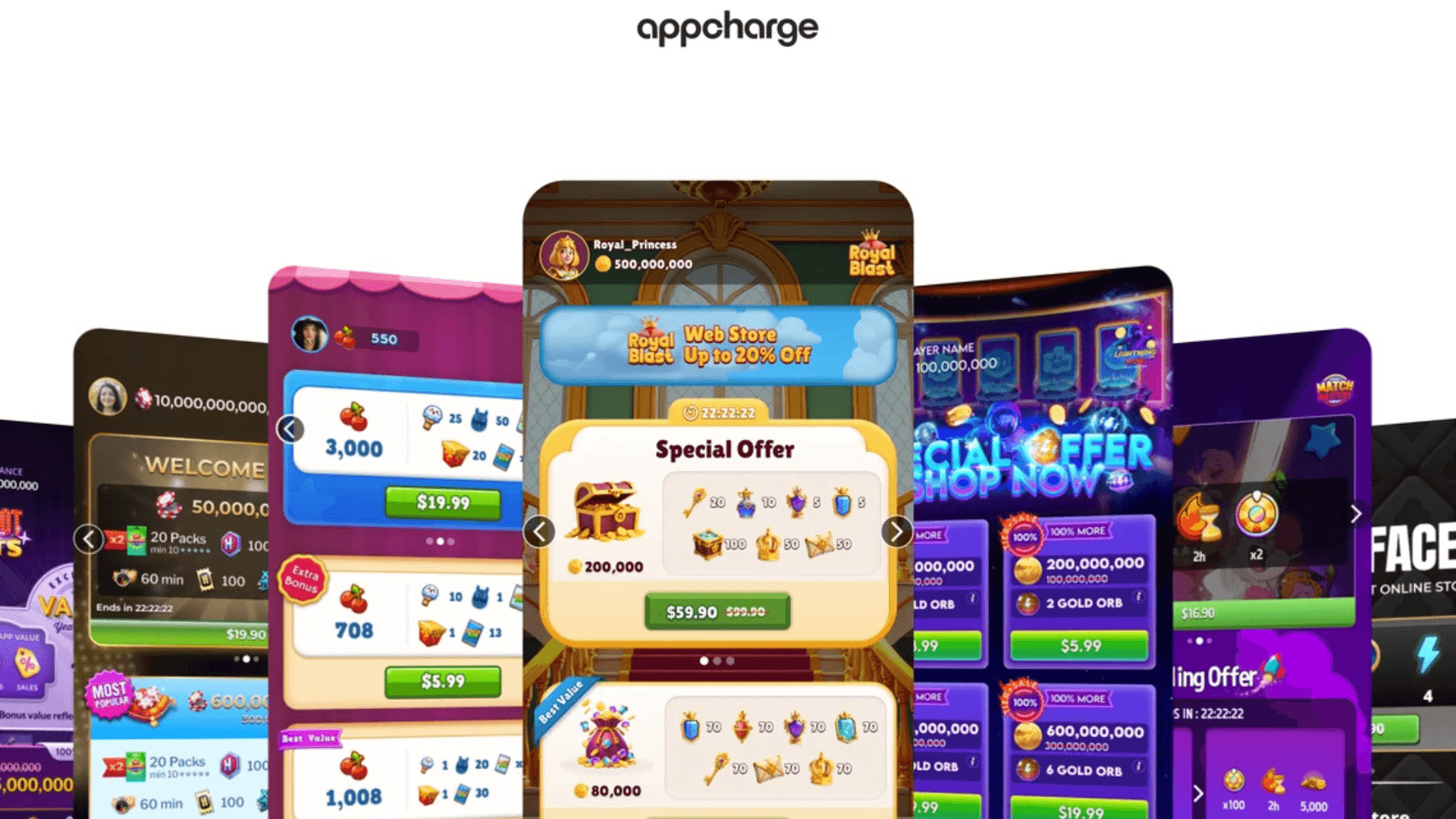
With new web-based store providers showing up regularly in the gaming ecosystem, AppCharge has had to clarify what sets its platform apart. Many studios think a web store is just a front-end add-on. The founders argue it's closer to building a secondary game experience that has to merge e-commerce logic, scalable infrastructure, and continuous optimization.
AppCharge's core advantage comes from specialized e-commerce knowledge, engineering focus, and consistent service quality. The company runs engineering teams dedicated entirely to gaming commerce infrastructure — something most studios can't prioritize without pulling resources away from core game development. The opportunity cost of internal maintenance, the founders said, often exceeds the cost of working with an external partner.
This positioning has helped the team frame AppCharge as a long-term partner rather than a simple vendor. For studios, the comparison usually boils down to performance, reliability, and cost. When one platform consistently improves storefront output while cutting the operational load, the choice becomes obvious.
The human side of hypergrowth
Beyond product and fundraising, the co-founders talked about the internal strain that comes with building a company that scales quickly. Sason and Barassi have known each other for over a decade, and while the friendship built trust, it didn't eliminate conflict. Their first year operating together was described as particularly rough as they figured out how to work together, handle disagreements, and bring in the right people.
The challenge of balancing personal life and company growth came up as a central theme. Barassi, who has two young daughters, described a structured routine that lets him be present with his family while still putting in long hours at the company. He emphasized how hard it is to maintain both commitments, especially when startup demands spike.
Sason talked about obsession as a trait, noting that the intensity shown at work often shows up in other parts of life too. The founders see constructive disagreement as a necessary part of their collaboration. They described a process of recognizing when conversations get emotional and taking space before revisiting decisions to keep discussions productive.
What their journey says about startup realities
AppCharge's growth reflects a broader pattern in the gaming and web3 commerce sectors. Companies that seem to scale quickly often spend years building internal systems, refining partnerships, and strengthening co-founder communication. The public milestones rarely capture the daily operational pressure or the emotional cost of sustaining momentum during uncertain stretches.
The founders' experience suggests that durability depends on having reliable structures for handling conflict, distributing responsibilities, and evaluating decisions without personal friction. Their approach has helped them navigate early failures, operational shifts, and rapid hiring while staying aligned on long-term goals.
AppCharge's story isn't about sudden success but about steady improvement, consistent product focus, and a partnership that evolved through pressure rather than avoiding it. In a fast-moving gaming economy where competition is constant, these internal systems may matter as much as any product feature or market position.
Source: Deconstructor of Fun
Frequently Asked Questions (FAQs)
What does AppCharge do?
AppCharge is a direct-to-consumer monetization platform that builds and manages web-based stores for gaming studios, supporting transactions and storefront performance at scale.
Why is AppCharge relevant in the gaming and web3 commerce space?
The company provides infrastructure that helps studios optimize revenue while reducing the cost and engineering load of managing their own web stores.
How fast has AppCharge grown?
Since launching in 2022, AppCharge has expanded to nearly 120 employees across seven global locations and now processes more than half a billion dollars in annual transactions.
What challenges did the founders face early on?
Early fundraising efforts failed, prompting the founders to rebuild metrics, strengthen their team, and refine their market strategy before trying again.
What is AppCharge's competitive moat?
Its moat combines specialized e-commerce expertise, a dedicated engineering focus, and stable long-term service delivery that many studios cannot replicate internally.
How do the co-founders manage conflict?
They rely on structured communication, respectful discussion, and a system that allows for temporary pauses when conversations become overly emotional.
Why do studios choose AppCharge over internal teams?
AppCharge often delivers higher performance at lower cost, while allowing studios to keep their engineering teams focused on core game development rather than storefront maintenance.