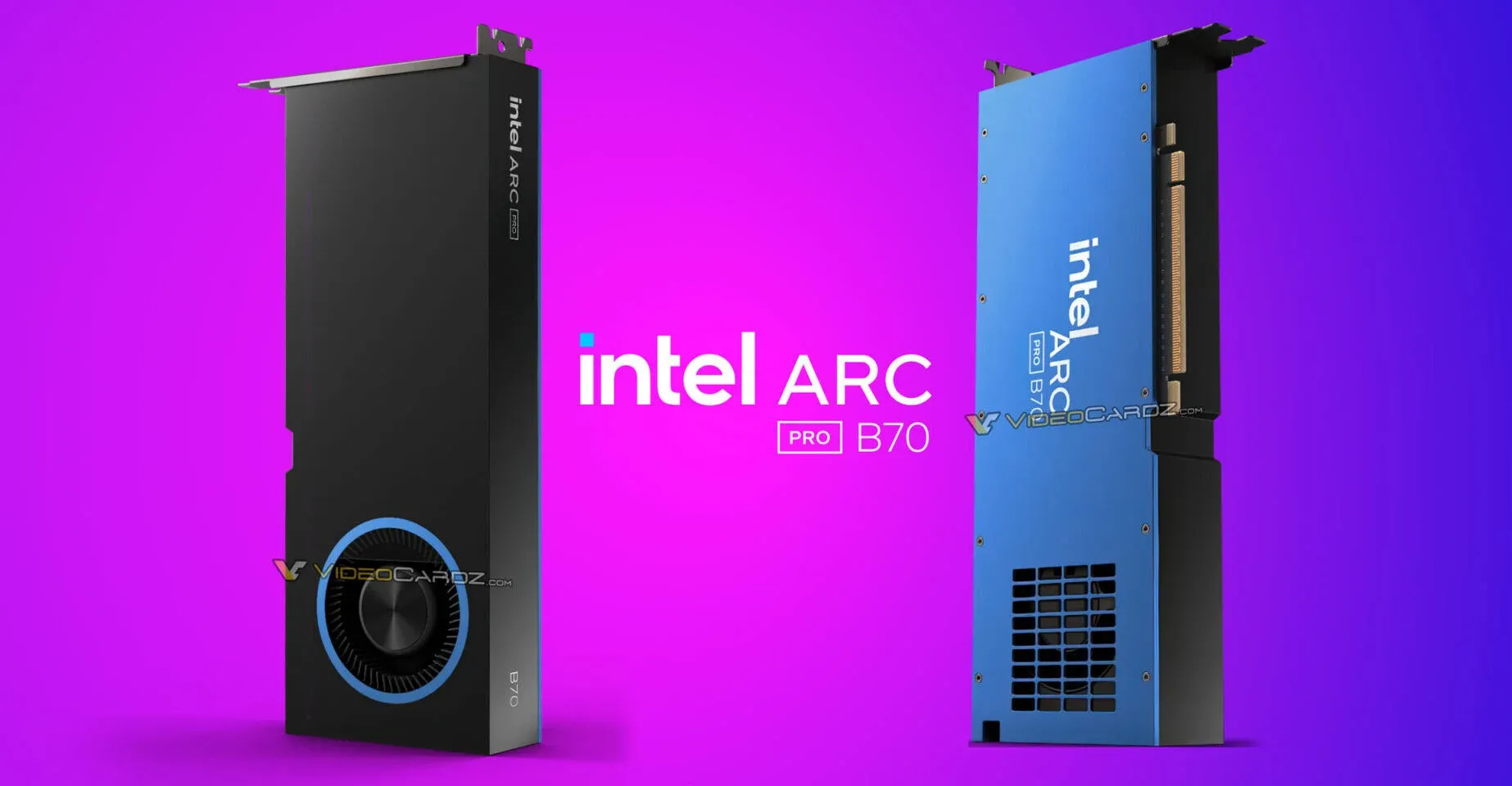

The Intel Arc Pro B70 is basically the GPU that Arc fans have been waiting years for. Big chip, serious specs, and now, officially, gaming support. The catch? You probably can't buy one, and even if you could, it costs nearly $1,000.
Intel just dropped Arc Graphics Driver 32.0.101.8629 WHQL, and buried in the release notes is something worth paying attention to: the driver now includes official "Gaming Support" for both the Arc Pro B70 and the Arc Pro B65. As PC Gamer reports, this is the most notable update in the entire driver dump, and the irony is hard to miss.
The GPU that was supposed to be the Arc B770
Here's the thing: the G31 chip powering the Arc Pro B70 was almost certainly designed with gaming in mind. For a long time, rumors pointed to an Intel Arc B770 consumer card built around G31. That card never happened. By the time Intel was ready to ship G31, the AI hardware gold rush had fundamentally changed the calculus.
Instead of a mid-to-high-end gaming GPU, Intel pivoted G31 into a workstation card loaded with 32 GB of VRAM and priced near $1,000. The pitch is squarely at developers and researchers running local AI models, not PC gamers shopping for an upgrade. For context, the Nvidia RTX Pro 4000 Blackwell runs around $1,800 and offers only 24 GB of memory, so the Arc Pro B70 does make a certain kind of sense as an AI workstation card.
The gaming GPU community watched this play out and got nothing.
What the driver actually adds
On paper, G31 is a serious chip. It packs 32 Xe2 GPU cores running over a 256-bit memory bus, compared to the 20 Xe2 cores and 192-bit bus in the Arc B580's G21 GPU. That works out to over 50% more theoretical compute performance.
danger
Even with that extra headroom, independent analysis suggests the RTX 5070 still averages around 85% faster across a typical game suite than the Arc B580. G31 closing that gap entirely was always optimistic.
The G31 die also measures 378 mm2, noticeably larger than the 263 mm2 GB205 chip inside the RTX 5070. Bigger die, more expensive to manufacture, and still slower in games. That math is exactly why the Arc B770 never made it to retail shelves.
As for the gaming driver work itself, a chunk of the optimization effort likely overlaps with existing work done for the Arc B580 and other Xe2-based cards. But a chip this much larger than G21 almost certainly needed dedicated tuning to run games properly, which is presumably what Intel has now delivered.
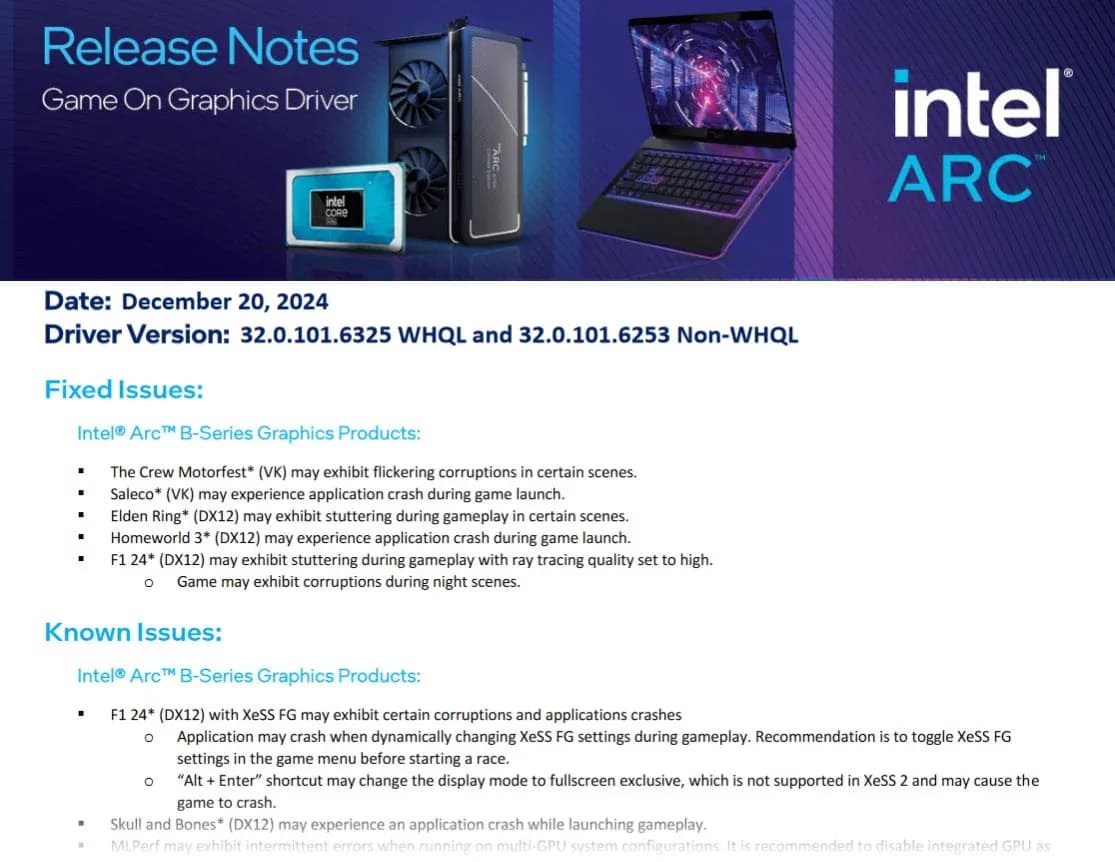
Arc driver 32.0.101.8629 WHQL
Who actually benefits from this
The honest answer is a pretty small group. The Arc Pro B70 is an enterprise and workstation product. It is not sold through typical consumer GPU channels, and its price point puts it well outside the range of anyone building a gaming rig.
That said, gaming support in the driver does matter for the people who have one. AI researchers and developers who also want to run games on their workstation no longer have to deal with a card that technically works but has no proper gaming driver backing it. The Overclock3D breakdown of the driver release confirms this is a WHQL-certified update, which means it has gone through Microsoft's full validation process.
For Arc fans watching from the sidelines, this update is more bittersweet than exciting. The G31 chip is real, it works, and it now officially runs games. It just lives in a product category most people will never touch.
Benchmarks from anyone who manages to get hands-on time with the Arc Pro B70 in a gaming context should start surfacing soon, and those numbers will finally answer the question Arc enthusiasts have been sitting with for years. Make sure to check out more: