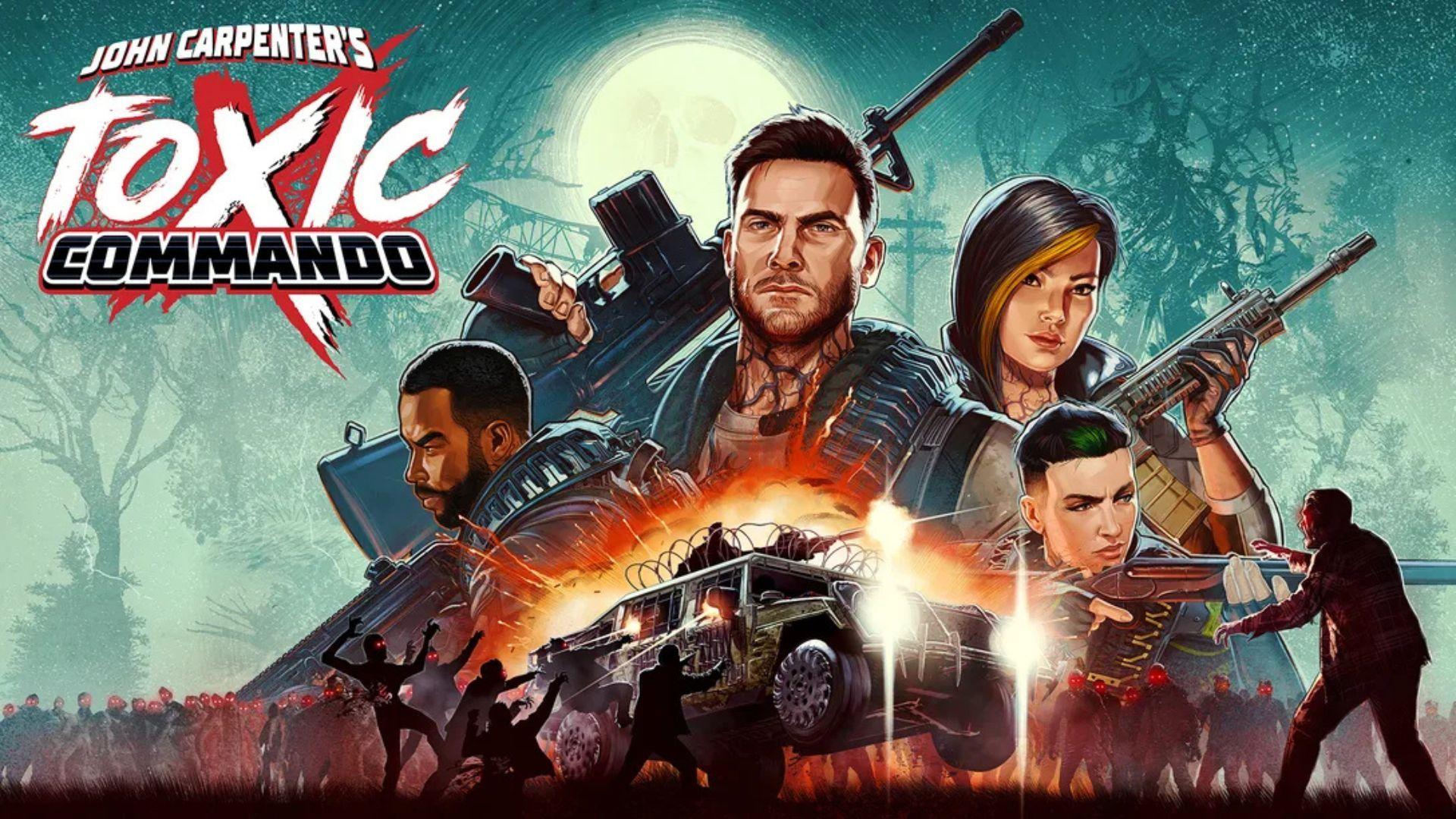

John Carpenter’s Toxic Commando is set to launch on March 12, bringing a cooperative zombie shooter that blends large-scale horde combat with heavy vehicle gameplay. Developed by Saber Interactive and published by Focus Entertainment, the game aims to stand apart from traditional corridor shooters by placing mobility, teamwork, and open environments at the center of its design.
Rather than leaning only on gunplay, Toxic Commando encourages players to think about how they move through its maps, when to stay behind the wheel, and when to step out on foot. The result is a co-op experience shaped as much by positioning and traversal as it is by shooting.

A Co-op Shooter Built Around Mobility
At its core, John Carpenter’s Toxic Commando is about surviving massive enemy hordes while navigating wide, open areas. The original concept came from a simple idea: combine the swarm pressure of World War Z with the terrain-focused traversal of vehicle-driven games. That approach led to a structure where players are not confined to narrow levels, but instead move across environments using trucks, armored transports, and other combat-ready vehicles.
Vehicles are not just transportation. They provide protection, mounted weapons, and faster access to objectives. At the same time, the design avoids locking players into driving. Squads can leave vehicles behind to explore, clear areas on foot, or approach encounters using traditional first-person shooter mechanics. This flexibility is meant to keep pacing varied, especially during longer missions.
How Toxic Commando Handles Combat Flow
Balancing shooting and driving was a major part of the project’s development. Saber Interactive structured encounters so that vehicles feel useful without becoming mandatory. Staying in a truck might offer safety and firepower, but tight spaces, indoor areas, and certain objectives work better when players dismount and fight directly.
This back-and-forth creates a rhythm that is different from standard co-op shooters. Players are constantly deciding whether mobility, protection, or precision matters more in a given situation. The goal is to ensure that both vehicle combat and on-foot gunplay feel equally supported throughout a mission.
Nonlinear Missions Encourage Team Decisions
Unlike linear shooters that funnel squads from point A to point B, Toxic Commando uses nonlinear mission structures. Each level contains multiple objectives that can be tackled in different orders. Teams can stay together for safety or split up to handle tasks in parallel, depending on their confidence and loadouts.
Each run also varies based on available vehicles, character classes, and equipment. This forces players to communicate and adapt, rather than relying on a single fixed strategy. It also helps give repeat sessions a different feel, as squad composition and available tools shape how encounters play out.
The emphasis on cooperation goes beyond simple revive mechanics. Success often depends on how well players coordinate movement, choose roles, and decide when to engage or reposition.
Creating a Near-Future Action-Horror Setting
The world of John Carpenter’s Toxic Commando is set in a recognizable near future. Technology is slightly advanced but still grounded, allowing the game to introduce creative tools without disconnecting from reality. The environments are designed to feel familiar enough that traversal and combat remain intuitive.
Tone is another key piece of the experience. Characters understand the situation they are in, reacting to the absurdity and danger of a zombie outbreak without turning the game into parody. Dialogue and scenario design aim to balance tension with moments of personality, keeping the story readable while supporting the action-heavy pacing.
Rather than mocking the genre, the developers approach it with respect for classic zombie and action-horror storytelling, letting humor emerge naturally from character interaction instead of overt satire.
John Carpenter’s Influence on Style and Sound
John Carpenter’s role goes beyond lending his name to the project. His influence is present in the game’s atmosphere, narrative direction, and soundtrack, which he composed for Toxic Commando. His earlier work such as Escape from New York, The Thing, and They Live helped shape the tone, focusing on grounded heroes facing overwhelming odds.
The development team also drew inspiration from films like Return of the Living Dead, Re-Animator, and Demons, alongside ensemble-driven action stories. Instead of copying specific scenes, the goal was to capture the feeling of late ’70s through early ’90s action-horror, where characters are serious about survival even when situations become extreme.
That influence shows up in pacing, character dynamics, and the sense that the squad is constantly reacting to pressure rather than commenting on it. The result is a cinematic style that supports gameplay rather than distracting from it.
Squad Identity and Found-Family Dynamics
Toxic Commando leans into the idea of a dysfunctional but capable team. Much like classic ensemble adventures, the characters form a “found family” under stress. This concept shapes how players experience co-op, as personalities, reactions, and situational dialogue help define the tone of each mission.
The idea is to combine action-adventure energy with horror tension. Players are not just clearing hordes, but doing so as part of a group that feels reactive and human, even in exaggerated circumstances. This approach ties narrative flavor directly into gameplay flow.
Modern Context and Player Ecosystems
While the focus of John Carpenter’s Toxic Commando remains on core shooter mechanics, its place in the modern industry also reflects how games connect with broader ecosystems. Player identity, digital ownership, and community systems influenced by spaces like web3 continue to shape how studios think about engagement, even when not directly embedded in gameplay.
In Toxic Commando’s case, the emphasis remains on delivering a cooperative shooter built around mechanics, replayability, and teamwork rather than experimental monetization structures. The technology supports the experience without overtaking it.
What to Expect at Launch
With its March 12 release date, John Carpenter’s Toxic Commando positions itself as a co-op zombie shooter that blends open environments, vehicle-based combat, and nonlinear objectives. By focusing on player choice, squad coordination, and cinematic influence, the game aims to offer an alternative to more scripted co-op experiences.
Instead of pushing players through narrow levels, Toxic Commando gives squads room to move, plan, and react under pressure. Its mix of driving, shooting, and teamwork defines the experience, supported by John Carpenter’s action-horror sensibilities.
As launch approaches, the game stands as a project that mixes classic genre influence with modern cooperative design, offering players a different way to approach zombie survival.
Make sure to check out our articles about top games to play in 2026:
Best Nintendo Switch Games for 2026
Best First-Person Shooters for 2026
Best PlayStation Indie Games for 2026
Best Multiplayer Games for 2026
Most Anticipated Games of 2026
Top Game Releases for January 2026
Frequently Asked Questions (FAQs)
What is John Carpenter’s Toxic Commando?
John Carpenter’s Toxic Commando is a cooperative zombie shooter developed by Saber Interactive and published by Focus Entertainment. It combines first-person shooting with vehicle-based combat in open environments.
When does Toxic Commando release?
The game is scheduled to launch on March 12.
Is Toxic Commando a single-player or co-op game?
The game is designed primarily as a co-op shooter, focusing on squad-based missions and teamwork, though players can approach objectives in different ways.
How do vehicles work in Toxic Commando?
Vehicles are used for traversal, protection, and mounted combat. Players can freely switch between driving and on-foot shooting depending on the situation and mission objectives.
What makes Toxic Commando different from other zombie shooters?
Its focus on vehicle gameplay, nonlinear missions, and open environments sets it apart from more linear co-op shooters. Player choice and squad strategy play a major role.
What role does John Carpenter play in the game?
John Carpenter influenced the game’s tone and narrative style and composed the soundtrack, helping shape its action-horror atmosphere.
Does Toxic Commando use web3 features?
The game is primarily focused on traditional co-op shooter gameplay. While modern industry trends like web3 influence broader ecosystems, they are not central to Toxic Commando’s core mechanics.