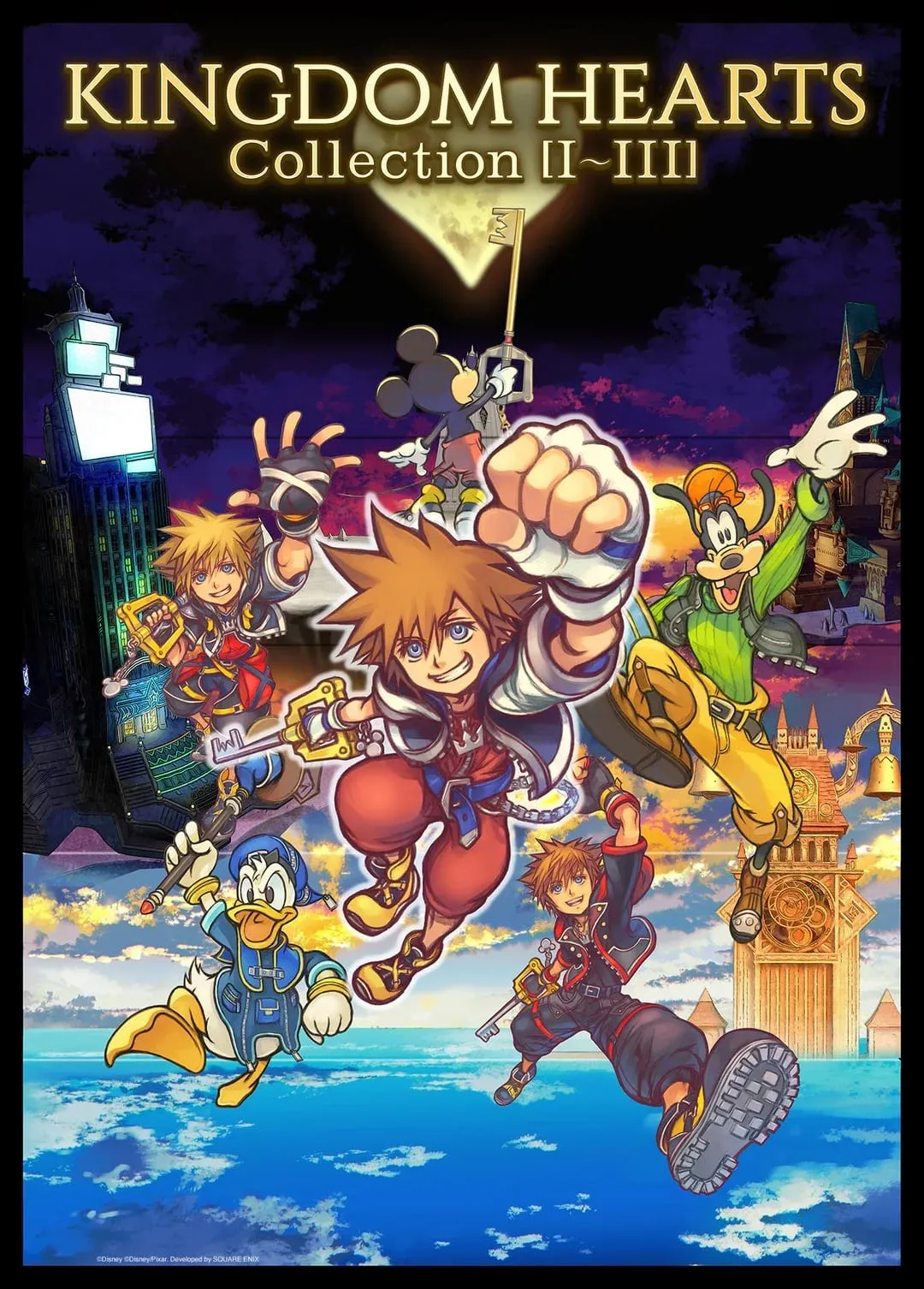


If you pre-ordered the Kingdom Hearts Collection and noticed the box art looking slightly off, you weren't imagining things. The overseas cover art for the bundle quietly disappeared from several major retailer listings after fans raised serious questions about whether Square Enix used AI-generated or AI-assisted artwork to create it.
The collection itself bundles the original three mainline games into one physical release, a welcome change from the cloud-streaming versions that frustrated fans for years. It arrived alongside the long-awaited reveal of Kingdom Hearts IV during a Nintendo Direct, making it one of the more exciting weeks the franchise has had in years. Then the cover art discourse started.
Use code TRYHARD33 at checkout to redeem this offer before code expires again.
Get 33% Off GAMES+ Subscription
What fans actually spotted in the art
Here's the thing: the accusations aren't just vague "it looks AI" complaints. Players went methodically through the overseas cover and flagged specific details that don't add up. Donald Duck's fingers are the most cited example, appearing malformed in ways that wouldn't survive a human illustrator's final pass. Sora's shoe drew similar attention, with proportions that look subtly wrong in a way that's hard to pin down but impossible to unsee once you notice it.
The key detail here is that Japan's version of the Kingdom Hearts Collection had its own cover art that looked completely fine. The overseas version appeared to be a modified or touched-up variant, and the modifications are what drew scrutiny. Whether the whole image was AI-generated or only specific elements were run through an AI tool is still debated, but the visual evidence players compiled across community threads was detailed enough to gain serious traction.
The retailer rollout is uneven
Some storefronts have already swapped in the Japanese version of the cover art. Others haven't. The inconsistency is noticeable: certain major online retailers updated their listings, while the official Square Enix storefront was still displaying the contested version even after the swap began elsewhere. That's a strange order of operations if this was a coordinated response.
What most players miss in situations like this is that retailer artwork often gets pushed out weeks before a publisher makes any internal decision to change it. The rollout being patchy doesn't necessarily mean Square Enix is dragging its feet. It might just mean the pipeline for updating product images across a dozen different storefronts is slower than the internet's reaction to the problem.
That said, the fact that the official Square Enix store was among the last to update is a bit harder to explain away.
No statement, just a quiet fix
Square Enix's silence is the part that's going to stick with people. The company hasn't acknowledged the accusations, hasn't explained what happened with the artwork, and hasn't confirmed whether AI tools were used at all. The cover art is just... being replaced, without comment.
This isn't the first time Square Enix has found itself adjacent to AI art controversy. The publisher has been more openly experimental with AI tools than many of its peers, which makes the lack of transparency here feel like a missed opportunity to address where and how those tools are being used in production.
For a franchise built on the work of artists like Tetsuya Nomura, whose visual identity has defined Kingdom Hearts since 2002, the optics of potentially using AI to touch up promotional materials for a flagship collection release are rough. Fans care deeply about the aesthetic of this series. The character designs are half the reason people love it.
What this means for the collection release
The cover art situation doesn't affect what's actually inside the box. The Kingdom Hearts Collection still represents the best way to play the original trilogy on modern hardware without relying on cloud streaming, and anticipation for Kingdom Hearts IV remains high after its Nintendo Direct appearance.
But the controversy does set an awkward tone for a release that should have been a straightforward celebration. Fans who have been waiting years for proper native ports of these RPG games deserve better than a product launch that gets derailed by questions about whether the box art was made with a few prompts and a generate button.
Square Enix still has time to address this before the collection ships. Whether it does will say a lot about how seriously the company takes the concerns its community raised.