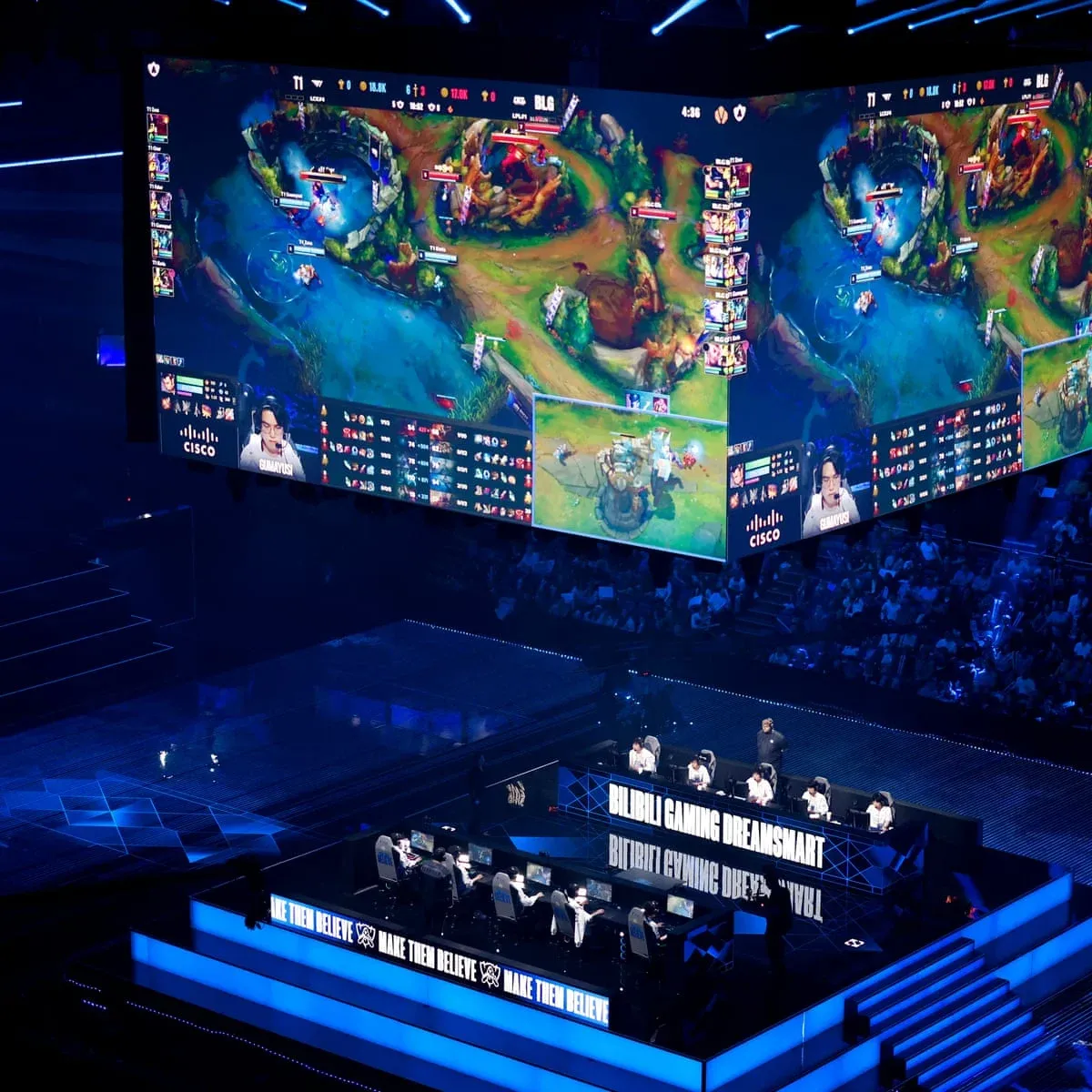


London already punches above its weight in esports. The 2024 League of Legends World Championship Final at the O2 contributed roughly $15 million to the local economy. The 2025 Blast Premier London Open at OVO Arena Wembley generated an estimated $38 million. Those are not small numbers, and Mayor Sadiq Khan has clearly noticed.
Khan traveled to Tokyo this week and visited the Red Bull Gaming Sphere alongside London-based esports organization Fnatic. His message was direct: London should be "the esports capital of the world." A post on his official X account from June 18, 2026 put it plainly: “London is ready to level up and lead the world in esports.”
Use code TRYHARD33 at checkout to redeem this offer before code expires again.
Get 33% Off GAMES+ Subscription
What the city hall report actually says
The visit was not just a photo opportunity. London City Hall has commissioned a formal report to map out how the capital can build a dominant position in global esports. The report frames the opportunity in economic terms: esports is currently a $2 billion global industry, with projections pointing toward nearly $10 billion by 2033.
The report's recommendations go beyond just attracting big tournaments. It calls for:
- Expanding access to esports careers through schools, apprenticeships, and training providers
- Building talent pipelines by connecting universities with employers in the esports sector
- Persuading major international events to choose London as their host city
Here's the thing: the economic case for hosting large esports events in London is already proven. The city has the venues, the transport infrastructure, and the international profile to compete with Seoul, Los Angeles, and Tokyo for marquee events. The O2 and OVO Arena Wembley have both demonstrated they can handle the scale.
The gap between ambition and reality
The harder question is whether esports can genuinely deliver on the "opportunities for young people" framing that runs through the report's language.
The esports industry does create real jobs, from broadcast production and event management to coaching and content creation. But professional playing careers are notoriously short, with many competitors retiring before their mid-20s. Treating esports as a meaningful employment pipeline for the 1.01 million 16-to-24-year-olds in the UK who are currently not in education, employment, or training is a stretch.
What most players miss is that the jobs esports actually generates at scale, production, logistics, marketing, and venue operations, are not unique to esports. A city that hosts more major events of any kind generates those roles. The esports branding is politically useful, but the economic engine is just event tourism.
That said, the ambition is not without merit. Cities that position themselves early in a growing sector tend to benefit disproportionately as the sector matures. London already has Fnatic headquartered there, a world-recognized esports brand. It has the media infrastructure, the international airport connectivity, and the cultural draw to make the pitch credible.
London vs. the established esports hubs
The competition is real. Seoul has decades of PC bang culture and government-backed esports infrastructure. Los Angeles hosts a concentration of franchise league teams and streaming talent. Tokyo, where Khan made this announcement, is investing heavily in its own gaming and esports ecosystem.
London's pitch rests on a few specific advantages:
- Venue scale: Few cities have the density of large-capacity arenas within a single urban area
- Time zone: GMT sits between North American and Asian audiences, which matters for live broadcast scheduling
- Existing talent: The UK has produced competitive players and production talent across multiple titles
The key here is execution. Declaring an ambition is the easy part. The report's recommendations around schools and apprenticeships will need sustained funding and coordination with the UK's existing games industry, which is centered in studios rather than competitive play.
With the FIFA World Cup 2026 already drawing massive crossover attention between sports and gaming (the Rocket League x FIFA World Cup 2026 event rewards guide covers exactly how that crossover is playing out in-game), the timing of London's push is not accidental. Football and gaming audiences overlap more than they ever have, and London sits at the center of both.
The next concrete step will be whether City Hall follows the report with actual budget commitments or whether this remains a statement of intent. Khan's Tokyo visit has set the direction. What London does with it over the next 12 to 18 months will determine whether the ambition holds up. For more on the games and events shaping competitive play right now, the gaming guides hub has you covered.