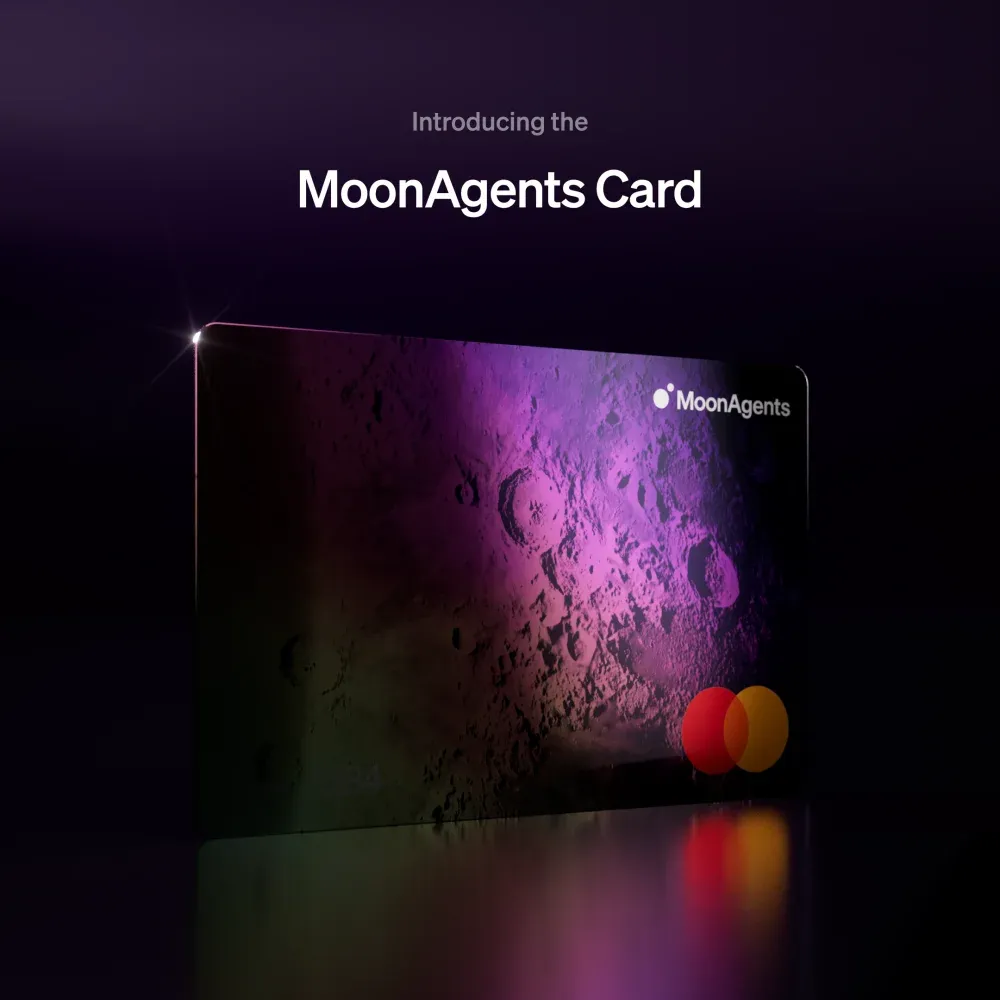


MoonPay just made it easier to hand your AI assistant the keys to your crypto wallet, without actually handing it the keys.
The crypto payments company launched the MoonAgents desktop app this week, giving users a graphical way to connect Anthropic's Claude Code and OpenAI's Codex to crypto wallets, token swaps, prediction markets, and other blockchain services. The pitch is simple: you sign in with your existing Claude or Codex account, and the app handles the technical setup in the background.

Use code TRYHARD33 at checkout to redeem this offer before code expires again.
Get 33% Off GAMES+ Subscription
From command line to living room
Here's the thing: MoonAgents is not a brand-new product. MoonPay first released it back in February as a command-line tool, which meant the audience was basically limited to developers comfortable typing their way through configuration files. Three months later, the desktop app wraps all of that into a visual interface that handles the heavy lifting for you.
Kevin Arifin, MoonPay's Head of Agents, described the shift clearly: "All that stuff is hidden under the hood for you. It will set up Codex or Claude locally on your computer behind the scenes, and then it's a front end."
The app includes prebuilt Skills for common blockchain tasks, scheduled Automations, and an Artifacts system that generates custom dashboards for managing financial activity. Before, you needed to know how to configure an MCP server manually. Now you just log in.
What the AI can and cannot touch
The obvious question with any app that connects an AI assistant to a crypto wallet is: what stops the AI from doing something you did not ask it to do?
MoonPay's answer is local key storage. Private keys never leave the user's machine and are stored in encrypted form. The AI model cannot read them directly. It can interact with blockchain services through the app's interface, but the credentials themselves stay locked on-device.
"The most important piece of security is not revealing the private keys," Arifin said. "The private keys are stored locally on the user's computer and are fully encrypted, so the LLM can't just access or view them."
This matters more than it might seem. In April, an AI agent running Anthropic's Claude Opus reportedly deleted a startup's entire production database and its backups through a single API call, leaving only a three-month-old backup recoverable. Security researchers have also flagged prompt injection as a real threat, where a malicious instruction buried in content can trick an AI agent into performing actions the user never intended.
Local key storage does not eliminate every risk, but it does close off one of the more obvious attack surfaces.
What MoonPay is actually building here
This desktop app fits into a broader pattern. In May, MoonPay launched a dedicated app inside ChatGPT that lets users buy cryptocurrencies including Bitcoin and Solana directly through the chatbot. That product targets buyers. MoonAgents targets people who want AI to do more active work with their wallets, running research, executing swaps, or monitoring positions.
Arifin framed the core use case as democratizing access to on-chain research tools that previously required scripting skills. "It's empowering you to be able to do the research, dive into the tokens, and dig into the trenches in a way that in the past it was only restricted to the people that could write scripts."
The key here is that the AI is positioned as a research and execution layer, not an autonomous trader. You stay in control of what it can do and when.
The bigger picture for AI and web3
AI agents interacting with blockchain infrastructure is becoming a real category, not just a concept. The combination of natural language interfaces and on-chain execution is something multiple companies are chasing right now, and MoonPay is positioning MoonAgents as a consumer-facing entry point into that space.
What most players miss is that the bottleneck was never the AI's ability to understand crypto. It was the setup friction. A command-line tool that required manual MCP configuration was never going to reach mainstream users. A desktop app that handles all of that automatically is a different product entirely.
For anyone curious about where AI-assisted web3 tooling is heading, our gaming guides and game reviews cover adjacent territory as blockchain-based gaming keeps pulling these same tools into player-facing experiences.
The MoonAgents desktop app is available now at moonpay.com/agents. If you have been waiting for AI-assisted crypto tooling that does not require a computer science degree to set up, this is the version worth trying.