

Back in 2021, most players filed New Pokémon Snap under "pleasant but forgettable." A rail shooter where you photograph Pokémon in pretty environments, judged by a professor with questionable taste. No real fail state. No grinding. No battle system. It felt almost too simple for a Nintendo release.
Here's the thing: that simplicity was the whole point, and Nintendo has spent the last few years quietly building its entire first-party philosophy around it.

Use code TRYHARD33 at checkout to redeem this offer before code expires again.
Get 33% Off GAMES+ Subscription
What made New Pokémon Snap so hard to place
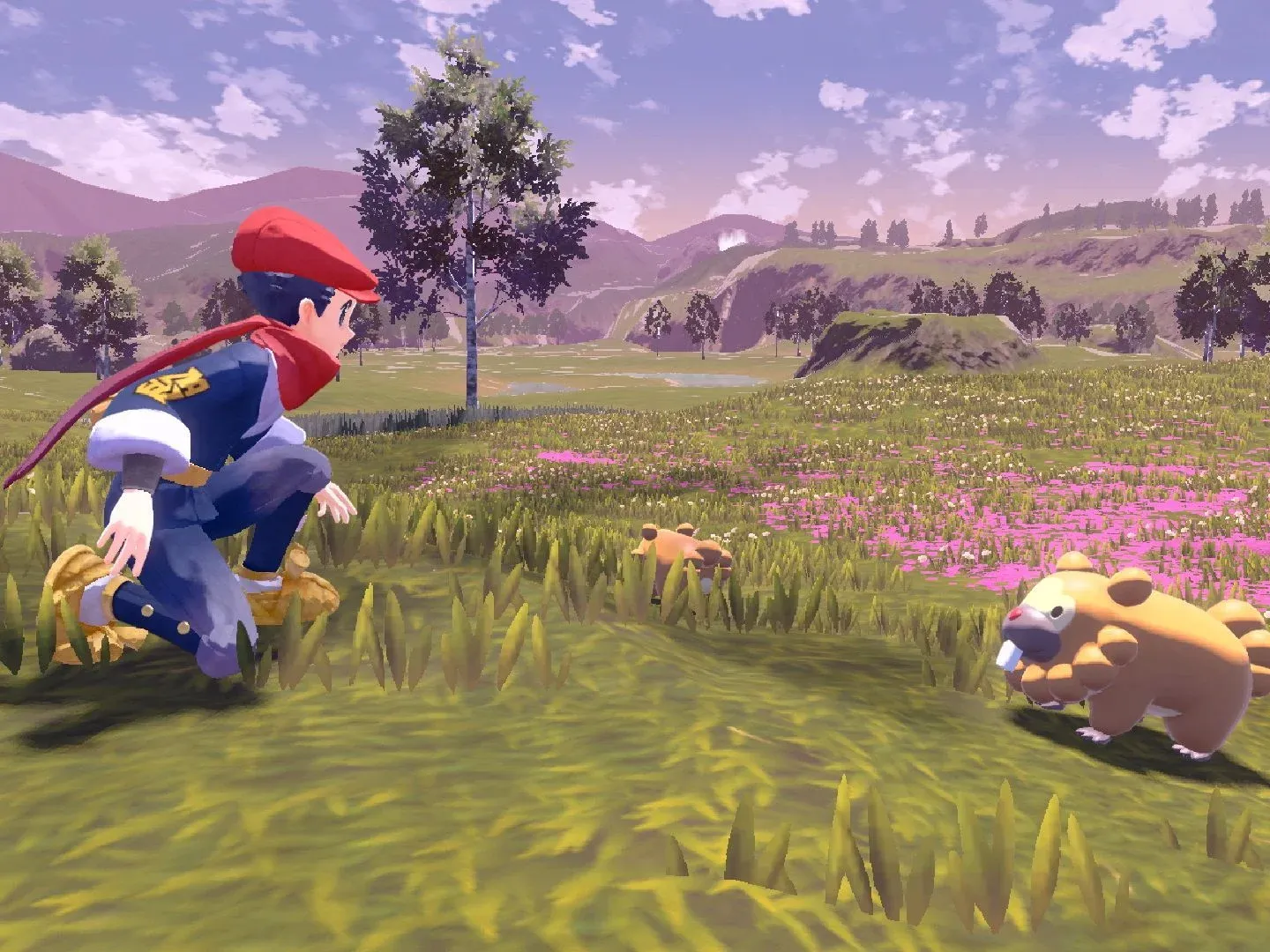
Pokémon Legends: Arceus gets most of the credit when people talk about the franchise taking creative risks. And fair enough, it genuinely shook up the mainline formula by throwing players into an open world where catching Pokémon required actual fieldwork. But New Pokémon Snap was doing something different and arguably stranger: it stripped out the concept of losing almost entirely.
You ride a set path through a course. Pokémon do things. You take pictures. Professor Mirror judges them on criteria that feel slightly arbitrary (a zoomed-in shot of a Bouffalant's backside technically counts as a submission). Higher-rated photos unlock more Pokémon behaviors in each area, which is the closest thing the game has to a progression gate. That's it.
No other Nintendo game at the time operated that way. Breath of the Wild was a physics sandbox with a final boss. Super Mario Odyssey was bigger playgrounds but still a collectathon. Even Animal Crossing: New Horizons, the poster child for cozy gaming, hid a serious time investment under its relaxed surface.
New Pokémon Snap had none of that scaffolding. The win condition was entirely self-defined.
The Switch 2 lineup looks a lot like this
Fast forward to the Switch 2 launch window, and the pattern becomes hard to ignore.
Mario Kart World has an open world between races. The purpose of that open world is essentially vibes. There is no urgent reason to explore it. It exists because driving around a big connected map feels good.
Donkey Kong Bananza reportedly requires a dedicated effort to actually lose. The platforming difficulty sits well below what Donkey Kong Country Returns put players through. The design priority is letting you smash through environments and find your own path through each level, not testing your reflexes to breaking point.
Yoshi and the Mysterious Book has no fail state at all and no obvious objective beyond discovering how its world works.
Super Mario Bros. Wonder started this shift before the Switch 2 even launched, dropping the series' timed stages and letting players move through levels at their own pace. The fun became about discovery, not performance.
All of that traces back, at least in spirit, to what New Pokémon Snap was doing in 2021.
Why this matters for how you play Nintendo games going forward
The shift is worth paying attention to because it changes what you should expect when you boot up a Nintendo title. The old mental model, complete stages, collect things, defeat boss, see credits, is becoming less reliable as a frame.
What most players miss is that this approach demands something different from the player too. When a game does not tell you what winning looks like, you have to decide. That is genuinely freeing for some people and genuinely frustrating for others. Players are split: some describe New Pokémon Snap as the only Pokémon game they have gone back to after finishing, specifically because there was no grinding for stats. Others call the original Snap their favorite Pokémon game for similar reasons.
The key here is that Nintendo is betting a significant portion of its first-party output on players who want to set their own terms. That is a real design commitment, not a marketing angle.
Splatoon Raiders, based on recent trailer footage, continues the trend by making weapon experimentation as central as actually defeating enemies. The lineage from New Pokémon Snap to that game is a straight line.
If you want to track where Nintendo's design thinking is heading, browse our latest gaming news for ongoing Switch 2 coverage. And if you want a starting point for understanding the philosophy firsthand, New Pokémon Snap is still available and still one of the more underrated arguments for what games can be when they stop demanding you prove yourself to them. Check out our latest reviews to find out what else in Nintendo's catalog is worth your time right now.