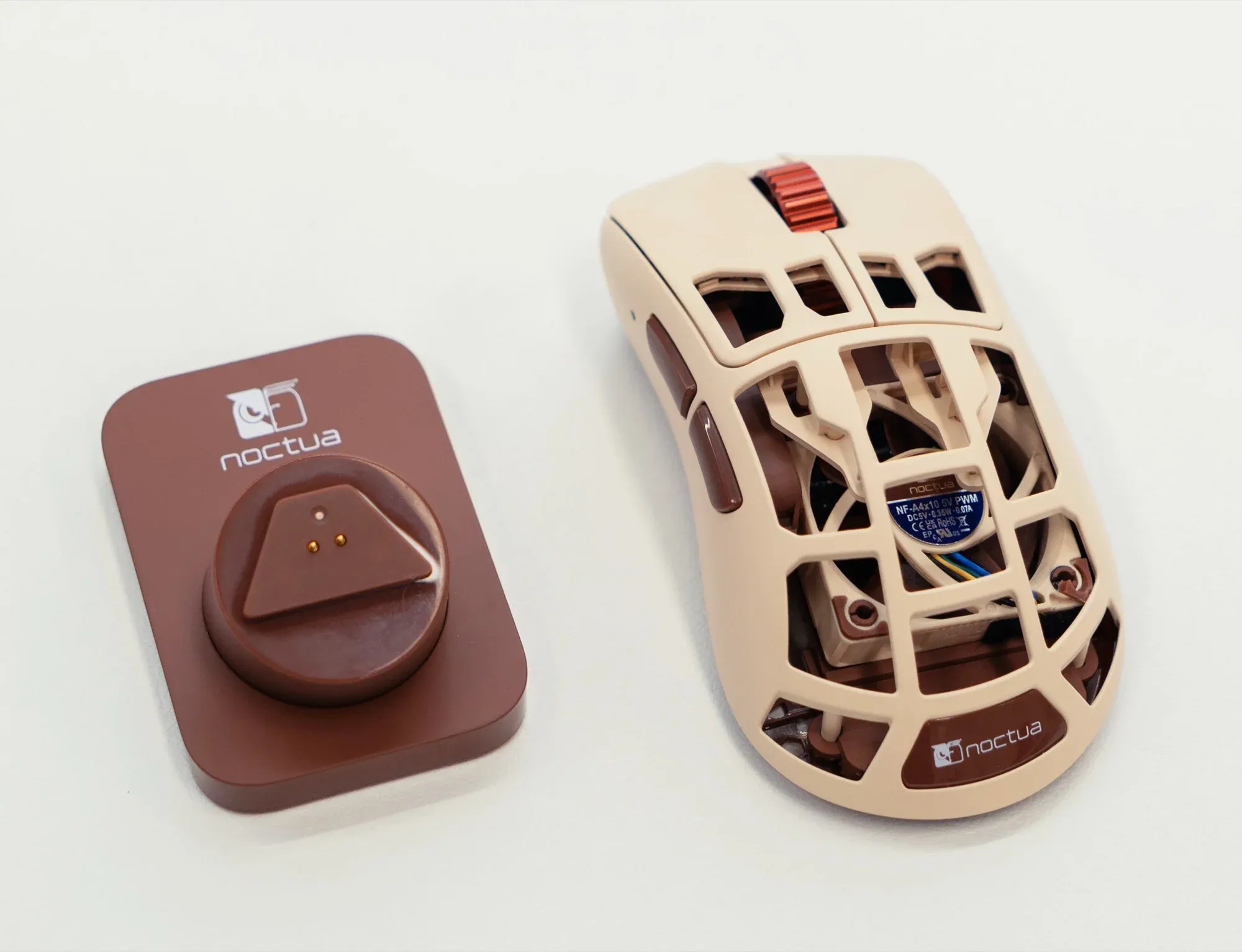


Noctua has revealed a gaming mouse with a fan built directly into it, and it might be the most practical peripheral idea to come out of Computex 2026.
The mouse is the Pulsar Feinmann F01 Noctua Edition, a collaboration between Noctua and peripheral maker Pulsar. The base Feinmann F01 already has an open, cage-like upper chassis, which makes it unusually light at 73g and leaves the interior exposed. Noctua looked at that open shell and apparently thought: perfect place for a fan.

Use code TRYHARD33 at checkout to redeem this offer before code expires again.
Get 33% Off GAMES+ Subscription
The fan that lives inside your mouse
Here's the thing: the fan Noctua dropped in there is a NF-A4x10 5V PWM, a real Noctua fan, not some generic afterthought. It fires upward directly into your palm, and it's wired to a motion sensor so it only spins when you're actually moving the mouse. Pick your hand up, it spins down. Grab it again, it kicks back in immediately.
Fan speed is adjustable across 5 levels, either through the mouse buttons themselves or via a web-based driver. So if you're deep into a ranked session in the middle of summer, you can push it to full blast without digging through software menus.
The noise levels are reportedly negligible. With your hand resting over the chassis, the fan is almost completely inaudible, which matters a lot for anyone who already runs a quiet setup.
What the Feinmann F01 already brings to the table
The Noctua edition isn't starting from a weak foundation. The Pulsar Feinmann F01 carries an XS-2 42000 DPI sensor and an 8K polling rate, which puts it firmly in competitive territory. It charges and runs wired via a standard USB port.
The open chassis design that makes the fan possible also keeps the weight at 73g, which is genuinely competitive for a performance mouse. Most honeycomb-shell mice sacrifice structural rigidity for that weight saving. The Feinmann's cage design handles it differently, and the Noctua partnership takes advantage of exactly that gap in the shell.
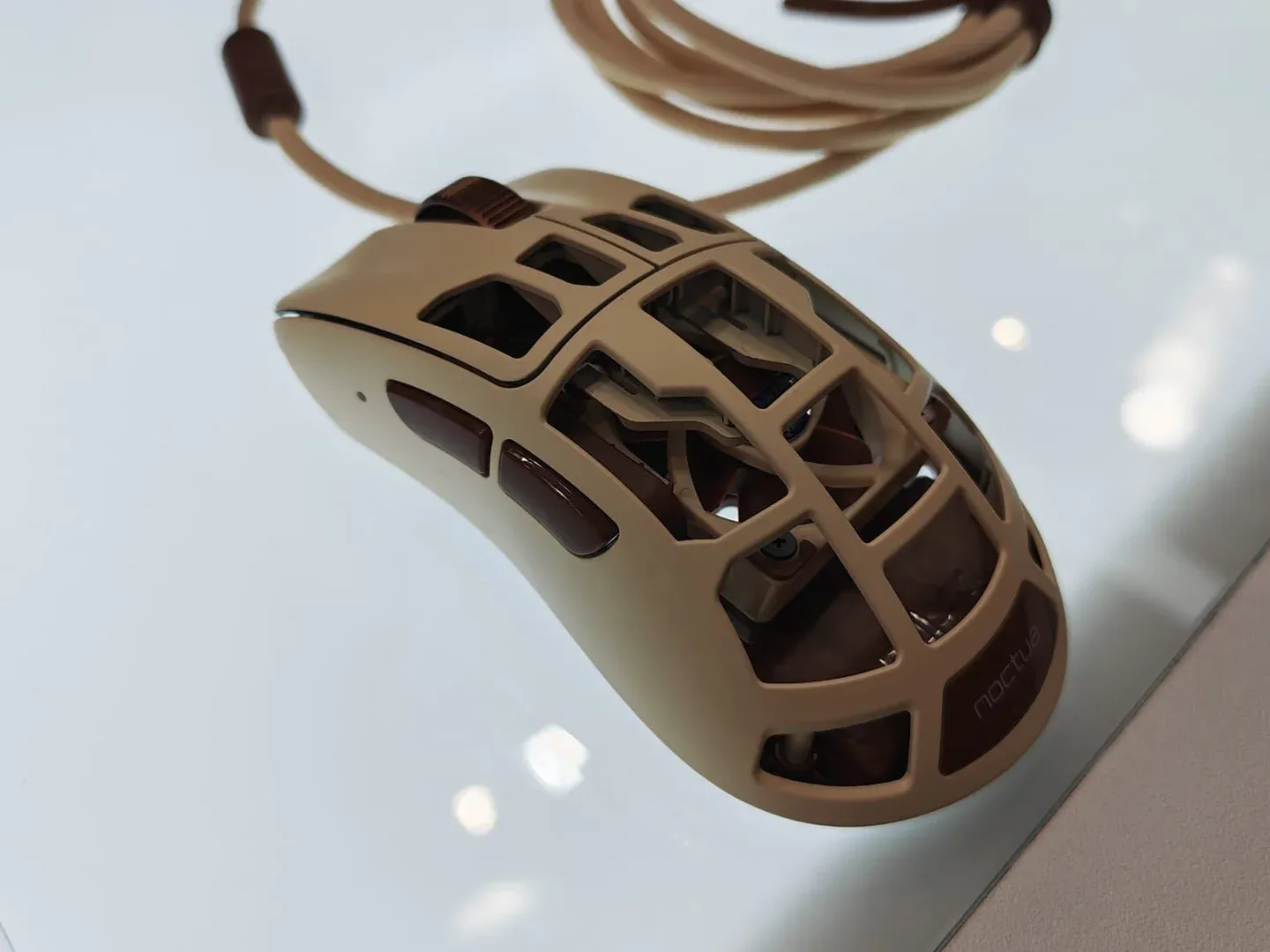
XS-2 sensor and USB port
The aesthetic is pure Noctua: no RGB, no aggressive angles, just that signature beige-and-brown colorway that looks completely out of place next to every other mouse on the market. That's kind of the point.
Why this matters for competitive players
Sweaty palms are a genuine performance issue, not just a comfort complaint. Moisture changes how a mouse feels in your grip, affects consistency on precise flicks, and can degrade sensor accuracy on some optical surfaces over time. Mice with solid shells trap heat directly under your palm, making the problem worse the longer a session runs.
The Feinmann F01 Noctua Edition addresses this at the hardware level rather than relying on mesh gloves or desk fans pointed at your hand. The key here is that the cooling is reactive and automatic: it responds to movement, not to a timer or a button press you have to remember.
The mouse is expected to launch in either June or July 2026, with no pricing confirmed yet. Given Noctua's track record with premium cooling hardware, expect it to sit above mid-range mouse pricing, but the spec sheet justifies the ask if the fan performs as demonstrated at Computex.
For more peripheral deep dives and hardware coverage, the gaming guides section has you covered, and you can check out the latest game reviews while you wait for release day. Keep an eye on Noctua and Pulsar's channels for official pricing and availability details closer to launch.