Playmint, a team of experienced game developers, has spent several years using blockchain technology to create innovative gaming experiences. The studio has prioritized decentralization, focusing on games free from centralized control. This pursuit led them to experiment with fully on-chain games (FOCGs), a significant step in decentralized design. However, they kept running into the same problem: blockchain gaming's unavoidable connection to real money.
That financial layer consistently warps the experience, transforming what should be play into something closer to a trading exercise. To solve this, Playmint developed Playerchains—a technical framework that tackles the practical limitations of FOCGs while redirecting attention back to what matters: the game itself. Playerchains offer a path to decentralized gaming that puts enjoyment and creativity ahead of speculation.
Fully On-Chain Games
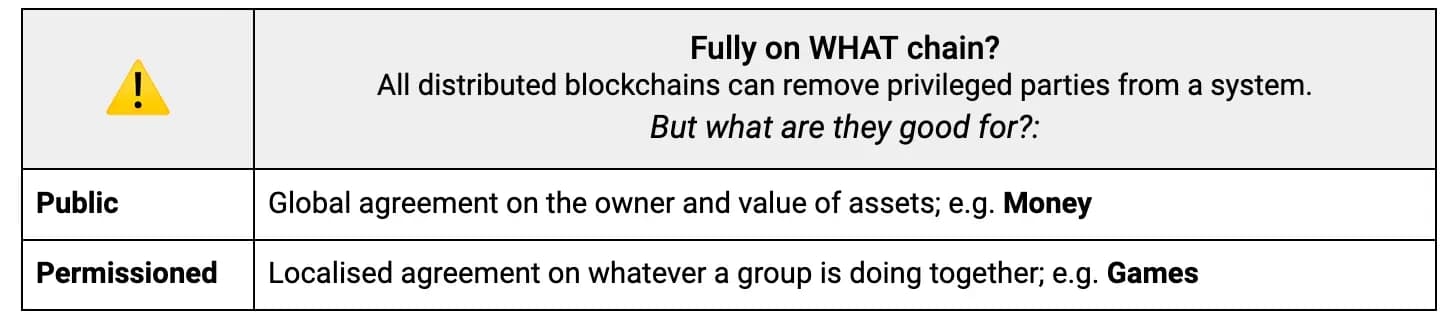
Why public blockchains struggle with games
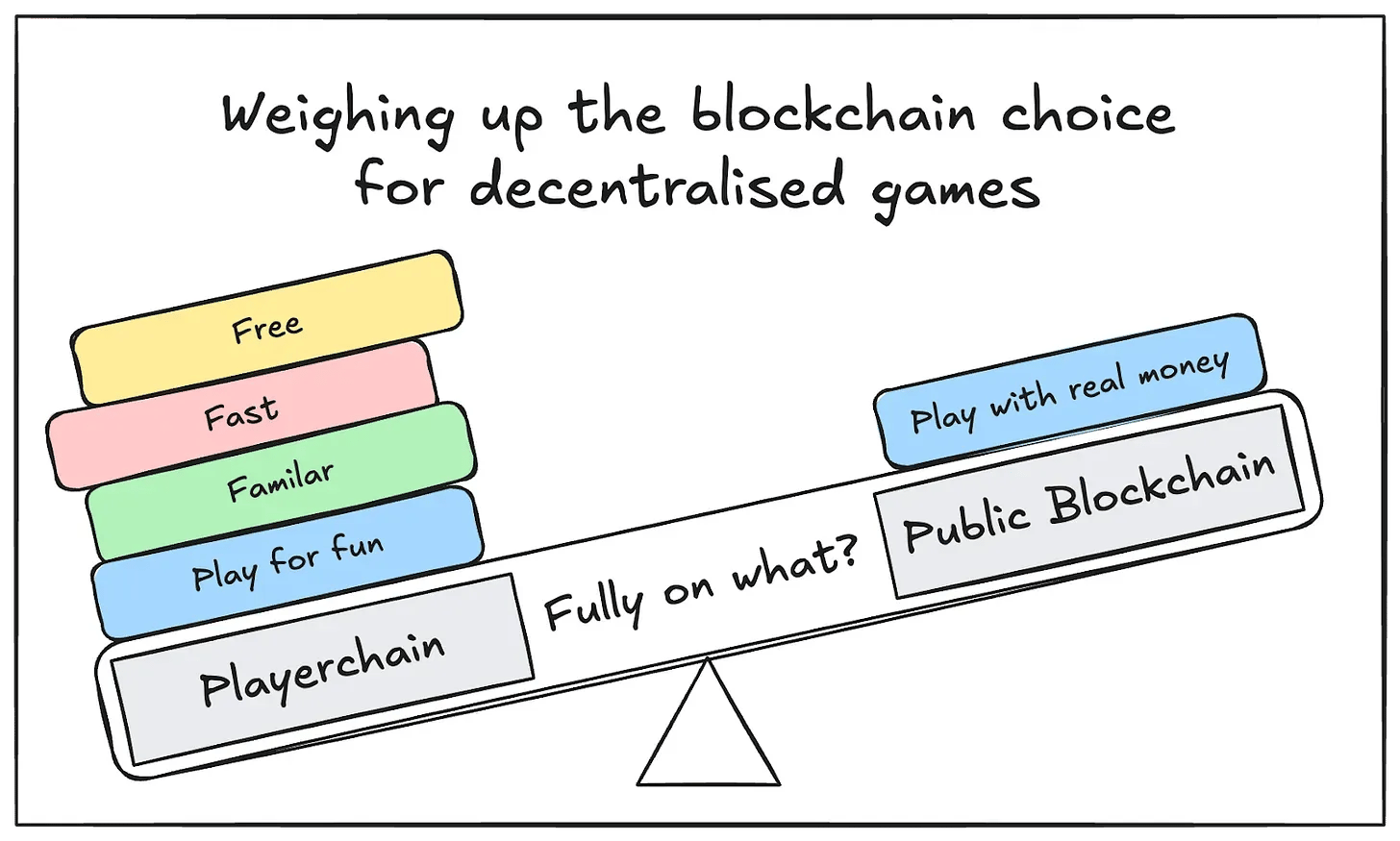
Public blockchains are the default for on-chain games because they provide open, interoperable financial systems. But that openness comes at a cost: games built on them become inseparable from monetary transactions. Financial speculation creeps in, and in many cases, it drowns out the game underneath. Some players enjoy that dynamic, but Playmint sees it as a distraction from what games are supposed to do—deliver engaging, enjoyable experiences.
Permissioned blockchains sidestep this issue by allowing developers to strip out financial elements entirely. With no money in the system, the focus stays on play. For developers who want to build games around fun rather than profit motive, permissioned chains offer a cleaner foundation.
Playerchains: A New Vision for Decentralized Gaming
How Playerchains work
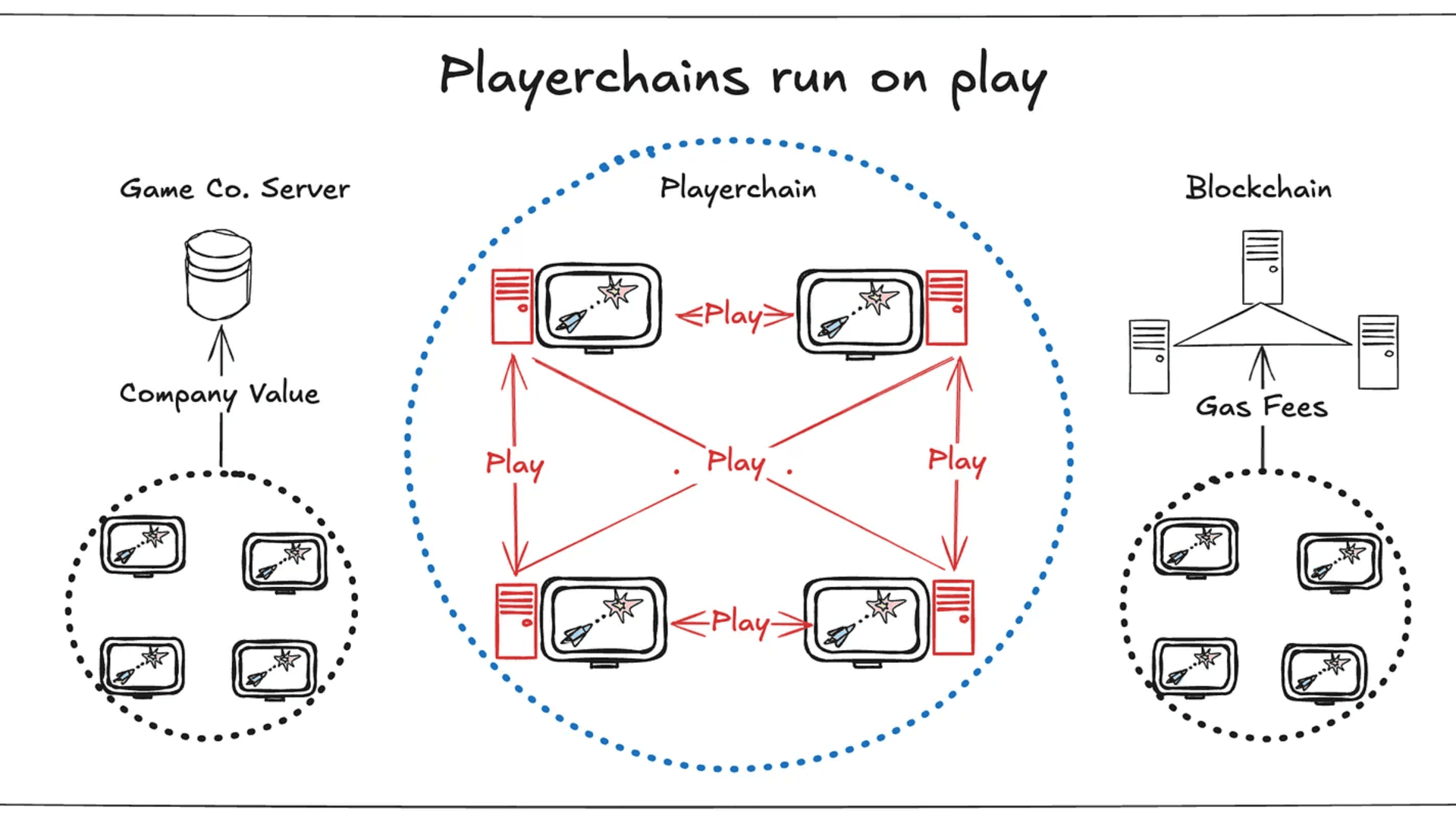
Playerchains use a peer-to-peer network architecture built specifically for multiplayer games. Instead of relying on traditional blockchain structures, they operate on a permissioned, DAG-based system where players themselves run both the game code and the consensus mechanism. This setup eliminates the need for company-owned servers (which exist to turn a profit) or public blockchain nodes (which are incentivized by financial rewards). Playerchains persist as long as players want to keep playing—nothing more, nothing less.
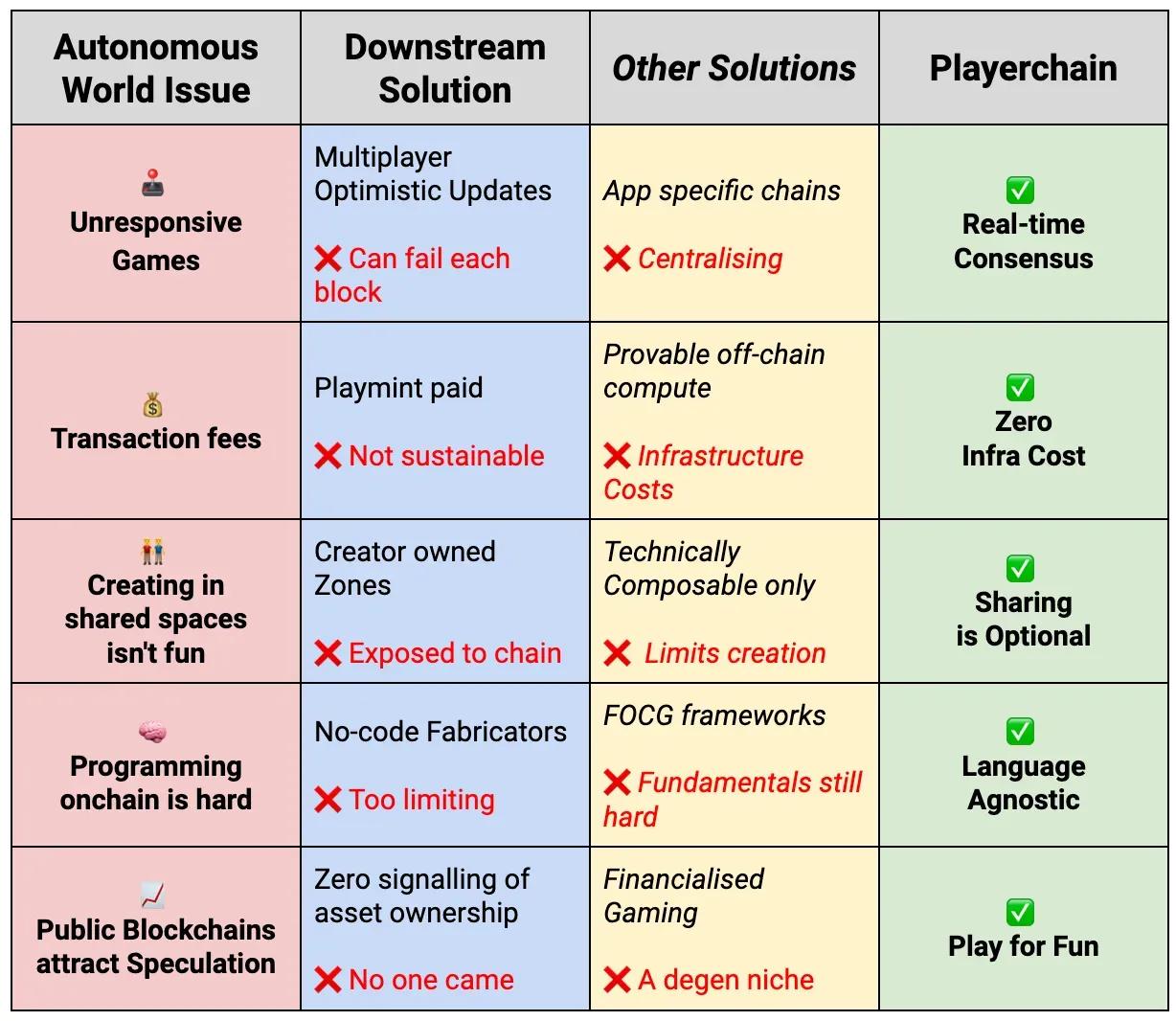
This design also solves several technical headaches that plague FOCGs. Playerchains support real-time multiplayer, tick-based game development, and gasless transactions. That makes it easier to build responsive, dynamic gaming experiences without the friction of transaction fees or slow block times. At the same time, Playerchains retain some of the advantages of public blockchains—interoperability and composability—so developers can still connect to public ecosystems when it makes sense.

Playmints Shooter Game
Proof of concept: a space shooter
Playmint built a space shooter game to demonstrate what Playerchains can do. Players can spin up their own Playerchain, invite friends, and jump into a responsive, real-time game without touching a centralized server. Right now, verifying the technical claims requires digging into the code, but Playmint plans to make player action immutability more transparent down the line.
The demo shows that Playerchains can support decentralized, serverless gaming environments. It also reinforces Playmint's goal: build games where the experience comes first, not the financial angle.
What they learned from earlier experiments
Before Playerchains, Playmint experimented with fully on-chain games on public blockchains through a platform called Downstream. It was an early Autonomous World (AW) that let users create their own games using no-code tools. The platform showed the potential of decentralized worlds where participants could build and share unique experiences. But despite the technical innovation, Downstream struggled to gain traction as an Autonomous World.
The challenges they faced revealed the limitations of public blockchains for gaming. That pushed Playmint toward a more flexible, player-focused model, which eventually became Playerchains.
Autonomous World Issue
Persistent, interconnected worlds without the financial baggage
Playerchains enable a new kind of decentralized gaming ecosystem. Each player forms an immutable history, and when groups create Playerchains together, they share partial views of a larger interconnected network—what Playmint calls a global blocklace. This structure allows worlds to persist and enables emergent connections between players and games.
Public blockchains offer persistence and composability by default, but they're locked into financial systems. Playerchains are private by default and only become active when players are engaged. That makes them better suited for games, where the focus should be on gameplay, not token economics. Developers can design worlds that grow and evolve based on player activity, not market speculation.
Pros and Cons
Decentralized gaming that's actually about gaming
The gaming industry has been dominated by centralized corporations for decades, stifling innovation and limiting the value of creative talent. Blockchain technology has the potential to disrupt that by enabling decentralized systems that reward creativity and empower players. But so far, most blockchain games have catered to financial speculators, not gamers.
Playerchains represent a different approach. By removing financial elements and centering player-driven experiences, they create an environment where games can thrive as spaces for creativity and fun. Playmint's work demonstrates that blockchain technology can be used to build games for everyone, not just people looking to flip tokens.