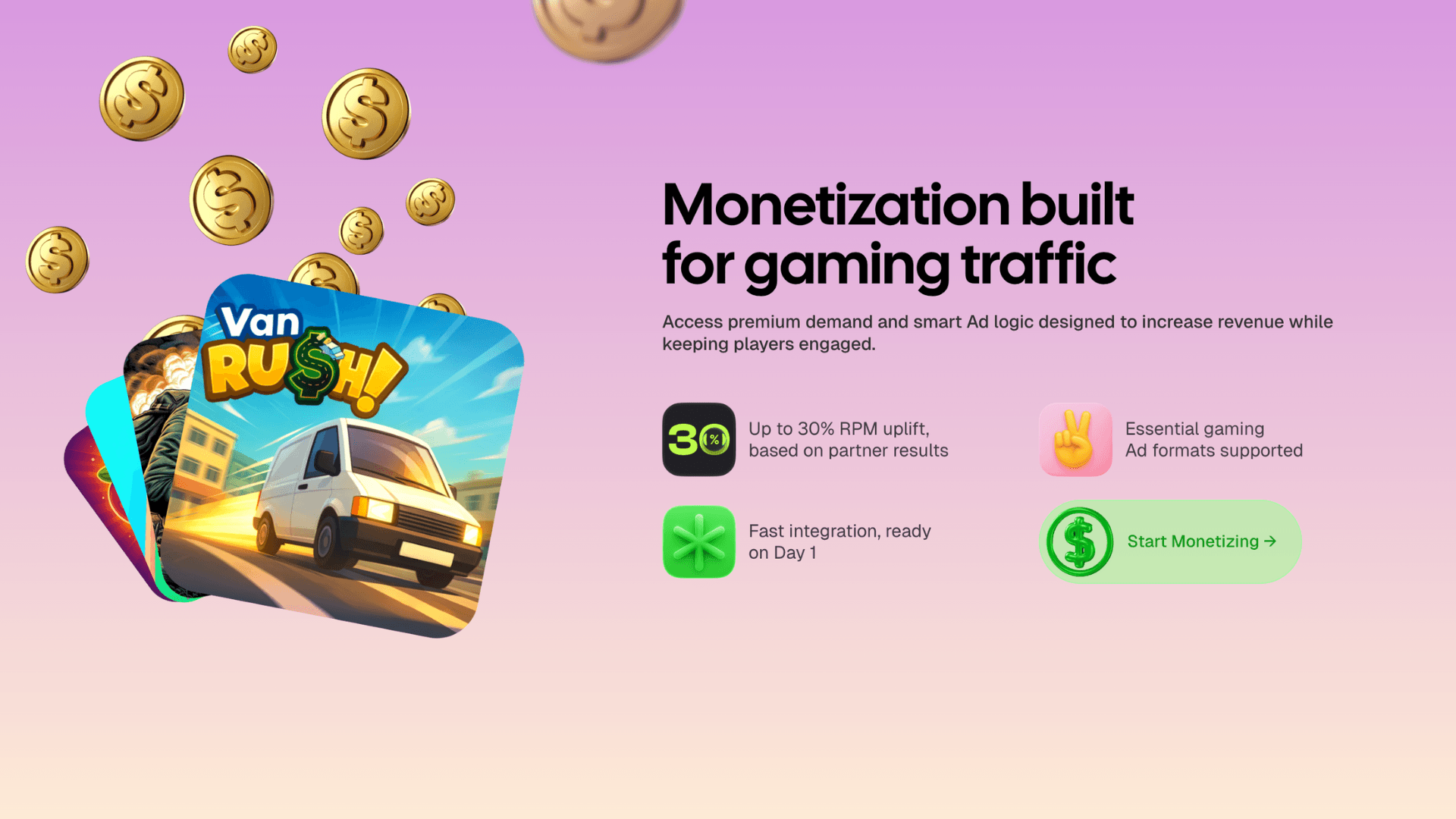

Playgama has launched Playgama Ad, an advertising platform built specifically for web gaming monetisation. The web-gaming distributor, already known for its Playgama Bridge SDK, is now moving into ad tech with a product that aims to help developers and publishers earn revenue without wrecking the player experience.
The platform focuses on balancing ad load, session length, and overall gameplay flow. Playgama Ad is now in open beta, meaning HTML5 developers, publishers, and gaming portals worldwide can start integrating and testing the system across their browser-based games.

Use code TRYHARD33 at checkout to redeem this offer before code expires again.
Get 33% Off GAMES+ Subscription
Built for browser games, not mobile apps
Most ad platforms are designed for mobile apps, which creates problems for web games. Browser and HTML5 games need tighter control over performance and user flow — players will bail if ads slow down load times or interrupt gameplay at the wrong moment.
Playgama Ad is designed to optimise ad delivery in a way that supports retention instead of killing it. The goal is to help developers maximise earnings without overloading sessions with ads that frustrate players or shorten playtime. By focusing on gaming-first ad placement, the platform tries to align revenue generation with how players actually interact with web games.
Open beta follows early partner tests
Before the public rollout, Playgama Ad ran tests with partners including Pocket Heaven Games and Play-Games.com. These early integrations gave the company a chance to refine performance and monetisation logic before opening the doors wider.
Now that the beta is live, Playgama is onboarding HTML5 developers, publishers, and gaming portals across different regions. The beta phase lets studios integrate the platform into their existing infrastructure while Playgama collects feedback and usage data from a wider variety of game genres and audiences.
For smaller studios, the platform offers access to monetisation tools tailored to web environments instead of relying on generic advertising networks that weren't built for games.
Expanding beyond distribution into monetisation
Playgama originally built its reputation with the Playgama Bridge SDK, which helps developers distribute web games and connect with multiple platforms. The launch of Playgama Ad marks a shift toward offering a more complete product stack that covers both distribution and monetisation.
By adding advertising infrastructure, Playgama is moving into a role that supports developers not just in reaching players, but in sustaining revenue from those players. This expansion reflects a broader trend in web gaming and web3-adjacent ecosystems, where accessibility and browser-based play are growing, but monetisation tools often lag behind mobile-first solutions.
The company's strategy is to provide developers with integrated tools instead of making them patch together multiple third-party services.
Tackling fragmentation in web gaming ads
Playgama founder Dmitry Kachmar says one of the biggest challenges facing web gaming is fragmentation and the lack of ad technology designed specifically for interactive browser experiences.
Kachmar stated that Playgama Ad is meant to support the ecosystem by delivering higher-quality demand to ad networks while helping developers and platforms improve earnings. In practice, this means reducing mismatches between standard advertising formats and gameplay sessions, which can cause performance issues and lost revenue.
By focusing on gaming-first monetisation logic, Playgama is trying to close the gap between advertisers and web game publishers in a market that has traditionally relied on less specialised solutions.
Strengthening the web gaming economy
As web gaming continues to expand across browsers, HTML5, and web3-related platforms, monetisation remains a central challenge. Players expect low-friction access and smooth performance, while developers need predictable income streams to maintain and update their games.
Playgama Ad fits into this landscape as an infrastructure layer that connects player behavior with advertising demand in a more controlled way. For developers and portals, the goal is to generate revenue without sacrificing session quality or retention.
Developers, studios, and gaming platforms interested in integrating Playgama Ad can apply through Playgama's official website as the company continues its open beta rollout.
Make sure to check out our articles about top games to play in 2026:
Best Nintendo Switch Games for 2026
Best First-Person Shooters for 2026
Best PlayStation Indie Games for 2026
Best Multiplayer Games for 2026
Most Anticipated Games of 2026
Top Game Releases for January 2026
Frequently Asked Questions (FAQs)
What is Playgama Ad?
Playgama Ad is an advertising solution created by Playgama for web gaming monetisation. It helps HTML5 developers and gaming portals generate revenue while balancing ad load and player experience.
Who can use Playgama Ad?
The platform is designed for HTML5 game developers, publishers, and web gaming portals. It's currently available through an open beta onboarding process.
How does Playgama Ad improve player experience?
Playgama Ad focuses on gaming-first ad delivery, aiming to avoid excessive or disruptive advertising that can shorten sessions or reduce player retention.
How is Playgama Ad different from standard ad networks?
Unlike generic ad platforms, Playgama Ad is built specifically for browser-based games, optimising performance, monetisation flow, and session quality for web gaming environments.
What is Playgama known for besides Playgama Ad?
Playgama is known for the Playgama Bridge SDK, which helps developers distribute web games and connect with multiple platforms. Playgama Ad expands the company's offering into monetisation and ad tech.
Is Playgama Ad related to web3 gaming?
Playgama Ad can support web and web3-adjacent gaming environments by providing monetisation tools suited for browser-based and accessible gaming ecosystems.
How can developers integrate Playgama Ad?
Interested developers and platforms can apply through Playgama's official website to onboard and integrate Playgama Ad during the open beta phase.