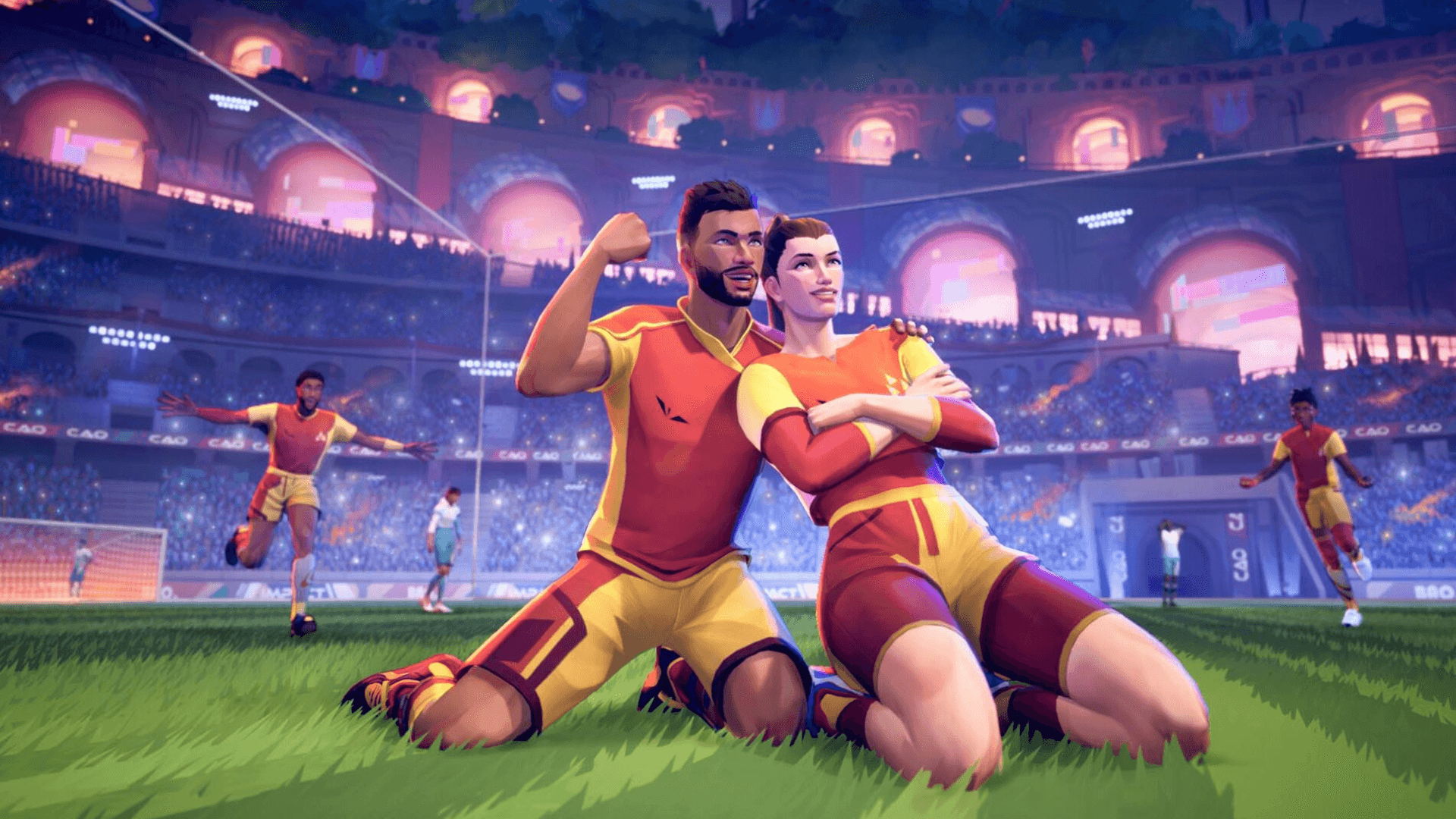
Rematch presents itself as a casual, arcade-style soccer game, but beneath the approachable visuals lies a system that rewards precision, timing, and understanding of fundamental mechanics. While matches may look lighthearted, success depends on mastering ball control, positioning, and the different roles players occupy during gameplay.
The game’s developer, Sloclap, is known for Sifu, a kung fu-inspired action title with highly detailed animations and fluid movement. That background carries over into Rematch, where every motion on the pitch feels deliberate and responsive. Although there is no combat in the traditional sense, the game requires players to treat their characters like dynamic, momentum-driven units capable of pulling off precise maneuvers.
Before diving into Ranked matches, players can experiment with Quick Match options in 3v3, 4v4, or 5v5 formats. This provides a safe environment to internalize mechanics and understand how different offensive, defensive, and goalkeeping actions interact in real time.
Getting Started with Ball Control and Movement
Offense in Rematch begins with ball control and understanding how movement affects possession. The game’s mechanics make the ball feel magnetically attached to a character, allowing automatic control when close. Jogging with the ball reduces cognitive load, letting players focus on positioning rather than minute adjustments. However, jogging also limits speed compared to sprinting without full control.
Players can sprint using the dedicated Sprint button (L1/LB/Left Shift), which drains a stamina bar located at the bottom of the screen. When stamina is depleted, it regenerates gradually. Double-tapping Sprint triggers Extra Effort mode, giving players brief bursts of speed represented by a secondary meter. Proper management of Extra Effort can make the difference between beating defenders to loose balls or maintaining control during a breakaway.
Even without possession, players can use the Ball Call mechanic (L3/Left Thumbstick/Scroll Wheel) to signal teammates. Coordinating passes through Ball Call improves offensive fluidity and prevents isolation when navigating through defensive pressure.
Advancing Through Push Ball and Directional Tricks
Moving the ball quickly requires balancing speed with control. Push Ball, executed with Sprint plus the Push Ball button (Sprint + X/A/C), allows a short, controlled kick that increases movement speed at the cost of some precision. While this opens opportunities for fast breaks, it also creates the risk of interception.
Players can influence the direction of Push Ball through minor camera adjustments or directional input. This allows the ball to be steered around opponents, toward teammates, or into open space near the goal. Push Ball can be combined with Rainbow Flicks (Sprint + R1/RB + X/A on controller or Sprint + C on keyboard) to lift the ball over defenders and maintain offensive momentum in congested areas. Using these techniques strategically rather than repeatedly improves ball progression and keeps defenders uncertain.
Fine-Tuning Dribble Stance and Skill Moves
Dribble Stance, activated with L2/LT/Left Control, enables players to perform precise maneuvers while slowing down. This stance widens the player’s legs and prepares them for Skill Moves, which can redirect the ball in a chosen direction using X/A/C plus a directional input. Skill Moves are most effective for avoiding slide tackles or shifting the ball away from closing defenders.
Dribble Stance allows players to maintain possession under pressure while creating space for shots or passes. Learning when to engage this stance is crucial, as sprinting recklessly with the ball often leads to turnovers.
Shooting Mechanics and Curved Shots
Shooting in Rematch is mapped to a single button (R2/RT/Left Mouse). Holding the button briefly charges the shot and allows minor adjustments before execution. Magnus Shots add an additional layer of control by applying spin to the ball. Holding a directional input while shooting bends the ball mid-flight, letting players curve it around defenders or toward specific areas of the goal.
Magnus Shots are particularly useful when direct lanes to goal are blocked or when precision is required to beat a goalkeeper. Mastering this technique increases offensive effectiveness and allows more creative shot placement.
Defensive Strategy and Positioning
Defense relies on timing, positioning, and reading the opponent rather than constant pressure. Defensive Stance (L2/LT/Left Control) mirrors Dribble Stance on offense. Players adopt a wider stance, which slows movement but allows automatic deflection of incoming shots. While in this stance, players can dash with X/A/C to reposition without leaving their defensive posture.
Tackling is a core defensive mechanic. Circle/B/E initiates a standard tackle near a ball carrier, while performing it while sprinting triggers a Sliding Tackle that closes the gap quickly. After a successful tackle, the ball becomes loose, providing an opportunity to regain possession using Extra Effort to reach the ball first. Effective defense requires combining Stance, Tackles, and movement to control space rather than relying on reaction alone.
Passing and Lobbing complement defensive awareness. Ground passes are executed with Square/X/Right Mouse, while Lobs are performed with R1/RB + Square/X or F on a keyboard. Lobbing the ball over defenders allows players to maintain offensive flow under pressure. Volley Actions, using the standard pass input without settling the ball, allow quick clearance from tight spaces.
Goalkeeping Essentials
Goalkeeping in Rematch uses similar mechanics to field play but emphasizes anticipation and positioning. Defensive Stance is critical for intercepting, catching, or deflecting shots. Players can adjust positioning with a Dash (X/A/C) while remaining in stance.
The Dive mechanic, executed with Triangle/Y/Space plus a direction, allows goalkeepers to reach difficult shots and secure possession. Goalkeeper Tackles (Circle/B/E) operate like defensive slides but end with possession, giving the goalkeeper control after stopping an attack. Success as a goalkeeper relies more on positioning and reading the play than reacting purely on reflex.
Practice and Skill Development
Rematch requires players to think of the game as an action title layered with football mechanics. Regular practice in Quick Match modes helps internalize Push Ball direction, Dribble Stance reactions, Magnus Shots, and defensive positioning. Understanding how offensive, defensive, and goalkeeping actions interact allows players to maintain tempo, control space, and coordinate effectively with teammates.
Developing consistent habits in these areas ensures players can approach Ranked matches with confidence, leveraging skillful execution over reactionary play. Rematch can be accessed through the Epic Games Store for players ready to begin practicing these fundamentals.
Make sure to check out our articles about top games to play in 2026:
Best Nintendo Switch Games for 2026
Best First-Person Shooters for 2026
Best PlayStation Indie Games for 2026
Best Multiplayer Games for 2026
Most Anticipated Games of 2026
Top Game Releases for January 2026
Frequently Asked Questions (FAQs)
What is the best way to learn Rematch as a beginner?
Beginners should start in Quick Match modes to practice basic mechanics like ball control, Push Ball, Dribble Stance, and Defensive Stance before entering Ranked matches.
How does Push Ball work in Rematch?
Push Ball allows a player to kick the ball a short distance while moving faster. It sacrifices some control but is useful for breaking past defenders or positioning the ball strategically.
What is a Magnus Shot?
A Magnus Shot adds spin to the ball during a shot. Holding a directional input while shooting allows players to curve the ball around defenders or place it in specific areas of the goal.
How do I improve my defensive play?
Using Defensive Stance to control space, timing Tackles effectively, and combining dashes with Extra Effort to reach loose balls are key to strong defense. Positioning is more important than constant sprinting.
What should I know about goalkeeping?
Goalkeepers rely on Defensive Stance, Dashes for positioning, Diving for wide shots, and Goalkeeper Tackles to regain possession. Reading the play and anticipating shots is more effective than reacting late.
Does Rematch require previous soccer or action game experience?
No, Rematch is designed to be approachable, but players with prior experience in action games or soccer simulations may find it easier to internalize movement, timing, and advanced mechanics.
Can Rematch be played solo or only in teams?
Rematch can be played in team modes, with Quick Match options available for 3v3, 4v4, or 5v5. Each player rotates through positions, including goalkeeping, ensuring practice in multiple roles.