
Ride 6, the latest installment from Milestone S.r.l., brings over 40 new circuits to the motorcycle racing franchise, combining real-world tracks with fully original designs. The game emphasizes realism and player choice, offering different levels of challenge and riding styles. Under the guidance of Game Director Paolo Bertoni, the development team spent more than two years refining every aspect of track creation, ensuring that each circuit feels both authentic and engaging.
The process of building tracks for Ride 6 balances technical accuracy, gameplay mechanics, and artistic detail. Real tracks are carefully reconstructed to reflect their real-world counterparts, while fictional tracks are designed to complement the bikes’ handling and provide varied challenges for players of different skill levels.
Capturing Real Circuits Through Technology
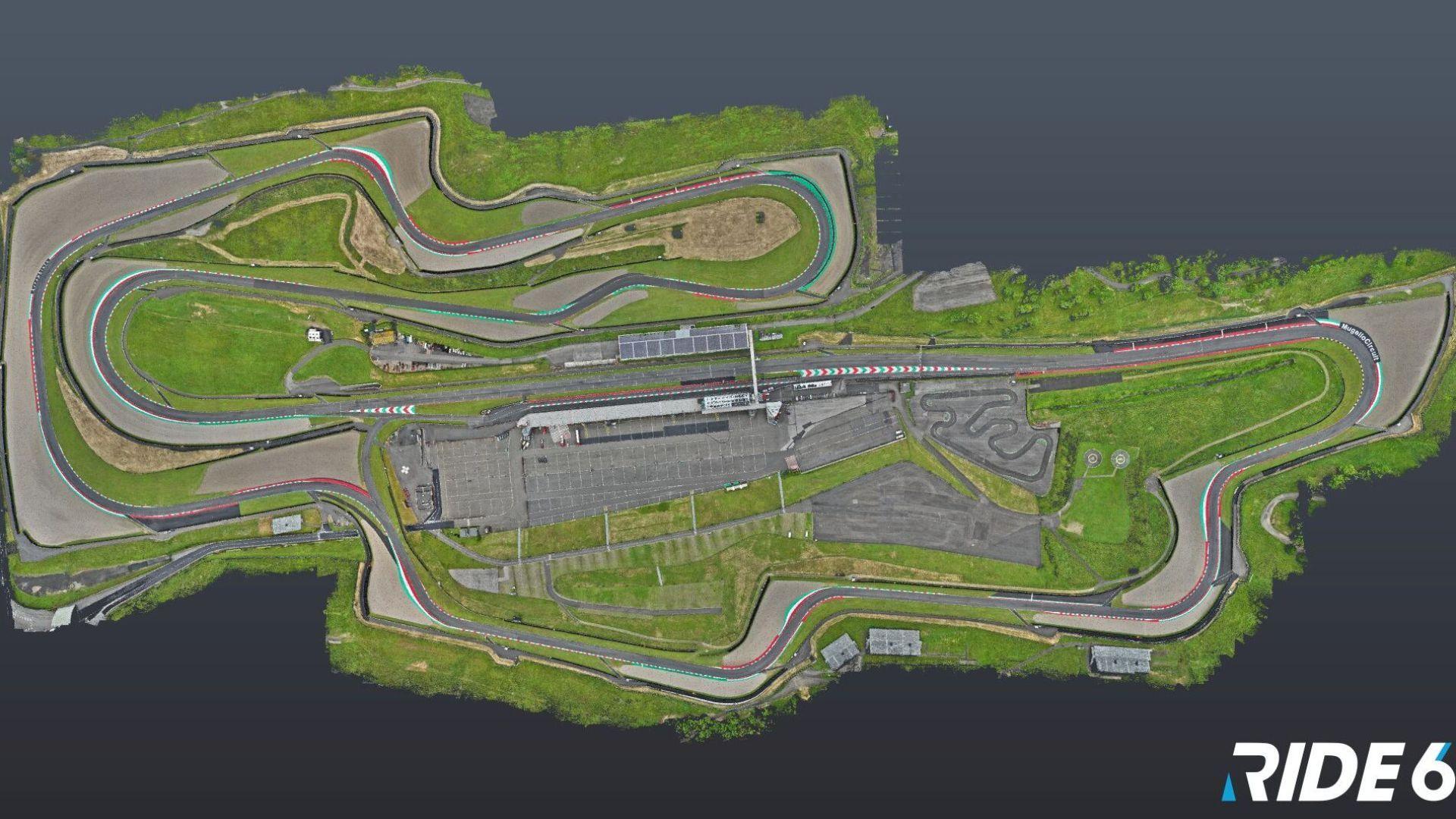
For licensed tracks, the team starts by surveying the location in person. Drones capture aerial images of the circuit, collecting between 2,000 and 2,500 photographs depending on the track’s complexity. Before any drone flight, around 20 to 25 Ground Control Points (GCPs) are placed across the area. These panels are marked and precisely measured using GPS antennas to ensure accurate placement.
Each photo is linked to its corresponding GCP, allowing the team to generate detailed point clouds with a margin of error of just 2.5 centimeters. This data includes not only the track’s asphalt and curbs but also surrounding features such as vegetation, runoff areas, and structures like grandstands. These point clouds form the foundation for the Art Team, who translate the data into 3D models that faithfully recreate the real-world environment, including tracks like Mugello Circuit in Italy.
Designing Fictional Tracks With Gameplay in Mind
Fictional tracks in Ride 6 are approached differently. Instead of replicating real circuits, the team begins with the intended experience and the type of bike that will best suit the layout. Designers work closely with the Physics Team to ensure each track highlights the bikes’ performance while presenting the appropriate level of challenge.
Some tracks are built for speed and flow, with long straights and wide corners that help newer players get accustomed to the gameplay. Tracks like the Kapadokya Rally provide an off-road experience with rally-style sections that showcase dirt riding mechanics. Other circuits are tighter and more technical, intended for experienced players. Environmental choices, such as dense forests versus open fields, play a key role in shaping the perceived speed and overall experience of the track.
Testing and Refining Track Layouts
Once a track design is completed, it undergoes a unique testing phase. The Gameplay Team rides the layout in a stripped-down environment, essentially a floating strip of asphalt with no visual reference points. This allows designers to focus purely on the flow and rhythm of the track. Based on this feedback, the layout is refined, after which reference objects like curbs, signs, and houses are added to guide players and reinforce immersion. The Art Team then completes the environment, adding surface details, vegetation, and structures to create a visually complete circuit.
Supporting Different Riding Styles and Player Levels
Ride 6 caters to a wide range of motorcycles and player preferences. With over 250 bikes spanning categories like superbikes, baggers, and enduro, tracks are designed to accommodate varying speeds, grip levels, and handling characteristics. The game also includes multiple play modes, including the accessible Arcade Experience and the more demanding Pro Experience. Tracks are built to remain readable for new players while still offering complexity for those seeking a challenge.
Online play also benefits from consistent and clear track design, which ensures fair competition in cross-play leaderboards and allows players to focus on mastering racing lines and bike control.
Bringing Tracks to Life
The combination of technology, testing, and art ensures that Ride 6 tracks are both realistic and engaging. Real-world scanning provides accurate layouts, while fictional tracks are carefully crafted to balance challenge and flow. By integrating environment, physics, and gameplay testing, Milestone ensures that each circuit is an essential part of the riding experience rather than just a backdrop.
Ride 6 demonstrates how detailed track design can support immersion and gameplay, offering players a variety of experiences across both asphalt and off-road environments.
Make sure to check out our articles on gaming gadgets:
Best Apple Products for Gaming
Best Nintendo Switch Accessories
Best Gaming Androids (phones)
Frequently Asked Questions (FAQs)
How are real tracks recreated in Ride 6?
Real tracks are mapped using drones and Ground Control Points (GCPs) with high-precision GPS to generate accurate point clouds. These are then converted into 3D models by the Art Team.
What is the process for designing fictional tracks?
Fictional tracks start with gameplay goals and bike types. Designers and the Physics Team collaborate to create layouts that balance speed, challenge, and rider experience, which are later refined through testing.
Does Ride 6 support different skill levels?
Yes. Tracks are designed for both new and experienced players, with options like the Arcade Experience for accessibility and the Pro Experience for more realistic simulation.
How does the environment affect track design?
Environmental elements, such as forests, hills, or open areas, influence the perception of speed and challenge. Designers use these elements to shape the riding experience and immersion.
Are tracks consistent for online play?
Yes. Tracks are designed to ensure clear racing lines and fair competition for cross-play online modes, maintaining balance and competitiveness across all players.
Does Ride 6 include off-road tracks?
Yes. The game includes off-road tracks like the Kapadokya Rally, designed to highlight dirt bike handling and provide rally-style experiences alongside traditional asphalt circuits.