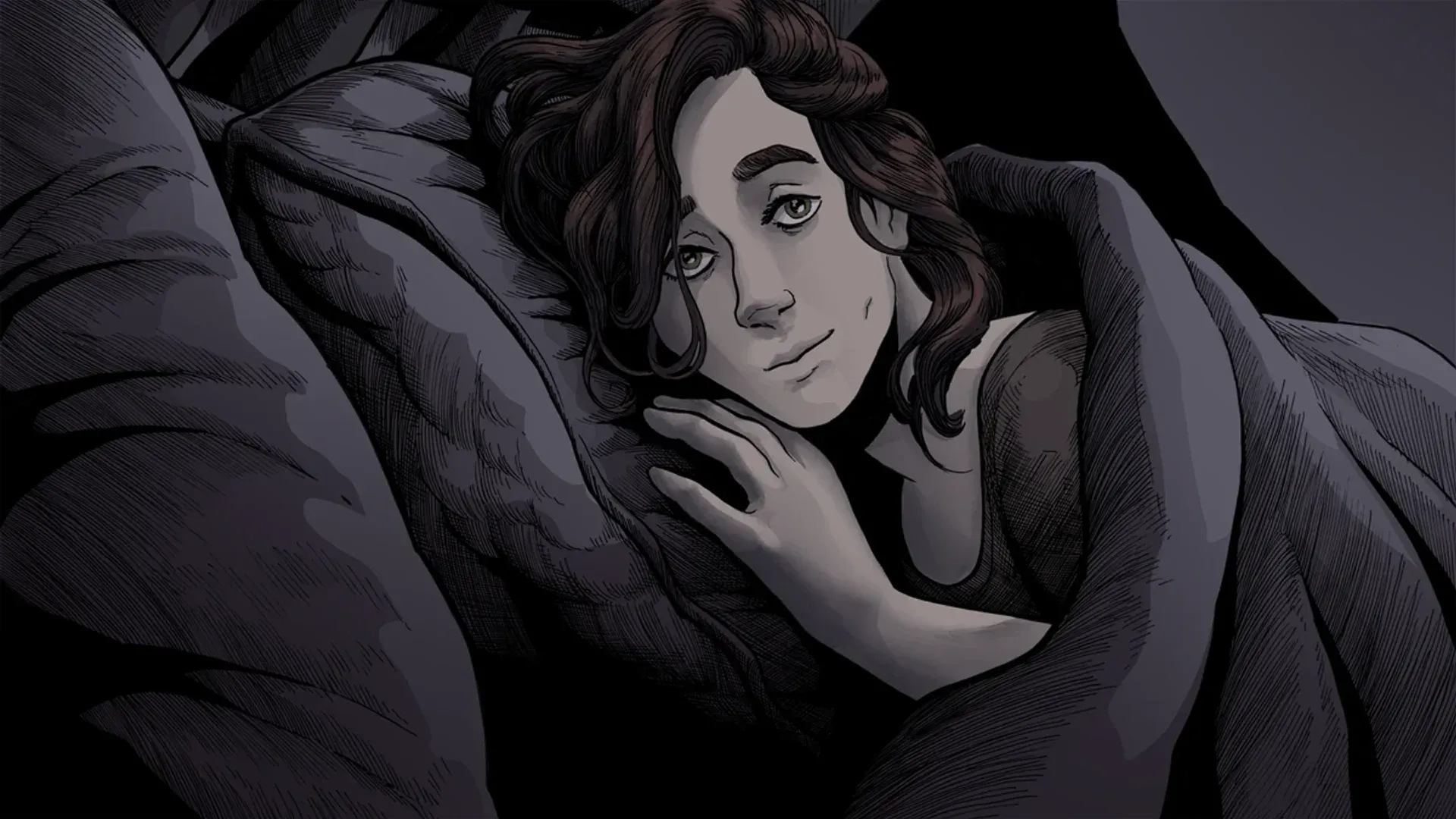


Most RPG romances are a transaction. You say the right things, pick the right gifts, and the companion rewards you with affection. Black Tabby Games looked at that formula and decided it was the problem, not the solution. Their horror visual novel Scarlet Hollow was built from the ground up to make sure the people in your life have their own wants, their own damage, and their own reasons to ignore what you think is best for them.

Use code TRYHARD33 at checkout to redeem this offer before code expires again.
Get 33% Off GAMES+ Subscription
The solipsism problem in RPG relationships
In a recent interview, Tony Howard-Arias (co-developer at Black Tabby Games) put it plainly: "In some RPGs, like Mass Effect, you lead a conversation that's about the other character, but it's also about you and how you can fix their problems. It's just this very solipsist structure, where a player feels like the only real person in this setting."
That framing lands hard if you've spent time with any modern RPG romance system. The companion has a problem. You help. They love you. The end. Scarlet Hollow asks what happens if the other person has decades of baggage you can't fix in a conversation, and if the choices they make are genuinely theirs, not just reactions to your dialogue picks.
Howard-Arias and co-developer Abby Howard wanted the NPCs to express agency, not just respond to it. The result is a game where you're at the whim of other characters as much as they're at yours.
How Bruce Springsteen ended up shaping a horror RPG
The setting, a small rural town in North Carolina, came from Abby Howard's own upbringing and her love of Southern Gothic literature. But Howard-Arias grew up in New Jersey, and to him "small town" meant one thing: Bruce Springsteen.
He went deep into Springsteen's discography and pulled out two connected themes: the desperate desire to escape to something bigger, and the crushing reality of not being able to. That tension became the emotional spine of Scarlet Hollow's character work. Every major NPC is trapped in some way, by family history, by how they were raised, by the expectations of people who will never see them differently. Those traps shape how they interact with you far more than anything you do.
The key here is that this context is invisible to the player most of the time. You won't get a tooltip explaining why Tabitha (your cousin, and the character most players initially read as the villain) behaves the way she does. You have to piece it together, and you might get it wrong.
What "no good endings" actually means in practice
Scarlet Hollow's fifth chapter, released in February, contains one of the game's most discussed moments: the possibility of making Tabitha cry. Not in a manipulative way, but in a genuinely cathartic one. Getting there requires a specific chain of decisions across the whole game, the kind of thing that would realistically require a wiki.
Even then, it doesn't function like a typical "unlock the good ending" moment. Tabitha's behavior for the rest of the chapter shifts, but it's still filtered through everything else that made her who she is. The weeping scenario influences her, it doesn't define her. That's the whole point.
For romantic relationships specifically, the developers are pushing back against what they see as a broader problem in modern media: frictionless closeness. Abby Howard described it in the interview as characters who, when confronted with a flaw, simply say "Oh my god, I'm so sorry I had a flaw. I'll stop having it right away." Real relationships, she argues, hit walls where both people want fundamentally different things, and Scarlet Hollow doesn't pretend those walls disappear.
Stella, the first friend you make in the game, will always choose to confront Tabitha in chapter five regardless of whether you want her to, and regardless of whether it goes badly (it often does). Oscar, the town librarian, expresses affection by letting you see how genuinely strange he is. You can't change that about him. You can only decide what it means for you.
Why this approach matters for the genre
The broader argument Black Tabby Games is making is about what games owe players emotionally. Howard-Arias framed it as a question of stakes: "What is good without sacrifice? What are we doing as an artistic medium if we're saying these are stories about heroism, but there's no stakes, there's no penalties, there is nothing risked for the greater good?"
That's a pointed critique of how most RPGs handle morality, and it applies just as much to romance systems as to combat or quest design. Scarlet Hollow treats every character, including the ones who do genuinely bad things, with what Howard-Arias calls "humanity, grace and empathy." That doesn't mean they're redeemable. It means they're real.
With the game's final chapter still ahead, players who want to see where these relationships land should browse the latest gaming news for updates as Black Tabby Games moves toward the conclusion.