Star Atlas, a space strategy game built on the Solana blockchain, has seen a significant increase in economic activity. Recent data from Flipside Crypto shows that players generated over $700,000 in revenue during March 2025 through in-game activities, staking mechanisms, and marketplace trades. This revenue stems from multiple sources within the game's evolving on-chain economy, demonstrating continued growth despite the relatively small user base and ongoing development.
Star Atlas Player Revenue Hits $700k
Key Sources of Revenue
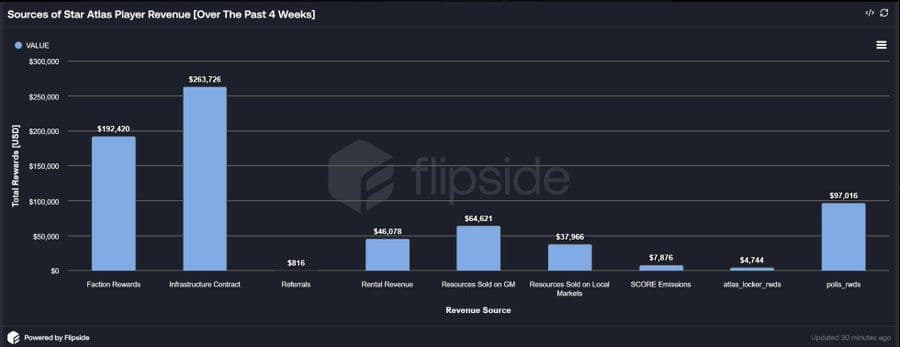
Player earnings in Star Atlas come from several distinct sources. Infrastructure Contracts (FICs) led the way with over $263,000. These contracts, part of the SAGE Labs module, let players craft agreements using in-game resources and exchange them for guaranteed ATLAS payouts—the game's primary token. Faction Fleet rewards through the SCORE program brought in around $192,000, allowing players to stake their ships with factions for ongoing ATLAS emissions.
The SCORE system caps emissions at roughly 3% of total ATLAS supply each quarter to control inflation. Players also earned through the Galactic Marketplace and local market sales. The Galactic Marketplace generated $64,621, while local markets added $37,966. These earnings come from trading resources like fuel, food, and ammunition that players produce through NFTs or claim stakes, then sell to others for crafting, missions, or ship maintenance.
A 6% transaction fee applies to all marketplace trades, with collected fees flowing to the Star Atlas DAO treasury to support the broader game ecosystem.
Star Atlas Player Revenue Hits $700k
POLIS Staking Rewards and Governance
Governance participation contributed to player earnings as well. Players who staked POLIS—the token used for DAO voting and treasury control—earned $97,016 total. These rewards come from a dedicated pool designed to encourage long-term participation in the game's governance. Governance participation remains low, though, raising questions about whether a small group of large holders might centralize decision-making.
Smaller revenue streams like rentals, referrals, and locker rewards added several thousand dollars combined. These elements reflect ongoing experiments within the game's economy, including performance-based emissions and player-to-player lending systems that may expand as development continues.
These player activities have generated substantial value for the Star Atlas DAO, which accumulated $1.37 million over the past year from fees and in-game sinks. POLIS token holders manage these funds and vote on their use for future development, token burns, or staking rewards. Roughly 66% of ATLAS emissions typically get re-spent or re-staked by players in the game, reducing sell pressure and supporting long-term economic sustainability.
Star Atlas Cover Banner on X
Challenges and Future Outlook
Star Atlas's economy shows promise, but challenges remain. ATLAS token volatility poses a real risk—the token dropped 25% in May 2024, directly impacting the USD value of in-game rewards. All current gameplay exists in a test environment, with the full release still under development. The eventual mainnet experience may differ significantly from what players see now.
Compared to other web3 games, Star Atlas demonstrates a more mature and balanced economic system. Its focus on controlled emissions and gameplay-driven economic inputs contrasts with earlier play-to-earn models that flooded markets with tokens without adequate sinks. As development progresses, the team aims to refine these systems for a more sustainable and engaging player experience.
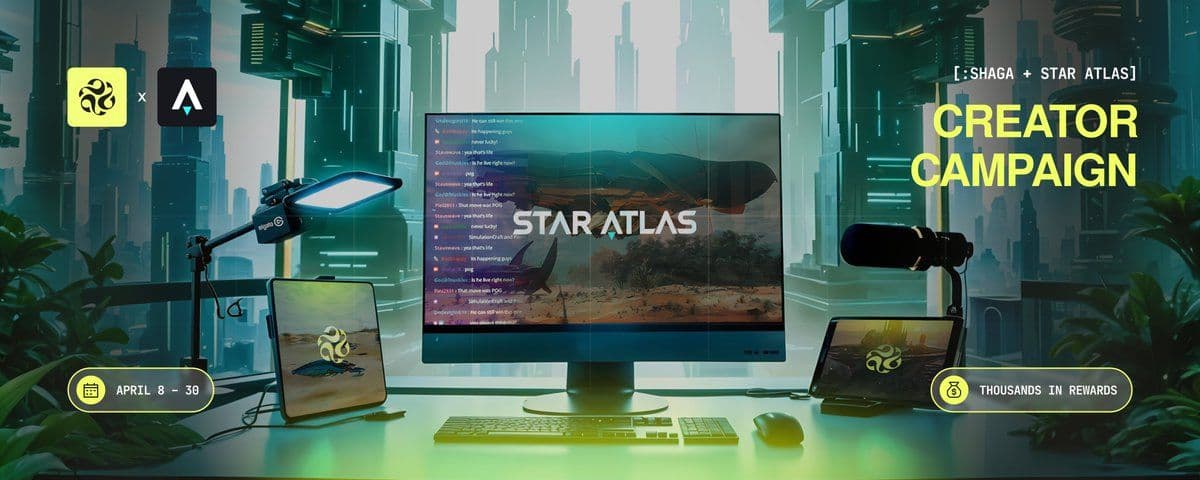
Details on Star Atlas' $100K Creator Campaign
Final Thoughts
The expanding on-chain economy in Star Atlas demonstrates the potential of blockchain-based gaming to generate real-world value for players during early development. The game's economic model integrates staking, marketplace trading, and player-driven decision-making in ways that may offer lessons for other web3 projects. Players should remain aware of the volatility and risks inherent in cryptocurrency-based systems. With continued development and refinement, Star Atlas aims to deliver a more sustainable and engaging economic environment for its players.