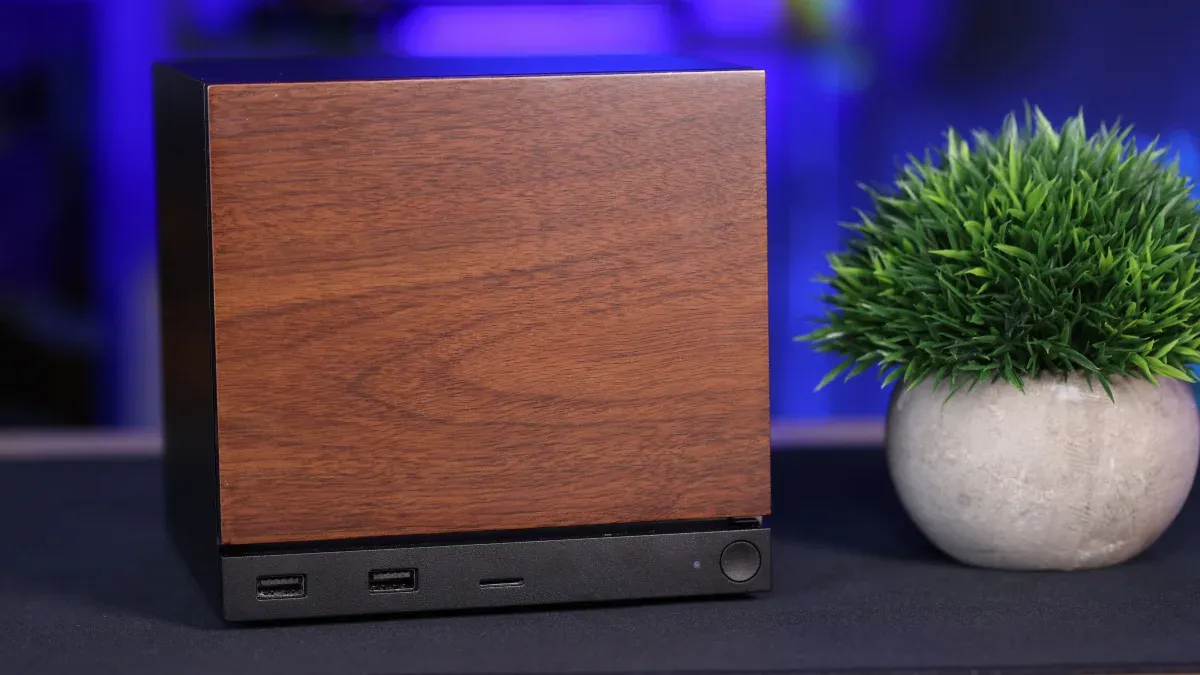


Valve hasn't shipped a single Steam Machine yet, and scalpers have already moved in. With preorders set to officially open on June 29, sellers holding confirmed reservation spots have started posting those reservations on eBay, asking anywhere from roughly double retail up to $3,200 for a device that hasn't left a warehouse.

Use code TRYHARD33 at checkout to redeem this offer before code expires again.
Get 33% Off GAMES+ Subscription
The price gap is hard to ignore
The Steam Machine itself isn't cheap to begin with. Depending on the configuration, retail pricing runs between $1,050 and $1,430. The eBay listings are treating that as a floor, not a ceiling.
The cheapest reservation spotted so far went for $1,363.70 and has already sold. A listing describing the device as "a piece of gaming history" is asking $2,600. The most expensive listing sits at $3,200, which is more than double the top retail price. For context, that's the kind of markup that made the PS5 launch scalping era infamous.
What "confirmed reservation" actually means here
Valve's preorder communication has been genuinely confusing. The company sent out emails distinguishing between people in the "queue" and people on the "waitlist," and the difference matters. A queue spot means you're in line to actually receive a unit. A waitlist spot does not carry the same guarantee.
The eBay sellers are specifically listing queue confirmations, not waitlist positions. Some listings even promise to ship the unit directly to the buyer as soon as Valve ships it to them, which could be as early as July. That turnaround promise is part of the pitch, even at a significant markup.
This is the hardware scalping playbook, again
Here's the thing: this is not a new story. The same pattern played out with the PS5, Xbox Series X, Nintendo Switch 2, and the original Steam Deck. High-demand hardware with limited initial supply, a queue-based reservation system, and a secondary market that moves faster than the official launch window.
What makes the Steam Machine situation slightly different is that the device is already expensive at retail. A $1,430 PC-in-a-box is a considered purchase for most people. Paying $2,600 or more for the same hardware, just to skip a queue, is a much harder sell than it was for a $500 console.
Early impressions of the hardware describe it as compact but capable, a small form-factor machine with real trade-offs around thermals and expandability. Whether that profile justifies scalper pricing is a separate question entirely. For anyone planning to actually use the device rather than flip it, waiting for stock to normalize is the more rational move.
The "piece of gaming history" pitch
One listing's decision to call the Steam Machine "a piece of gaming history" is doing a lot of work. Valve's living room PC ambitions stretch back to the original Steam Machines from 2015, which never found a mass audience. This new iteration is a different product with a different context, but the historical framing is clearly part of the sales strategy for at least one seller.
Whether the hyperbole lands is another matter. The device is interesting hardware, and Valve's reputation gives it credibility the 2015 machines never had. But "gaming history" is a stretch when preorders haven't even formally opened yet.
If you're tracking upcoming releases and want to plan around launch windows, the 007 First Light preload guide is a good example of how staggered availability windows work across platforms, and the same patience principle applies here. Official Steam Machine stock will expand past the initial queue. The scalper window is usually shorter than it feels in the moment.
For more coverage on launches, hardware, and everything else moving in gaming right now, the full gaming guides hub has you covered as the Steam Machine release date approaches and more details emerge about availability beyond the first wave.
Valve has not confirmed when general availability opens beyond the initial queue. The June 29 date marks the start of preorders, not the end of the wait for most people. Keep an eye on official Steam announcements for queue updates before considering any secondary market options.