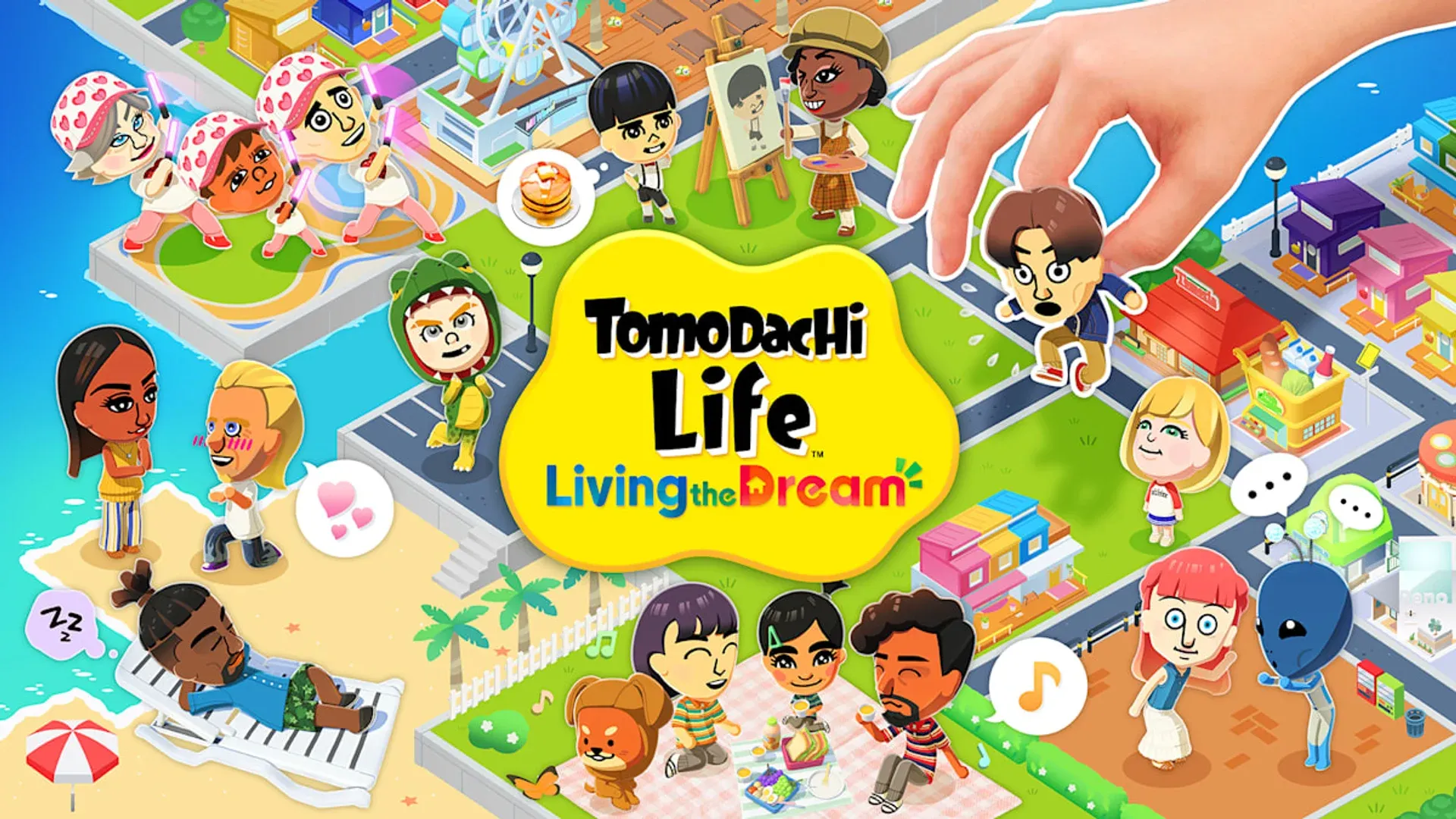

Twelve years is a long time to wait for anything, let alone a sequel to a game about watching cartoon avatars fall in love with crackers.
That's exactly how long Tomodachi Lifefans sat in silence after the 3DS original dropped in 2014 and became one of the platform's best-selling games before Nintendo seemingly forgot it existed. No sequel. No spin-off. No explanation. Just a very long, very loud nothing. Some fans assumed Nintendo had quietly retired both the series and its Mii avatars for good. Others kept the flame alive through mods, fan art, and increasingly elaborate "summoning circles" on social media begging Nintendo to bring it back.
Then Tomodachi Life: Living the Dream was announced, and the internet briefly lost its mind.
What Tomodachi Life actually is (and why people love it so much)
For anyone who missed the original, Tomodachi Life sits in a weird, wonderful space between The Sims, Animal Crossing, and a reality TV show you accidentally get invested in. You populate an island with Mii avatars modeled after your friends, celebrities, fictional characters, or whoever you want, then mostly step back and watch the chaos unfold. They form friendships, start feuds, fall in love, get married, and have kids. You feed them, play minigames with them, and occasionally nudge relationships along, but the Miis make their own choices. That loss of control is the whole point.
The series actually traces back to Tomodachi Collection, a Japan-exclusive DS game from 2009. Here's a fun bit of trivia: Miis were originally created for the Wii specifically because of that game's development. The 2014 3DS sequel brought the concept to Western audiences for the first time, and it landed hard.
The memes that kept the series alive between games
Even during the long gap between releases, Tomodachi Life never fully disappeared from the internet. The "all hail the cracker" meme, clips of a Peter Griffin Mii delivering a tearful ballad to a packed crowd, and basically the entire concept of making Miis do unhinged things all trace back to this series. If you've spent any time on gaming corners of the internet over the past decade, you've absorbed Tomodachi Life content whether you realized it or not.
That cultural footprint kept the fanbase warm and ready. When Living the Dream was announced, those fans didn't need to rediscover the series. They'd never left.
What Living the Dream is actually adding
Nintendo didn't overhaul the formula, and according to Kotaku's impressions, that's probably the right call. The core loop of watching Miis live their chaotic little lives stays intact. What's new is a meaningful expansion of what you can customize and who gets to participate.
danger
Living the Dream now supports gay marriage and adds expanded options for creating more diverse Miis, features that were notably absent from the 2014 original.
Beyond representation, the new entry lets players customize the island's layout, which the original never allowed. You can also draw your own items, pets, and even Mii faces directly into the game, which then exist as real in-game objects. Profanity is now permitted too, though Nintendo responded to that by making screenshot sharing more restricted, which is very much a Nintendo move.
The key here is that Nintendo resisted the urge to bolt on crafting systems or sprawling progression mechanics. Living the Dream looks like a more expressive, more inclusive version of what the 3DS game already did well, rather than a reinvention.
The Animal Crossing connection fans keep pointing out
Here's the thing: Living the Dream is set on an island, looks visually warm and approachable, and is arriving on a platform where Animal Crossing: New Horizons already introduced millions of players to exactly this kind of low-stakes, cozy life sim. That 2020 release pulled in players who had never touched the genre before, and many of them are still looking for the next thing that scratches that itch.
Tomodachi Life fills a slightly different niche. Where Animal Crossing gives you direct control over your environment and daily routines, Tomodachi Life hands that control over to the Miis and makes you watch. The unpredictability is the feature. For players who loved New Horizons but wanted more personality and less landscaping, this could be exactly what they've been looking for. Make sure to check out more: