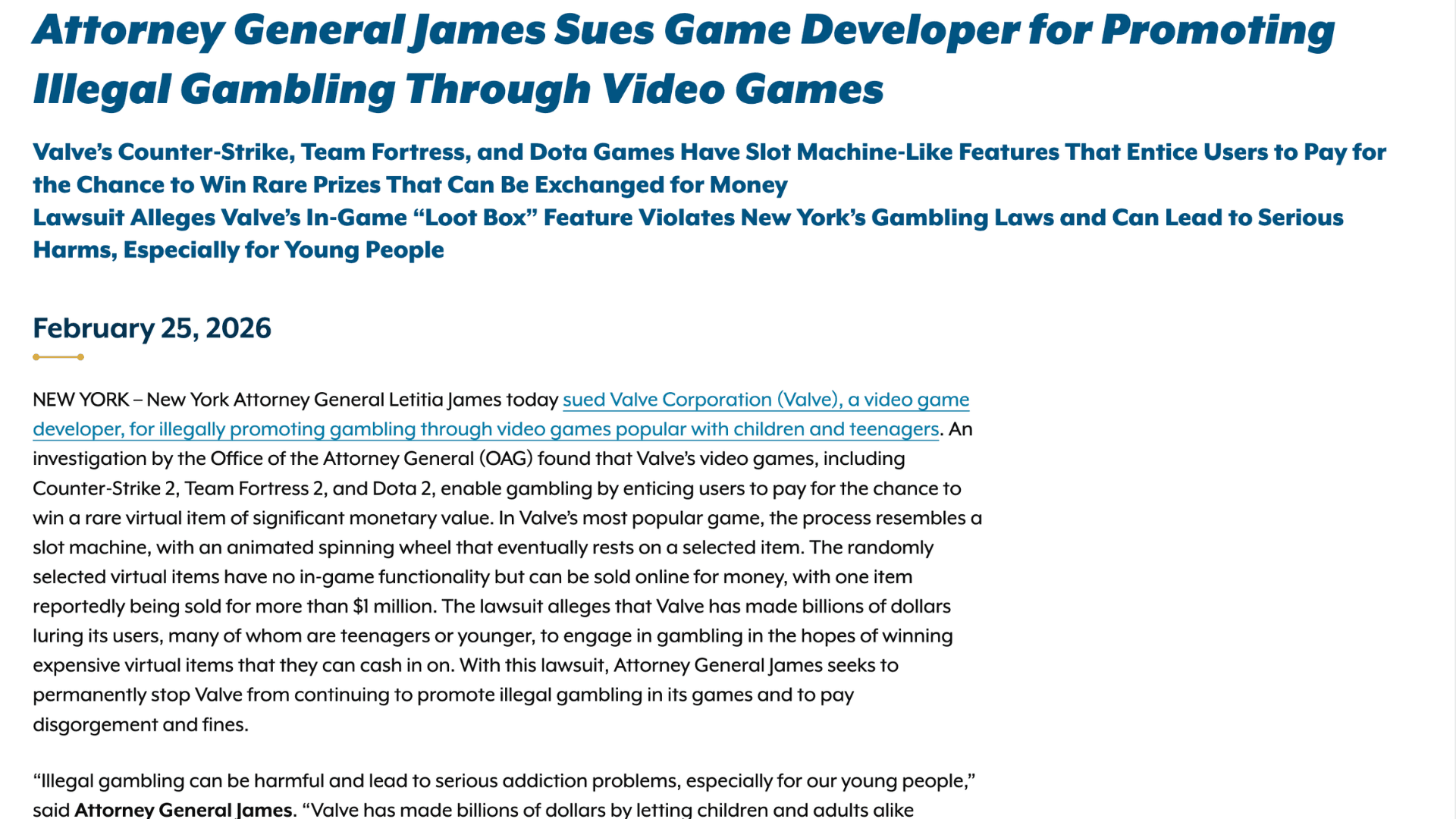

New York Attorney General Letitia James filed a lawsuit against Valve on February 25, 2026, claiming the company runs an illegal gambling operation through loot boxes in Counter-Strike 2, Dota 2, and Team Fortress 2. The Manhattan filing argues that these systems exploit players, particularly minors, by encouraging compulsive spending through randomized rewards.
James compared the loot box mechanics to slot machines. Players spend real money on digital keys to unlock containers with randomized cosmetic items. Rarity is built into the system, making certain skins exponentially more valuable than others. One Counter-Strike skin sold for over $1 million in 2024. The lawsuit contends that this scarcity drives repeated purchases as players chase high-value drops.
Steam Marketplace profits
Valve operates Steam, the largest PC game storefront globally. Items obtained from loot boxes can be resold on the Steam Marketplace, where Valve collects a transaction fee on every sale. The lawsuit estimates Valve earned close to $1 billion from Counter-Strike key sales in 2023 alone, not counting marketplace cuts.
In 2025, Valve made changes to Counter-Strike's skin trading rules that erased more than $1 billion in virtual item value overnight. Traders and collectors saw their inventories plummet. The incident highlighted how much real money flows through Valve's in-game economies and how vulnerable those markets are to company policy shifts.
Loot boxes under legal pressure
Loot boxes have been controversial for years. Publishers frame them as optional cosmetic purchases, but critics see them as predatory gambling mechanics that hook vulnerable players. The New York lawsuit demands that Valve permanently stop offering loot boxes in its games and pay fines for violating state gambling regulations.
Third-party "skin casino" sites, where players gamble with in-game items, have drawn increased attention. YouTube restricted content promoting these platforms in 2025. If New York wins this case, it could reshape how loot boxes are treated under U.S. law and pressure other publishers to rethink their monetization strategies.
Make sure to check out our articles about top games to play in 2026:
Best Nintendo Switch Games for 2026
Best First-Person Shooters for 2026
Best PlayStation Indie Games for 2026
Best Multiplayer Games for 2026
Most Anticipated Games of 2026
Top Game Releases for January 2026
Frequently Asked Questions (FAQs)
What games are involved in the lawsuit against Valve?
The lawsuit targets Counter-Strike 2, Dota 2, and Team Fortress 2.
Why does New York consider loot boxes illegal?
The state argues that loot boxes function as gambling because players pay real money for randomized virtual items, with rarity intentionally manipulated to increase perceived value and encourage repeated spending.
How much money has Valve reportedly made from loot boxes?
Valve earned nearly $1 billion from Counter-Strike key sales in 2023, plus additional revenue from Steam Marketplace transaction fees on cosmetic item trades.
What changes did Valve make to the skin economy in 2025?
Valve altered Counter-Strike's trading and valuation systems, wiping out over $1 billion in virtual market value and disrupting the economies built around skin trading.
Could this lawsuit affect other games or companies?
Yes. A ruling against Valve could set a precedent for how loot boxes and virtual item economies are regulated under U.S. gambling laws, potentially forcing changes across the industry.