


Playing No Rest for the Wicked solo can be brutal. The Together update changes everything by introducing full cooperative multiplayer where you and up to three friends tackle Isola Sacra as a fellowship. This isn't your typical drop-in, drop-out co-op. You'll share a persistent realm where every action matters, every piece of loot counts, and coordination becomes essential for survival.
Here's the thing: the multiplayer system in No Rest for the Wicked breaks the traditional ARPG mold. Instead of temporary sessions where only the host progresses, everyone in your party shares the same continuous world. You can log in, gather resources, and push forward even when your friends are offline. This guide breaks down everything you need to dominate cooperative play.
How Co-op Works in No Rest for the Wicked
The Together update introduces shared realms, persistent multiplayer worlds that belong to your entire fellowship. When you create a realm and invite friends, you're building a collective adventure where progress sticks for everyone.
Unlike traditional co-op ARPGs, your friends don't get kicked back to their own worlds after each session. The realm stays active. You can hop in solo to farm materials, then your buddy can join later to tackle that boss you've been avoiding. Everything you do, from upgrading vendors to clearing areas, affects the shared world state.
Creating and Joining Realms
Setting up cooperative play takes seconds:
- Create a new realm from the co-op menu
- Send invitations through your Steam friends list
- Friends accept the invite and join your world
- Start playing together (up to four players total)
You don't need to start fresh characters. Bring your existing character into any realm, regardless of their progress level. This flexibility lets you maintain multiple fellowships without grinding new builds each time.
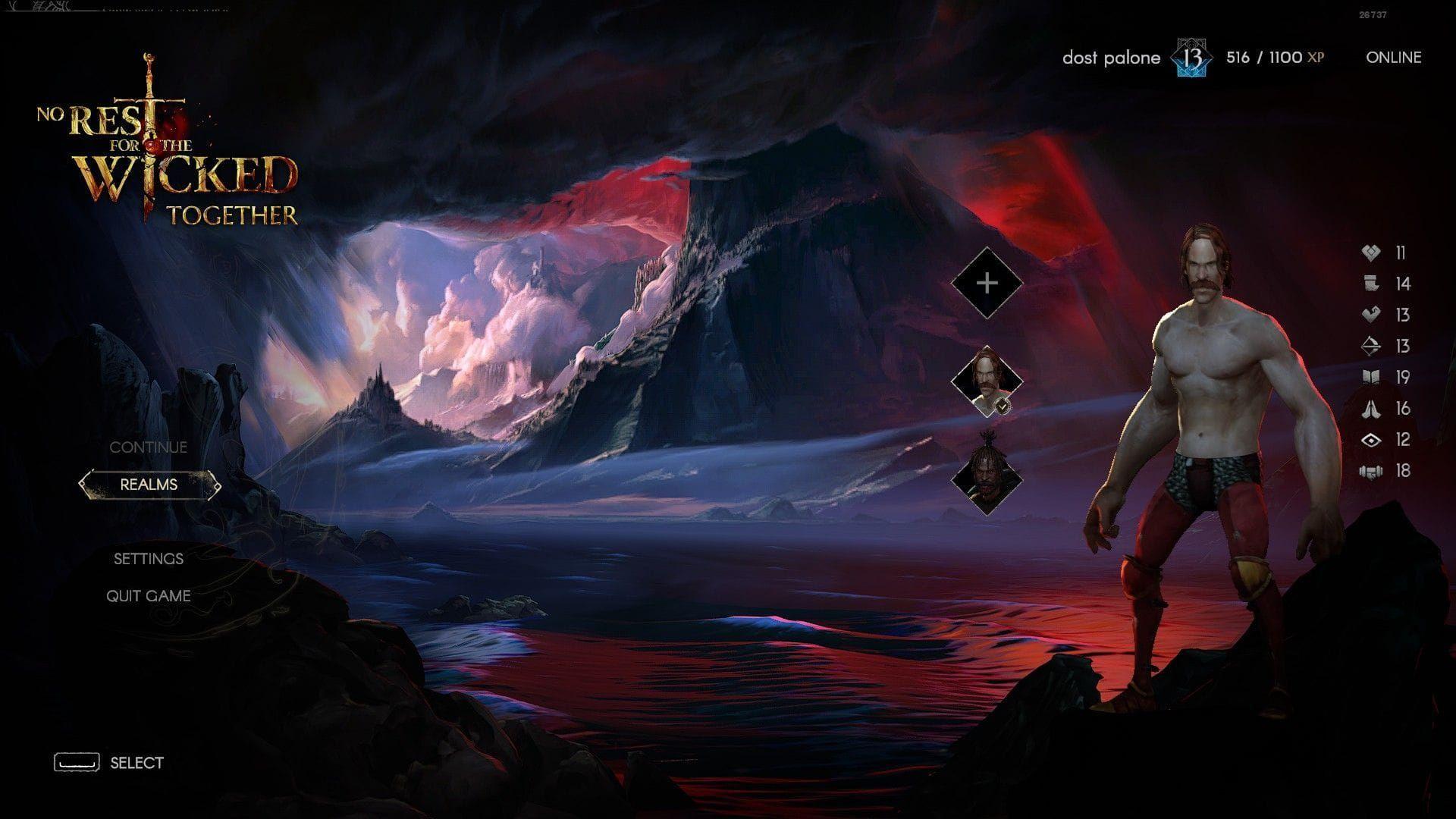
Realm creation menu interface
What Makes Shared Realms Different?
Traditional ARPG co-op feels temporary. You join someone's game, get some loot, then return to your own world like nothing happened. Shared realms flip this model completely.
Key differences from standard co-op:
- World changes persist for all members
- Vendor upgrades benefit everyone
- Quest progress advances collectively
- Resource gathering affects the shared economy
- Boss kills stay permanent
Think of it like owning property together. When one person upgrades the blacksmith, everyone benefits. When someone clears a dungeon, it stays cleared. The realm becomes a collaborative project rather than a temporary session.
Managing Multiple Realms
You're not locked into one realm. Create as many as you want for different friend groups or playstyles. Each realm maintains its own:
- World state and progression
- Vendor levels and inventory
- Resource availability
- Quest completion status
Switch between realms freely with any character. This system works perfectly for testing different difficulty settings or playing with various groups without commitment.
How Loot Works in Multiplayer
Loot follows a first-come, first-served system. When an enemy drops gear or you find a chest, whoever grabs it first owns it. No shared pools, no automatic distribution. You'll need to communicate and coordinate to avoid conflicts.
What most players miss: this creates natural specialization opportunities. One player focuses on gathering crafting materials while another hunts for weapons. The trading system makes this division of labor work seamlessly.
The Trading System
Since loot isn't automatically shared, trading becomes essential. The system lets you exchange items and currency without restrictions between realm members.
How to trade:
- Initiate trade with a party member
- Place items in your offer window
- Add currency if needed
- Both players confirm and lock
- Complete the exchange
Pro tip: establish a loot council system where the group decides who needs what most. This prevents arguments and optimizes gear distribution for your fellowship's overall power.
Combat Strategies for Co-op Play
Friendly fire changes everything. You can absolutely hurt your teammates with poorly timed attacks. This isn't Dark Souls where you can spam attacks mindlessly. You need coordination.
Team Composition Tips
Balance your fellowship across these roles:
Don't stack four melee characters. You'll trip over each other and trigger friendly fire constantly. Mix ranged and melee for better battlefield control.
Revive Mechanics
When a teammate falls, you can resurrect them, but it costs you health. The revival system creates interesting tactical decisions. Do you risk your own survival to save a fallen ally during a boss fight? Sometimes letting someone stay down until you clear adds makes more sense.
Position matters during revivals. Don't stand in fire to pick up your friend. Clear the area first, then revive safely.
Enhanced Enemy AI in Multiplayer
Enemies get smarter and more aggressive when facing multiple players. The AI adapts to party size with:
- Increased spawn rates
- Higher difficulty scaling
- Improved escape tactics when cornered
- Better target switching
- Enhanced coordination between enemy groups
You'll face more enemies than solo play, and they'll behave differently. Expect flanking maneuvers, retreats to regroup, and focus-fire tactics against vulnerable targets.
Vendor and Crafting Changes
The Together update overhauls how vendors and crafting work, affecting both solo and multiplayer modes.
Upgradable Vendors
Vendors now level up, improving their inventory quality and variety. Each upgrade tier unlocks better gear and materials. In shared realms, vendor upgrades persist for all members, so coordinate investments wisely.
Vendor inventory refreshes daily with random items instead of fixed stock. Check back regularly for rare finds. What most players miss: higher-tier vendors have better odds of stocking legendary items.
New Crafting System
Research Papers drop throughout Isola Sacra, unlocking crafting recipes. Take these to a Scribe Table to research new items. You can even research random undiscovered items, adding a gambling element to crafting progression.
Every item in the game is now craftable after researching its recipe. This eliminates dependency on RNG drops for specific builds.
Stat Allocation for Beginners
Starting fresh in co-op? Don't immediately dump points into weapon-specific stats. You'll want flexibility until you find your preferred playstyle.
Early stat priorities:
- Health: Survivability matters more in multiplayer
- Stamina: Dodging, attacking, and parrying all consume stamina
- Weapon stats: Only after committing to a build
You can respec later using the Crucible system, but it costs Fallen Embers. Save yourself the resource drain by staying flexible early.
Weapon Scaling Breakdown
Different weapons scale with different attributes:
- Strength: Two-handed weapons, heavy melee
- Dexterity: Bows, dual-wield, light weapons
- Intelligence: Staves, magical implements
- Faith: Support abilities, healing tools
Check your weapon's stat scaling icon before allocating points. The key here is matching your point investment to your preferred gear.
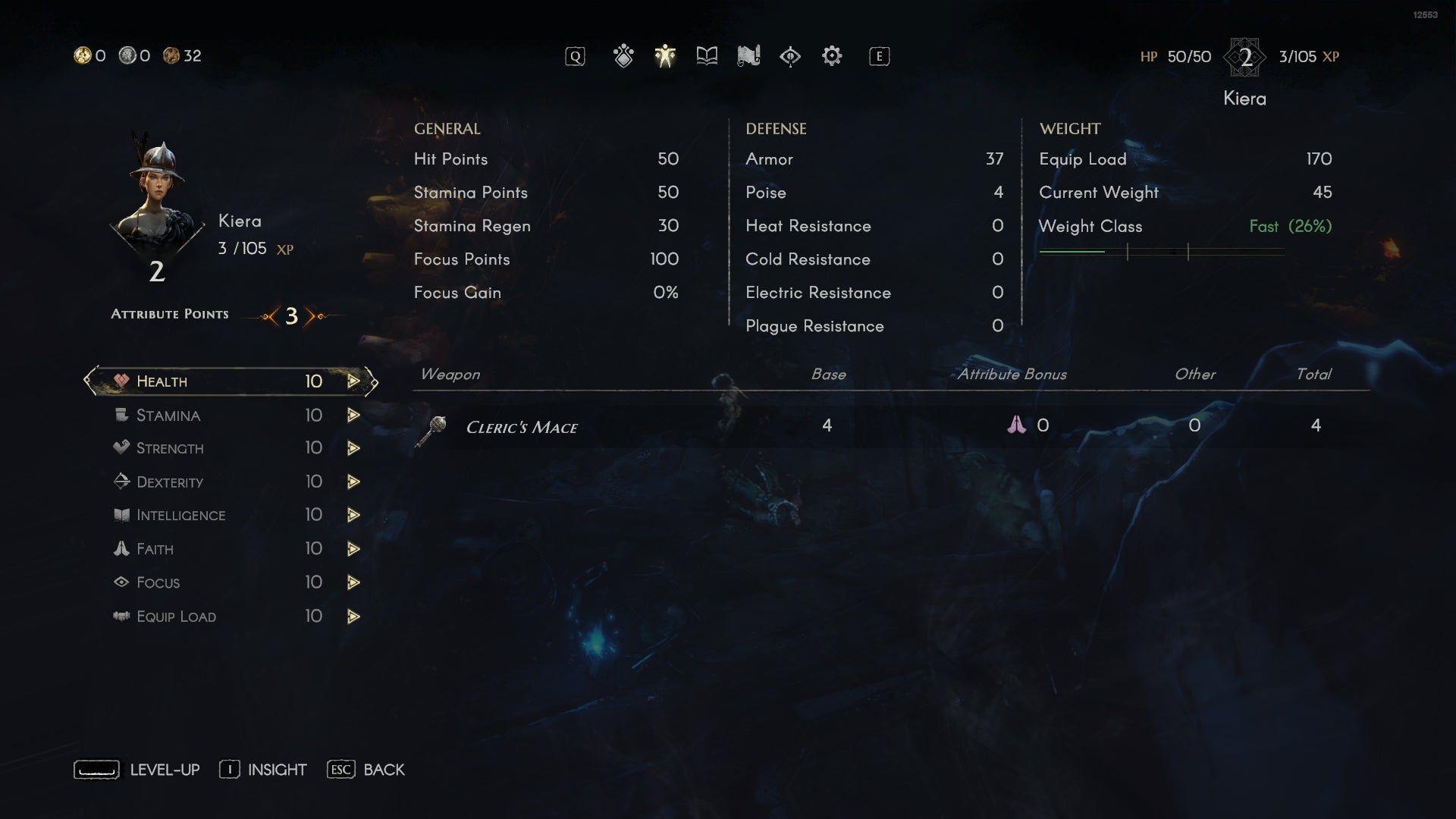
Character stats screen
New Systems in the Together Update
Compendium Feature
The Compendium acts as your game encyclopedia, letting you:
- Revisit tutorials
- Rewatch story sequences
- Review quest dialogues
- Browse item catalogs
- Study enemy behaviors (bestiary coming soon)
Missed a crucial story beat? Check the Compendium instead of starting over.
Facet System for Weapons
Facets add unique modifiers to weapons, creating trade-offs between power and utility. You might find two identical swords with different facets:
- Facet A: +20% attack speed, -15% damage
- Facet B: +30% critical chance, -10% attack speed
This system multiplies build variety. The same weapon type can function completely differently based on its facet.
Overhauled Enchantment System
Enchantments now scale with item level. Higher-level gear rolls better enchantments automatically. The number of enchantment slots also increases with item level, making endgame gear significantly more powerful.
New enchantments in the Together update provide fresh build options beyond the base game offerings.
Exalting System Changes
Exalting now requires maxed-out items (fully upgraded, all enchantment slots filled, all gem slots occupied). When you exalt, one random enchantment or gem gets boosted by 50%. That same stat can get selected again on future exalts, stacking the bonus.
This creates a meaningful endgame grind where perfect items require multiple exalt attempts.
Bow and Quiver Mechanics
The Together update introduces Quivers as functional off-hand items for bow users. Different quivers modify your arrow effects:
- Explosive arrows
- Piercing shots
- Status effect applications
- Elemental damage conversions
You're no longer stuck with basic arrows. Quiver selection becomes part of your build strategy.
Difficulty Settings and Realm Options
Three difficulty modes let you tune challenge levels:
- Standard: Balanced for new players
- Challenging: Increased enemy damage and aggression
- Path of the Unspoken: Hardcore mode with permadeath risk
Choose difficulty when creating your realm. You can also toggle the prologue on or off if you've already completed it on another character.
Co-op in No Rest for the Wicked is less about carrying friends and more about building something together. Shared realms, persistent progress, and meaningful coordination turn every session into a long-term investment rather than a one-off run. Whether you’re theorycrafting builds, splitting roles, or slowly upgrading vendors as a group, the Together update rewards planning and teamwork in a way few ARPGs attempt. If solo play felt punishing before, this is where the game truly opens up. Gather your fellowship, set your rules early, and treat your realm like a shared legacy.