
Nova Roma does not ease you in. The city-builder published by Hooded Horse drops you into a fragile Roman settlement where a single logistics mistake can trigger a cascade of starvation, plague, and divine punishment before you have time to react. After testing dozens of layouts and pushing cities past the 10,000-citizen mark, the patterns that separate thriving empires from abandoned ruins become very clear. This guide covers everything from your first five in-game years to late-game export economy and performance tuning.
Why does Nova Roma punish new players so fast?
The core problem is that Nova Roma simulates individual citizen routines. Every worker, transporter, and baker has a physical path they walk, and if that path is too long or blocked, the system breaks down quietly. Your granaries can be full while your citizens starve because the bread transporter is stuck in a logistics loop on the other side of the city. Understanding this single mechanic changes how you approach every building placement decision.
The game runs on the Lion Shield engine, which is notoriously CPU-intensive. As your population grows, the processor has to track thousands of simultaneous pathfinding calculations. That is why performance degrades as cities scale, not because your GPU cannot handle the visuals.

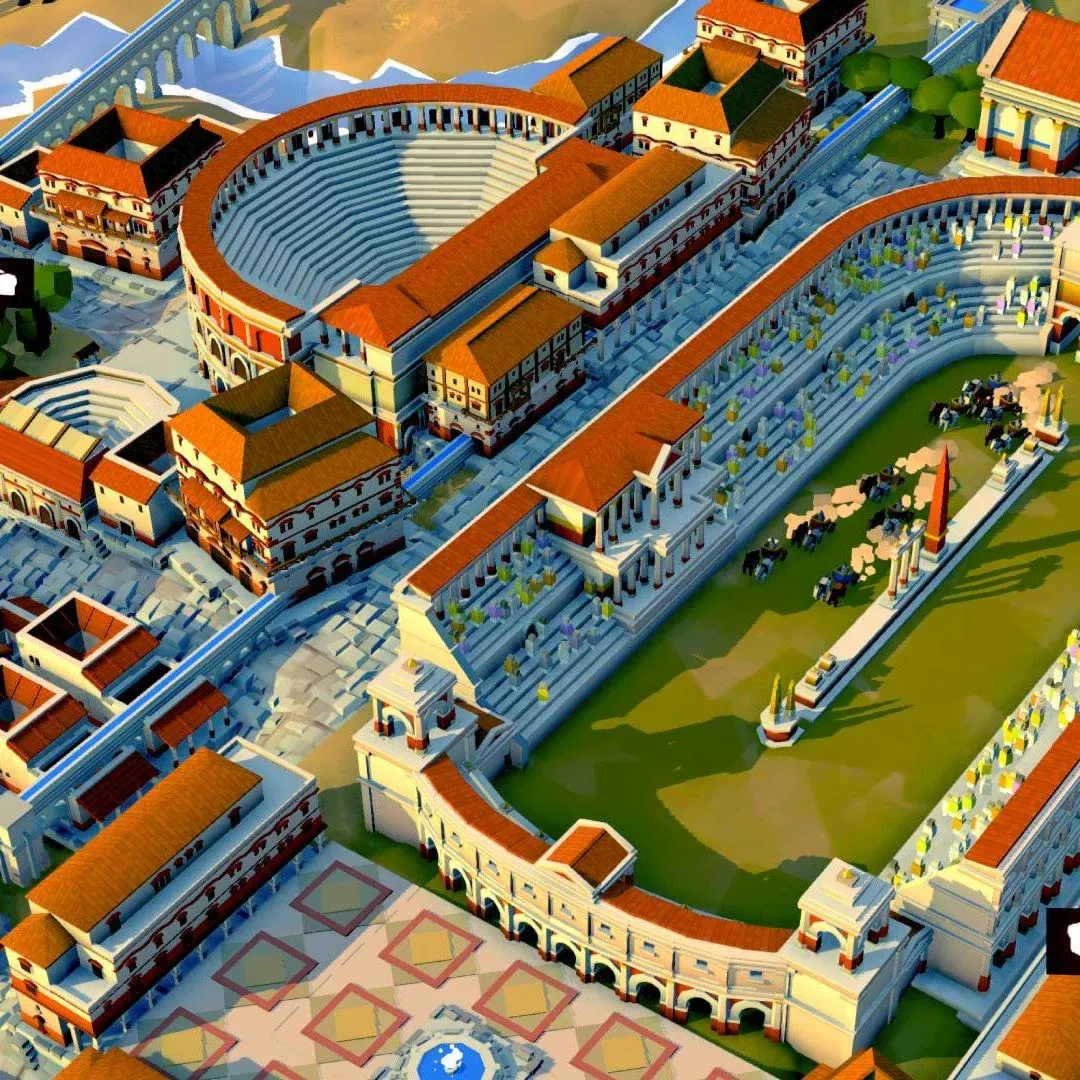
Early game survival: how to plan your first city
The five rules that decide your first five years
These priorities are not suggestions. Skipping any one of them in the first few years reliably causes a crisis:
- Aqueducts before housing. No exceptions. Zone houses only after water coverage is confirmed.
- 20% food buffer. Target food production that exceeds your current population demand by at least 20%. One drought season will wipe a thinner margin.
- Granary placement within 10 tiles. Transporters walking long distances are the most common cause of famine when food stocks are technically available.
- Shrine to Ceres in year one. Her agricultural blessing is the difference between a food surplus and a mid-game famine curse that is nearly impossible to recover from.
- No mass-zoning. Rapid population spikes create what the game effectively treats as a logistics shock, where the AI cannot scale its transporter assignments fast enough to meet sudden demand.
What is the best city layout for Nova Roma?
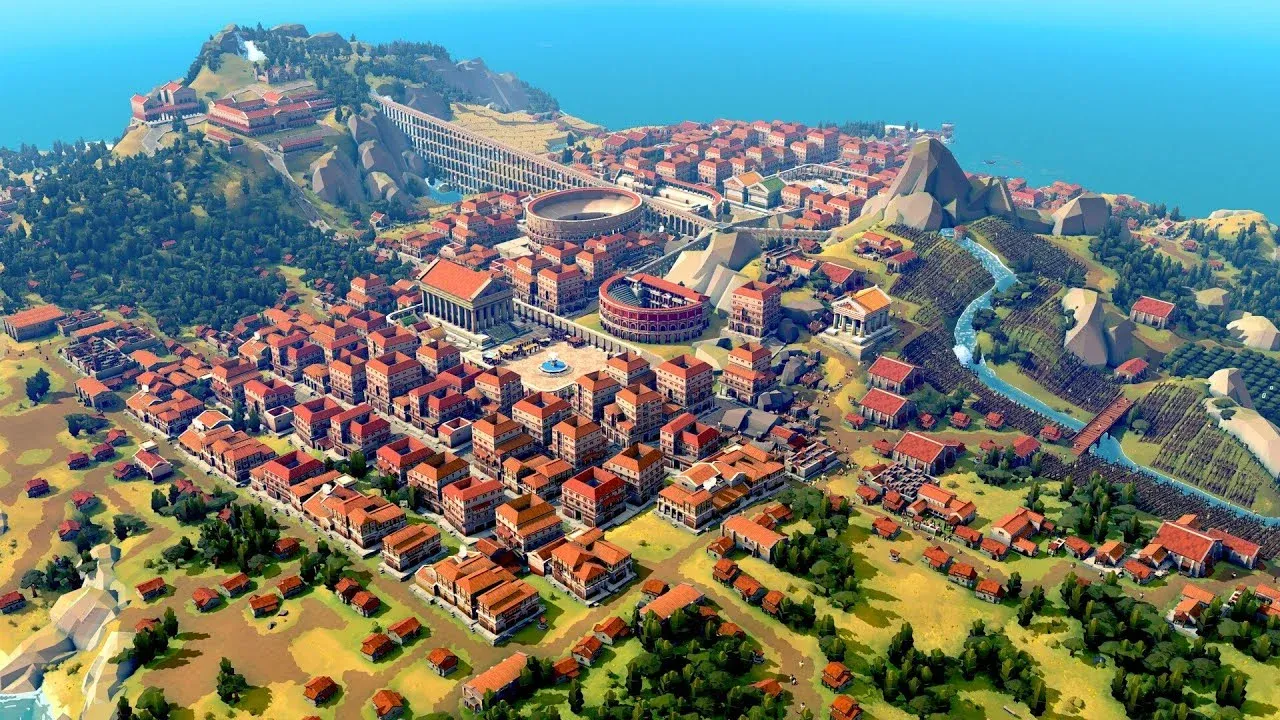
After testing multiple grid configurations, the 6x6 residential block holds up best across all game stages. Center a small Market and a Fountain within the block to maximize land value and keep service coverage tight without over-extending Prefecture (fire station) radius.
Keep industrial buildings like tanneries and mines downstream from your aqueduct intake. Placing dirty industry near your water supply is a direct path to a city-wide plague outbreak.
Mid-game economy: what are the best production chains?
Taxes are a trap in Nova Roma. Push tax rates too high and immigration slows to a halt, starving your labor pool. The real Denarii come from exports. Three production chains consistently outperform everything else in the current build:
| Final Product | Required Inputs | Key Efficiency Tip | Relative Profit |
|---|---|---|---|
| Fine Wine | Grapes + Pottery | Place Winery adjacent to Docks for direct export | Very High |
| Iron Tools | Iron Ore + Coal | Build for internal upgrades first, export surplus | High |
| Furniture | Timber | Logging Camps must be near a Warehouse to prevent idle workers | Medium |
Fine Wine is the strongest export chain available. The margin is high and the production footprint is manageable if you site your Winery close to the export Docks. Iron Tools are worth running even if you are not exporting yet, because upgrading your own buildings with iron tools significantly increases their output efficiency before you have enough surplus to sell.
Advanced strategy: how do you manage the Roman gods?
The religion system in Nova Roma is not cosmetic. Jupiter will burn districts. Ceres will curse your harvests. Check the Religion Tab every in-game month and treat any god listed as "Indifferent" as an emergency. Throwing a festival costs Denarii but costs far less than recovering from a "Poor Harvest" curse mid-expansion.
The Anger Meter for each deity climbs faster than most players expect. A god ignored for two or three seasons can shift from Indifferent to Hostile before you notice. Build dedicated temple districts early and keep festival funding in your budget as a fixed recurring expense rather than an emergency reaction.
For plague management, the fastest containment method is road deletion. Removing the road connection between an infected residential block and the main city hub stops pathfinding into that zone and prevents spread. It is a harsh call, but it works.
How to fix Nova Roma stuttering and performance issues
Nova Roma's performance problems are almost always CPU-bound, not GPU-bound. The Lion Shield engine tracks individual citizen pathfinding for every person in your city. Once population climbs past several thousand, mid-range processors struggle regardless of your graphics card.
The March 2026 launch build patch notes confirm the developers are actively optimizing background simulation calculations, but the most effective fix available right now is reducing the Citizen Simulation Distance slider in gameplay settings. This stops the engine from calculating the full daily routines of citizens outside your current camera view, which frees up substantial CPU overhead and immediately smooths out camera panning.
What are the best PC graphics settings for Nova Roma?
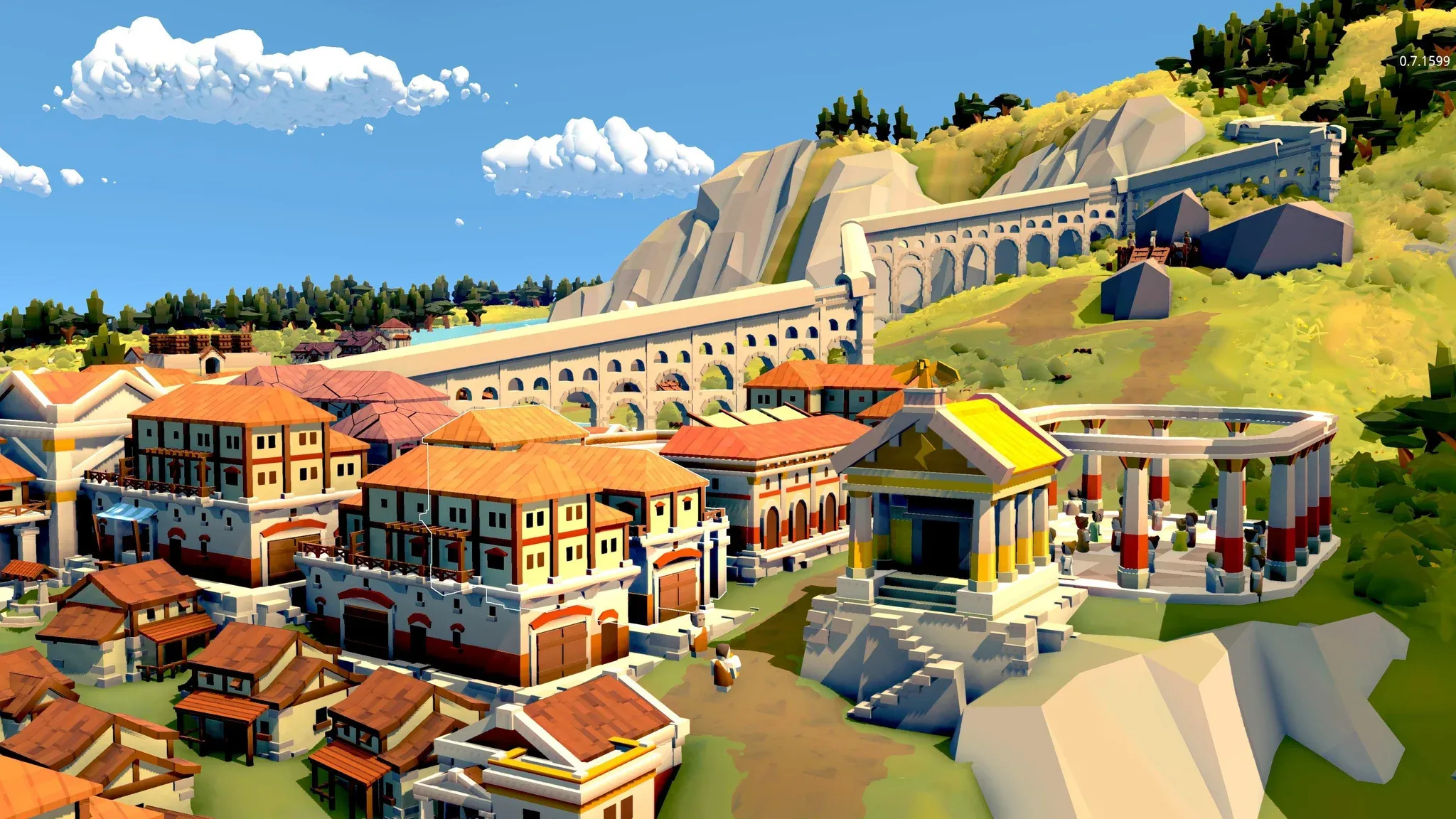
The single most impactful visual setting is Citizen LODs. Dropping this to Low is virtually unnoticeable when you are zoomed out managing your city, but it delivers the largest FPS gain of any individual setting. Shadow Quality at Medium rather than Ultra reclaims GPU resources while keeping the terracotta architecture looking sharp. The visual difference between High and Medium shadows during active gameplay is negligible.
| Setting | Low-End PC | High-End PC | Recommended |
|---|---|---|---|
| Shadows | Low | High | Medium |
| Textures | Medium | Ultra | High |
| Citizen LODs | Low | Medium | Low |
| Anti-Aliasing | TAA | DLSS/FSR | DLSS Quality |
For players on an RTX 3070 or equivalent, DLSS Quality provides a noticeably sharper image than TAA without the ghosting artifacts that appear during fast camera pans across dense city blocks.
PS5 performance mode vs. fidelity mode: which should you use?
Performance Mode. No contest. It targets 60 FPS with dynamic resolution scaling, typically hovering around 1440p, which makes road placement, aqueduct routing, and UI navigation significantly more responsive. Fidelity Mode locks at 30 FPS for native 4K, and at that frame rate, laying down complex road networks across uneven terrain becomes genuinely frustrating.
Fidelity Mode has one legitimate use: pausing the simulation to take high-resolution screenshots of completed architecture. For active play, stick with Performance Mode.
Common mistakes that kill late-game cities
The most damaging mistake is setting everything to Ultra during the early game when the map is empty, then being blindsided by unplayable stuttering once the population scales. Establish your graphics baseline around late-game load, not early-game load.
Leaving Citizen Simulation Distance at maximum is the second most common error. The performance cost is enormous and the visual benefit is zero from a zoomed-out city management perspective. Lower it immediately and leave it there.
Finally, close background applications before long sessions. Web browsers and Discord consume CPU cycles and RAM that the Lion Shield engine needs for pathfinding calculations. The difference is measurable in dense cities.
For deeper dives into production chains and building databases, the Nova Roma Wiki is the most thorough community resource available, with production chain calculators and map seed guides. You can also join the active player community through the Steam Community page to find layout screenshots, bug reports, and build discussions from other players.
For more city-builder strategies and gaming guides across all genres, browse the latest guides on GAMES.GG to keep your strategy sharp.