
Building a Roman empire in Nova Roma sounds glorious until your Trade Port sits empty, your treasury bleeds Denarii, and fifty Plebeians are somehow accomplishing nothing. The culprit is almost never a shortage of raw materials. It's the space between them.
Developed by Lion Shield Studios (the team behind Kingdoms and Castles), Nova Roma simulates every step of physical logistics. Clay sitting in a pit three districts away from your kilns might as well not exist. This guide breaks down exactly how to structure your production chains so goods actually move, get processed, and generate the income your city needs.
Why do your industries keep stalling?
Before touching a single production chain, understand what kills them. Nova Roma does not abstract resource delivery. Every unit of clay, wood, and iron ore travels on foot or by cart, tile by tile, through your city.
Three logistics fundamentals determine whether your factories run or sit idle:
- Carry limits: A standard Plebeian worker hauls 1 unit per trip. An Ox-Cart hauls 10. Without Cart Depots positioned near industrial zones, factories will starve for materials regardless of how much raw stock exists nearby.
- Road quality: Dirt roads are temporary infrastructure. Upgrading connections between resource hubs and your city center to Paved Stone boosts walking and cart speed by 40%, cutting the "Missing Materials" downtime that chokes mid-game production.
- Storehouse filtering: Leave a Storehouse on its default "Accept All" setting and it fills with surplus wheat, leaving no room for iron ingots or finished wine. Click every Storehouse and manually restrict it to the specific goods you want stored there.
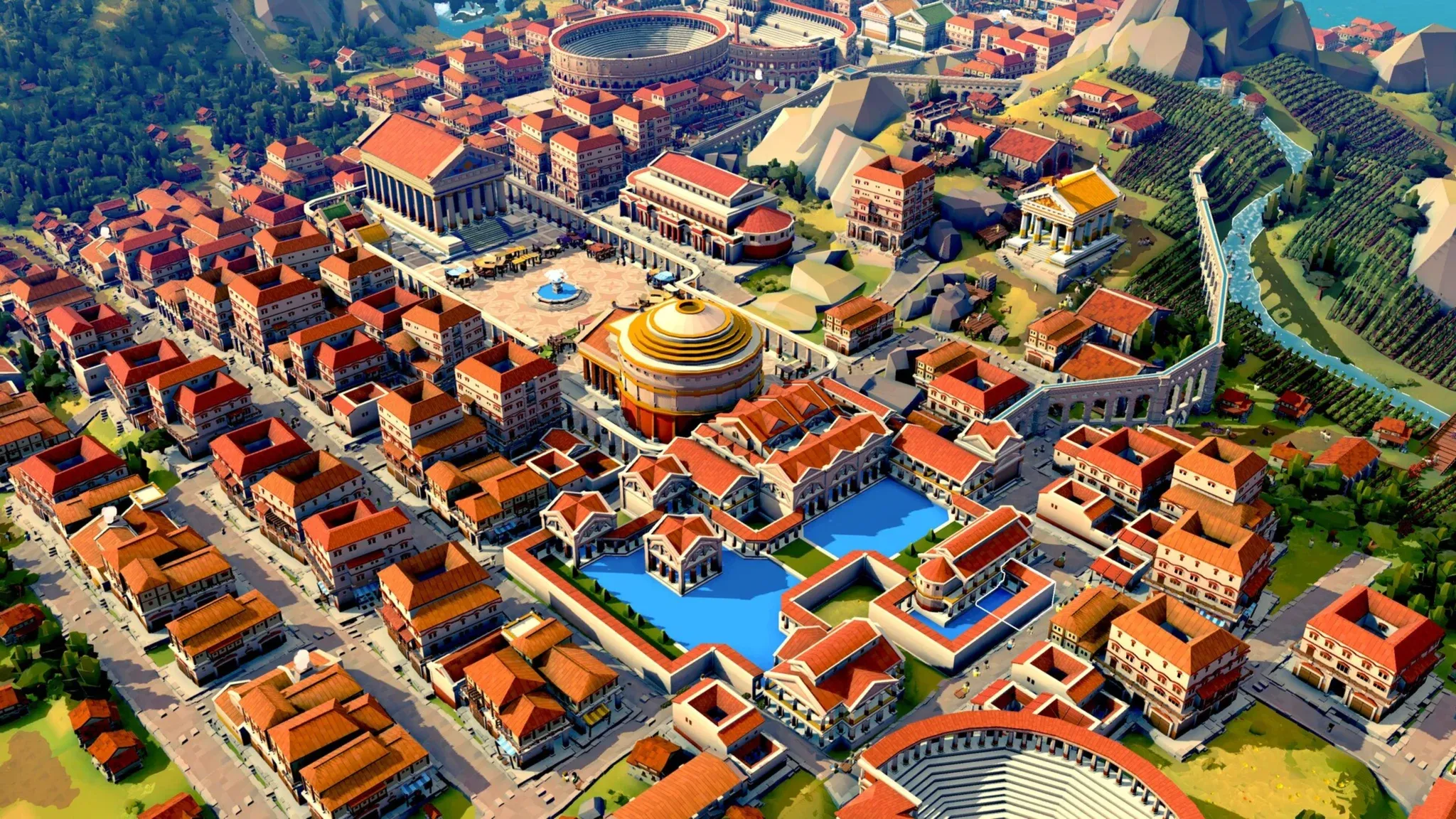
The practical takeaway: build micro-districts where raw materials, fuel, and processing buildings sit within a few tiles of each other. Long supply lines are the main reason experienced players watch their industries collapse.

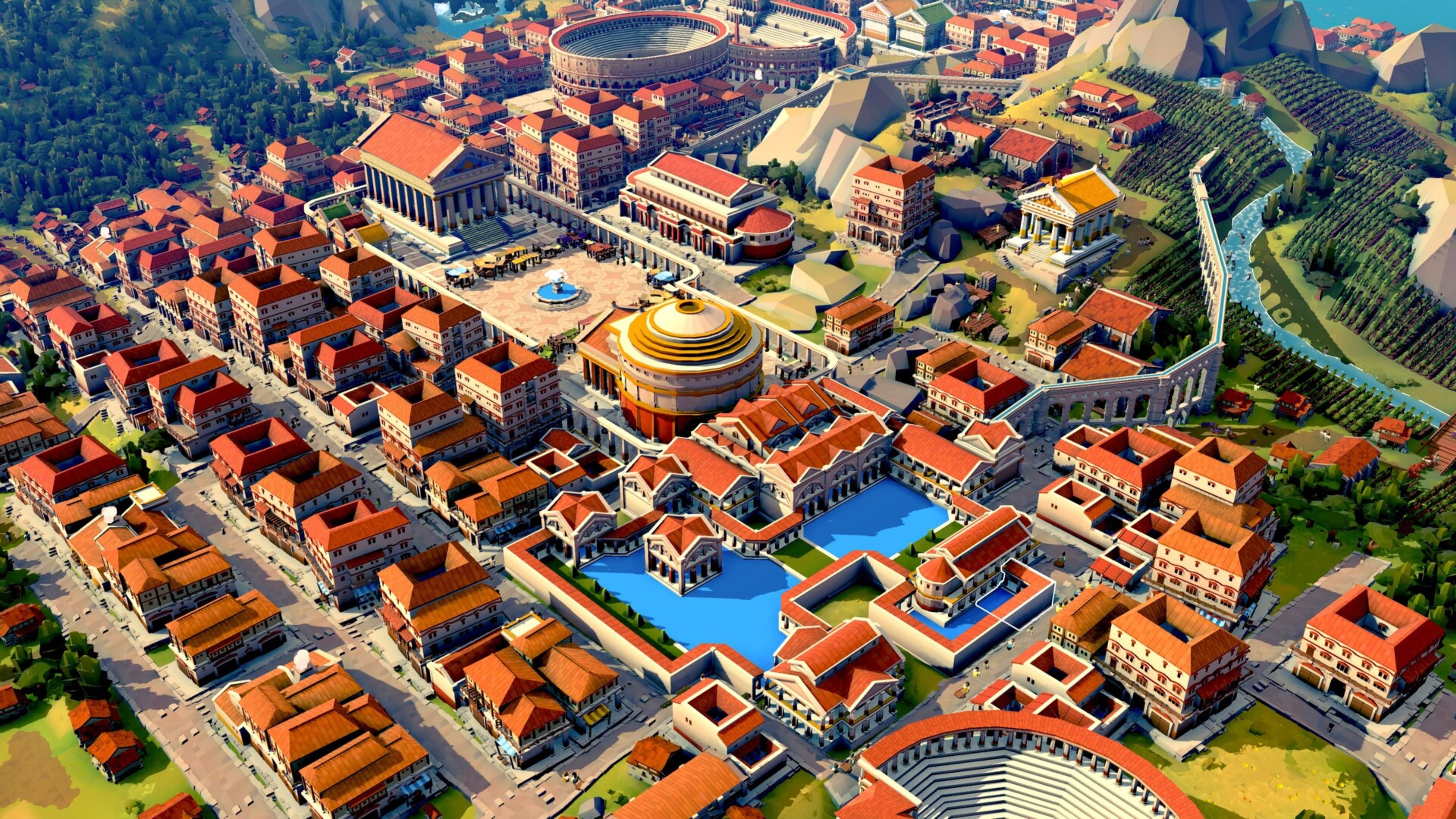
The bread chain: why the 1:1 ratio fails
Bread is not a luxury. It is the single production chain that keeps your population alive and immigration flowing. The mistake most players make early is building one Wheat Farm per Bakery and wondering why citizens still starve.
Optimal bread ratio: 3 Wheat Farms : 1 Windmill : 2 Bakeries
Layout strategy:
- Find a large flat plain with high soil fertility, ideally near a riverbed. Land near rivers consistently shows better fertility, and the game's Dynamic Fertility system prioritizes water proximity and terrain type as the main drivers of soil quality.
- Group your 3 Wheat Farms tightly together in this zone.
- Place the Windmill just outside the farm cluster, close enough to minimize flour transport distance.
- Drop both Bakeries directly adjacent to the Windmill.
- Build a Granary across the street, set to accept only Bread and Flour. Flour should never travel more than five tiles before it gets baked.
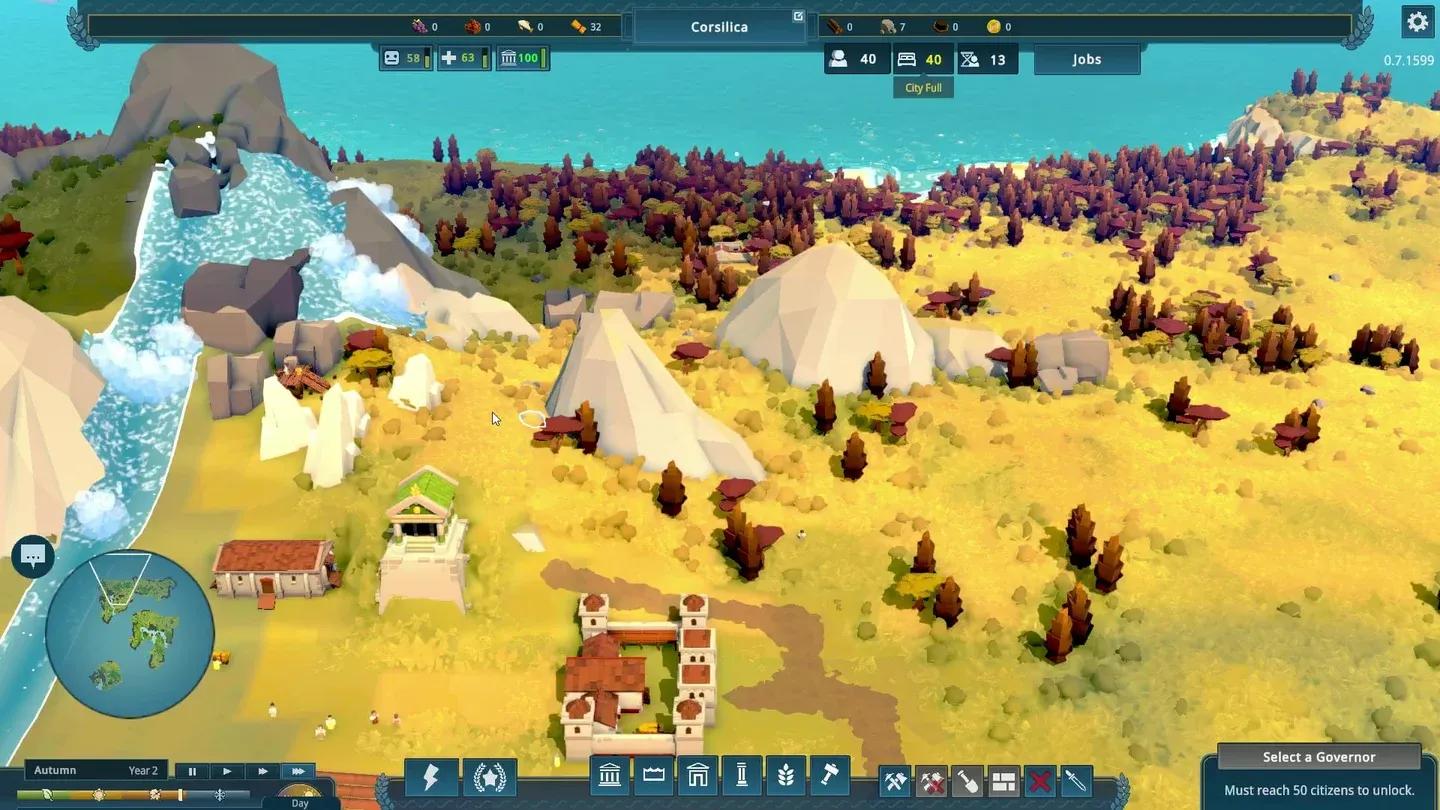
Bread chain district layout
The pottery chain: your early-game financial lifeline
Pottery is the fastest production chain to set up and one of the most profitable in the early game. It requires low-tier Plebeian workers, cheap infrastructure, and sells at a strong margin through the Trade Port. There's also a secondary reason to prioritize it: Pottery provides the Amphorae containers that Wine and Olive Oil require later. Let your Pottery industry fail and your entire mid-game economy stalls.
Optimal pottery layout:
- Clay Pit placement: Locate a riverbank or mudflat. Place Clay Pits as close to the water's edge as the grid allows. River proximity improves both clay access and nearby soil fertility for any adjacent farms, as detailed in the Dynamic Fertility mechanics breakdown.
- Dedicated fuel source: Pottery kilns need intense heat. Don't rely on a distant logging camp near your city center. Build a Woodcutter directly next to the Clay Pits and set it to prioritize kiln supply over city storage.
- Kiln positioning: Place the Pottery Kiln at the midpoint between the Clay Pit and the Woodcutter. Workers should grab both inputs within a few tiles.
- Export hub: Build a small Storehouse (restricted to Pottery only) near the kilns. Run a dedicated Ox-Cart route from this Storehouse to your Trade Port.
This four-step triangulation keeps your kiln workers moving efficiently instead of making long cross-city trips for a single ingredient.
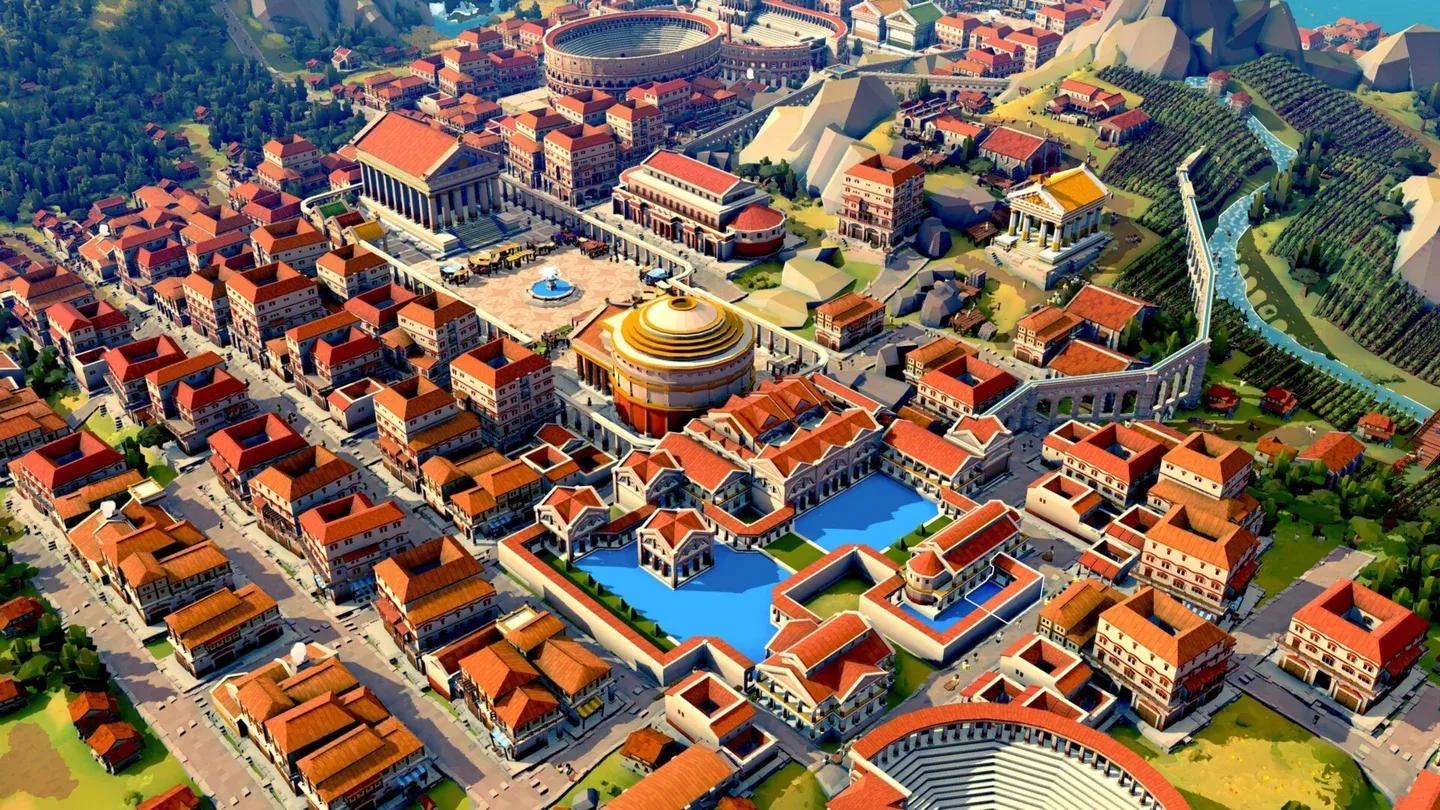
Pottery micro-district setup
The wine chain: what most players get wrong
Once you want Patricians in your housing, basic food and water stop cutting it. Patricians demand luxury goods, and Wine is the most important component of mid-game happiness and high-tier tax income. It's also the production chain that trips up experienced players because it has two inputs that both need to arrive on time.
The dual-input problem: Wine requires Grapes and Pottery (Amphorae). If either supply line breaks, the Winery stops completely.
Optimal wine layout:
- Vineyards: Grapes need specific rocky fertility. Use the fertility overlay to identify prime land, ideally on a slight hill. Zone your Vineyards here and keep them large, since grape volume is the usual bottleneck.
- Winery placement: Build the Winery immediately adjacent to the Vineyards. Grapes are bulky and spoil quickly, so the vine-to-press distance must be minimal.
- Amphorae supply: Route a steady stream of Pottery from your kiln district to a Storehouse directly beside the Winery. Workers need to grab containers on-site. If this Storehouse runs dry, the Winery halts.
- Patrician distribution: Route finished Wine to a secure Storehouse inside your upscale residential district so market vendors can distribute it before the nobles start rioting.
| Chain | Inputs Required | Key Bottleneck | Primary Output Use |
|---|---|---|---|
| Bread | Wheat, Flour | Farm-to-granary distance | Citizen food supply |
| Pottery | Clay, Wood | Kiln fuel delivery | Trade export + Amphorae |
| Wine | Grapes, Pottery | Amphorae supply failure | Patrician happiness, trade |
| Iron | Iron Ore, Charcoal | Heavy transport weight | Legion equipment, tools |
The iron chain: endgame power at a cost
Iron is the heaviest, most complex production chain in Nova Roma, and it comes with a desirability penalty that can wreck your residential zones if you're careless with placement.
Optimal iron layout:
- Iron Mine: Prospect mountainous terrain for Iron Ore veins. Deep mines produce steadily but need dedicated hauling infrastructure to function at capacity.
- Charcoal Burner: Raw wood cannot reach the temperatures required for iron smelting. Build Charcoal Burners near the mines. Keep them well away from housing since they generate significant noise and pollution that degrades nearby residential desirability.
- Smelter: Place the Smelter directly next to both the mine and the Charcoal Burner. It converts Iron Ore and Charcoal into Iron Ingots, which are considerably lighter than raw ore.
- Blacksmith placement: Unlike the Smelter, the Blacksmith (which turns Ingots into Weapons and Tools) belongs closer to your city center or Barracks. Ingots are easy for carts to transport down from the mountain. Raw ore is not.
How does soil fertility affect your production output?
Soil fertility is not static. It shifts based on water proximity, terrain type, and crop rotation history. Land near riverbeds starts at higher fertility, but repeatedly planting the same crop in the same zone will temporarily exhaust it.
When fertility drops on a farming plot, the fix is straightforward: demolish the crops, let the land recover for a few in-game years, and replant. Rushing back onto depleted soil just extends the problem.
The fertility overlay is your most important planning tool. Before placing any farm, Vineyard, or Clay Pit, open it and confirm you're working with genuinely productive land. High-fertility tiles produce meaningfully better yields, which means fewer farms needed to feed the same population.
What's the best early game production priority?
If you're starting a new city and want the fastest path to a stable economy, the order matters:
- Bread chain first (survival baseline, prevents starvation and immigration collapse)
- Pottery chain second (generates Trade Port income and builds Amphorae stock for later)
- Wine chain third (unlocks Patrician housing tiers and high-tax income)
- Iron chain last (endgame investment for legions and monument construction)
Rushing Wine before you have a stable Pottery supply is one of the most common mid-game traps. You'll build Wineries, zone Vineyards, and then watch the entire chain sit idle because there are no Amphorae to bottle the product.
For more city-building strategy content, browse more guides on GAMES.GG covering everything from survival sims to grand strategy.