


The Path of Exile 3.28 Mirage league completely reshapes how you interact with the Atlas of Worlds. Maps now drop by tier rather than layout, you get up to 138 Atlas Passive Points to spend, and new systems like Astrolabes and Eagon Memory Vaults add fresh layers of depth to endgame farming. Whether you're grinding currency in trade league or self-funding every upgrade in SSF, knowing how to build your Atlas tree from day one makes an enormous difference in how fast you progress and how much wealth you accumulate.
What changed in the PoE 3.28 Mirage Atlas?
Before jumping into specific strategies, it helps to understand exactly what Mirage changed. The new systems affect every farming decision you'll make.
Maps are now tier-based, not layout-based
In previous leagues, getting a specific map layout meant hunting for that exact item. In 3.28, map items simply read "Tier X Map" and you can use any of them to access any revealed layout at that tier from the Atlas UI. This means map sustain is no longer a chore, and you can switch farming targets or favorite layouts instantly without trading for specific names.
The new Atlas structure and navigation
The Atlas now starts from the center, with the four Voidstones anchoring each corner. All content, including standard maps, unique maps, and boss encounters, is physically placed on the Atlas and revealed as you explore. The Map Device opens directly into the Atlas interface, making layout selection and progression tracking far more intuitive than before.
Astrolabes, shaped blobs, and Eagon Memory Vaults
A new item called the Astrolabe lets you shape a region of your Atlas (referred to as a "blob") with unique modifiers. Every map inside a blob benefits from those modifiers. Clearing a map inside the blob removes its influence from that specific node but adds extra modifiers to the remaining maps, increasing difficulty and reward as you work through the region. Finishing every map in a shaped region sends you to an Eagon Memory Vault for a powerful targeted reward.
Atlas Passive Points and objectives overhaul
You can now earn up to 138 Atlas Passive Points in 3.28, allowing for much more specialized tree setups. Unique map completions grant 1 point each, up to a maximum of 10, so you can skip the bosses you dislike. Every 4 bonus objectives completed also grants +1% map item quantity, rewarding thorough mapping across your Atlas.
Voidstone mechanics
Voidstones now require defeating boss pairs to unlock. For example, both Shaper and Elder must fall for their respective stone. Socketing Voidstones upgrades map tier drops, converts some dropped maps to gold, and raises the chance for Tier 16 maps to become Nightmare maps (up to 1.6% total with all stones socketed). The Originator Voidstone, earned by defeating the Incarnation of Dread, enables Atlas bosses to drop Astrolabes and Exceptional Support Gems.
What got removed?
Cartographer's Chisels no longer drop, and map crafting at the Map Device is gone. The Favoured Map system, Memory Petals, and many frustrating map modifiers have been cut entirely. Scarabs now handle all the mechanical bonuses that Kirac's crafts used to provide.
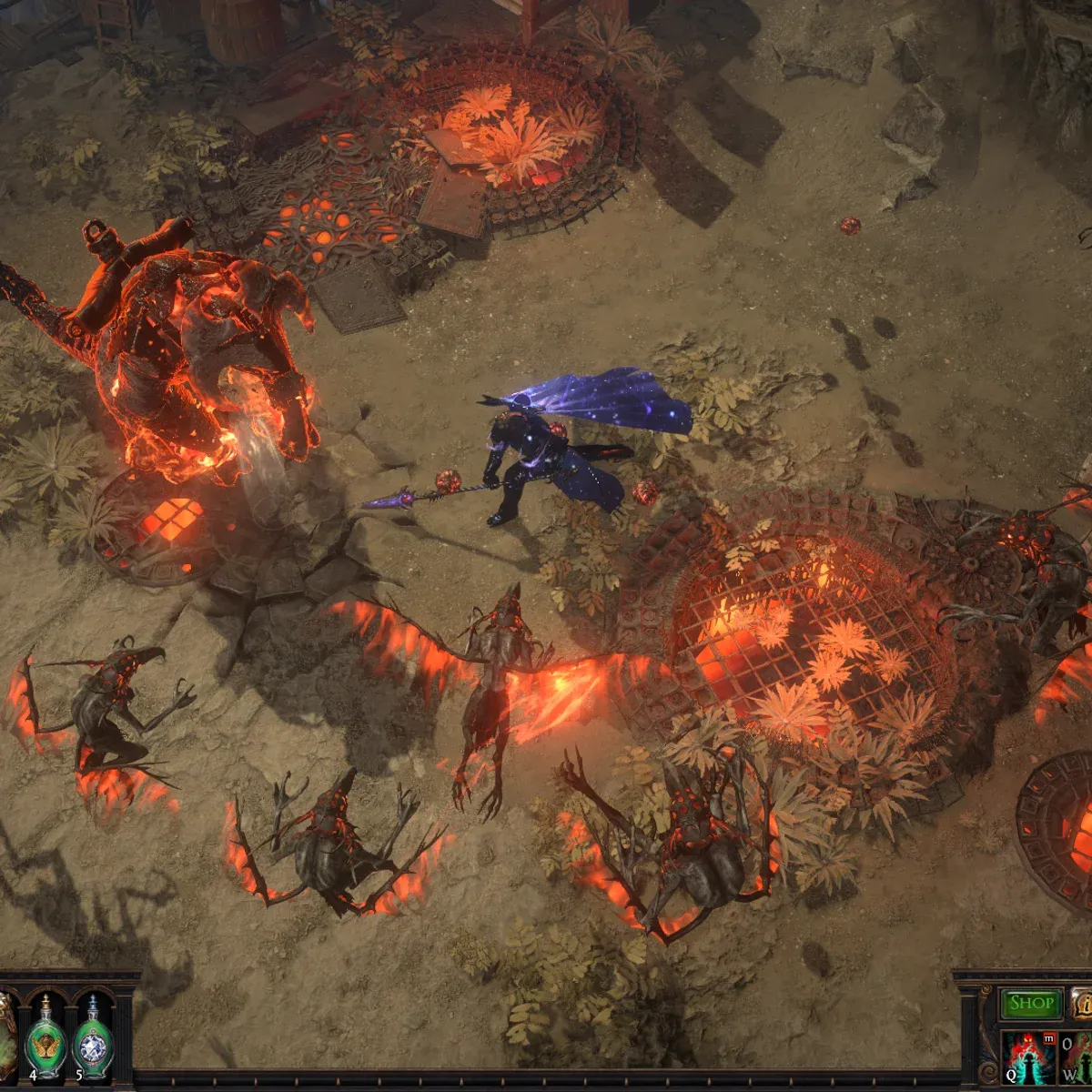
Atlas passive tree overview
How do you earn all 138 Atlas Passive Points?
Maxing your Atlas Passive Points requires working through several distinct objectives. Here's the full breakdown:
For Unique Maps, target the cheapest or easiest bosses first. You only need 10 out of 19, so skipping the punishing ones is perfectly valid. If your build can't handle certain Pinnacle bosses, the community typically offers carries early in the league.
Best early Atlas tree setup for league start
The first priority in any new league is map sustain and smooth progression. Overcommitting to juice too early leads to bricked portals and stalled advancement.
Step 1: Grab the Shaping trio first
These three nodes form the backbone of early map sustain:
- Shaping the Mountains: +10% more rare monsters in maps
- Shaping the Skies: +10% more magic monsters in maps
- Shaping the World: Map boss has a 5% chance to drop an extra map one tier higher
Together, these provide a 50% increased chance for map drops to be one tier higher while also beefing up monster density, which feeds both sustain and experience.
Step 2: Take Shrine nodes for speed and safety
Shrines are one of the most underrated early investments. Grab the guaranteed shrine node (a free shrine in every map with increased duration) and follow up with shrine effect nodes. The buffs to movement speed, survivability, and damage output make clearing faster and dying less likely, both of which matter enormously in early red maps.
Step 3: Block mechanics you don't want
Blocking unwanted league mechanics increases the spawn rate of the ones you do want and keeps maps cleaner. Recommended early blocks:
- Breach (unless running a Breach-focused strategy)
- Legion
- Expedition (unless that's your farming target)
- Harvest
- Abyss
Keep one or two mechanics unblocked to sample their rewards before committing.
Step 4: Add Scarab nodes before juice wheels
Scarab nodes are excellent early investments because they add value without making maps significantly harder. Scarabs are also highly liquid at league start, so even if you don't use them all, selling extras generates solid currency. Hold off on the central map effect and pack size wheels until your build can comfortably handle the increased difficulty.
Target around 31-35 points for this early route so you have flexibility to adapt as the meta settles.
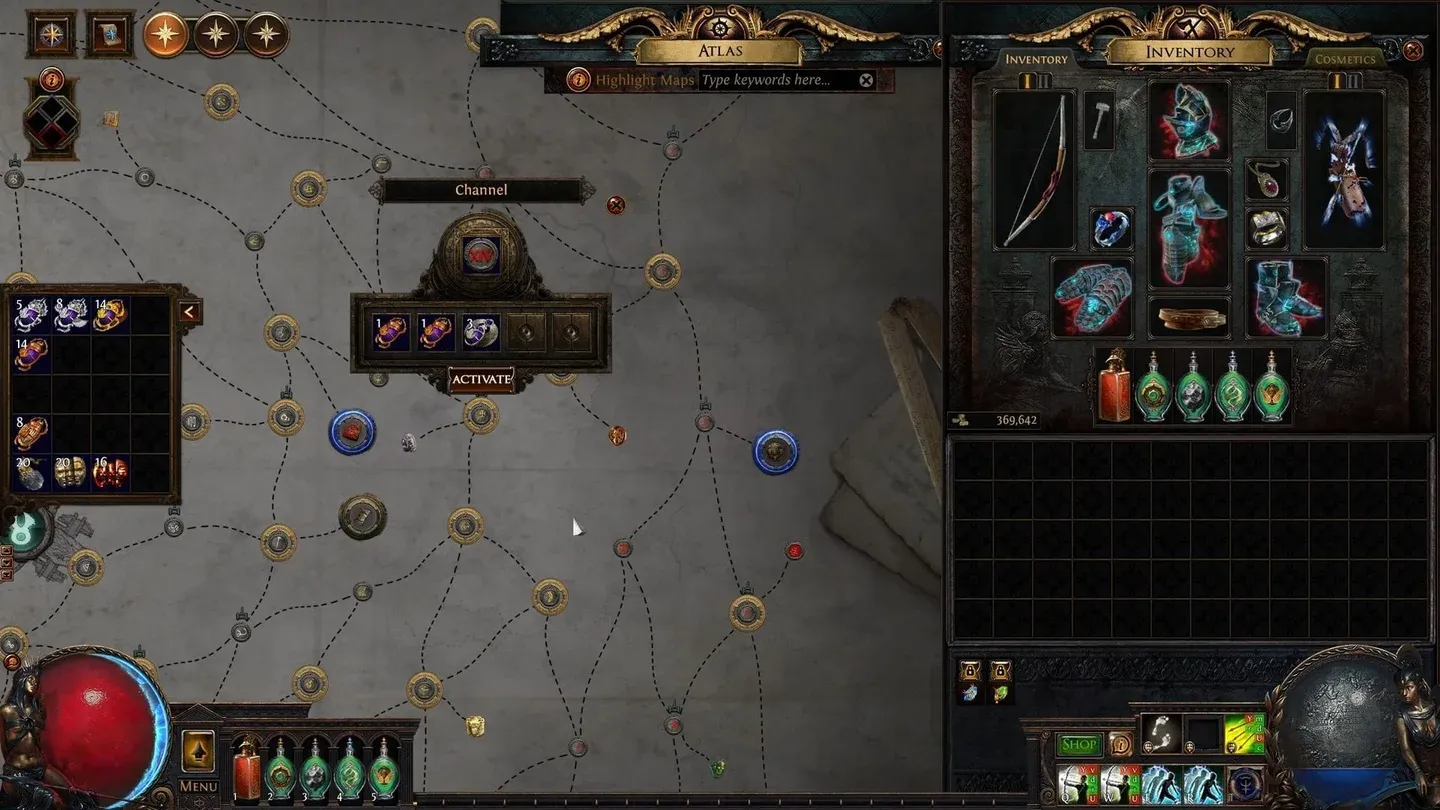
Map device tier selection
What's the best farming strategy for currency? (Trade league)
Delve: Fossil monopoly in 3.28
Delve is positioned as one of the strongest early-currency strategies in Mirage specifically because fossils now drop exclusively from Delve. Every other drop location, including Heist and Delirium, has had fossils removed from their loot pools. This restriction means fossil prices are expected to be significantly higher at league start than in recent leagues.
When to start: Begin meaningful Delve runs from Act 8 onward. Sulphite deposits now scale better with map item quantity, and higher map tiers accelerate sulphite accumulation substantially.
Target depth: Aim for depths 250-350 as your primary farming range. This range provides reliable fossil and resonator drops without the punishing difficulty of depth 500+. Push deeper only when your build's defenses are solid.
Atlas tree setup for Delve:
- Take Frantic Mining to increase Niko encounter frequency
- Pick up Mining Byproducts and related clusters for higher sulphite yield per map
- Upgrade sulphite capacity first, then alternate between darkness resistance, light radius, flares, and dynamite
Darkness farming tip: As you travel mine paths, drop a flare and use dynamite to break suspicious walls. Side rooms frequently contain fossil and resonator stashes that make up a large portion of your per-hour income.
Best builds for Delve: Tanky Juggernauts, Spectre Summoners, and mana or armor stackers. Evasion-based builds struggle with the undodgeable darkness damage.
Heist: High volume, low investment
Heist received significant Atlas passive buffs in 3.28, dramatically increasing the frequency and quality of Smuggler's Caches in maps. This makes it one of the most efficient early-league strategies for players who prioritize speed over complexity.
Atlas tree priorities:
- Secret Stash: Guarantees a Smuggler's Cache per map
- No Honor Among Thieves: Most maps will contain 2 caches
- Casing the Joint: Fully revealed blueprints
- Dutiful Soldier: Useful buff every map when opening a cache
You can complete the full Heist wheel in roughly 40 points or fewer. With 138 total Atlas points available, pairing Heist with Expedition is entirely achievable.
Best rogues:Karst (Lockpicking) and Gianna (Deception and Blueprints) are your primary earners. Focus on Deception contracts above all others; they're the fastest to run and the most profitable to sell.
Blueprint wing priorities: Currency rooms, Replica items, Enchantments, and Experimental Bases. Don't bother fully clearing reward rooms; speed and low alert levels generate more profit through volume.
Expedition: Consistent and scalable
Expedition remains one of the most reliable mechanics in Path of Exile for steady currency generation. Dig sites are quick, untimed, and self-contained, and the new Expedition Scarab of Infusion causes logbooks to roll with four implicits, dramatically increasing their value.
Atlas tree must-haves:
- Take all spawn chance nodes to reach 100% Expedition in every map (92% from nodes plus 8% baseline)
- Extreme Archaeology: Detonates the entire Expedition at once with all remnant modifiers applied. This is the single most important quality-of-life node in the cluster
- Buried Knowledge: Increases logbook quantity from runic monsters
- Target Tujen and Dannig appearance nodes for the best vendor returns
Scarab priority for Expedition:
Vendor strategy: Buy everything from Tujen worth a chaos or more. From Dannig, purchase Tujen currency and logbooks without haggling. Skip Gwennen entirely; her gambling rarely justifies the cost.
Logbook priority order: Knights of the Sun (Dannig) > Blackscythe Mercenaries (Tujen) > Order of the Chalice > Druids of the Broken Circle. Always hit bosses and underground areas for maximum returns.
Breach and Betrayal: Fast clearing, valuable early drops
The Breach and Betrayal combination excels at "Alch and Go" mapping, where you simply apply an Orb of Alchemy to a map and run it without additional investment. The focus is on volume and speed rather than heavy juicing.
Atlas tree priorities for Breach:
- Dimensional Foothold: Guarantees a Breach Hive in every map
- Protracted Siege: More Alith skill buttons and more waves per Hive
- Evolving Hives: More monsters per wave
- Adaptive Reaction: 100% increased flammable burrow explosion radius
- Fortress-related nodes for Wound Gifts and Hive Blood rewards
Betrayal integration:
- Increased veiled item drops
- Pillage and Plunder for fractured veiled mods (extremely valuable at league start)
- Lethal Extraction to accelerate safehouse progression
What to sell immediately: Wound Gifts, fractured veiled items (especially conversion, projectile, and speed gloves), Hive Blood, and quality gems. These fetch premium prices in the first days of the league when demand is highest.
Breach Hive wave rewards
How should SSF players approach the Atlas?
Solo-Self Found players need to prioritize mechanics that provide deterministic crafting materials and strong map sustain without relying on trade.
Recommended SSF priorities:
- Breach and Genesis Tree: Breach provides powerful early items and crafting flexibility. The Genesis tree remains effective for bootstrapping gear when trade isn't available.
- Essence Focus: Essences deliver deterministic crafting outcomes, making it far easier to hit multi-resistance and high-life gear that SSF players desperately need.
- Delve (Nico) Nodes: Sulphite buffs and fossil farming generate early power spikes and crafting bases without requiring any trade.
- Map Sustain Nodes: Maintaining a healthy map pool is critical in SSF. Nodes that improve scouting reports and map drop rates prevent progression bottlenecks.
- Expedition and Betrayal (later): Once gear improves, adding these mechanics expands your item pool and crafting options significantly.
SSF players benefit most from specializing rather than spreading Atlas points thinly. Mirroring trade strategies is tempting but rarely pays off when you can't buy the pieces you're missing.
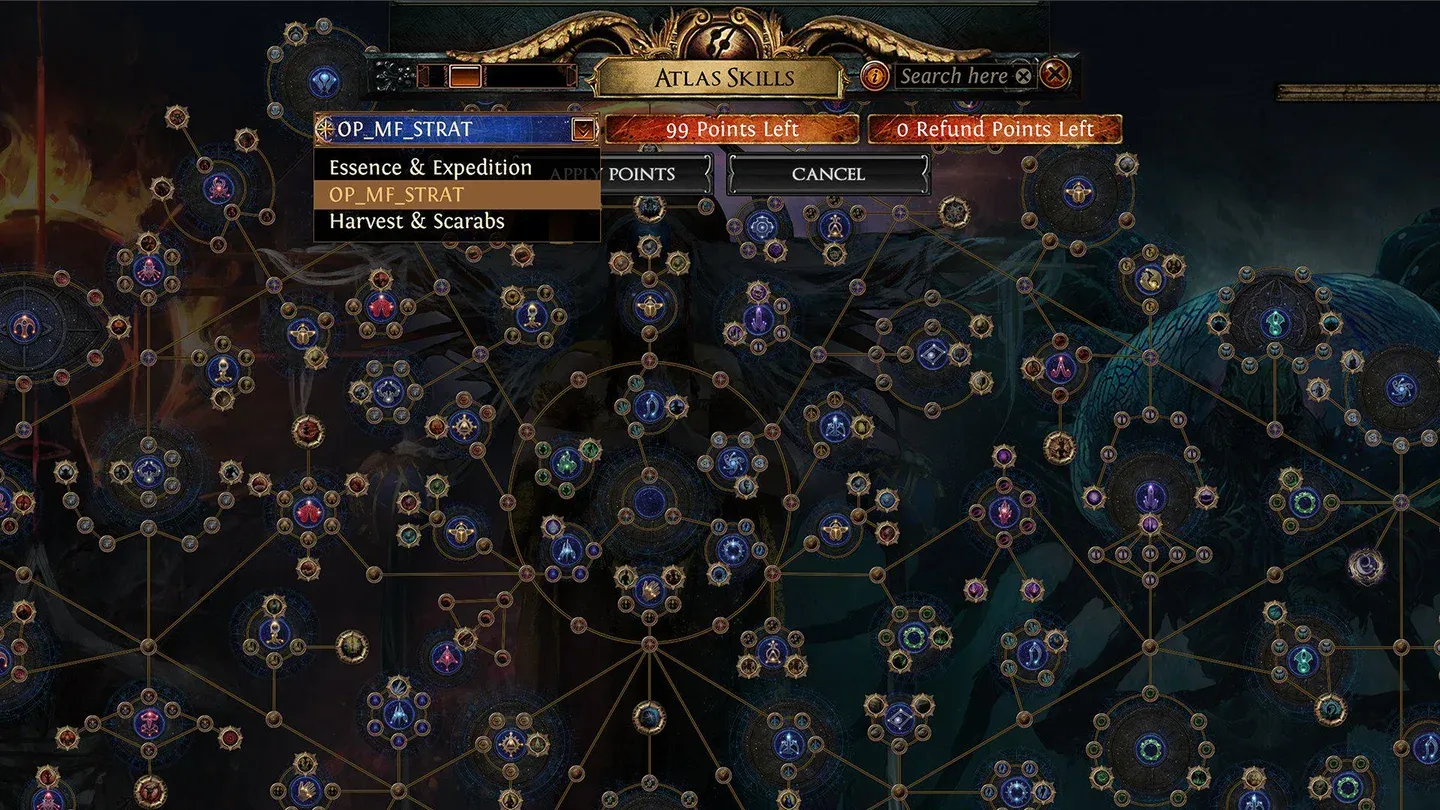
SSF Atlas tree planning
Quick reference: Which farming strategy fits you?
Every one of these strategies can be combined with others once you have enough Atlas Passive Points. At 138 points available, pairing two mechanics (such as Heist with Expedition, or Breach with Betrayal) is achievable without sacrificing core sustain nodes.