Search games, articles, guides...CtrlK
Sign InGet Started

People of Note blends turn-based RPG combat with genre-hopping music. Here's what works, what doesn't, and whether it's worth your $25.

Written by Nuwel
Content Writer
See more GAMES.GG guides on Google
Add us as a preferred source and our guides show up first in your results.
People of Note Weird Owls: All 20 Locations
Find all 20 Weird Owls in People of Note, answer every trivia question correctly, and claim Vox's best weapon, The Third Echo.

People of Note Difficulty Options Explained
Iridium Studios' musical JRPG blends rhythm combat, deep puzzles, and a 20-hour story worth playing on PC, PS5, Xbox, and Switch 2.
People of Note Guide: All Maestro Locations
Find all 5 Maestro (?) locations in People of Note to unlock the Sidenote trophy with this step-by-step guide.
People of Note arrives with a genuinely exciting premise: a musical JRPG from Iridium Studios, published by Annapurna Interactive, where genre-hopping combat music ties directly into your battle strategy. Pop, rock, EDM, and rap all collide in a continent-spanning band recruitment story. After 43 hours spent reaching 100% completion on the hardest difficulty, the picture that emerges is complicated. There's a real game buried in here. Finding it takes patience most players won't have.
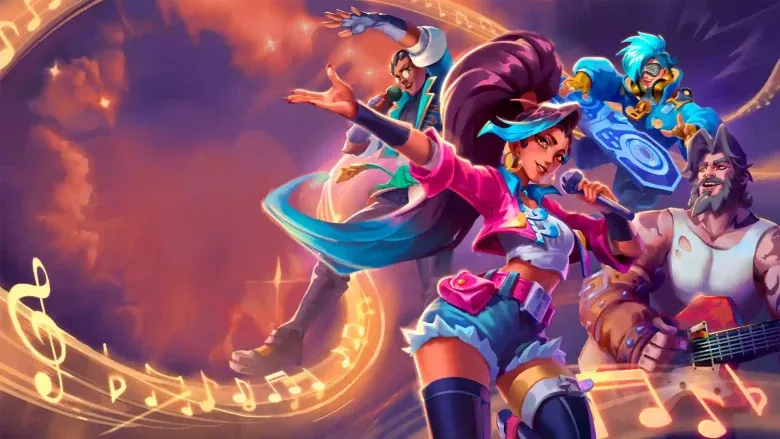
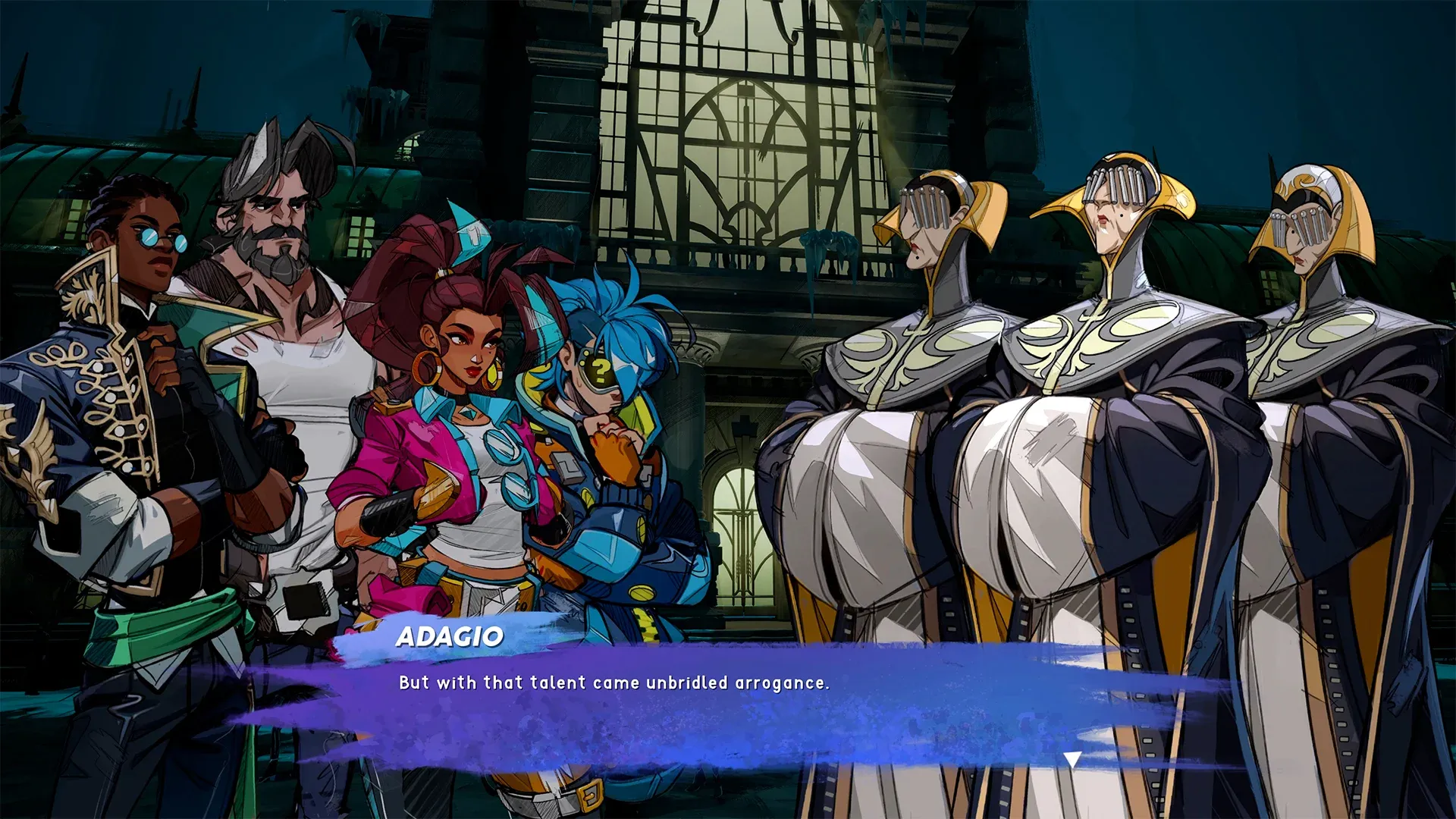
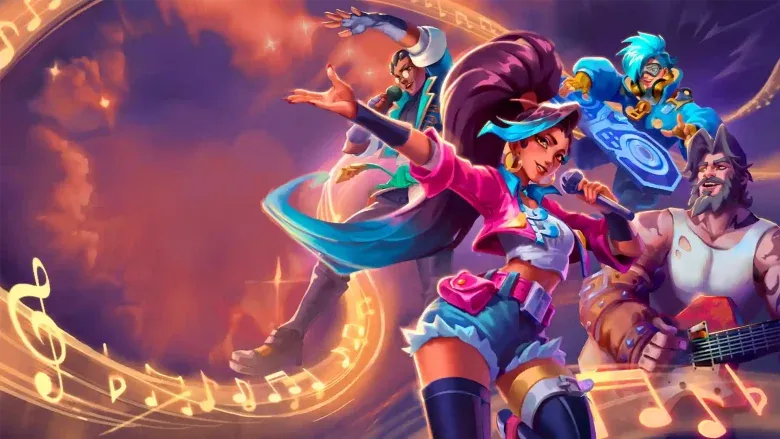
People of Note is a turn-based JRPG set in the world of Note, a continent divided into city-nations built around musical genres. You play as Cadence, a pop singer who gets rejected from a major competition called Noteworthy and decides to build a band by recruiting musicians from across the continent. The cast expands to include Fret (rock, from the nation of Durandis), Synthia (EDM, from Lumina), and Vox (rap, from Pyre). The game launched on Steam, Epic Games Store, Xbox, PlayStation, and Nintendo Switch 2 at a launch price of $22.49, rising to $24.99 afterward.
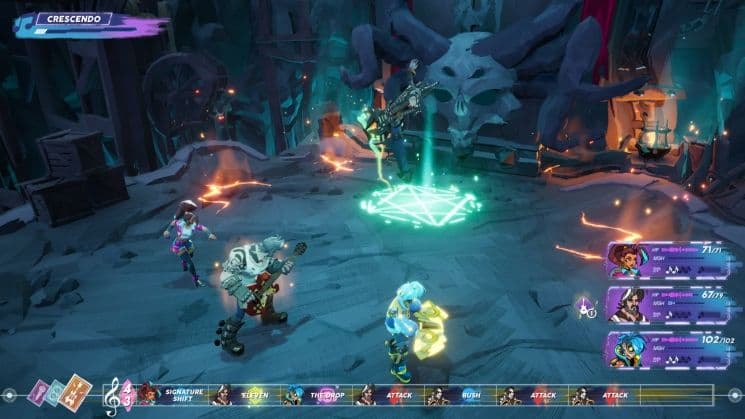
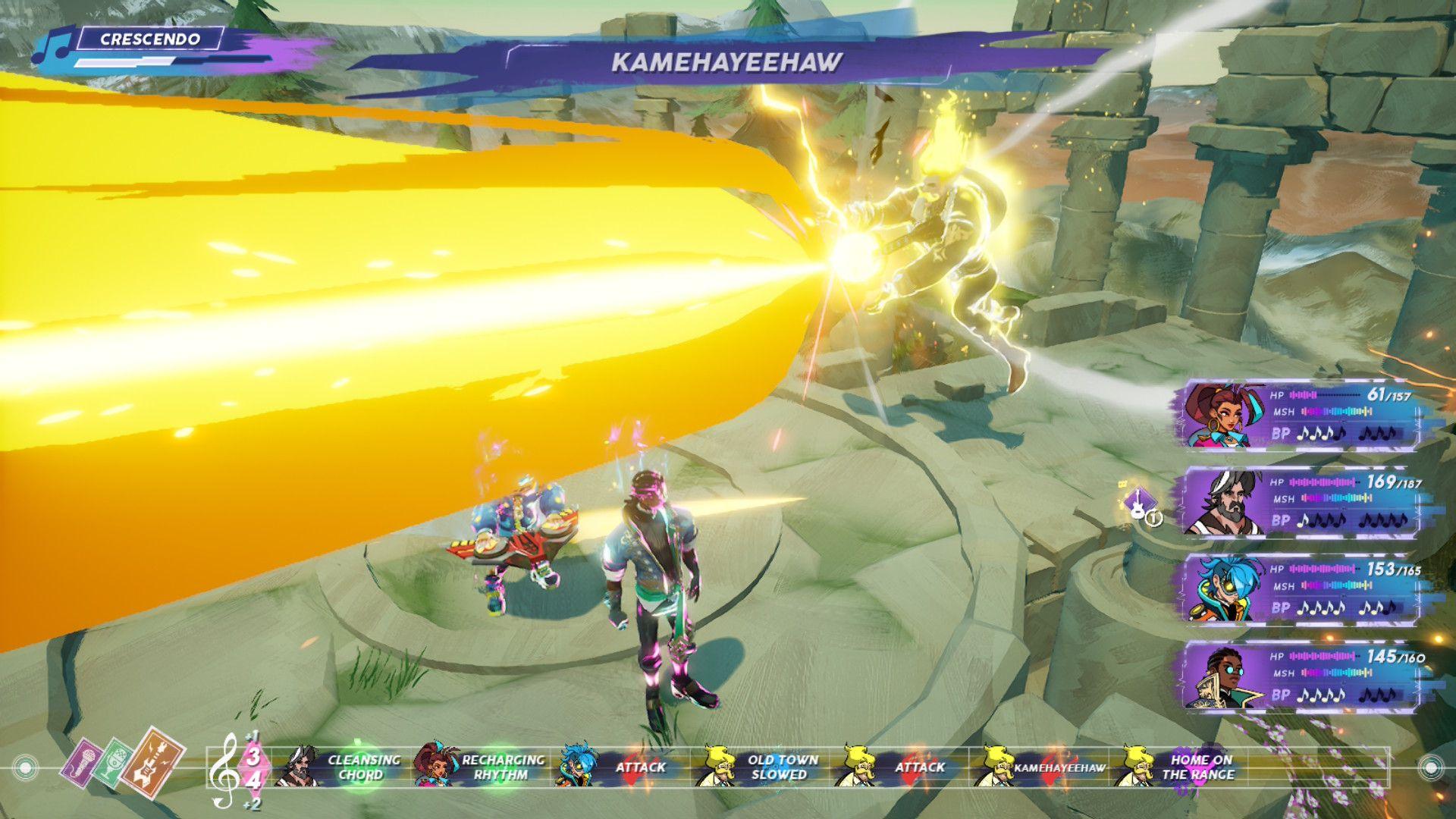
The core mechanic that separates People of Note from a standard turn-based RPG is the Stanza system. At the bottom of the battle screen, a bar tracks turn order and shows which musical genre is currently active. When a character's genre is in the Stellar Stanza slot, their abilities receive a direct power boost. You can see the active genre and the next two upcoming genres at all times, which lets you plan around when to spend resources and when to hold back.
Abilities themselves come from Songstones, gems you find or purchase that slot into your equipped instrument. The quality of your instrument determines how many Songstones you can equip at once. Each Songstone can be upgraded using AP earned from defeating enemies, though upgrade costs escalate sharply from double to triple digits as you level them up. Remix Stones act as modifiers that enhance existing Songstone abilities.
Characters also share some Songstones regardless of genre. Healing abilities and those that grant extra action points to bandmates can be used by anyone, which adds a layer of flexibility to team composition.
Once two characters fill their individual meters by taking damage, they can perform a Mashup: a combined ultimate ability that blends their genres musically and grants an ability boost to everyone involved at the end of the turn. The meter only fills through taking hits, so playing aggressively at the wrong time can delay your Mashup access.
The equipment system has three slots: instrument, fashion outfit, and accessory. Here's how each one functions:
| Slot | Primary Function | Secondary Function |
|---|---|---|
| Instrument | Determines Songstone capacity | Higher tier = more ability slots |
| Fashion | Passive HP/Defense/Offense boosts | No active abilities |
| Accessory | Defense or Offense boosts | Can grant bonus AP at battle start |
On standard difficulty, you have room to experiment. On Superstar, the math is simple: Defense on fashion plus Defense on accessory keeps you alive through the damage-sponge boss encounters that define the late game. Accessories that provide extra ability points at the start of combat are worth considering once your survivability is stable.
The setup is solid. Cadence's rejection and her cross-continent recruitment arc gives the game a clear direction in its opening hours. The pacing holds up early. Then things get messy.
The narrative can't settle on a tone. It swings between light-hearted musical comedy, serious character drama, meme-heavy satire, and pop culture references without committing to any of them. The result is a story that feels like it's constantly interrupting itself.
Fret is the standout character by a significant margin. His arc is consistent, his development feels earned, and his voice actor Jason Charles Miller delivers lines that actually sound like a person talking rather than text being read aloud. The rest of the cast struggles. Cadence frequently feels disconnected from the consequences of her own story. Synthia has genuinely interesting backstory material that gets almost no screen time. Vox exists primarily to fill the rap slot.
The voice acting across the broader cast, which includes Erika Ishii and Erica Lindbeck, lands below what those names typically deliver. The performances sound read line-by-line without consistent emotional context, which makes the 2D visual novel-style dialogue scenes feel longer than they are.
The world is divided into hubs (the major city-nations for each genre) and dungeons that range from caves to clubs. Navigating between areas requires walking to the entrance or exit of each zone to access the overworld map, which means a lot of backtracking through spaces that feel emptier on repeat visits.
Enemies have fixed positions and disappear permanently once defeated. The Drop The Beat mechanic lets you trigger on-demand battles anywhere to grind AP and level up Songstones, which is useful but highlights how thin the enemy variety actually is. Fighting the same small pool of enemies repeatedly gets old fast, and most encounters collapse into either an AoE Songstone setup for groups or a slightly adjusted single-target build for elite enemies and bosses.
Beyond standard combat, the game includes battle puzzles with predetermined resources, trivia battles that reward key items for a specific vendor, and environmental puzzles tied to story progression or optional loot. The puzzles are the most consistently engaging part of the gameplay loop.
The genre-shifting combat music is the game's most ambitious idea. When the Stellar Stanza shifts to a new genre, the battle track adapts to match. Mashup abilities blend the genres of the two characters performing together. On paper, this is exactly the kind of mechanical-musical integration that makes a game like this worth building.
In practice, the tracks wear out faster than the combat does. A few songs genuinely land, but the quality is inconsistent across the full soundtrack. The musical performance sequences that punctuate story beats suffer from a different problem: stiff character animation. Camera work during these moments is erratic, and the body language doesn't match the energy the songs are going for. The gap between what the music is trying to communicate and what the animation actually delivers undercuts the moments that should hit hardest.
Some characters are voiced by a single performer for both dialogue and singing. Others have separate performers for each. The split is noticeable but not always in the way you'd expect.
At $22.49 (launch price) or $24.99 (full price), you're getting a game that takes roughly 43 hours to complete fully. The hours are there. Whether they're enjoyable hours is a harder sell.
The Stanza system has real potential that the enemy variety never fully exploits. Fret's character arc works. The color palette is handled well enough that it never becomes visually exhausting despite how saturated everything is. The puzzles provide occasional genuine challenge.
Everything else ranges from serviceable to frustrating. The story loses its footing after a strong start. Most characters feel written to fill a genre slot rather than to be people. The music wears thin. Exploration is mostly walking. Bosses on Superstar difficulty are damage sponges that test patience more than strategy.
For players who want a deeper look at what's worth playing right now, browse more guides at GAMES.GG to find reviews and breakdowns across every genre.
People of Note is a game with a genuinely good idea at its center that never quite figures out how to build around it. The band deserved a better setlist.