Search games, articles, guides...CtrlK
Sign InGet Started

Master People of Note's rhythm-based combat, Songstone builds, and platform tips for PC, Switch 2, and PS5.

Written by Nuwel
Content Writer
See more GAMES.GG guides on Google
Add us as a preferred source and our guides show up first in your results.
People of Note Weird Owls: All 20 Locations
Find all 20 Weird Owls in People of Note, answer every trivia question correctly, and claim Vox's best weapon, The Third Echo.

People of Note Difficulty Options Explained
Iridium Studios' musical JRPG blends rhythm combat, deep puzzles, and a 20-hour story worth playing on PC, PS5, Xbox, and Switch 2.

People of Note: Complete Beginner's Guide
Everything you need to know about People of Note, the turn-based RPG musical from Annapurna Interactive, now on PC, PS5, Xbox, and Switch 2.
Iridium Studios released People of Note on April 7, 2026, across PC, PlayStation 5, Nintendo Switch 2, and more, and it immediately became one of the most talked-about turn-based RPGs of the year. The concept sounds like it could go sideways fast: a musical JRPG where every battle plays out as an interactive performance, with rhythm minigames, genre-shifting stanzas, and a pop singer as your protagonist. It works. Brilliantly. Here's everything you need to know to get the most out of it.
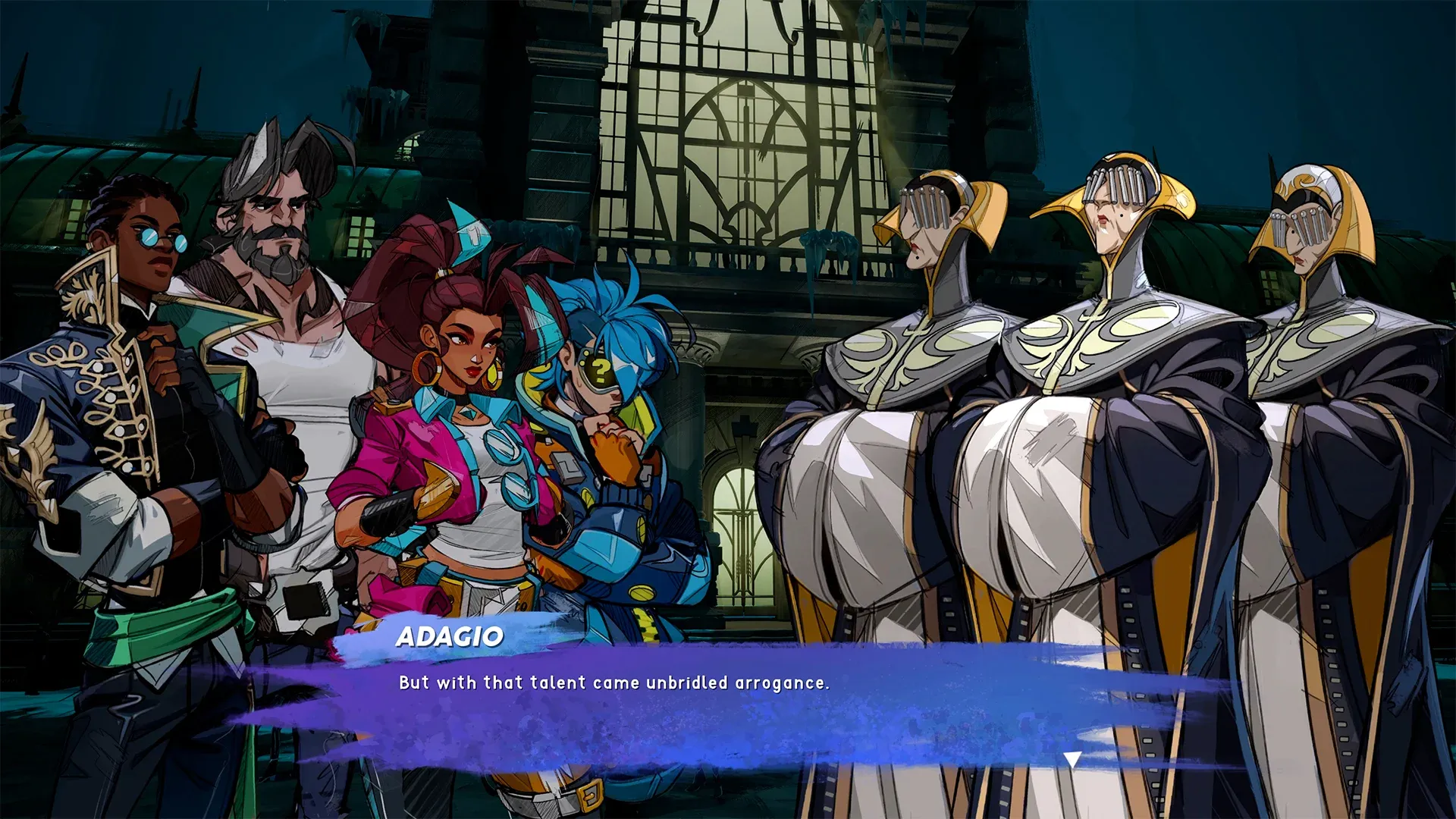
You play as Cadence, a pop star from the music city of Chordia, one of six genre-focused city-states in the land of Note. After getting shut out of the Noteworthy Song Contest, she sets out across Note to recruit musicians from cities including the EDM hub Lumina and the Rock city Durandis, building a band capable of something the judges have never heard. The story escalates from personal ambition into world-saving territory when the Harmonic Convergence starts destabilizing Note's musical energies, and a shadowy faction from the country nation of Homestead begins stealing the Keys of each city.
According to the Noisy Pixel review, the game runs roughly 20 hours if you complete all side content, which is on the shorter side for a JRPG but keeps pacing tight through most of the experience. The Digital Chumps review scored it 8.5 out of 10, calling the combat one of the more memorable variations on the turn-based genre in recent memory.
Stanza combat in action
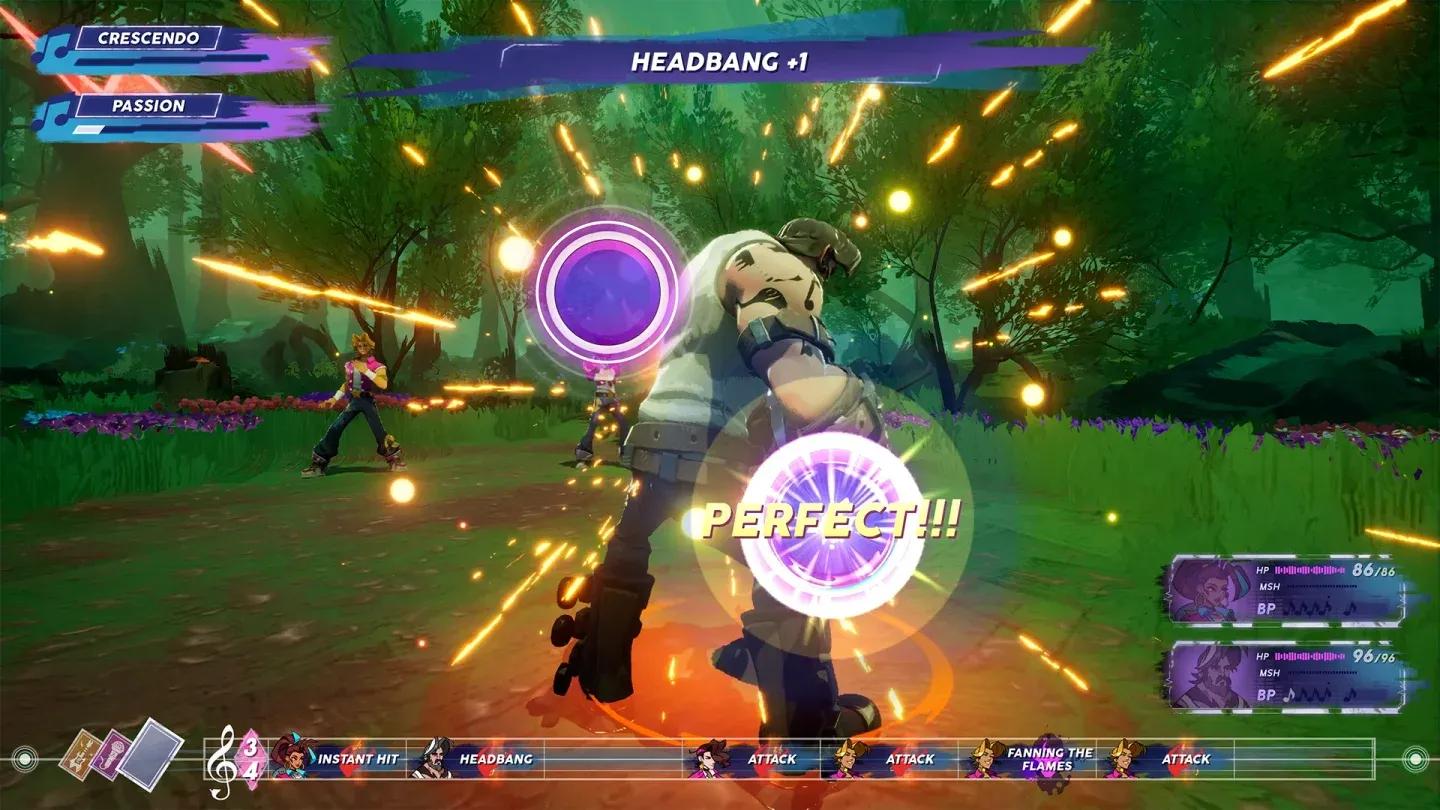
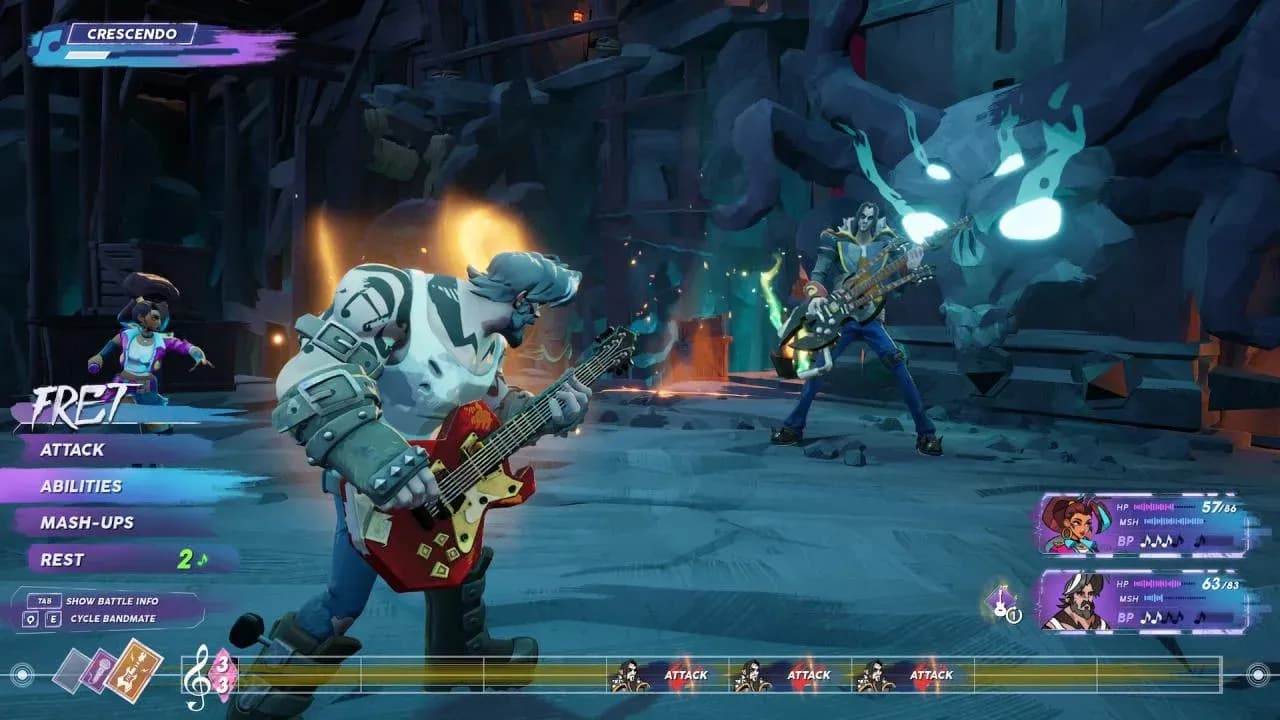
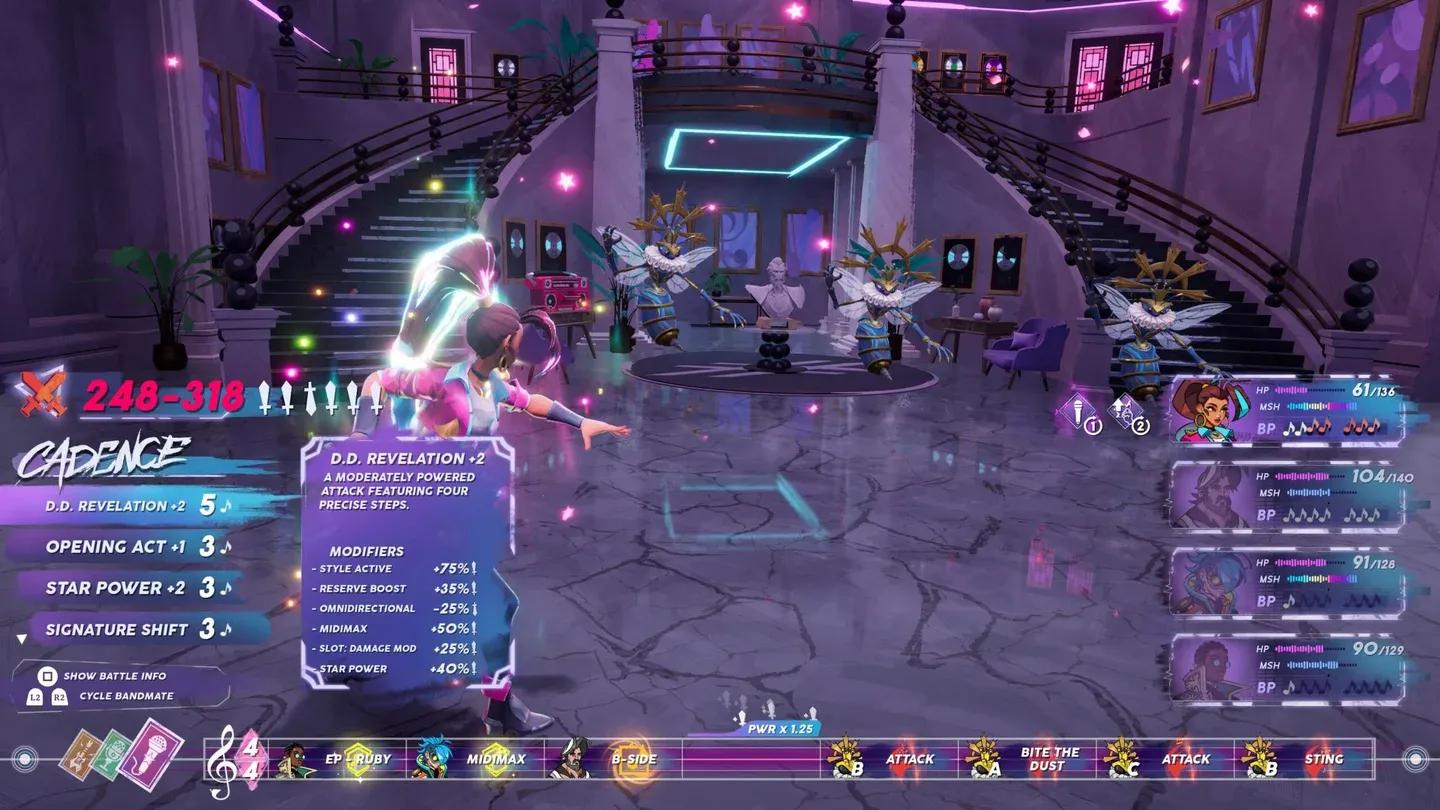
Every battle in People of Note is split into rounds called Stanzas. During your Stanza, you can act with your party members in any order you choose, and many abilities reward smart sequencing. Cadence's Opening Act Songstone, for example, deals double damage if it's the first action used in a Stanza, so leading with her consistently pays off. Fret has an ability that heals the party whenever a member takes damage, which becomes a cornerstone of survival in boss fights.
The backing track shifts genre every Stanza: purple for pop, yellow for rock, blue for EDM, green for rap. Whichever character's genre matches the active style gets a significant power boost on their actions that round. Planning around this, rather than ignoring it, is the difference between breezing through fights and running into walls.
Actions cost BP, a resource that starts at half a bar at the beginning of each fight and recovers one point per turn. Resting skips your action but recovers more BP and boosts defense until the next Stanza. If you equip a Songstone that costs one BP or less, you can use it every single turn. Equip one that costs zero or negative BP and you actually gain BP for using it, which opens up some aggressive build options.
All party members recover full HP at the start of every fight, so there's no need to hoard healing items between encounters. Boss fights specifically drain everyone's Mashup meter to zero at the start, which eliminates any advantage from pre-grinding those meters on regular enemies.
Songstones are the game's ability and customization system, described by Noisy Pixel as a combination of Final Fantasy VII's Materia and Final Fantasy X-2's Dressphere systems. Each weapon a character equips has a unique grid of large and small nodes: large nodes hold combat abilities, small nodes hold modifiers that adjust things like power scaling based on turn order or BP cost reduction.
Some Songstones are character-specific, others are universal and can be slotted onto anyone. The key quality-of-life feature here is experience flexibility: you can spend or refund experience points on any Songstone at any time. Swap out an old ability for a new one and you don't have to re-grind. Drain the XP from the old Songstone one-for-one and apply it directly to the new one.
Songstone grid customization
Mash-Ups are the game's Limit Break equivalent, combining two party members to deliver a unique effect, whether that's massive damage or a party-wide buff. To trigger one, both characters involved must not have acted yet in the current Stanza. Using a Mash-Up also shifts the active genre for the rest of that Stanza, which adds a layer of strategic timing since you can use it to manually trigger a genre boost for a specific character's follow-up action.
More Mash-Up combinations unlock as the story progresses, and eventually you can chain more than two characters together. The Digital Chumps review notes that the Mashup meter carries over between regular fights but resets to zero at the start of every boss encounter, so don't hold back on using them against normal enemies.
Bosses in People of Note are designed to force you out of your default patterns. Based on descriptions in the Digital Chumps review, some bosses negate the first attack of each round entirely, which punishes players who always lead with their hardest-hitting move. Others make damage irrelevant above or below certain HP thresholds, meaning you need to hold a powerful attack until the enemy crosses a specific health value.
A few practical approaches that hold up across most encounters:
Scattered throughout the world are puzzle battles: encounters with specific win conditions like dealing 200 damage in a single hit or eliminating a group of enemies within two Stanzas. These require you to think through your entire Songstone loadout before engaging, since the margin for error is tight. The Digital Chumps review specifically notes that some of these require actual math to solve, working out which character's abilities stack to hit the required threshold.
Outside of combat, each area also has thematic environmental puzzles that block progression or gate optional rewards. Examples from the sources include lining up woodwind instruments to trigger a flower's growth, pressurizing geysers to cross rock formations, and stepping across neon floor panels to reach a switch. These puzzles have a difficulty range, with the optional hard versions offering the best rewards.
If a puzzle or a combat encounter is blocking your progress and you'd rather keep moving, the accessibility options let you skip both entirely from the pause menu.
People of Note ships with four difficulty settings: Easy, Normal, Hard, and No Combat. Beyond that, the options menu includes individual toggles for turning off the rhythm minigame during combat and for auto-solving the world's puzzle rooms on entry. Any fight can also be skipped mid-battle from the pause menu, which the Noisy Pixel review highlighted as one of the smartest quality-of-life decisions in the game.
| Option | What it does |
|---|---|
| Easy / Normal / Hard | Adjusts enemy stats and damage output |
| No Combat | Removes combat encounters entirely |
| Rhythm toggle | Disables rhythm minigame, keeps turn-based structure |
| Puzzle skip | Auto-solves environmental puzzles on entry |
| Mid-battle skip | Exit any fight in progress without penalty |
The game launched simultaneously on PC (Steam), PlayStation 5, and Nintendo Switch 2 on April 7, 2026, with the Switch 2 version priced at $24.99 (currently on sale for $22.49 through April 22, 2026). The file size on Switch 2 is 13.3 GB.
Here's what early players have reported across platforms, based on community discussion from the ResetEra OT thread:
Nintendo Switch 2 (docked): Performance is close to 60fps and described as smooth. No major issues reported in docked mode.
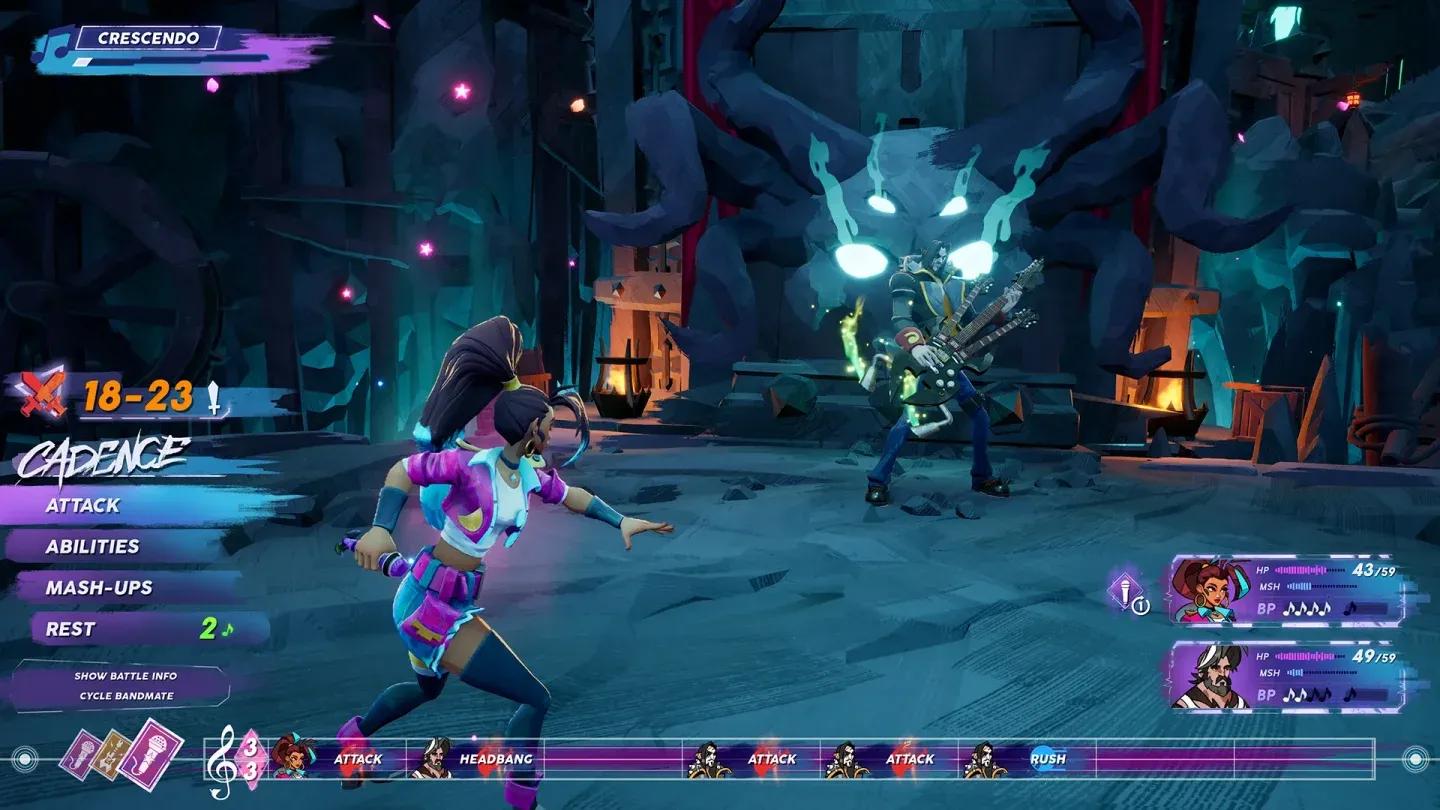
Nintendo Switch 2 (handheld): Framerate dips slightly below 60 in some areas, particularly heavier city sections, but remains playable. Text size has been flagged as on the smaller side, though a text size option exists in the menu.
Steam Deck: The game runs well and feels good on the device, but currently shares graphical settings with your desktop profile. Switching between Steam Deck and a desktop PC requires manually adjusting graphics settings each time. Iridium Studios lead designer Feep confirmed in the ResetEra thread that this was flagged during the Steam Deck verification pass and is on the list to address after launch, with native PS5 controller support also in the queue.
PC (desktop): No significant issues reported. Ultra settings are not viable on Steam Deck but run fine on a proper desktop setup. Ultrawide (5K2K) is not currently supported; toggling display settings back and forth or switching to 4K resolves the aspect ratio issue at launch.
Switch 2 handheld performance
The four main party members each fill a distinct combat role, according to the Noisy Pixel review:
The Noisy Pixel review specifically calls out LEXXE's vocal performances as the biggest reason to want the soundtrack on streaming platforms, and notes that Wakili sells Vox's stoic facade convincingly despite having no prior acting credits.
Full party roster overview
This one trips up a lot of players early. The dungeon has three NPCs who each hint at one ingredient for a drink mix. You need to speak to all three before the puzzle clicks. One NPC mentions Cola Tengo, but the other two ingredients require tracking down the remaining NPCs elsewhere in the area. According to the ResetEra community thread, one confirmed solution is Bourbon, Cola Tengo, and Lemon, though the exact combination may vary. The third NPC is located by heading to the bar on the right, going straight, then left, and down a hallway.
The Noisy Pixel review gave it a 9 out of 10, calling it a must-play and praising the Songstone system and soundtrack as standout achievements. The Digital Chumps review landed at 8.5 out of 10, highlighting the inventive combat and diverse music while noting some difficulty spikes and pacing issues in the second half. Both reviews agree that the late-game rushes through Vox's character arc and the final act arrives faster than it should.
The soundtrack covers pop, rock, metal, punk, EDM, rap, country, classical, and 80s retro, with each combat track featuring multiple genre versions that shift dynamically during Stanzas. The live traditional Scottish instrumentation on the track Lilting Green was recorded by the group Breabach, confirmed by Iridium Studios lead designer Feep in the ResetEra thread.
For more RPG guides and reviews, browse the latest gaming coverage at GAMES.GG.