
The Banshee is one of Phasmophobia's most distinctive ghosts, and also one of the most dangerous if you don't understand how it picks its prey. Unlike most ghosts that spread their aggression across the whole team, the Banshee locks onto a single player from the moment the contract starts and builds its entire behavior around eliminating that one person. Get the target identified early and your whole team gains a massive tactical edge. Miss it, and that one unlucky player is in serious trouble.
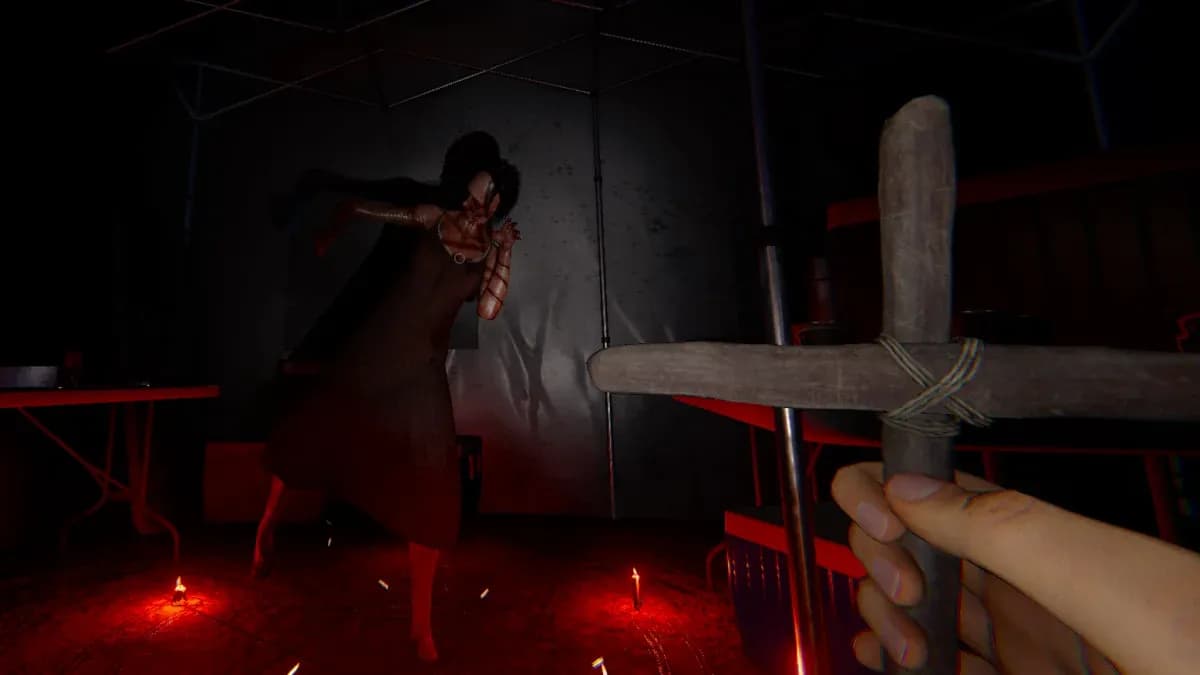
Banshee on D.O.T.S. projector
What evidence does the Banshee leave?
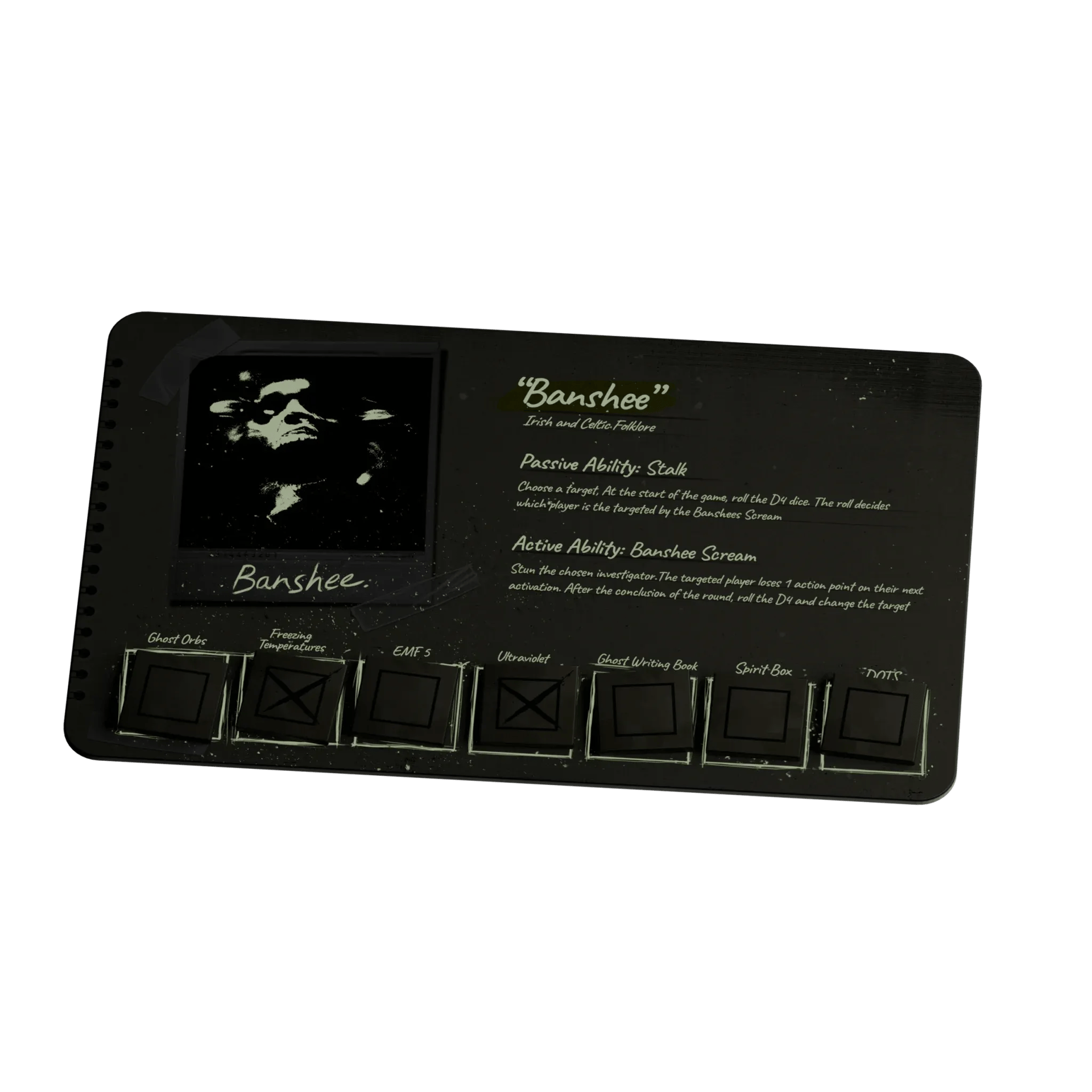
The Banshee produces three pieces of evidence: D.O.T.S. Projector, Ghost Orb, and Ultraviolet. This combination has remained stable through recent patches, so your loadout should always include a UV Light, a video camera for Ghost Orbs, and a D.O.T.S. Projector when the Banshee is a possibility.
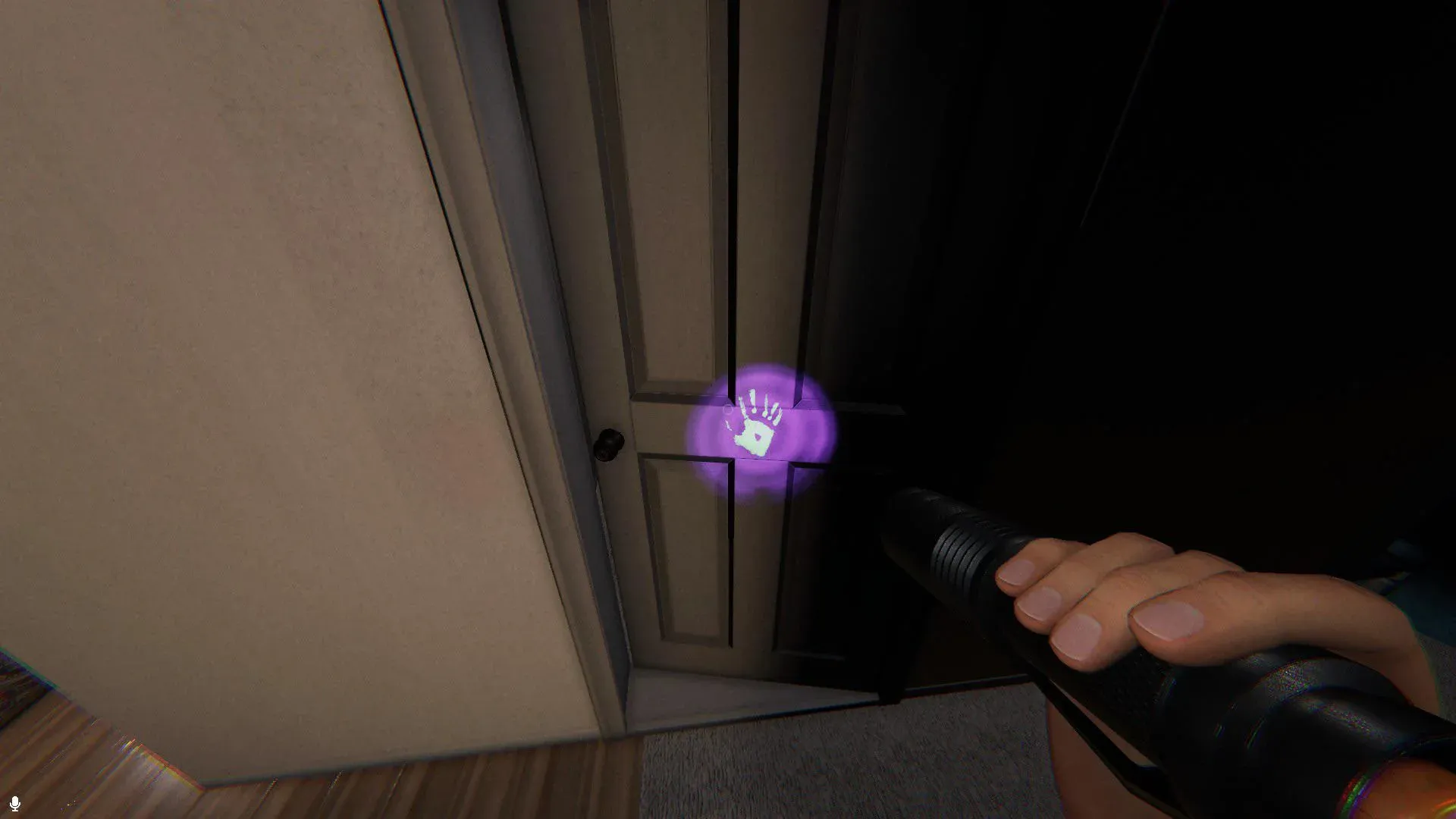
Ultraviolet evidence shows up as fingerprints or footprints on surfaces throughout the map. Bring a UV Light and scan doors, windows, and light switches early. Ghost Orbs appear in the ghost room on camera, so set up a video camera and check the monitor from a safe distance. D.O.T.S. requires the ghost to physically walk through the projector beam, which the Banshee will do, though it may take some patience.

How does the Banshee choose its target?
At the start of every contract, the Banshee randomly selects one player as its hunt target. This selection happens immediately and does not change unless that player dies or leaves the game. When a target is replaced, the Banshee does not pick randomly again. Instead, it selects the first alive player in the lobby join order who was not the previous target, unless only one player remains.
This targeting system has significant gameplay consequences. The Banshee's activity level is based on the target's individual sanity, not the team average. A hunt can trigger from as high as 87% average sanity on the Sanity Monitor if the target's personal sanity has dropped to 50%, or the ghost might stay calm at 12% average sanity if the target still has high sanity. The Sanity Monitor reading can be genuinely misleading when a Banshee is involved.
During hunts, the Banshee ignores every player except its target. Non-target players can walk directly past it without being killed. The ghost will pass through them harmlessly. This is the single most important mechanic to understand because it means non-target players can continue gathering evidence during a hunt, provided the target is safe.
How to identify the Banshee's target
Finding the target is the highest-value action your team can take on a Banshee contract. There are three reliable methods, each suited to different situations.
Sanity-based deduction
Watch the Sanity Monitor closely. If the ghost hunts while average sanity is well above 50%, check which players have low personal sanity. One of them is the target. If the ghost refuses to hunt despite average sanity being below 50%, look for a player with unusually high sanity. That player is likely the target holding the hunt threshold up. Be careful not to confuse this with a Demon (which hunts at higher thresholds) or a Shade (which hunts at lower ones).
Bait testing during hunts
This method is more direct. Have players spread out inside the building with Incense ready and electronics active to attract the ghost. The player the Banshee rushes toward is the target. This approach is especially useful on Nightmare or Insanity difficulty where the Sanity Monitor is unavailable. One caution: the Banshee can wander toward a non-target player after losing sight of its actual target, especially in hallways. Watch for line-of-sight acceleration to confirm active pursuit.
Ghost movement tracking
Outside of hunts, the Banshee frequently roams toward its target's location. A player who reports the ghost appearing near them repeatedly, or hunts starting in their area far from the ghost room, is a strong candidate for the target. Motion Sensors and Salt placed around the map help track these movement patterns without requiring direct observation.
What are the Banshee's abilities?
The Banshee has two notable abilities beyond its hunt behavior.
First, it produces unique screams when a Parabolic Microphone or Sound Recorder is used nearby. The game includes 20 distinct Banshee screams, and there is a 33% chance of hearing one instead of a regular paranormal sound when using either tool. This is listed as the Banshee's weakness in the Journal because it can confirm the ghost type outright. That said, the 33% chance means silence does not rule it out.
Second, the Banshee performs a stalking ability during short roams. When the target is inside the investigation area, the Banshee has a 67% chance of placing a waypoint at the target's location and traveling directly to them. Unlike similar abilities on the Wraith or Phantom, this movement produces no EMF reading. This is why the Banshee can feel like it always knows where you are.
Banshee strengths and weaknesses at a glance
| Attribute | Detail |
|---|---|
| Evidence | D.O.T.S. Projector, Ghost Orb, Ultraviolet |
| Hunt threshold | 50% (target's sanity only) |
| Singing event rate | 46.67% (vs. 20% for most ghosts) |
| Stalking ability chance | 67% during short roams (target inside area) |
| Parabolic scream chance | 33% per use |
| Unique screams available | 20 |
| Gender | Always female |
| Kills non-target players | No (unless target is outside investigation area) |
Can you rule out the Banshee quickly?
Yes, in one specific case. The Banshee is always female. If the ghost presents a male name, appears with a male ghost model, or uses male vocalizations during an event or hunt, you can eliminate the Banshee immediately. It is one of only two ghost types in Phasmophobia with a gender restriction, the other being the Dayan.
On D.O.T.S., ruling out the Banshee based on gender is harder but still possible if the model is clearly visible.
Survival strategies for the target player
If you determine you are the Banshee's target, your options shift significantly. The most aggressive safe play is to use Sanity Medication to keep your personal sanity above 50% at all times. Since the Banshee only checks your sanity to decide whether to hunt, staying above the threshold prevents hunts entirely. Combine this with staying outside the investigation area when possible and the Banshee effectively cannot hunt at all.
For the rest of the team, a confirmed target means you can continue investigating during hunts without needing to hide. The Banshee will ignore you. Use that time to gather remaining evidence, complete optional objectives, or set up equipment.
Singleplayer considerations
The target-based identification methods are useless in singleplayer since there is only one player. Rely on the Parabolic Microphone or Sound Recorder to catch the unique screams, watch for a high frequency of singing events, and note whether the ghost roams toward you frequently without leaving EMF readings. The 15% sanity drop from interrupting a singing event (versus the usual 10%) is also a viable check if the Sanity Monitor is available.
For more ghost guides and investigation tips, browse more guides on GAMES.GG to sharpen your Phasmophobia knowledge across every ghost type. For a deeper mechanical breakdown of the Banshee's targeting system, the Phasmophobia wiki covers evidence and UV interaction in additional detail.