

Pokémon Champions drops you into ranked competition fast, and the first real decision you make matters more than it might seem. After completing the tutorial battle, the game hands you a free first recruit and five additional mon to fill out your squad. There are 10 possible starting lineups, each built around a different lead mon. Choosing wisely here gives you a functional competitive team from the moment you step onto the ladder.
How does the starter selection work?
The starter lineups are not randomized. Each lead mon comes packaged with a fixed set of five teammates, so when you pick Pikachu, you know exactly which five mon will fill the rest of your roster. The first pick costs nothing, which means this is the one moment in Pokémon Champions where you get a full, free competitive squad without spending any VP.
Once you have your starter lineup locked in, every player also has the option to add Dragonite to their team regardless of which starter they chose. That applies across all 10 lineups and gives every new player a strong, consistent option to build around from the start.
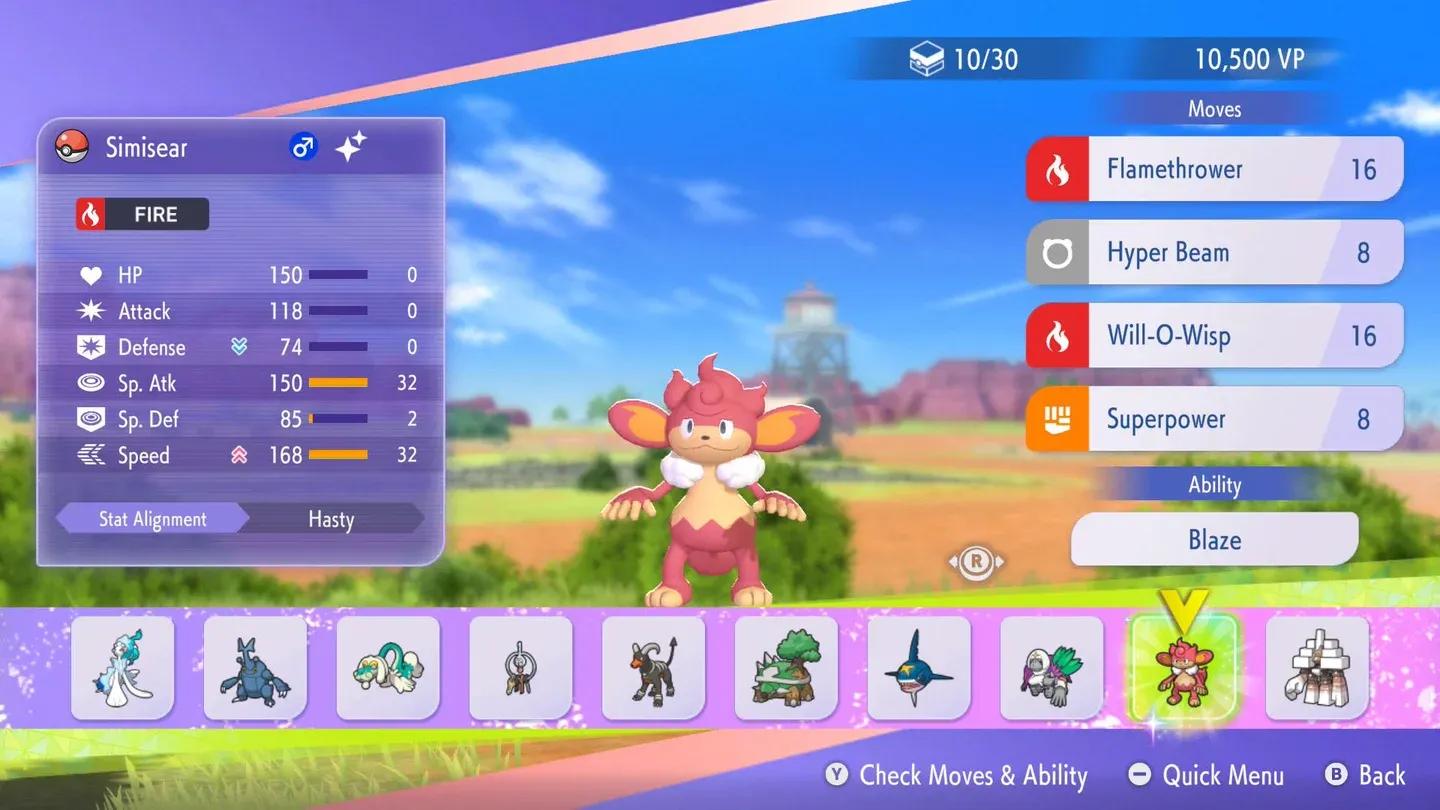
Starter lineup selection screen
All 10 starter lineups in Pokémon Champions
Here is every starting lineup available at launch:
Which starter lineup is the strongest?
Looking purely at team composition, the Pikachu lineup stands out. Pairing Pikachu with Kingambit, Garchomp, Azumarill, Gyarados, and Gengar gives you a squad with serious type coverage and multiple mon that are already established threats in competitive formats. When measured on raw squad strength, this team outperforms the others at launch.
That said, Pikachu itself is not necessarily the best individual lead mon in the current meta. There are stronger starter picks from a pure competitive standpoint, but those lineups come with weaker supporting casts. The trade-off is real: you might get a top-tier lead mon and then spend more VP later filling in gaps, or you take Pikachu, get a strong team immediately, and upgrade from there.
For players who want to hit the ground running on the ranked ladder without spending resources right away, Pikachu's lineup is the most self-contained starting point. Players who are more comfortable with the competitive format and plan to recruit aggressively from Roster Ranch early on may prefer to prioritize the lead mon over the supporting cast.
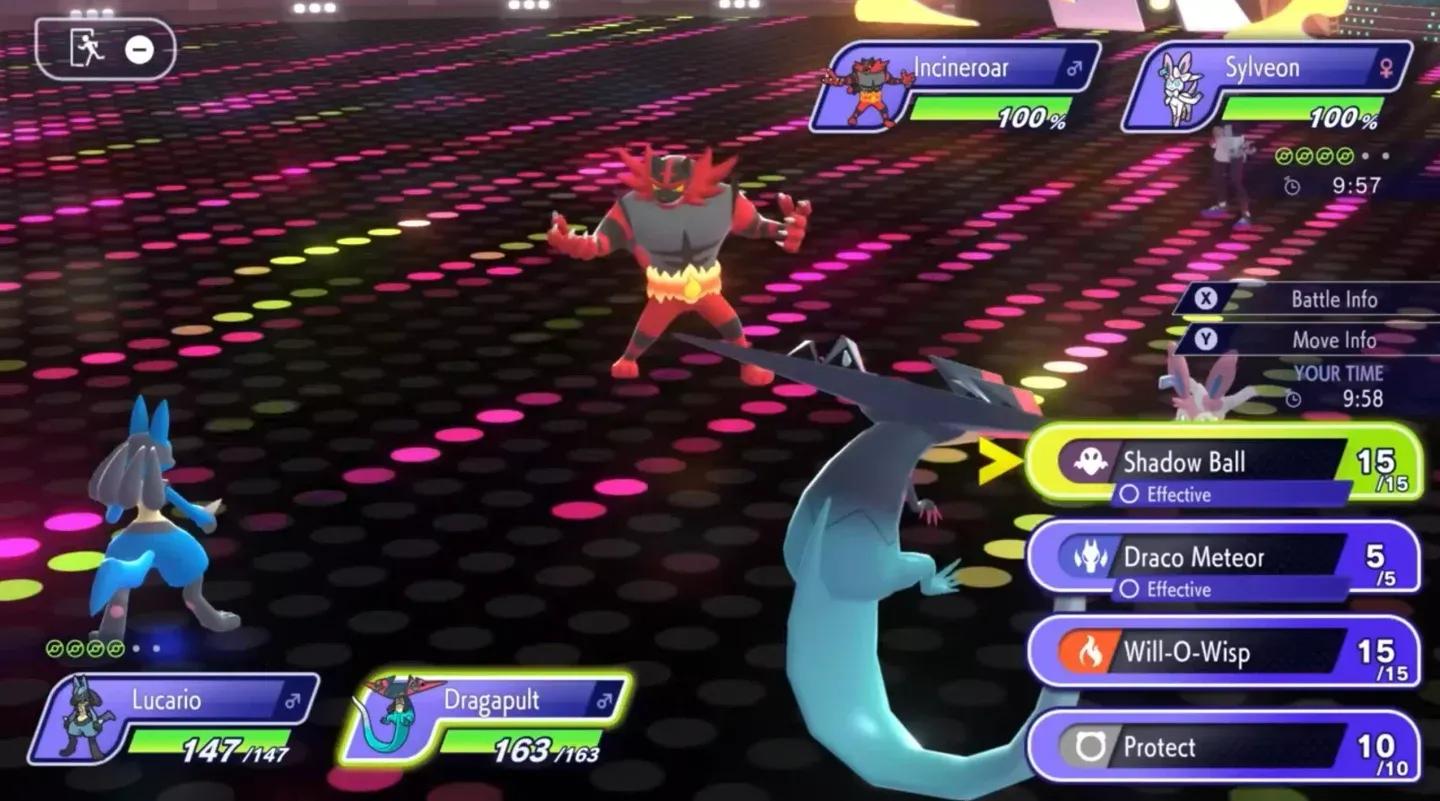
Garchomp in competitive play
What makes a good starter team in Pokémon Champions?
Pokémon Champions uses double battles as its primary competitive format. That context matters when evaluating these lineups. In doubles, type synergy, speed control, and the ability to apply pressure from two positions simultaneously all carry more weight than raw individual power.
With that in mind, lineups that include mon known for doubles utility, such as Whimsicott (a fast Prankster user that fits naturally into doubles), Azumarill, and Gyarados, have built-in competitive value beyond their individual stats. The Pikachu lineup benefits from having several of these doubles-relevant mon already in place.
Tips for picking your first lineup
Here are the key things to keep in mind before you commit:
- Evaluate the full team, not just the lead. The five supporting mon will be your core squad through early ranked matches.
- Check which mon overlap with Roster Ranch options. If a mon you want is easy to recruit early, a weaker version in your starter lineup matters less.
- Dragonite is always available. Factor that free addition into your team planning before you pick.
- Doubles synergy matters. Look for mon that support each other in two-on-two situations rather than five independent threats.
- Meta leads come at a cost. Stronger individual starters often come with thinner supporting casts, so budget VP for recruitment if you go that route.
For more guides on Pokémon Champions and other titles, browse the full guide library at GAMES.GG to keep your competitive edge sharp as the meta develops.