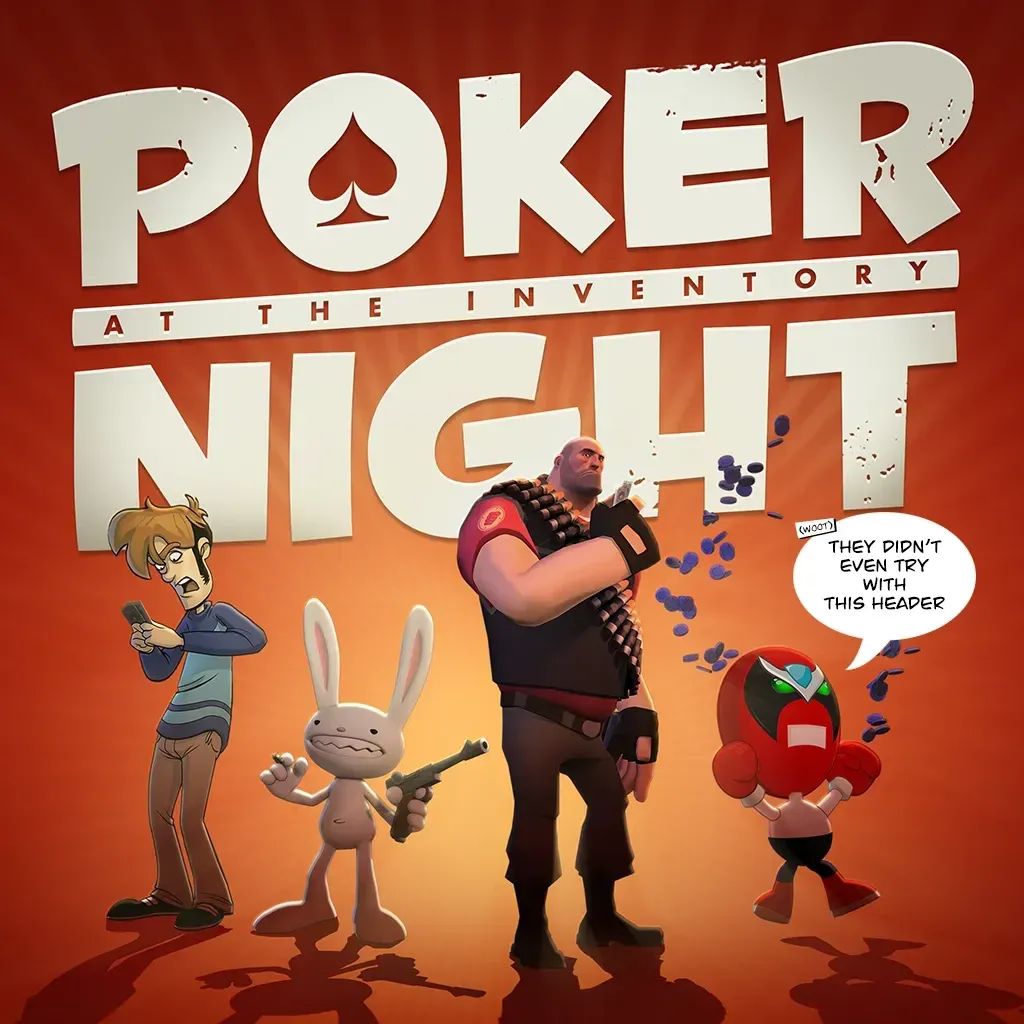
Poker Night at the Inventory drops you into a smoky underground club called The Inventory, where Heavy Weapons Guy, Strong Bad, Max, and Tycho Brahe are waiting to take your chips. Developed by Telltale Games and remastered by Skunkape Games, this Texas Hold'em crossover is packed with personality, hidden tells, and unlockable Team Fortress 2 items. Whether you're new to poker or just new to this game, understanding how each opponent thinks is the difference between winning Sasha and going bust.
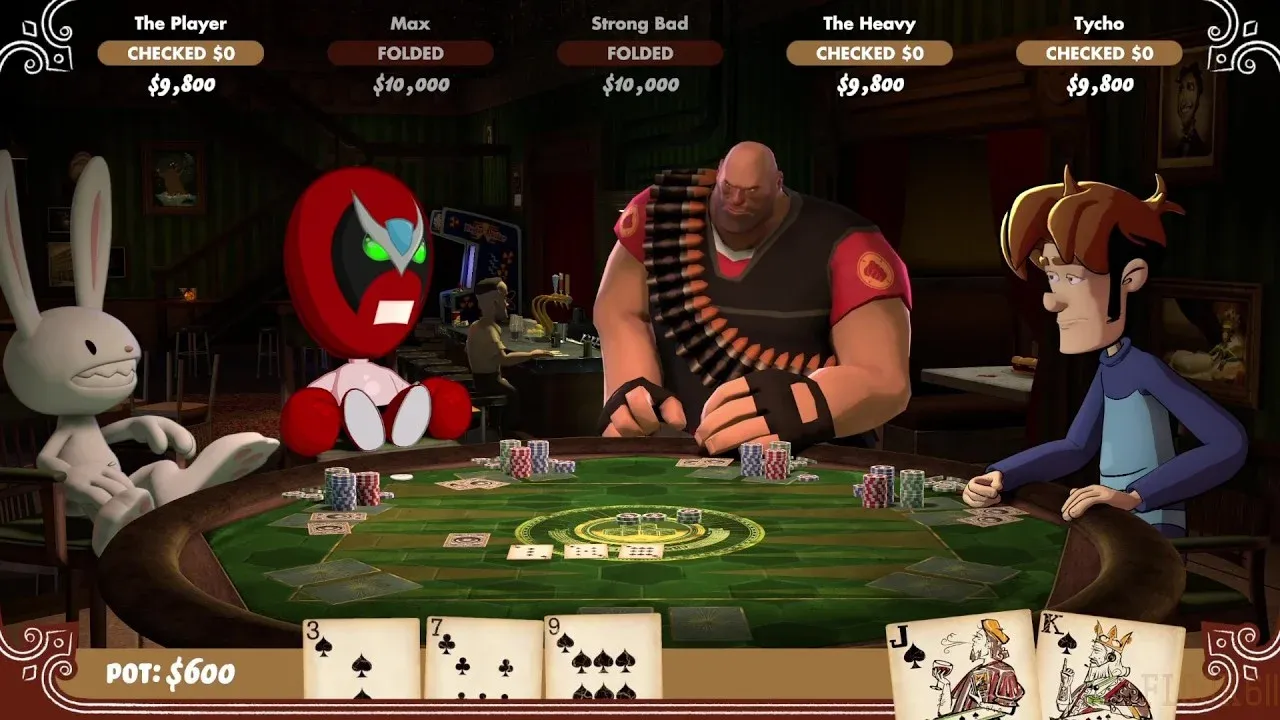
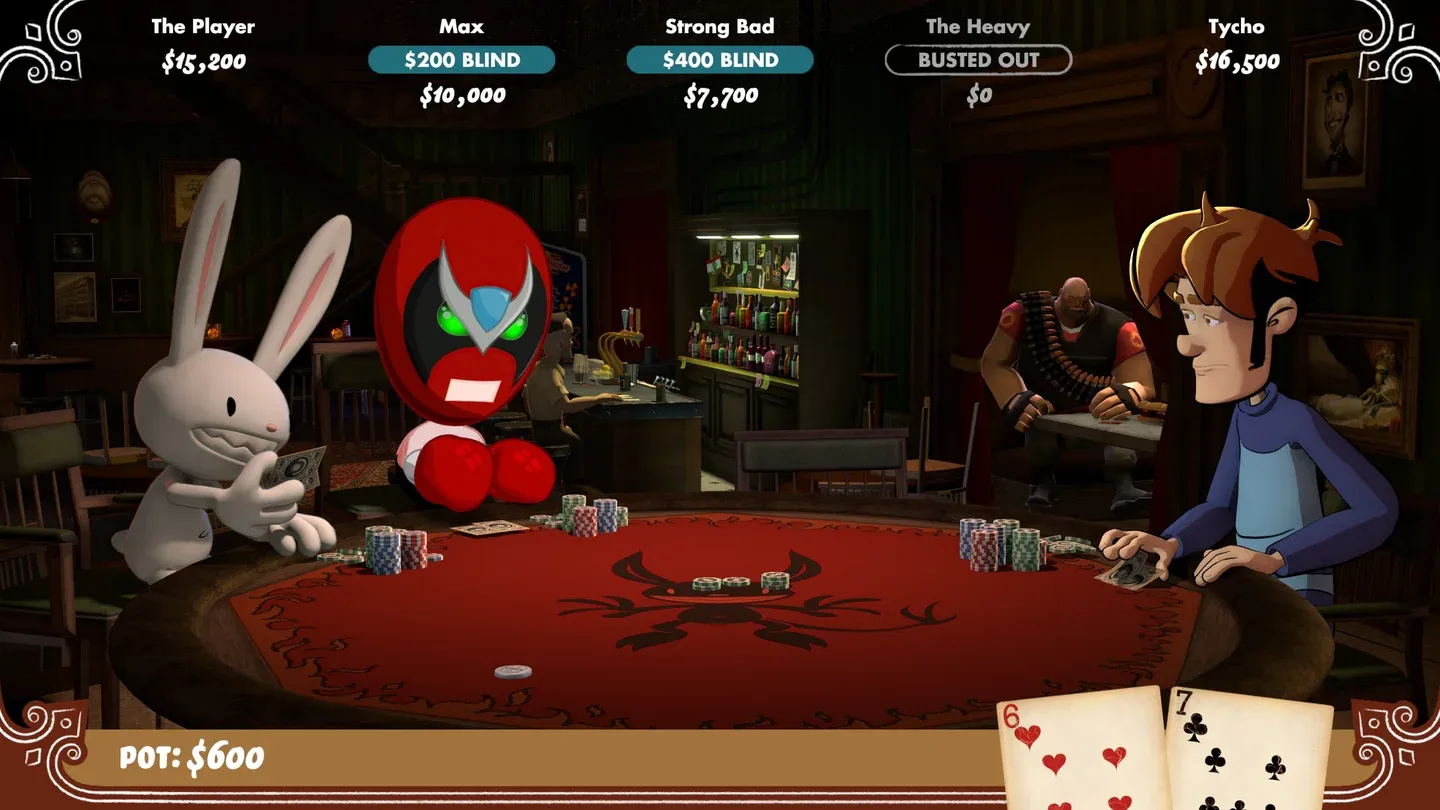
The Inventory's poker table
What Is Poker Night at the Inventory?
Poker Night at the Inventory is a single-player Texas Hold'em tournament where you face four AI opponents, each with distinct personalities drawn from their source franchises. Every player starts with $10,000, and you win by eliminating all four opponents and claiming their chips. The game also features unlockable tables, card decks, and special buy-in items that transfer to Team Fortress 2 on Steam.
The 2026 Skunkape remaster improved the AI significantly, fixing issues where opponents made decisions based only on their high card and correcting illegal re-raise situations that existed in the original release.
Texas Hold'em Basics: What You Need to Know
Before reading opponent tells, you need a solid foundation. Here's a quick reference:
Hand Rankings (Weakest to Strongest)
How a Hand Plays Out
Each player receives two private cards (your pocket). Betting rounds alternate with community cards being revealed: the flop (three cards), the turn (one card), and the river (one final card). The player who makes the best five-card hand using any combination of pocket and community cards wins the pot. You can also win if every other player folds.
How Do You Read Opponent Tells?
A tell is an involuntary physical reaction that hints at the strength of a player's hand. In Poker Night at the Inventory, each opponent has a set of animated tells ranging from very subtle to impossible to miss. Turning off table conversations in the settings prevents camera cuts from interrupting your view of these animations.
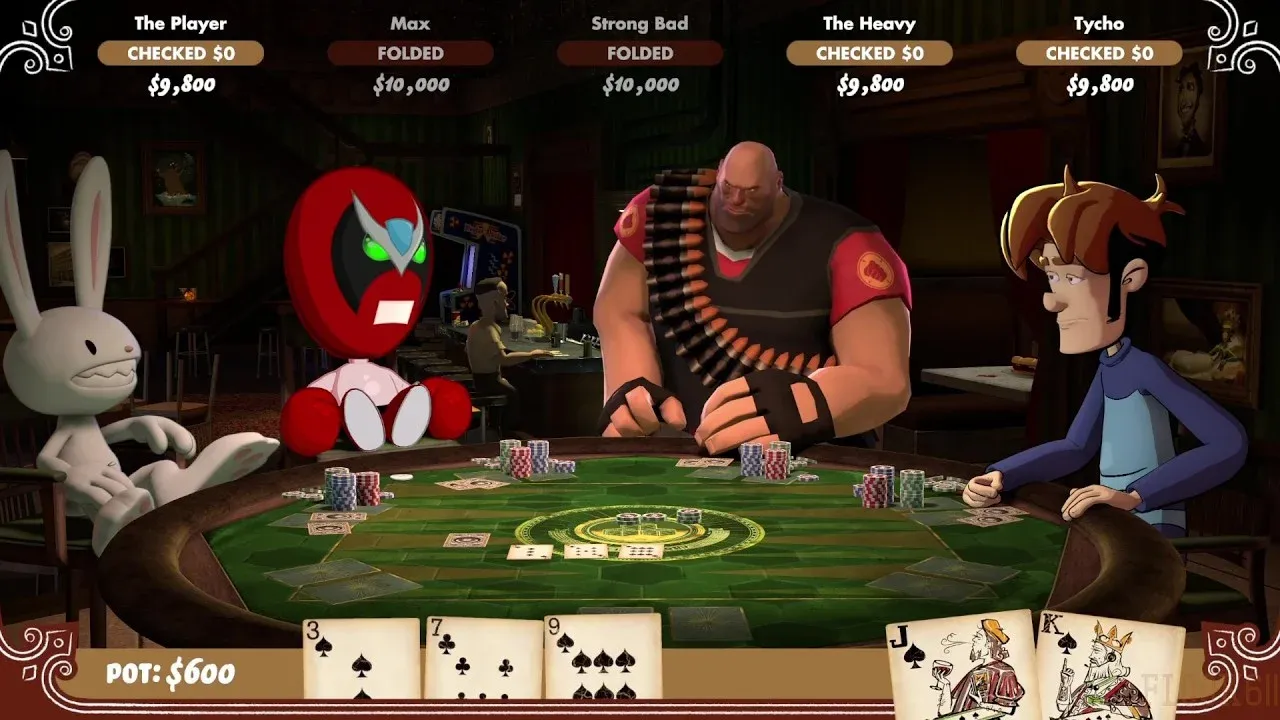
Strong Bad's bad hand tell
Heavy's Tells
- Bad hand: Slams his fist on the table, or looks furious after checking his cards
- Decent hand: Adjusts his ammo belt
- Good hand: Checks cards and nods slightly
- Great hand: Rubs the bottom of his nose, or his nostrils flare immediately after betting
- Bluffing: Stretches his neck after placing a bet
Heavy's strategy: He plays conservatively and rarely bluffs. If he stays in a hand aggressively, respect it. Lure him in with small bets when you have a strong hand, since he connects big chip stacks with bold play and will chase pots when he's ahead.
Max's Tells
- Bad hand: Checks for multiple turns in a row, shakes his head, or smacks himself after the flop
- Decent hand: Adjusts himself in his seat
- Good hand: Right hand quivers while betting
- Great hand: Stands on his chair looking triumphant, or gets a crazed expression
- Bluffing: Left hand quivers while betting
Max's strategy: His behavior is intentionally erratic. On Normal difficulty he plays almost randomly, but on Hard he becomes the most intelligent player at the table. The key tell to watch is which hand is quivering: right hand means a real hand, left hand means a bluff.
Strong Bad's Tells
- Bad hand: Repeatedly slams his head against the table
- Good hand: Eyes are smugly half-shut (bottom half visible)
- Great hand: Throws arms up and looks around the table
- Bluffing: Quickly cocks his head back after betting, or lightly taps his fist on the table edge after raising
- Ambiguous: Eyes winced showing only the top half (could be a good hand or a bluff)
Strong Bad's strategy: He has low card-reading intelligence but extremely high aggression, meaning he bluffs constantly. Call him down with decent hands and you'll drain his stack. Be cautious when he actually shows the great-hand tell, because those moments are real.
Tycho's Tells
- Bad hand: Subtle head shake, smacks himself in the face, or checks far more than usual
- Good hand: Looks up toward the ceiling, or diverts eye contact and smiles after checking cards
- Great hand: Eyes glow red with a demonic expression
- Bluffing: Smiles awkwardly before betting, or has a worried look before or after placing chips
Tycho's strategy: He is the most cautious and intelligent opponent. He only bets aggressively when he has something worth betting. If Tycho starts raising like Heavy does with a large pot, fold unless you have a strong hand yourself. Target him early in tournaments when he is still playing timidly.
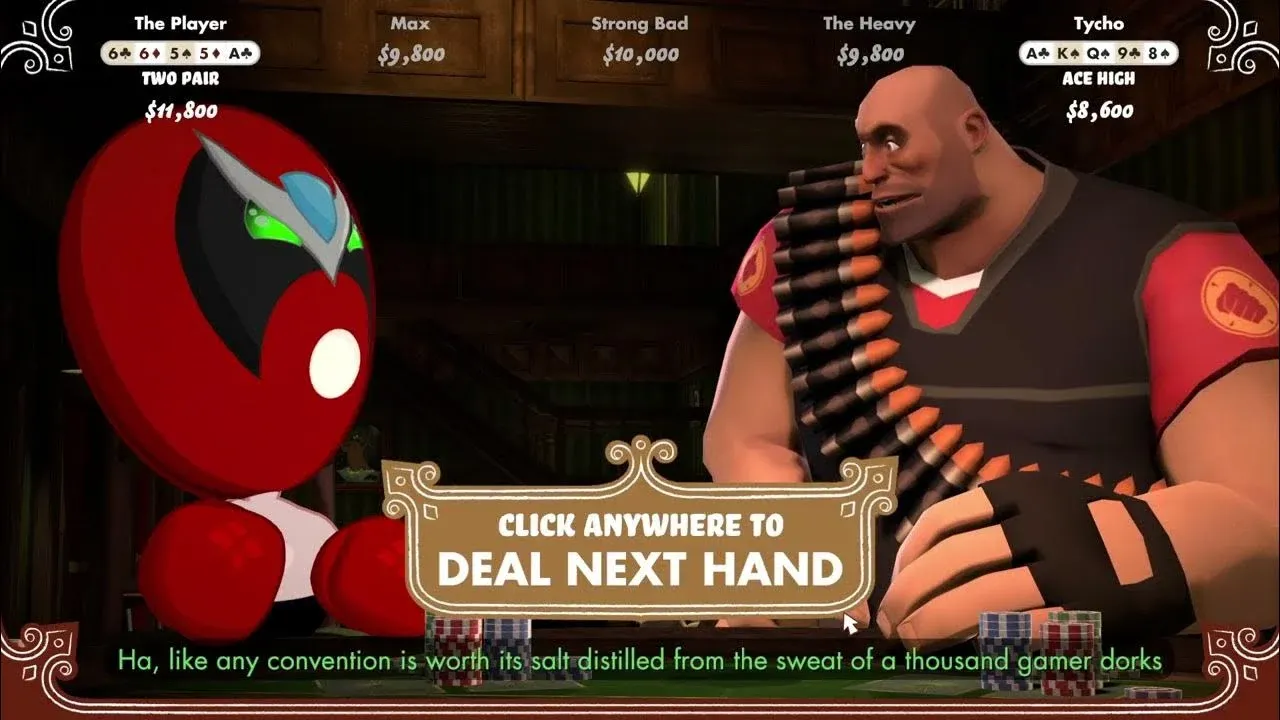
Tycho's unmistakable great hand tell
What Are the Best Strategies for Each Opponent?
Playing Against Heavy
Heavy has relatively high card intelligence but low aggression. He folds weak hands and bets with decent ones, making him predictable. The best approach is to use small "baby bets" to draw him in, then raise once the pot is established. He becomes more reckless when he has a large chip stack, so knock him out during those confident moments.
Playing Against Strong Bad
Strong Bad's ego does the work for you. He will go all-in at poor times and bet heavily on nothing. Your job is to avoid being scared off by his aggression and to call when you have a pair or better. The AI recognizes mindless bluffing based on what's on the river, so make sure you have something plausible when you push back.
Playing Against Max
Don't try to build a read on Max across multiple hands. His playstyle resets each deal. Instead, watch his behavior within the current hand: how he acts pre-flop and on the flop tells you how he's playing that specific round. Catch his left-hand quiver and call the bluff confidently.
Playing Against Tycho
Tycho's nickname from the community is "Foldsville and Check City." He checks and folds more than anyone else at the table. If he suddenly plays like Heavy with a big pot, get out. Your best window to beat him is early in the game before he accumulates chips and starts trapping.
How Do Game Mechanics Affect Your Strategy?
Blinds and Chip Drain
Blinds exist to drain chips from the table and prevent endless games. Each round, the big blind and small blind together put $50,000 at risk across the session. What most players miss: the opponents do not adjust their playstyle based on who is paying the blind. Strong Bad will still make frivolous bets even when the blind is eating his stack. Play conservatively when you're in the blind position, and let the blind work against reckless opponents.
Bluffing the AI
The game's AI evaluates bluffs based on what's visible on the river. If the community cards show nothing that could connect into a straight or flush, the AI assumes you're bluffing and will call you. Bluffing works best when there are connected cards on the board (sequential numbers, matching suits, or pairs) that make your big bet look plausible.
The All-In Exploit
The original version of the game had an AI weakness where going all-in caused opponents to fold regardless of their hand. The Skunkape remaster addressed many of these AI issues, so this exploit is less reliable in the updated version. Playing tactically with occasional bluffs and strong bets after four or five hands is the more consistent path to wins.
TF2 item unlock rewards
Unlockables: What Can You Win?
TF2 Special Items
Each opponent has a special buy-in item they wager when short on chips at the start of a tournament. Eliminate that opponent to claim the item, which unlocks in Team Fortress 2 on Steam.
Tables and Decks
Tables and card decks unlock through wins and knockouts. Notable unlocks include the Automata table at 5 wins (turns the entire screen black and white), the Videlectrix table at 10 wins (transforms Strong Bad into a low-polygon retro character), and the Telltale Shield table at 20 wins (activates all special effects simultaneously).
Achievement Tips: Which Ones Take the Longest?
Most achievements come naturally through regular play, but two stand out as genuine grinds:
- Four of a Kind has a 0.168% chance per hand (roughly 1 in 594). One community member reported getting it around their 1,100th hand.
- Straight Flush has a 0.0279% chance per hand (roughly 1 in 3,589). The same player reached 4,904 hands before unlocking it after 80 hours of play.
For luck-based achievements, Normal difficulty is recommended because opponents make more mistakes and create more varied hand outcomes. For Rags to Riches (winning a showdown with just a high card), Normal is essentially required since the AI plays more loosely.
Achievements worth planning for:
- Slow Play: Check on any hand better than a pair instead of betting
- Rushing: Win three pots in a row (go aggressive pre-flop to force folds)
- Triple Through: Win a pot where two or more opponents are all-in with you (more common on Normal)
- Summer of '69: Win a hand while holding a 6 and a 9
Easter Eggs and Hidden Details Worth Knowing
The Inventory is full of callbacks to the characters' source franchises. A few highlights:
- The number on Max's badge reveals he's actually betting Sam's badge and gun, not his own
- If Tycho is the first eliminated, all remaining characters draw weapons on him as he reaches into his pocket (it's a granola bar)
- Heavy's favorite films are The Dirty Dozen and the first 20 minutes of Rocky 4, and he listens to Huey Lewis and the News
- The background music is a jazz arrangement of "More Gun" from Team Fortress 2's Meet the Engineer short
- Strong Bad is the only appearance of the character where he uses actual profanity (though it remains bleeped regardless of censor settings in the original; the remaster reveals the line was always self-censored)