Search games, articles, guides...CtrlK
Sign InGet Started

Master every washer, nozzle, and upgrade in PowerWash Simulator 2 with this complete equipment guide for faster, cleaner results.

Written by Nuwel
Content Writer
See more GAMES.GG guides on Google
Add us as a preferred source and our guides show up first in your results.

PowerWash Simulator 2: Complete Achievement and Trophy Guide
All 40 PowerWash Simulator 2 achievements explained, from petting cats to riding roller coasters. Get every trophy with this complete guide.
PowerWash Simulator 2 Career Mode: Cash Tracking Guide
Master Career Mode in PowerWash Simulator 2 with the latest patch fixes, cash tracking tips, and job progression strategies.

PowerWash Simulator Graphics Settings Guide for Best Performance
Get the best visuals and frame rates in PowerWash Simulator with these optimized graphics settings for every PC setup.
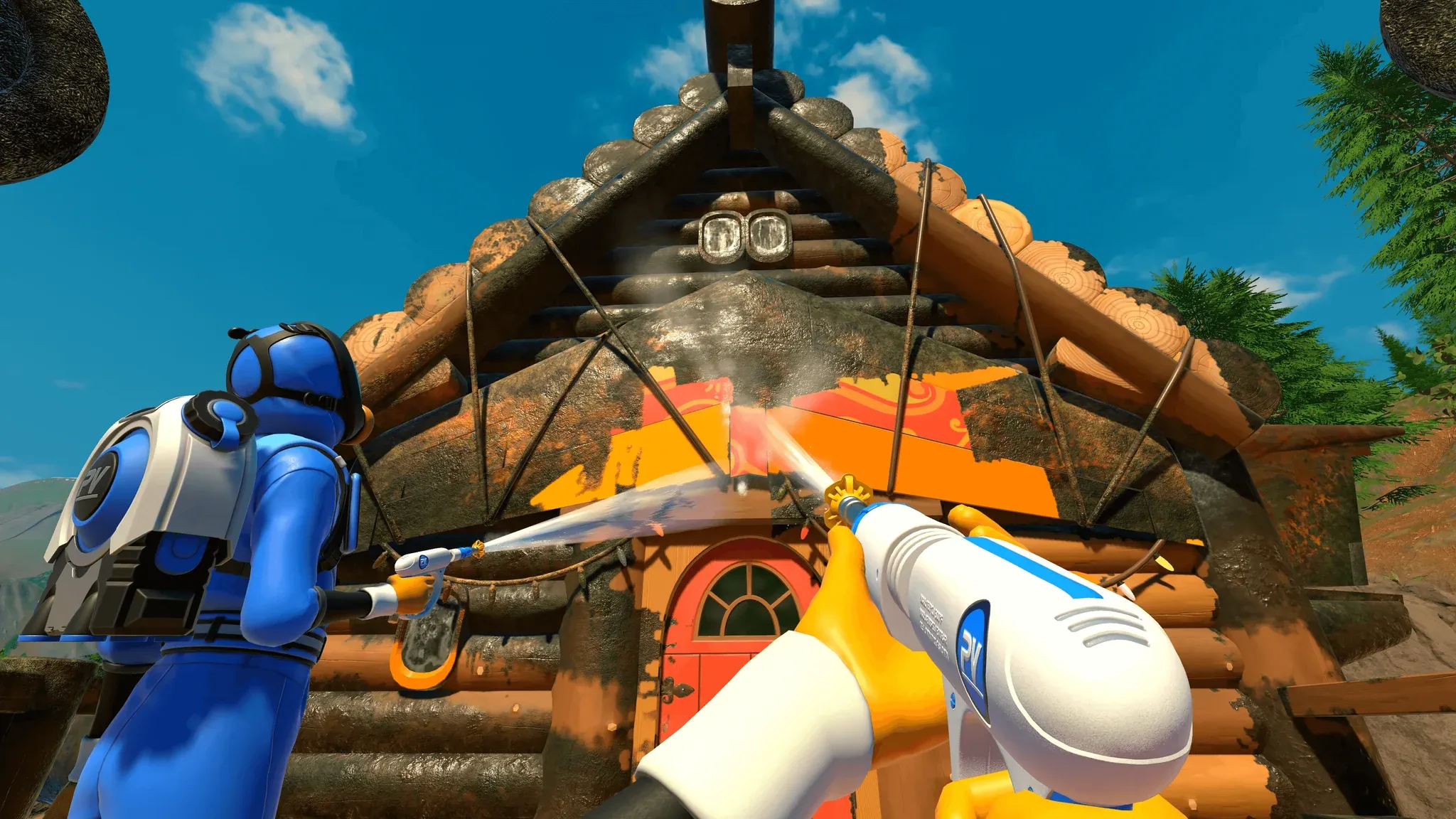
PowerWash Simulator 2 has a lot more mechanical depth than its predecessor, and that depth lives almost entirely in your equipment choices. Pick the wrong washer for a late-game level and you'll be there twice as long as you need to be. Pick the right nozzle for a stubborn surface and the dirt practically falls off. This guide breaks down every washer tier, the most useful upgrades, and which attachments are worth your stars and cash.
The game organizes washers into three broad tiers, each suited to a different stage of the campaign. Starting equipment gets the job done on early levels, but you'll feel the ceiling pretty fast once Caldera County opens up.
The Muckster I is where everyone begins. It's serviceable for the tutorial jobs and the first few residential levels, but its flow rate and pressure ceiling are low enough that you'll notice the difference the moment you upgrade. Don't spend stars on accessories for this washer. Save everything for the next tier.
The Muckster II is the first real upgrade and the one most players spend the majority of the game using. Its pressure output handles the bulk of Caldera County's challenges, and it accepts all the standard nozzle attachments. According to equipment breakdowns from the PowerWash Simulator 2 community, the Muckster II hits a sweet spot between flow rate and maneuverability that the heavier machines can't match for general use.
The Muckster Pro and the Caldera Industrial sit at the top end of the roster. The Pro is the go-to for players who want maximum pressure without sacrificing too much mobility. The Caldera Industrial trades mobility for raw output, making it ideal for the largest outdoor surfaces but awkward on anything with tight angles or detailed geometry.
For most players, the Muckster Pro will be the permanent endgame choice. The Caldera Industrial earns its place on specific jobs, particularly wide flat surfaces like parking lots and sports courts, but it's not a daily driver.
Upgrades in PowerWash Simulator 2 fall into two categories: washer-specific stat boosts and universal quality-of-life improvements. Spending your resources in the wrong order is the most common mistake new players make.
Pressure and flow rate upgrades are the most impactful per star spent. Higher pressure cuts through dirt faster on hard surfaces, while flow rate determines how quickly you saturate softer materials. Upgrading both on the Muckster II before moving to the Pro gives you a much smoother experience across the mid-game.
Tank capacity upgrades are worth picking up once you start tackling longer jobs. Running out of water mid-level and having to wait for the refill animation breaks rhythm in a game that rewards consistent movement.
The spray range extension is underrated. Most players skip it early because the default range feels fine, but once you're working on multi-story buildings or vehicles with hard-to-reach undersides, the extra reach saves significant time.
The ergonomics upgrade reduces fatigue penalties in extended sessions (relevant primarily if you're playing with motion controls or a gamepad) and slightly improves the spray arc width, which helps with coverage on flat surfaces.
For a quick reference on upgrade priority, here's how the main options stack up:
| Upgrade | Priority | Best For |
|---|---|---|
| Pressure boost | High | Hard surfaces, stubborn stains |
| Flow rate | High | Soft materials, large areas |
| Tank capacity | Medium | Long jobs, large maps |
| Spray range | Medium | Tall structures, vehicles |
| Ergonomics | Low | Comfort, minor coverage gains |
Nozzles are where a lot of the moment-to-moment decision-making happens. The game gives you several options, and each has a legitimate use case.
The 0-degree nozzle fires a tight, high-pressure stream. It's the fastest option for isolated dirt patches and detailed work on small objects, but it's slow on large surfaces because the coverage area is tiny.
The 25-degree nozzle is the all-rounder. Most players default to this for the majority of jobs. It balances pressure and spread well enough to handle both general cleaning and moderately stubborn stains.
The 40-degree nozzle sacrifices pressure for width. Use it on large flat areas where you want to cover ground fast and the dirt isn't particularly resistant. It's the right call for freshly dirtied surfaces but struggles with set-in grime.
The soap nozzle deserves more attention than it typically gets. Applying soap before switching to a pressure nozzle loosens stubborn dirt significantly, cutting total cleaning time on the toughest surfaces. The extra step feels slow at first, but the time saved on the actual cleaning pass more than compensates.
The triple-tip nozzle is a late-game attachment that fires three simultaneous streams in a spread pattern. It's one of the most efficient tools for covering medium-to-large surfaces quickly once you have the pressure output to back it up. Pairing it with a fully upgraded Muckster Pro produces some of the fastest clear times in the game.
For a deeper breakdown of how these attachments interact with specific washer models, the equipment guide from NeonLightsMedia covers the soap and triple-tip nozzle interactions in useful detail.
Co-op changes the calculus slightly. When two players are on the same job, you don't both need to run identical loadouts. Splitting roles, one player running the 0-degree nozzle for detail work and the other running the triple-tip for broad coverage, gets levels done faster than both players using the same setup.
Upgrade priority in co-op also shifts. Tank capacity becomes more important because two players drain the supply faster. If one player has a higher-tier washer, that player should take the most pressure-resistant sections of the level while the other handles the easier surfaces.
After working through the full campaign, the setup that handles the widest range of jobs is the Muckster Pro with a fully upgraded pressure stat, paired with the triple-tip nozzle for general cleaning and the soap nozzle for stubborn sections. Keep the 25-degree nozzle as a backup for detailed areas where the triple-tip overshoots.
For players still in the mid-game, the Muckster II with pressure and flow rate upgrades maxed out is genuinely good enough for everything through most of Caldera County. Don't rush to the Pro if it means skipping those stat upgrades.
For more detailed equipment tier lists and community-tested loadouts, the GamepadSquire equipment guide is worth checking alongside this one for additional context on late-game progression.
If you want to keep building out your knowledge across other games and genres, browse more guides on GAMES.GG for strategies covering everything from sim games to action RPGs.