
Buffs and debuffs are the real engine behind every fight in Raid: Shadow Legends. Raw damage matters, but a well-timed Decrease Defense or Block Buffs can flip a losing battle in seconds. Understanding exactly what each effect does, when to apply it, and how effects interact with each other separates players who grind the same Arena tier for months from those who climb steadily toward Platinum. This guide covers every major buff and debuff, explains their mechanical interactions, and connects that knowledge directly to PvP strategy.
Buff and debuff status bar
What are buffs and debuffs in Raid: Shadow Legends?
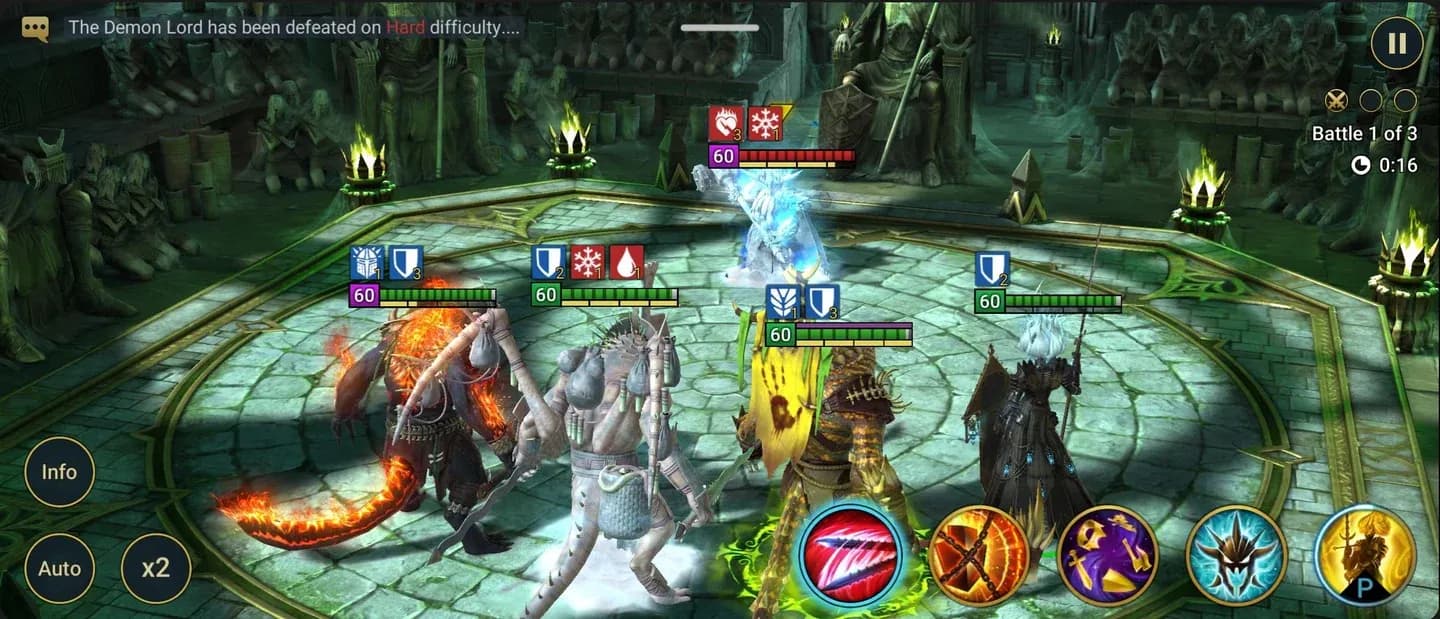
Buffs and debuffs are displayed directly near a champion's HP bar, shown in blue for buffs and red for debuffs. You can tap the Info button during any battle to see every active effect on your squad. That visibility matters because managing the buff/debuff state of both teams is where battles are actually won.
A buff improves the champion it sits on. A debuff degrades the champion it lands on. The key mechanical difference: buffs apply automatically to allies, while debuffs only stick if the target lacks the Resistance to shake them off. That means your debuffer's Accuracy stat directly determines how reliably your debuffs land, and the enemy's Resistance stat is the wall you need to break through.
After each round in Campaign and Dungeon stages, both buffs and debuffs are cleared and cooldowns decrease by one turn. In Arena and Clan Boss fights, there is only one round, so every effect you apply stays until it expires or gets cleansed.


Complete buff breakdown
Defensive buffs worth prioritizing
These are the effects that keep your team alive long enough to execute a strategy.
- Shield absorbs incoming damage before it touches HP. Damage dealt to the Shield does not count as damage to the champion, so Lifesteal does not proc from Shield hits.
- Unkillable prevents a champion from dropping below 1 HP for its full duration. Hard countered by Hunter's Gaze, which bypasses protective effects including Unkillable.
- Block Damage makes a champion completely immune to all damage forms for its duration.
- Strengthen reduces all incoming damage by 15% or 25%. Stacks with other mitigation effects.
- Ally Protection redirects 25% or 50% of direct damage from the target to the caster. Self-inflicted damage and Poison do not trigger it, and each champion uses their own DEF value for mitigation.
- Revive on Death automatically revives a fallen champion at 30% HP and 0% Turn Meter.
- Stone Skin is one of the strongest defensive buffs in the game. It decreases incoming damage, removes all debuffs except Bombs and HP Burn, grants immunity to most debuffs, and provides bonus Stone Skin HP. Champions under Stone Skin are also immune to Decrease MAX HP and Decrease Turn Meter effects.
Offensive and utility buffs
- Increase Attack boosts the champion's current Battle Attack by 25% or 50%.
- Increase Defense raises Battle Defense by 30% or 60%.
- Increase Speed adds 15% or 30% to Battle Speed, directly affecting Turn Meter fill rate.
- Increase Critical Rate adds 15% or 30% to C.RATE.
- Increase Critical Damage adds 15% or 30% to critical hit damage.
- Increase Accuracy raises ACC by 25% or 50%, helping debuffs land more consistently.
- Counterattack causes the buffed champion to strike back with their Default Skill at 75% damage whenever they are attacked. It only triggers once per multi-hit skill and does not proc in response to enemy counterattacks.
- Taunt forces all enemies to target the taunting champion. Provoke has priority over Taunt. If two champions both have Taunt active, enemies can target either one.
Specialized buffs with unique mechanics
Intercept blocks crowd control debuffs (Stun, Sleep, Freeze, Provoke, Fear, True Fear, Petrification, Sheep) on a per-stack basis. Each stack negates one application, then disappears. Intercept has no duration and cannot be extended, reduced, or spread to allies. When combined with Block Debuffs, Intercept stacks are only consumed for debuffs that cannot be blocked by Block Debuffs.
Veil prevents enemies from directly targeting the veiled champion, though AoE attacks and random-target attacks still hit. Veiled champions lose the buff when they attack an enemy, but can still apply debuffs or buff allies without losing it. If every champion on a team is under Veil or Perfect Veil, the effect becomes inactive and enemies can target any of them normally. Perfect Veil functions identically but does not break when the champion deals damage, and reduces incoming AoE damage by 15% instead of 7.5%.
Stormcall builds in stacks up to 5, each adding 5% damage. When a champion attacks with all 5 stacks active, they apply an irresistible Stun and all stacks are removed.
Lightning Orb stacks whenever an enemy receives a buff or has their Turn Meter filled. Each stack protects one other active buff from being removed, stolen, or transferred. At 3 stacks, attacking enemies deals bonus damage based on the champion's MAX HP, then all stacks are removed.
Intercept stack management
Complete debuff breakdown
Damage and pressure debuffs
- Poison deals 2.5% or 5% of the target's MAX HP at the start of their turn. The damage scales only with the target's MAX HP and is not affected by other modifiers.
- HP Burn deals 3% of MAX HP to the afflicted champion and all their allies at the start of the afflicted champion's turn. Only one HP Burn can be active on a champion at a time.
- Poison Sensitivity increases damage taken from Poison by 25% or 50%. Stack this before applying Poison for massive HP drain.
- Weaken increases all damage received by the target by 15% or 25%.
- Decrease Defense reduces Battle Defense by 30% or 60%. This is the single most impactful debuff for amplifying your team's damage output.
- Bomb detonates when it expires, dealing direct damage that ignores DEF. The damage scales based on the stat listed in the skill description.
Crowd control debuffs
- Stun locks a champion out of action for the duration. Cooldowns do not refresh while Stunned.
- Freeze also prevents action and pauses cooldowns, but the frozen champion only takes 75% of incoming damage.
- Sleep prevents action and pauses cooldowns, but any incoming damage immediately removes it. This means Sleep is fragile in multi-target situations.
- Petrification removes all buffs from the target, prevents them from taking their next turn, blocks new buffs from being applied, and reduces incoming damage to 40%. Bomb damage is increased by 300% against a Petrified champion.
- Fear gives a 50% chance that the champion's skill misfires and they forfeit their turn. True Fear does the same but additionally pushes the attempted skill onto cooldown if it misfires.
- Sheep replaces all of the champion's skills with a single basic attack. Any ally under Sheep joins the attack. There is a 50% chance to remove Sheep after the champion attacks.
- Provoke forces the champion to attack only the champion who applied it, using their Default Skill.
Stat reduction and control debuffs
- Decrease Attack reduces Battle Attack by 25% or 50%.
- Decrease Speed reduces Battle Speed by 15% or 30%, directly slowing Turn Meter fill.
- Decrease Accuracy reduces ACC by 25% or 50%, making the enemy's debuffs less likely to land.
- Decrease Resistance reduces Battle Resistance by 25% or 50%. Apply this first to make other debuffs easier to land.
- Decrease Critical Rate reduces C.RATE by 15% or 30%.
- Decrease Critical Damage reduces critical hit damage by 15% or 30%.
- Heal Reduction cuts any healing the target receives by 50% or 100%.
- Block Buffs automatically blocks any buff applied to the champion for the debuff's duration.
- Block Active Skills prevents the champion from using any skill other than their Default Skill. Cooldowns still refresh normally.
- Enfeeble forces the champion to only land weak hits unless a specific skill description states otherwise.
- Ensnare reduces any Turn Meter increase effects the champion receives by 50% or 100%.
Unique and advanced debuffs
Hex causes the afflicted champion to take damage whenever their allies do. Hex damage ignores DEF. Against AoE attacks, hexed champions take 2% of the AoE damage dealt to their allies. Against single-target attacks on allies, they take 10% of that damage. Hex only procs on direct attacks, not from lasting effects like Poison or buffs.
Leech heals any champion that attacks the leeched target for 18% of the damage inflicted.
Necrosis stacks up whenever an enemy champion dies. Each death adds one stack to all surviving enemies. At the start of their turn, each stacked champion takes damage equal to 5% of their MAX HP per stack.
Nullify is one of the most restrictive debuffs in the game. Champions under Nullify cannot have skills activated, participate in Ally Attacks, receive an Extra Turn or Instant Turn, have cooldowns decreased, have Shield values increased, restore destroyed HP, swap HP, Evade enemy effects, equalize Turn Meters, or balance HP.
Fatigue applies a 1-turn Sleep debuff to the champion after they use any active skill. If the champion uses a skill that removes debuffs, Fatigue is removed and the Sleep is not placed.
Seal blocks effects from Gear Sets and Masteries (except stat boosts). Master Seal additionally blocks Blessings (except stat boosts). Effects activated before Seal was placed are not blocked.
Deathbrand applies a Block Revive debuff to the champion when they are killed.
Infest triggers when the infested champion is slain: all remaining enemies take pure damage equal to 50% of the dead champion's MAX HP. Against bosses and their minions, this is capped at 10% of their MAX HP.
Smite causes a meteorite to strike the champion when they use an Active Skill, dealing 25% of their MAX HP in damage plus 5% of all other enemy champions' MAX HP. Only one Smite debuff can be active per team at any time.
How to use debuffs effectively in PvP battles
Debuffs like Weaken, Decrease Defense, and Block Buffs can greatly reduce the effectiveness of enemy champions in Arena. Crowd control effects including Stun, True Fear, and Freeze prevent enemies from taking turns or using their strongest abilities entirely.
The timing problem with debuffs in PvP is real. Drop them too early against a team with a cleanser and they disappear before they matter. Apply them after the enemy's support champion has already acted and you lose their window entirely. Players neglecting crowd control is one of the most common Arena mistakes players make.
Here is how the most impactful debuffs stack up for PvP specifically:
| Debuff | Effect | Primary PvP Use |
|---|---|---|
| Decrease Defense | -30% or -60% DEF | Amplify nuker damage |
| Weaken | +15% or +25% damage received | Stack with Decrease DEF |
| Block Buffs | Prevents all buffs landing | Shut down support champions |
| Stun / Freeze | Removes turn entirely | Lock out dangerous champions |
| Decrease Speed | -15% or -30% SPD | Disrupt turn order |
| HP Burn | 3% MAX HP to whole team per turn | Sustained pressure on stall teams |
| Poison (x5) | Up to 5% MAX HP per stack per turn | Melt high-HP tanks |
Speed is the foundation of early-to-mid Arena success. But debuffs are what separate a team that wins fast from a team that wins reliably. A Decrease Speed debuff on the enemy's booster before they fire can collapse an entire Speed Team strategy. Block Buffs on a support champion prevents them from applying Increase Speed or Counterattack to their team, leaving the enemy exposed.
What team types should you build around debuffs?
Speed Teams rely on going first and landing Decrease Defense or Weaken before a nuker clears the enemy. Your debuffer needs enough Accuracy to land reliably against the enemy's Resistance, especially in higher tiers where Resistance investment is common.
Go-2nd Teams need crowd control to survive the enemy's first turn. Stun, Freeze, or Petrification on key enemy champions after surviving their opening burst lets you stabilize and counter. These teams lean on gear sets like Stoneskin and Chronophage, but the debuffs are what seal the fight once they survive.
Stall Teams on defence benefit from Provoke, Taunt, and Heal Reduction to frustrate attackers. A defender that forces enemies to waste attacks on a tanky champion while Heal Reduction prevents their support from recovering is extremely difficult to grind through.
In Live Arena, the draft phase adds another layer. Banning a champion specifically because they apply Block Buffs or True Fear can dismantle an opponent's entire strategy before the fight starts. Identifying what debuffs their team depends on and removing that champion is as valuable as picking your own best champion.
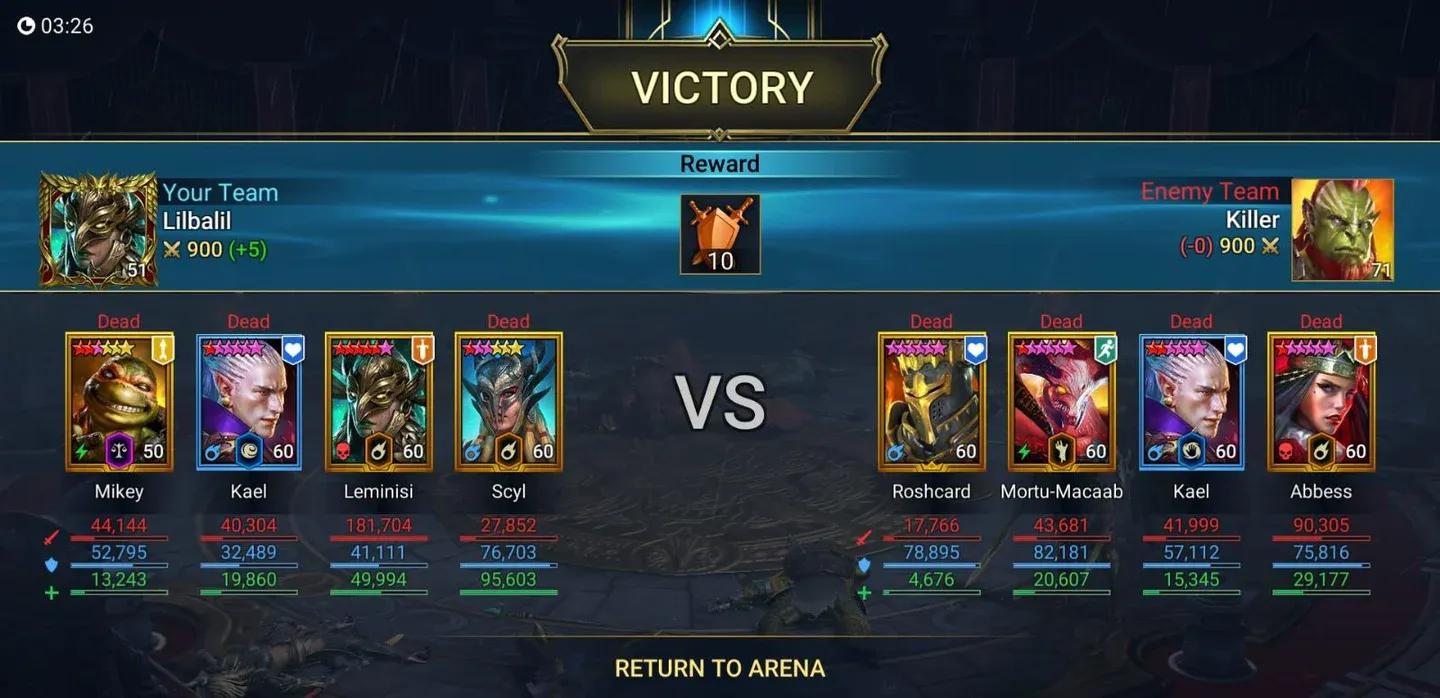
Live Arena draft phase
Accuracy and Resistance: the hidden stat war
Every debuff application in Raid: Shadow Legends runs through an Accuracy versus Resistance check. As Plarium's official overview confirms, a debuff only sticks if the target lacks the power to resist it. That means building Accuracy on your debuffers is not optional at higher content levels.
The Decrease Resistance debuff directly solves this problem by cutting the enemy's Battle Resistance by 25% or 50%. Landing it first makes every subsequent debuff from your team far more reliable. The Increase Accuracy buff adds 25% or 50% ACC to the recipient, which stacks with Accuracy from gear.
For PvP, the practical approach is:
- Check the Resistance stat of the teams you frequently face.
- Build your debuffer's Accuracy to exceed that Resistance by a meaningful margin.
- If your Accuracy is borderline, bring a champion who can apply Decrease Resistance first.
Boss-specific buffs and debuffs to know
Several buffs and debuffs only appear in specific boss encounters and behave differently from standard effects.
The Hydra uses Mark of the Hydra (which cannot be removed, blocked, or resisted), Pain Link (which deals 15% of damage the Head of Suffering receives to the afflicted champion), and Poison Cloud (which blocks Poison debuff damage). The Vengeance buff on the Head of Wrath increases its damage by 300% after receiving 15 hits, and Decapitated increases damage taken by a severed head by 200%.
The Minotaur uses a Rage buff that multiplies its damage by 400%, and a Dazed debuff that increases damage it receives by 200%. The Dazed duration cannot be extended.
The Chimera applies a Duel effect that cannot be removed, resisted, stolen, spread, or blocked. It forces the target to use only their Default Skill against the Chimera, while the Chimera deals 50% more damage to the dueling champion.
Understanding these boss-specific mechanics is separate from general buff/debuff knowledge, but the same core principles apply: read what is active on the battlefield and respond to it.
Building your buff and debuff knowledge further
Mastering this system takes time spent in actual battles, not just reading about it. The interaction between Intercept and Block Debuffs, the timing window for Fatigue into Sleep, or the exact conditions that make Nullify devastating are things that click after you see them fail and succeed in real fights. For more strategies across every game mode, the Raid: Shadow Legends guides collection covers team building, dungeon progression, and Arena climbing in depth.
If you are newer to the broader RPG games genre and still getting comfortable with turn-based combat systems, understanding the buff/debuff layer in Raid is one of the fastest ways to improve across the genre as a whole. The same logic of controlling the battlefield state before committing to damage applies everywhere.
For everything else Raid has to offer, including champion tier lists and gear optimization, the full Raid: Shadow Legends game page is the best starting point.