


Roblox Paradox is back, and the rerelease brings every skill tree decision back into focus. Your stat investment determines your entire combat identity, so picking the wrong tree early means grinding through content with a build that fights against you. After testing all the major trees across PvE missions and PvP scenarios, here's the full breakdown of every skill tree ranked, what each one actually does, and how to get the items you need to unlock them.
How the skill system works in Roblox Paradox
Before getting into rankings, the unlock process deserves a clear explanation because it trips up a lot of returning players. Spending stat points into a tree does not automatically hand you the skills. The game runs a two-step system: first, you need enough points invested in the right stat tree (Hakuda, Speed, Sword, or Kido) to hit specific thresholds (5, 10, 15, and so on). Second, you need a Skill Core, Skill Crystal, or Skill Gem to actually claim the move.
Skill Points come from raising your Potential, which you do by completing story missions and general progression content. To spend them, open M and head to the Stats menu.
Where to get Skill Cores, Crystals, and Gems
The most consistent source is simply playing through the story. Missions drop these items as part of the normal reward loop. The more deliberate farming method is Kisuke, found in the bottom-left area of Karakura near the Bank NPC and Inori. You fight him every 125 Potential to break your cap (at 125, 250, 375, 500, and 625 Potential), and each fight rewards a Skill Crystal. After clearing all five cap breaks, you can keep fighting Kisuke for Skill Gems, though there is a 1-hour cooldown between repeat attempts.
Full skill tree tier list
Rankings below are based on stat investment cost, passive scaling value, flexibility across PvE and PvP, and how much the tree actually pays off at different stages of progression.
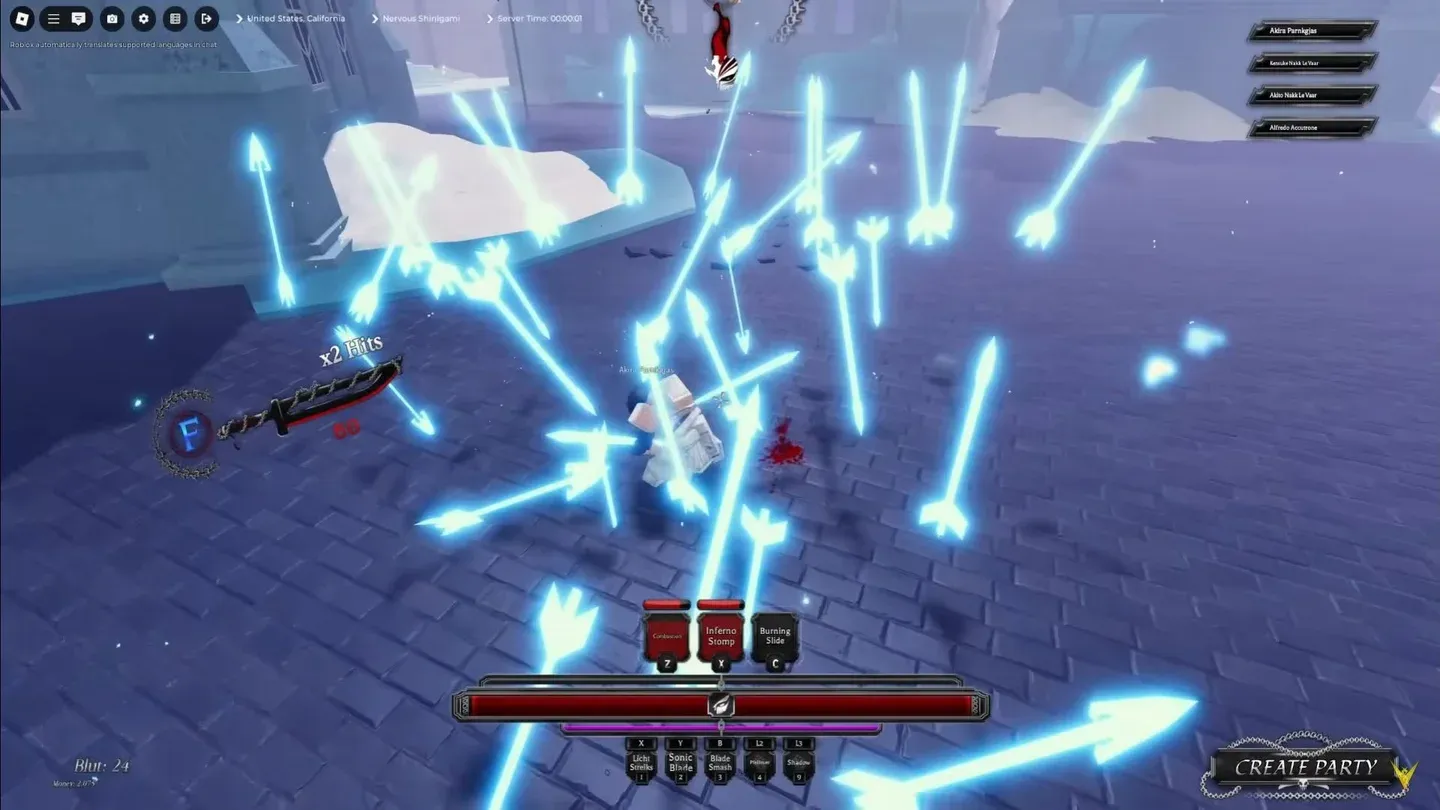
All skill trees ranked
S tier: Hakuda
Hakuda sits at the top because it does more than just give you moves. Every point you put into Hakuda also increases your M1 damage, so the stat investment pays off passively the whole way through. The tree itself covers every combat need: pressure tools, multiple guard breaks, air variants, a self-buff in Limit Breaker (which starts at +15% damage and stacks three more times for +5% each, at the cost of health on later stacks), and a burst finisher in Dragon Kick.
The full moveset unlocks across 8 skills from 5 to 40 Hakuda investment:
- Guard (5 Hakuda): Fast jab into a tornado kick, breaks guard.
- Ground Drawer (10 Hakuda): Ground version creates a vision-obscuring AOE; air version is a 360-degree slam with brief iframes and guard break.
- Leap (15 Hakuda): Quick upward jump into a ground slam.
- Kick Assault (20 Hakuda): Blitzes forward, locks onto the first target, triple afterimage kick with guard break.
- Triple Piercer (25 Hakuda): Three forward kicks, third launches and guard breaks; air version is a 3-hit round-kick sequence.
- Full Boost (30 Hakuda): Two-variant skill, one extends speed and reach, the other pops the target into the air.
- Limit Breaker (35 Hakuda): Stacking damage steroid.
- Dragon Kick (40 Hakuda): Ranged multihit kick, strong damage but heavy endlag and cooldown.
The main cost is commitment. You need 40 Hakuda to fully open the tree, and Dragon Kick's recovery window will punish you if you throw it recklessly. Staying in close range is where this tree thrives, so spacing errors are expensive.
A tier: Speed, Sword, and Arrancar Kido
Speed
Speed is the best tree for players who want to control the pace of every fight. The passive benefit here is a reduced Flashstep cooldown, which means your movement utility improves outside of the actual skill moves. The tree runs 6 skills from 5 to 40 Speed investment, with three unblockables (Vanquish at 8, Flash-step Barrage at 30, and Night Blade at 40) and consistent posture damage across almost every move.
The tradeoff is that Speed is narrower than Hakuda. It excels when you stay aggressive and keep momentum, but it has less varied utility if the fight slows down or you get caught out of position.
Sword
Sword is the most approachable A-tier option. The tree gives you steady offensive output from the first skill through to Twinblade Rush at 40, and Blade Counter at 25 adds genuine matchup depth by deflecting an attack and retaliating with a 360-degree slash. That counter option is what separates Sword from being a pure aggression tree.
It does not hit the same ceiling as Hakuda or Speed, and it has fewer standout utility tricks, but it fits naturally into most builds and rarely wastes your investment.
Arrancar Kido
Arrancar Kido is race-locked to Arrancar players, but it earns A tier because it comes online faster than almost anything else. Bala starts at just 1 Kido investment and immediately gives you a projectile that deals posture damage. By 10 Kido, Cero Grab bypasses block entirely. Cero Counter at 15 adds teleport-behind punish potential.
The tree is shorter than the big stat-based options and depends on Kido investment (which has fewer passive rewards than Hakuda or Speed), but for Arrancar players who want efficient early progression, this is the right pick.
B tier: Soul Reaper Kido, Quincy Kido, and Universal Skills
Soul Reaper Kido
Source 1 actually places Soul Reaper Kido in A tier, while Source 2 puts it in B tier. The difference likely comes down to how much weight you give race restrictions. The tree itself is genuinely strong: Hado 4 bypasses block, Hado 88 is a sustained guardbreak beam, Bakudo 61 can stun-lock targets, and Hado 31 applies blinding. That is a full toolkit of damage, control, and pressure. The B placement here reflects the race lock and the fact that Kido investment has fewer passive rewards than Hakuda or Speed.
Quincy Kido
Quincy Kido is the most straightforward of the three Kido paths. Every move from Pfeilfeuer at 5 through Weltschmerz at 30 either deals posture damage or breaks guard. Repeated guardbreak pressure is always useful, especially against defensive players, but the tree is one-note compared to Arrancar or Soul Reaper Kido. Less is known about its finer mechanics compared to the other paths, which contributes to its lower ranking.
Universal Skills
Universal Skills require no stat investment at all. The only confirmed move currently is Blade Smash, which launches you into the air and slams down with a guard break. It is genuinely useful as a slot-filler in builds that need a guardbreak option without paying a stat tax, but one move cannot define a build.
C tier: Vizard Skills
Vizard Skills sit in C tier not because Vizard Grab is useless (block-bypass grabs are always dangerous) but because the unlock cost is steep. You need to reach the Ender NPC in Karakura and collect 5 Shattered Hogyokus just to access a single move. That resource cost is hard to justify when the tree has no depth beyond that one grab. Vizard players should treat this as bonus tech on top of a real tree, not a foundation.
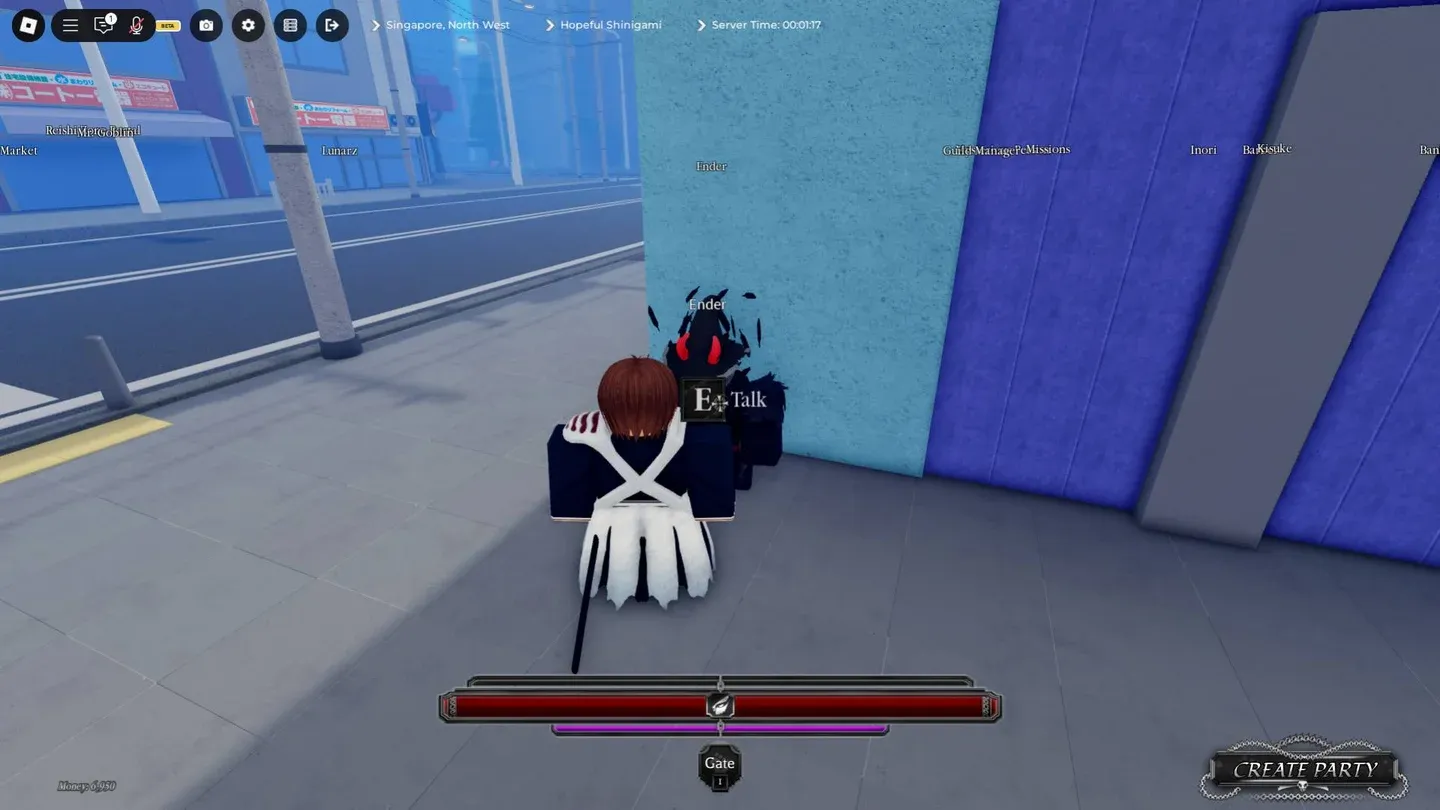
Vizard Grab unlock requirements
What's the best skill tree for your playstyle?
The honest answer depends on your race and how you like to fight:
- Aggressive melee players: Hakuda is the clear answer. The passive M1 damage scaling and full toolkit make it the best long-term investment.
- Fast tempo, unblockable pressure: Speed rewards players who can stay on top of opponents and never give them room to breathe.
- Balanced offense with a defensive option: Sword gives you Blade Counter, which adds real matchup depth without asking you to fully commit to an aggressive style.
- Arrancar players wanting early power: Arrancar Kido comes online at 1 Kido investment and stays useful all the way through.
- Soul Reapers wanting a full toolkit: Soul Reaper Kido covers damage, control, and pressure in one tree.
For more Roblox Paradox guides and other games, browse more guides at GAMES.GG.