
Roblox Paradox is back with its long-awaited rerelease, and the talent system is one of the first things you need to get right. You only get 3 talent slots, one of which is a main slot that actually enhances whichever talent sits in it. That makes every pick matter. Run the wrong combination and you leave serious power on the table. Run the right one and fights start feeling unfair in the best possible way.
What are talents in Paradox and how do they work?
Talents are passive modifiers that slot into your build to strengthen your combat capabilities. You equip up to 3 at a time, with the main talent slot providing an enhanced version of whatever talent you place there. The other two slots still apply their effects, just without the enhancement bonus.
Some talents are universal, while others are locked to specific builds. Speed-exclusive and Kendo-exclusive talents only activate if you have invested enough points into those respective stats. Rolling a powerful exclusive talent on a build that does not meet the requirement is a wasted slot, so always check compatibility before committing.


How do you get and reroll talents in Paradox?
Talents come from a separate progression loop entirely. Here is the process, step by step:
- Farm Whispering Willows from the game world
- Bring them to Inori, the talents NPC
- Use Whispering Willows to roll for talents
- Equip whatever fits your build best
This is completely separate from the skill system, which requires investing stat points into Speed, Sword, Hakuda, or Kido and using the correct core item. Talents bypass all of that and come purely from farming the right item and converting it through Inori.
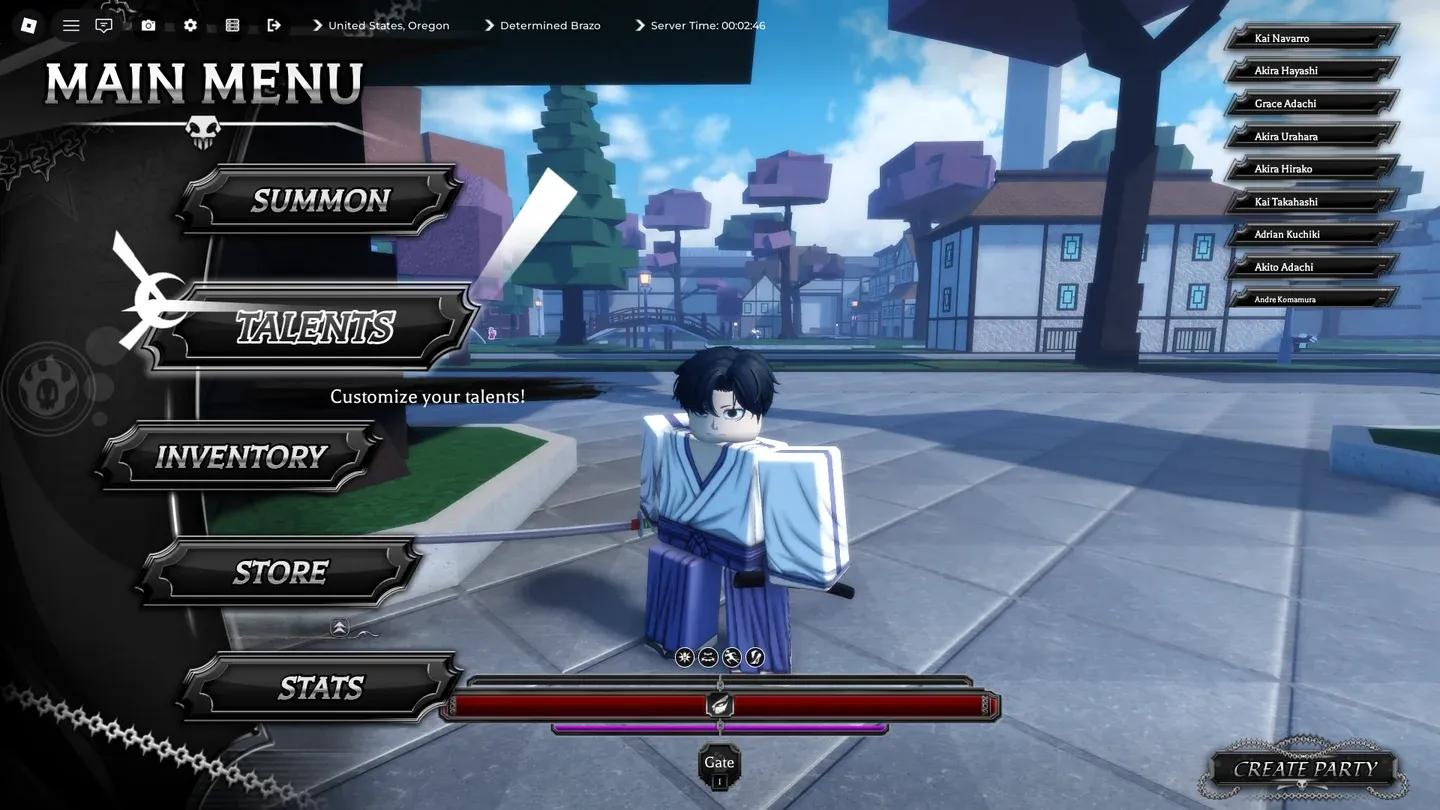
Blood Surge parry heal in action
Full Paradox talent tier list (rerelease)
This ranking is based on hands-on testing across multiple builds and playstyles, weighing consistency, combat impact, and how well each talent performs across the widest range of situations. Rarity does not equal rank here. Some Common talents outperform Legendaries in practice.
S tier: meta talents
These are the picks you build around.
| Talent | Rarity | Effect | Why it ranks here |
|---|---|---|---|
| Master of Speed | Legendary | Extra flashstep charge plus massive flashstep regen boost | Mobility is never wasted. Scales hard on Speed builds but feels strong on almost anything |
| Ultra Ego | Legendary | Landing hits without getting tagged stacks damage up to a 10% cap | Rewards pressure-heavy play that already wins fights. Easy to activate in real combat |
| Unrelenting Impact | Legendary (Kendo) | M1s apply anti-damage-reduction, negating target's damage reduction for 5 seconds | Turns basic M1 pressure into real payoff against tanky or defensive opponents |
| The Dancer | Legendary (Speed) | Weapon crit refreshes one flashstep charge, 15-second cooldown | Creates tempo through movement loops. Rewards players who already fish for crit pressure |
| Blood Surge | Legendary | Successful parries heal 0.2% of max health, no cooldown | No cooldown is the key detail. Sharp defenders will quietly win longer fights with this |
A tier: very good talents
Strong picks that belong in most builds.
| Talent | Rarity | Effect | Notes |
|---|---|---|---|
| One With Speed | Rare | Flashstep cooldown no longer worsened by low health | Reliable mobility when you need it most |
| Shattering Blow | Rare (Kendo) | Guardbreak attacks deal full damage instead of reduced | Deadly in Kendo pressure setups |
| Compressive Force | Common (Kendo) | Posture damage increased by 15% | Punches well above its Common rarity |
| Angry Step | Rare | Perfect dodge increases next attack damage by 10% | Gets stronger the better your reactions are |
| Steady Ground | Legendary | Three M1s in a row trigger double reiatsu regen for 10 seconds, 30-second cooldown | Good bridge between pressure and resource sustain |
| Get Over Here | Rare (Speed) | Weapon crits disable target's flashsteps for 3 seconds, 25-second cooldown | Three seconds of mobility denial can swing an entire exchange |
| Trail Blazer | Rare | Successful dodge gives a large sprint speed boost | Practical repositioning that activates off something you should already be doing |
| Final Stand | Common | At 5% health or lower, all skill cooldowns cut in half | High-risk trigger with real payoff for cooldown-heavy builds |
B tier: decent talents
Playable and situationally strong, but not picks you build around.
| Talent | Rarity | Effect | Notes |
|---|---|---|---|
| Sharp Shooter | Legendary | More damage the farther away you are | Build-dependent. Interesting for spacing-heavy styles |
| Shot Tacked | Legendary | Dodging an attack has a chance to return half the damage, with a damage cap | The RNG and cap keep this from feeling elite |
| Reiatsu Surge | Rare | Reiatsu regen increases in dire situations | Solid fallback, not game-warping |
| Critical Hit | Rare | 5% chance to deal double damage | Fun, but RNG makes it unreliable |
| First Blood | Rare | First hit on a full-HP target deals 1.5x damage | Strong opener that stops working after the first hit |
| Medical Step | Common | Perfect dodges heal 10 health, 15-second cooldown | Good players can squeeze consistent value from this |
| Retract | Common | Parrying restores 10% more posture than normal | Smooth glue talent for disciplined parry timing |
| Stand Strong | Rare | At 10% health or lower, all damage dealt increases | Strong effect, brutally low threshold |
| Piercing Blitz | Common | Weapon crits briefly boost movement speed | Useful for crit or chase setups, a step below top movement talents |
| Health Proficiency | Common | Health regenerates faster out of combat | Quality-of-life for longer sessions, not a combat power pick |
C tier: situational or limited talents
Not recommended for general use. Some have niche applications.
| Talent | Rarity | Effect | Notes |
|---|---|---|---|
| Ecdysis | Legendary | Converts damage reduction into damage increase | High-risk, inconsistent. More gimmick than staple |
| Exoskeleton | Legendary | You always die in 25 hits | The downside is too harsh to justify outside very specific plans |
| Reverse Induction | Rare | 10% less damage to players, 10% more damage to NPCs | Fine for pure PvE, rough for mixed content |
| Shaped Glass | Rare | 5% more damage dealt, 10% more damage taken | The trade is not kind enough. You feel the extra damage taken immediately |
| Desperation | Rare (Kendo) | Below 10% reiatsu, gain 1.25x M1 damage buff | Awkward to maintain the resource threshold consistently |
| Stay Afloat | Common | Dodging an attack sends back a small amount of posture | Gets outclassed by stronger dodge-reward talents |
| Scaredy Cat | Common | Combat tag ends faster for easier disengagement | Low direct combat impact. Very situational |
What are the best talents for each build type?
The right talent combination depends entirely on what your build is already doing. Here is how to think about it:
Speed builds get the most out of Master of Speed, The Dancer, and Get Over Here. All three feed directly into the flashstep and crit pressure loop that Speed-focused play revolves around. One With Speed is a strong secondary slot for keeping mobility consistent when you are low on health.
Kendo builds want Unrelenting Impact in the main slot whenever possible. Pair it with Compressive Force and Shattering Blow for a pressure setup that shreds defensive opponents. The anti-damage-reduction effect on M1s combined with 15% extra posture damage means guardbreaks translate into real, punishing damage.
Sustain or defensive builds benefit most from Blood Surge and Angry Step together. Blood Surge rewards clean parrying with no-cooldown healing, while Angry Step converts perfect dodges into a 10% damage bonus on the next hit. Both talents reward skill rather than stats, which makes them scale well at higher levels of play.
General or mixed builds without a strong style commitment should default to Ultra Ego and Master of Speed. Both provide value in almost every situation without needing specific triggers or stat thresholds.
Are Legendary talents always worth running?
Not automatically. Rarity signals potential, not guaranteed performance. Compressive Force is a Common talent that sits comfortably in A tier because its 15% posture damage increase is simple, consistent, and always relevant in pressure-focused play. Exoskeleton, on the other hand, is Legendary and lands in C tier because the fixed 25-hit death mechanic is too dangerous for general use.
The pattern across the tier list is clear: talents that offer consistent, build-relevant value in real fights rank higher than talents with flashy effects tied to unreliable triggers or harsh trade-offs. When deciding what to run, ask whether the talent activates naturally through your normal play or whether it requires you to change how you fight to get value from it.
For more guides covering Roblox and other games, you can browse more guides on GAMES.GG to keep your builds sharp across everything you play.