
Picking the wrong armor in Rotwood doesn't just cost you a run. It costs you momentum, resources, and sometimes a boss kill that felt almost within reach. Klei's side-scrolling co-op brawler ties your survivability directly to how well you understand the three-piece armor system, and there's far more nuance here than simply equipping the highest defense numbers you find in a shop room. Whether you're just stepping into the Great Rotwood Forest for the first time or pushing deep into The Molded Grave, this guide breaks down every armor slot, every notable effect, and the upgrade materials you'll need to get there.
How Does the Rotwood Armor System Work?
Every armor loadout in Rotwood consists of three separate slots: Helmet, Body, and Legs. Each piece comes with a Weight rating (Light, Medium, or Heavy), a Defense value that scales with upgrades, and a unique passive Effect that defines how that piece shapes your playstyle.
Armor pieces are acquired in two main ways. Most sets drop from shop rooms during a hunt, while certain pieces only appear in frenzy levels, meaning you won't see them on a standard run. Rarer sets tied to specific biomes require you to progress further into the game before they become available.
Upgrading is handled through the Armoury back at your base. Each upgrade tier raises the Defense value and, at certain thresholds, improves the strength of the piece's passive effect. Upgrade costs use materials tied to the biome where the armor originates, along with Fortifying Ingots (Arbour, Dusk, Clever, and Insect varieties) that become progressively more demanding at higher tiers.

Understanding Armor Weight and Defense Scaling
Weight isn't just a label. It affects how the piece interacts with certain passive effects and build archetypes. Heavy pieces consistently deliver the highest raw Defense values, making them the go-to choice for players who want to absorb punishment. Light pieces sacrifice Defense for effects that reward aggressive movement and positioning. Medium pieces sit in the middle, often pairing moderate Defense with versatile effects.
Here's a quick snapshot of how Defense scales across weight classes at max upgrade, using Great Rotwood Forest helmets as a reference:
| Helmet | Weight | Max Defense | Key Effect |
|---|---|---|---|
| Basic Headband | M | 25 | +100 Maximum Health |
| Bulbin Buddy | L | 24 | Dodge deals Knockback hit (+120% Weapon Damage) |
| Rillo Kettlehat | M | 25 | -50% Projectile Damage Received |
| Yammo's Noggin-Padder | H | 28 | +30% Heavy Focus Hit Damage |
As you progress into later biomes, the Defense floors rise significantly. A Snortoise Helmet from The Molded Grave starts at 14 Defense and caps at 22, compared to the Basic Headband's 2-to-25 range. The tradeoff is that later-biome pieces require rarer upgrade materials and more of them.
What Are the Best Helmets for Each Playstyle?
Aggressive Dodge-Based Builds
The Bulbin Buddy is one of the most satisfying helmets for players who treat dodging as an offensive tool. Your dodge becomes a knockback hit that scales up to 120% Weapon Damage Bonus at max upgrade. Pair this with the Bulbin Sash (legs) for a faster dodge speed and you have a setup that rewards constant movement and precise timing.
For players deeper into the game, the Iriss Shroud from Blisterbane Bog rewards Perfect Dodges specifically. Landing a perfect dodge applies a debuff to your attacker that increases the damage they take, scaling up to a 30% debuff stack bonus at max level.
Heavy Attack and Crowd Control Builds
Yammo's Noggin-Padder is the standout choice here. At max upgrade it pushes 30% bonus damage on Heavy Focus Hits, and it carries the highest base Defense of the Great Rotwood Forest helmets at 28. If your weapon of choice leans into heavy attacks, this helmet amplifies that investment directly.
From Blisterbane Bog, Groak's Best extends the stun duration on your heavy attacks by up to 50%, which is genuinely powerful in both solo and co-op play since stunned enemies stop dealing damage to your teammates.
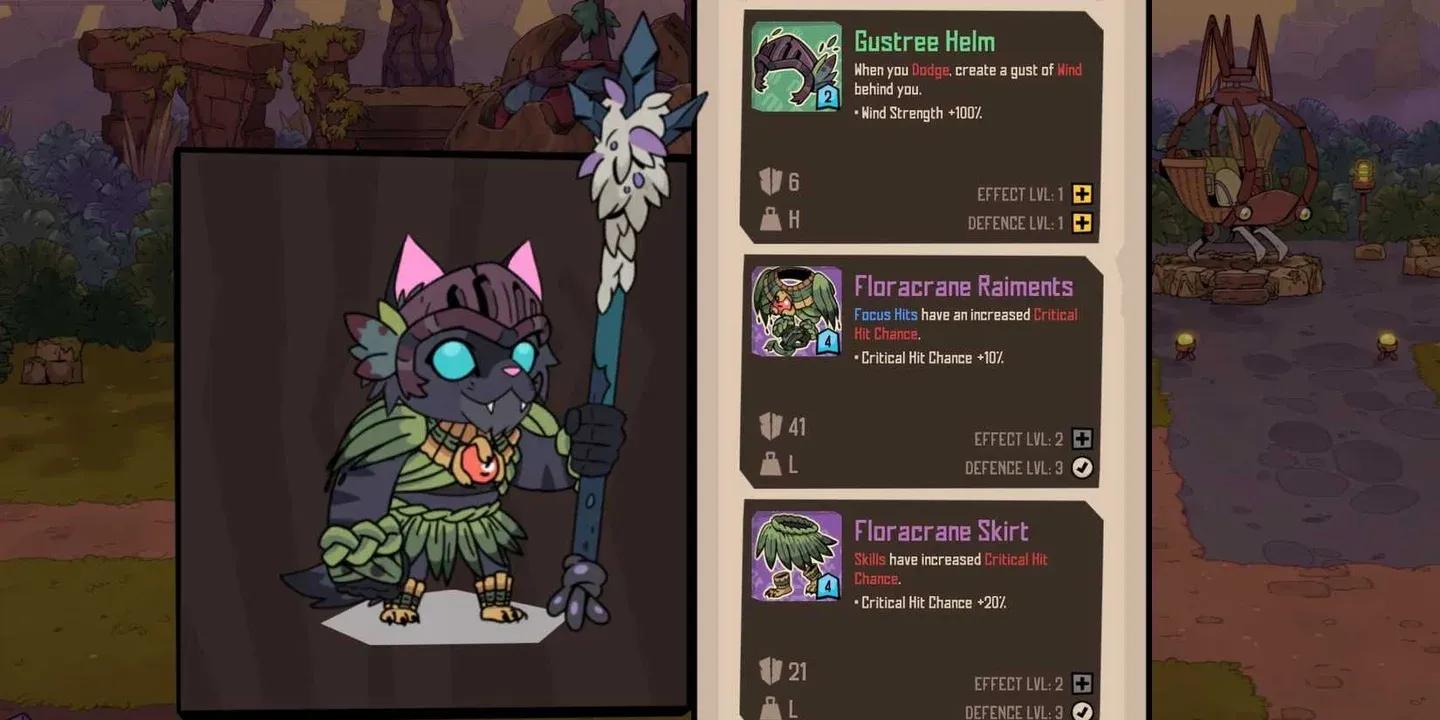
Helmet stats and passive effects
Sustain and Survivability Builds
The Gourdo's Noggin-Padder from Nocturne Grove boosts healing received by up to 20%. Stack this with the Gourdo Vest body piece, which shares a portion of your healing with allies (up to 20% heal share), and you become a passive support pillar in co-op runs.
For poison-heavy zones like The Molded Grave, the Wollusk Helmet converts a percentage of poison damage you take into healing, scaling from 20% up to 70% at max upgrade. That's a dramatic shift in how poison hazards feel in that biome.
What Are the Best Body Armors in Rotwood?
Body armor carries the heaviest Defense values in the game and tends to house the most impactful passive effects. Here's how the key body pieces break down across biomes:
| Body Armor | Weight | Max Defense | Key Effect |
|---|---|---|---|
| Bulbin Longcoat | L | 14 | +30% Invincibility Duration on Dodge |
| Yammo Singlet | H | 21 | -40% Damage from Boss Rots |
| Gustree Breastplate | H | 28 | Drop up to 3 Gustree Spikeballs on Perfect Dodge |
| Groak Body Casing | H | 38 | Heavy Attacks pull enemies toward you (+100% Vacuum) |
| Snortoise Armor | H | 44 | Area weapon damage on landing (+100% Damage) |
| Floracrane Raiments | L | 41 | Focus Hits gain +15% Critical Hit Chance |
The Groak Body Casing from Blisterbane Bog is a standout for melee-focused players. Pulling enemies toward you on heavy attacks effectively gives your weapon extended crowd control, and at max upgrade the vacuum effect reaches 100%. Combined with Groak's Best helmet for extended stun duration, this is a cohesive combo that turns heavy attack windows into genuine crowd lockdowns.
For critical hit builds, Floracrane Raiments from The Molded Grave pairs naturally with the Floracrane Skirt (legs), which adds up to 30% critical hit chance to skills. Running both pieces creates a focused critical hit platform for skill-heavy weapon types.
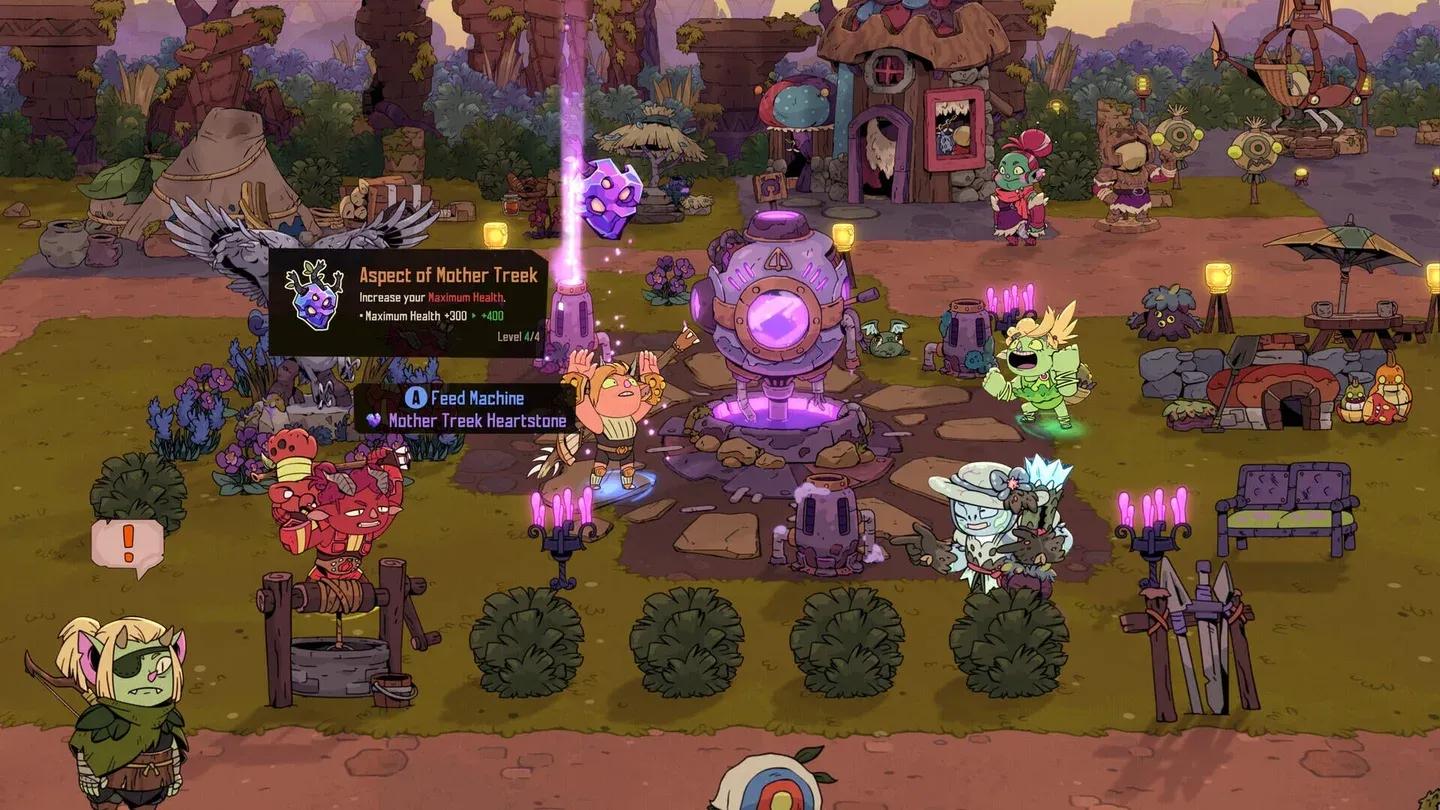
Body armor passive effects overview
How Do Leg Armor Pieces Shape Your Movement?
Legs in Rotwood frequently modify dodge behavior, which makes them some of the most playstyle-defining pieces in the game despite their lower Defense values.
| Leg Armor | Weight | Max Defense | Key Effect |
|---|---|---|---|
| Bulbin Sash | L | 7 | +40% Dodge Speed |
| Gnarlic Bulb Shorts | L | 9 | +40% Dodge Distance |
| Iriss Twine Cinch | L | 16 | Faster dodge that phases through objects (+30% Speed) |
| Bulbug Tarsi | H | 18 | Break shield on gain, deal area damage (+200% Weapon Damage) |
| Floracrane Skirt | L | 21 | +30% Critical Hit Chance on Skills |
| Snortoise Boots | H | 22 | -60% Poison Buildup Rate |
The Iriss Twine Cinch from Blisterbane Bog is particularly interesting because it lets your dodge pass through objects, which opens up repositioning options that simply don't exist with other leg pieces. At max upgrade it also carries a 30% dodge speed bonus on top of that.
For poison-heavy content, Snortoise Boots slow poison buildup by 60%, giving you a substantial buffer in The Molded Grave before you need to manage your status. Pair with the Snortoise Helmet for layered poison resistance.
What Materials Do You Need to Upgrade Rotwood Armor?
Upgrade costs follow a consistent pattern: materials from the biome where the armor originates, plus Fortifying Ingots in increasing quantities at higher tiers. Here's a breakdown of the material types by biome:
| Biome | Common Materials | Rare/Imbued Materials |
|---|---|---|
| Great Rotwood Forest | Forest Twigs, Forest Leaf | Imbued creature drops (Bulbin Bulb, Rillo Trunk, etc.) |
| Nocturne Grove | Grove Seeds, Grove Fern | Imbued creature drops (Gnarlic Sprouts, Gustree Horn, etc.) |
| Blisterbane Bog | Creature-specific drops | Imbued creature drops (Mothball Ears, Bulbug Bulb, etc.) |
| The Molded Grave | Creature-specific drops | Imbued creature drops (Gloop Arm, Snortoise Eye, etc.) |
Fortifying Ingots (Arbour, Dusk, Clever, Insect) are required for most full upgrades. Early-biome armor like the Basic Headband needs 4 of each Ingot type plus 6 Forest Twigs and 18 Forest Leaves to reach max upgrade. Late-biome armor such as Yammo's Noggin-Padder escalates to 6 of each Ingot type plus 24 Forest Leaves and 8 Mother Treek Claws.
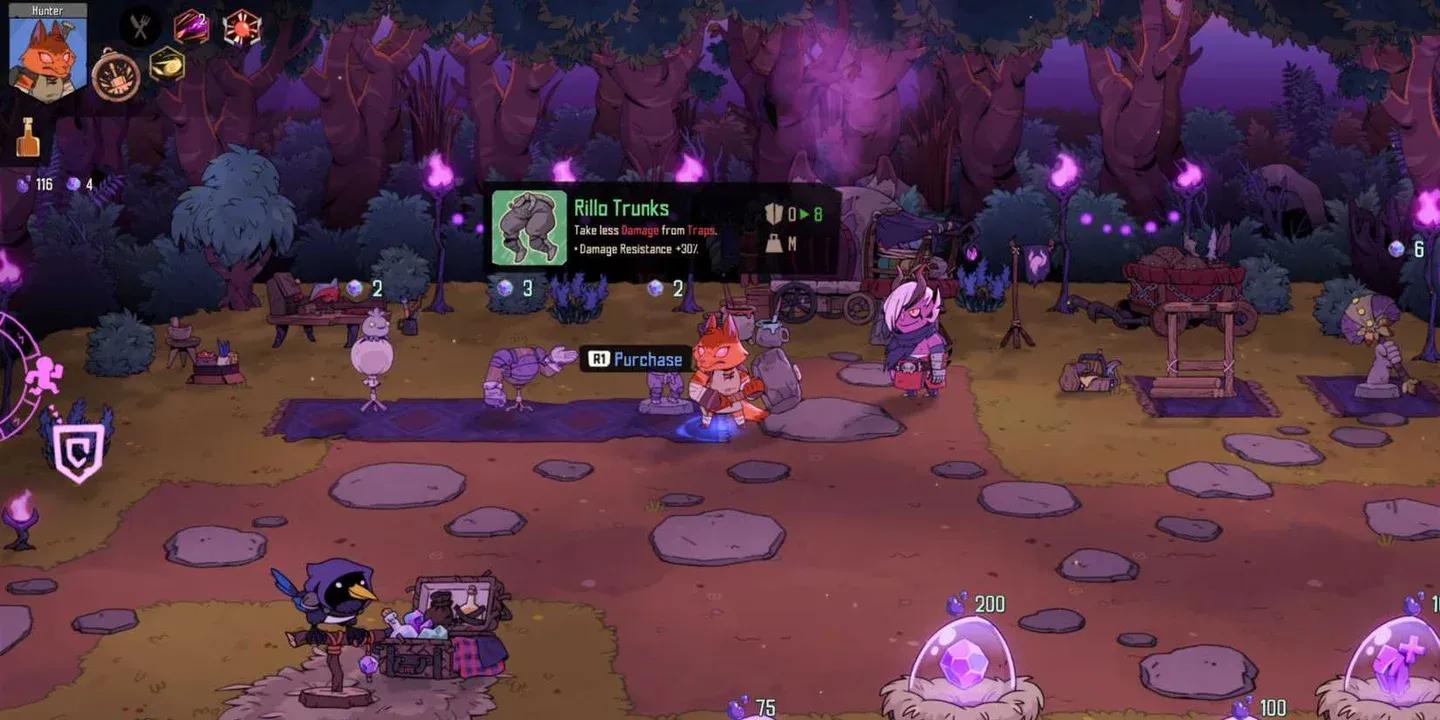
Upgrade material requirements screen
How to Build a Strong Armor Set from Scratch
Starting out, your first priority should be finding a body piece that reduces incoming damage from the enemies you're struggling with. The Rillo Chestplate (20-40% resistance to Rot Minibosses) and Yammo Singlet (20-40% resistance to Boss Rots) are both accessible early and meaningfully reduce the punishment of learning new encounters.
Once you have a body piece that covers your biggest damage source, build your helmet and legs around a single theme. Dodge-focused players should stack the Bulbin Buddy helmet with Bulbin Sash or Gnarlic Bulb Shorts for legs. Heavy attack players get more out of Yammo's Noggin-Padder paired with Yammo Elasti-Shorts (20-40% damage resistance while not attacking, which rewards the gaps between heavy attack animations).
In co-op, consider designating one player to run the Gourdo set pieces. The Gourdo Vest shares a portion of healing with all allies, and Gourdo Elasti-Shorts heal the wearer on entering each new clearing, creating a passive sustain loop that benefits the entire team without requiring dedicated healer mechanics.
As you push into Blisterbane Bog and The Molded Grave, prioritize upgrading your body armor first since that's where the largest Defense jumps occur. A max-upgraded Groak Body Casing at 38 Defense or Snortoise Armor at 44 Defense creates a meaningful survivability floor that lets you experiment more freely with offensive helmet and leg choices.
The most important thing to remember is that Rotwood rewards building around your weapon's strengths. Check what your weapon does best, find the armor effects that amplify exactly that behavior, and upgrade those pieces before spreading resources thin across a mixed set.