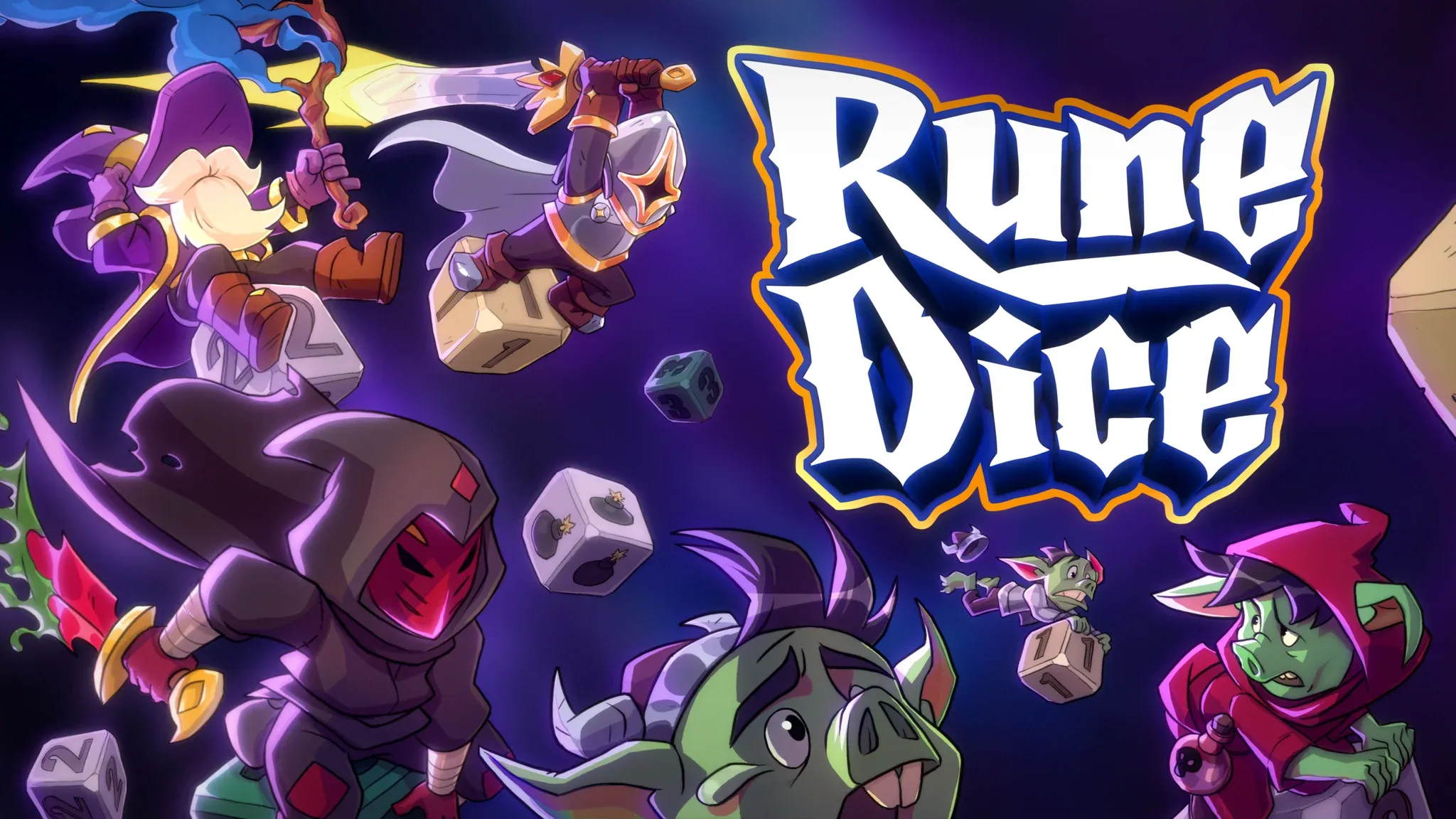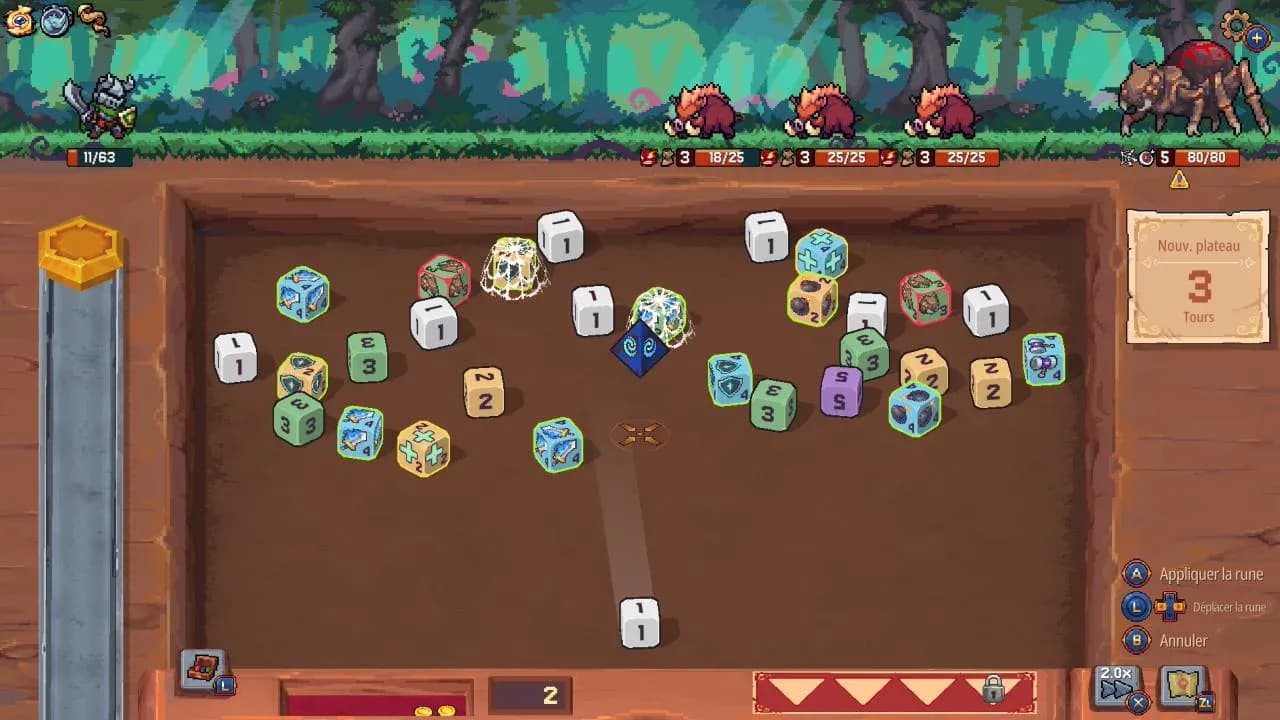

Rune Dice looks approachable in the first few fights. Then enemy dice start stacking, field refreshes wipe your setups, and you walk into a boss with 8 HP and no defensive runes. Sound familiar? The game is a physics-based roguelite where dice collide, chain-merge into higher values, and your build grows through rewards, shops, runes, and relics across a branching map. The gap between losing early and winning consistently comes down to a handful of decisions most new players get wrong.
How does dice merging actually work?
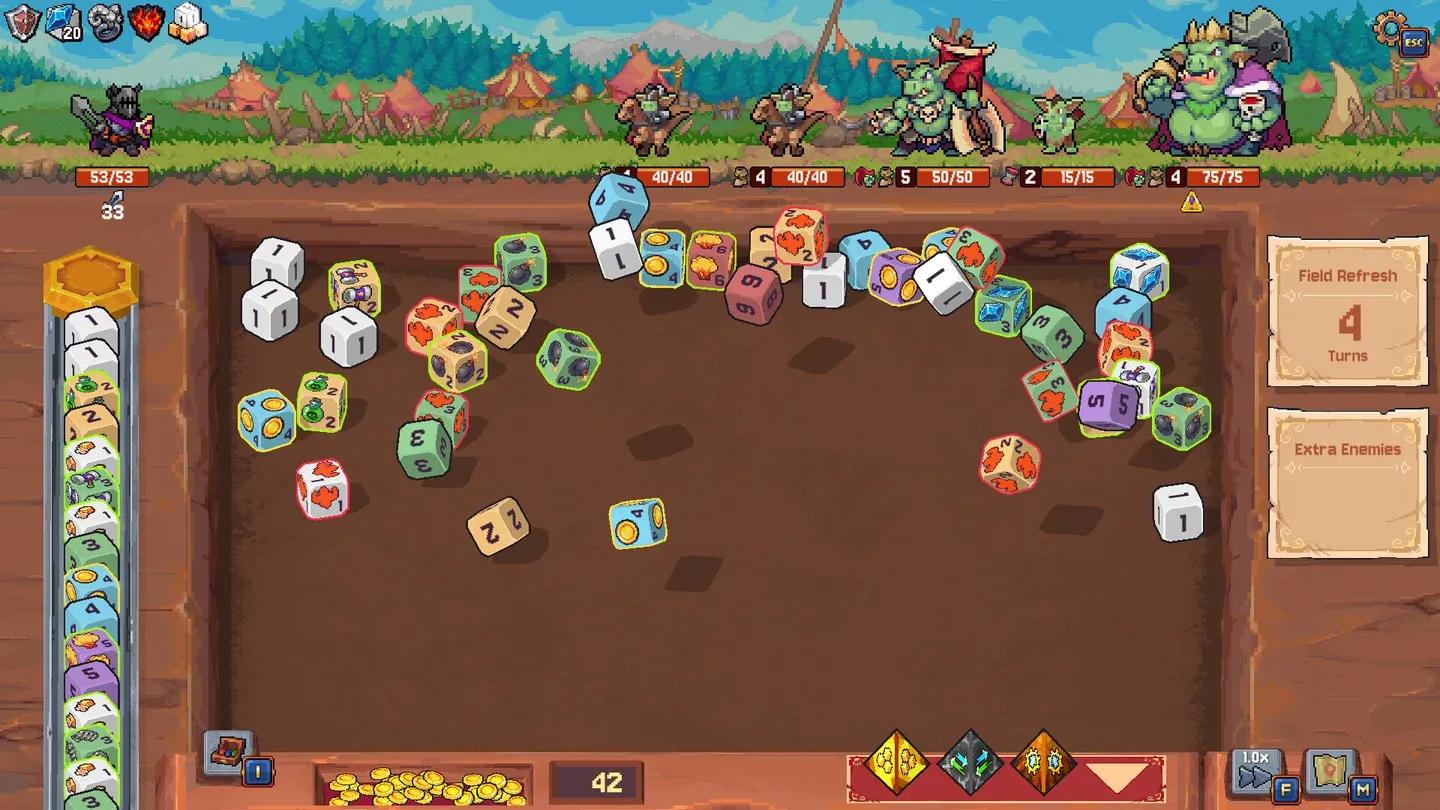
When a die hits another die of the same value, they merge into a single die one step higher. That upgraded die can then travel into another matching value and keep the chain going. A value-1 die merging into another 1 becomes a 2, which can roll into a nearby 2 and become a 3, and so on.
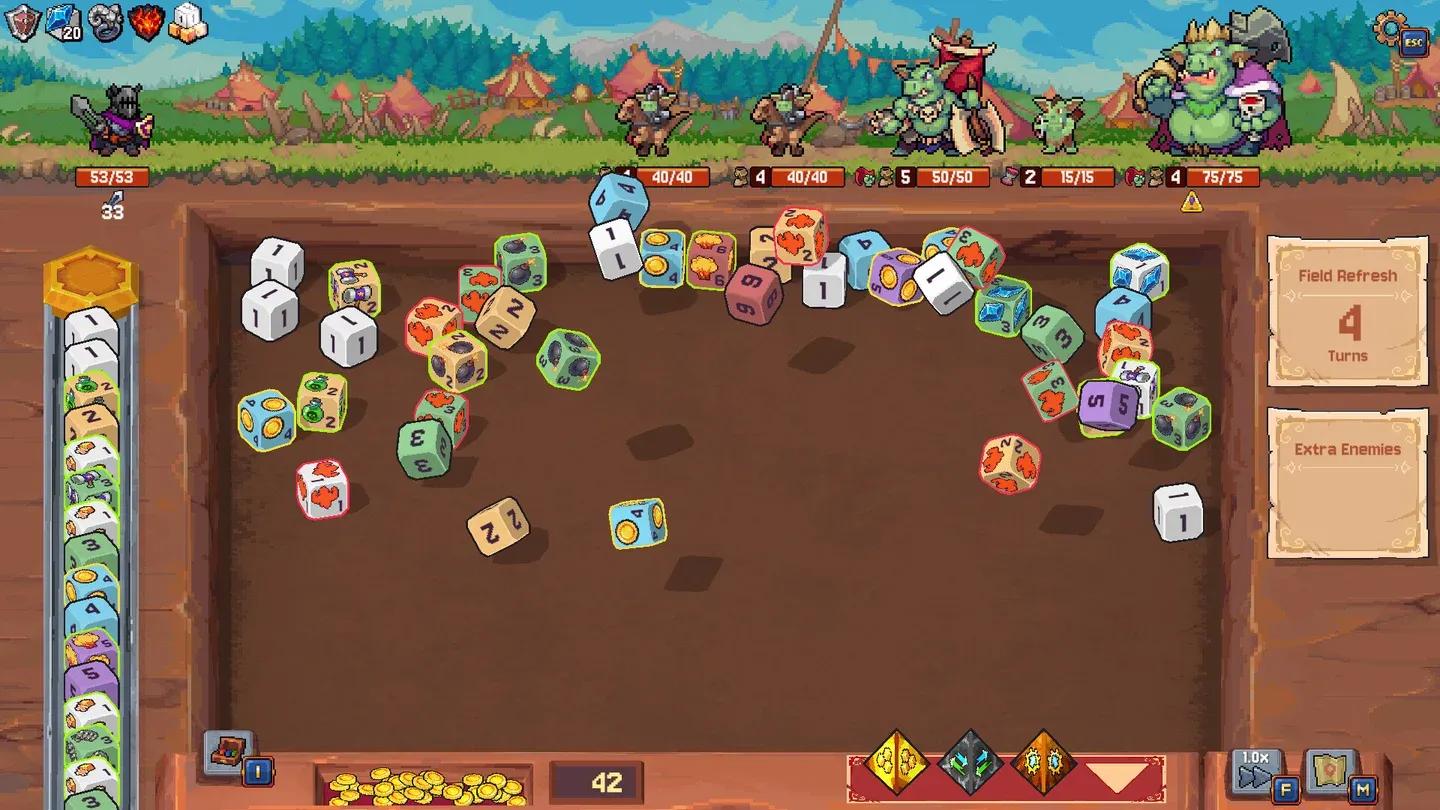
Chain merges build fast
The part most beginners miss is that your thrown die does not have to be the one that merges. You can shoot into a die and push it toward a matching value on the other side of the board. This "push merge" approach is where Rune Dice becomes genuinely tactical rather than a simple matching game.
Good habits to build early:
- Scan for chain opportunities before taking the obvious direct merge
- Use walls and angles to create ricochets that set up secondary merges
- Push dice into each other when a direct path does not exist
- Track where the upgraded die will land after a merge
- Stop chasing a massive combo if enemies are about to deal serious damage
Bouncing a die off another value first before merging into a match can trigger multiple chain reactions from a single throw. That kind of two-reaction turn is worth planning for.

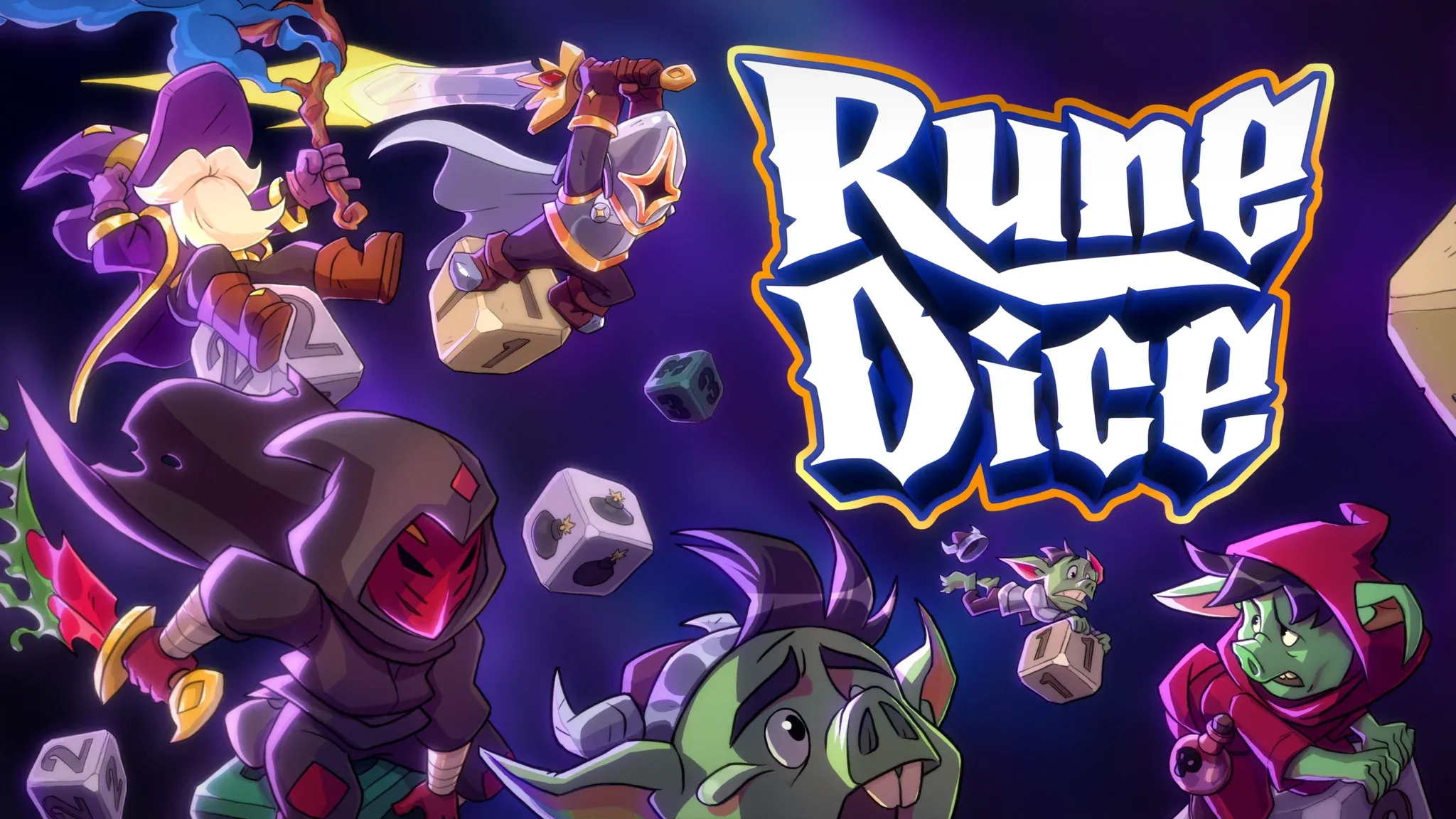
What is field refresh and why does it matter?
Field refresh resets the board after a set number of turns. Early on it feels like a minor inconvenience. Once you start building larger chains, it becomes one of the most important timers to track.
| Turns until refresh | Best approach |
|---|---|
| 3 or more | Set up larger merges if the board is safe |
| 2 | Start converting your setup into actual value |
| 1 | Take the best immediate merge, coin, heal, or defensive play |
| Just refreshed | Look for new chain angles before committing to a shot |
A refresh can actually save a messy board, but consistently ignoring the timer will burn your best planned turns.
What are the differences between runes and relics?
Runes are active combat tools. You can use them during fights to block damage, reposition dice, heal, pull dice together, or weaken enemies. Many runes do not cost your normal throw, which makes them especially valuable during boss fights when one bad turn can end a run.
Relics are passive upgrades that change how your build works across the entire run. They might improve shops, add dice, increase damage, provide shields, or amplify specific effects.
Pick runes with boss fights in mind
Useful runes for new players:
| Rune | Best use |
|---|---|
| Gravity | Pull dice together to force merges on a bad board |
| Protection | Block incoming damage before a dangerous turn |
| Weakness | Reduce enemy attack pressure |
| Shuffle | Reposition dice when the board layout is working against you |
| Minor Life | Recover HP before or during a hard fight |
The Treasure Rune deserves a special mention. It becomes particularly strong on Jester nodes and reward-heavy encounters, letting you collect multiple dice or extra upgrades from a single stop. Pair it with a route that has good reward density rather than burning it on a weak fight.
The Shuffle Rune is worth using proactively, not just as an emergency tool. A bad board layout in a normal fight can still cost you HP you need later.
Which class should beginners pick first?
Rune Dice has 8 classes in the roster: Rogue, Mage, Warrior, Archer, Bard, Druid, Paladin, and Necromancer. Most are locked at the start.
| Class | Early status | Why it matters for beginners |
|---|---|---|
| Rogue | Available from the start | Dodge, poison, backstab, and bomb dice give flexible survival |
| Mage | Available from the start | High damage ceiling, but more synergy-dependent |
| Warrior | Unlockable | Shield and Stun tools make it easier to stabilize once unlocked |
| Archer | Unlockable | Better suited after you understand chain setups |
| Bard, Druid, Paladin, Necromancer | Unlockable | Better evaluated after more run experience |
Rogue is the safest starting pick. Dodge reduces incoming damage from physical attacks, and the class's flexible dice types mean mistakes are less punishing. Mage can hit harder with the right setup, but finding that synergy is harder when you are still learning boss patterns.
Warrior is the most important early unlock target because Shield and Stun give you a more defensive path through the game. Use Rogue to reach that unlock while building your understanding of boss routing.
How should you approach the map?
Every map node is a resource decision. The GameStrategyHub source notes that the best route is not always the hardest route. Hto arder paths usually provide better rewards, more coins, and stronger relic opportunities. The key is knowing when you can afford the risk.
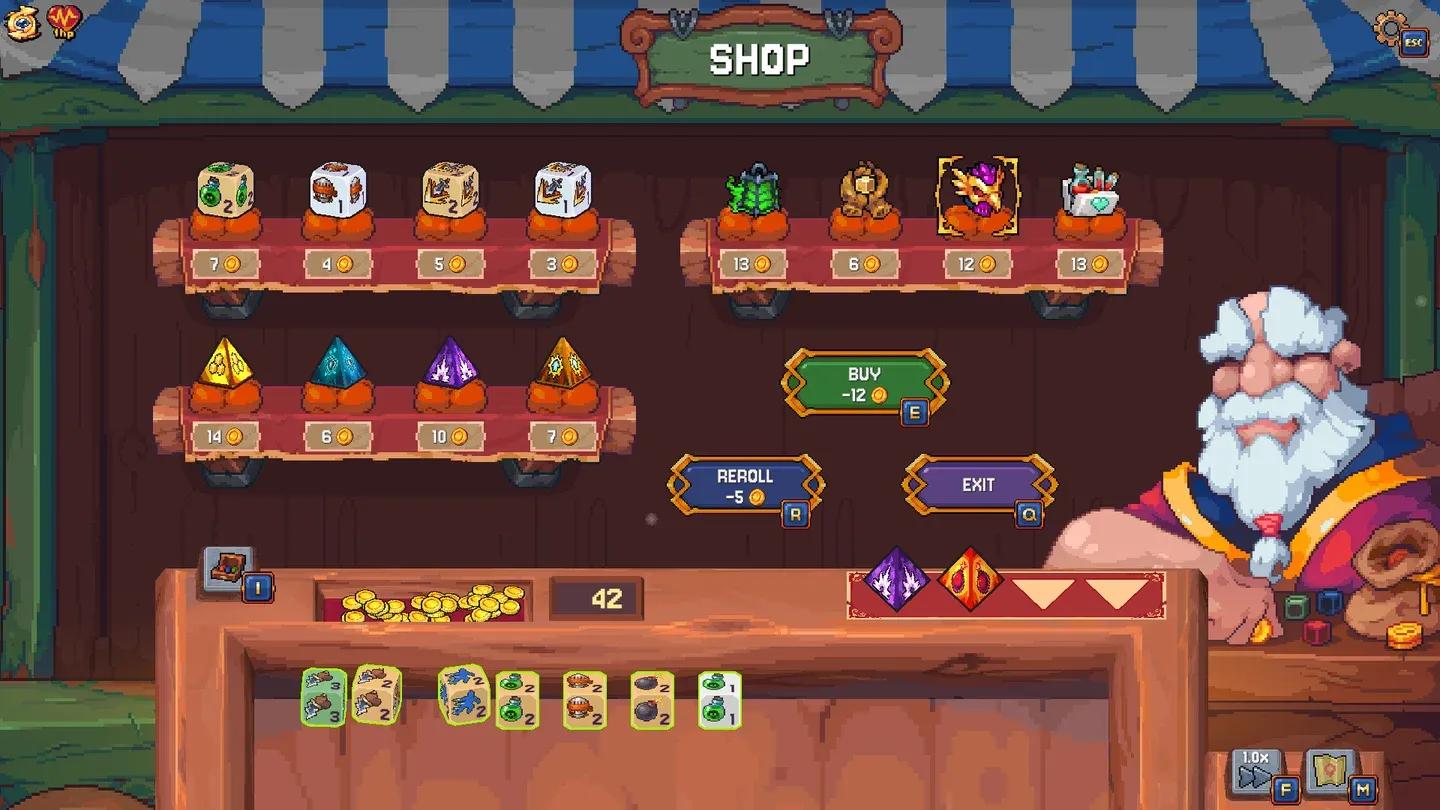
Route choices shape your whole run
| Node type | Take it when | Avoid it when |
|---|---|---|
| Normal battle | You need a safe reward or recovery | You are strong and need better rewards |
| Tough battle | HP is stable and your build has a damage or defense base | HP is low or you have no rune backup |
| Mini boss | You have defensive tools and upgraded damage | You lack healing or runes |
| Shop | You have enough coins for a meaningful purchase | You are broke |
| Magic altar | You have a die worth enhancing and can survive a failed roll | A bad result would leave you too weak for the next boss |
| Jester | Your build can benefit from several possible outcomes | You need exactly one specific fix |
Altars deserve extra attention. They can enhance, transform, or clone dice, but they are not automatically safe. Only use an altar on a die that already matters to your build, such as your main damage die or a key healing die. A random low-impact die is not worth the risk just because the upgrade number looks appealing.
What should you prioritize in the early game?
The developer tips from Treyex Gaming are direct on this point: HP is a resource in the first half of a run. Economy and relics matter more than protecting every point of health. The developer notes they only start playing defensively when HP drops below 20 or healing becomes unreliable.
That does not mean being reckless. It means taking a tough fight for better rewards when your build can handle it, or collecting coin dice even if it costs a small amount of HP.
Shop relics can define a run
Best early reward priorities:
- Coin dice for economy and shop access
- Healing dice to reach bosses safely
- Bomb or AoE dice to clear crowded enemy lines
- Dodge or Shield tools to prevent sudden HP loss
- Poison dice for steady damage in longer fights
- Shop discount relics to make every future shop stronger
Do not take every reward offered. A die that does not fit your current build makes the board harder to control. If your build already has reliable damage, a defensive rune or healing die is often more valuable than another attack option.
One counterintuitive tip from Treyex Gaming: some dice are actually stronger at low values. For Rogue builds, keeping several low-value Dodge dice makes them easier to merge and creates more consistent defensive triggers. For Mage, multiple Freeze dice at value 1 or 2 allow more frequent freeze effects and better crowd control against melee enemies than a single high-value Freeze die. The exception is when you have relics specifically designed around high-value dice.
How do you prepare for boss fights?
Bosses punish greedy play hard. You can get away with messy shots in normal fights. Against bosses, enemy dice, summons, webs, and high-damage turns stack up fast.
Before entering a boss, try to have:
- Good HP (enough to survive at least one bad turn)
- At least one defensive rune (Protection, Weakness, or Shuffle)
- A healing option or shield option
- Upgraded damage dice
- A way to handle enemy dice on the board
- Enough board control to avoid dead turns
During the fight, your priority shifts. Do not chase a big combo if the boss is about to deal lethal damage. Use your defensive tools before the board becomes unmanageable, not after.
The three most common ways runs end before a boss clear are: arriving with too little HP, carrying too many unfocused dice, and burning all runes in earlier fights. Fix those three habits and your clear rate improves noticeably.
Common mistakes that kill runs early
| Mistake | Why it hurts |
|---|---|
| Taking every reward offered | Unfocused boards are harder to control and combo |
| Ignoring coin dice | Weak economy means weak shops and weaker late-game |
| Spending runes in easy fights | Leaves you with no tools when bosses apply real pressure |
| Chasing every large merge | Causes avoidable HP loss when enemies are about to attack |
| Entering mini bosses too weak | Burns the run before your build is ready |
| Healing too late | One bad turn can kill you before recovery is possible |
| Ignoring field refresh | Wastes your best planned combos |
| Building only damage | Collapses when enemies start hitting harder in later stages |
The mindset shift that matters most: the best turn is not always the biggest number. Sometimes it is a small heal, a Weakness rune, or skipping a risky angle to protect the HP you need for the next fight.
For deeper strategy on specific systems, the full Rune Dice strategy guides cover chain merging, class builds, boss mechanics, and unlock routes in detail. If you are exploring other indie games with similar roguelite systems, the genre page has plenty of comparable picks worth checking out.