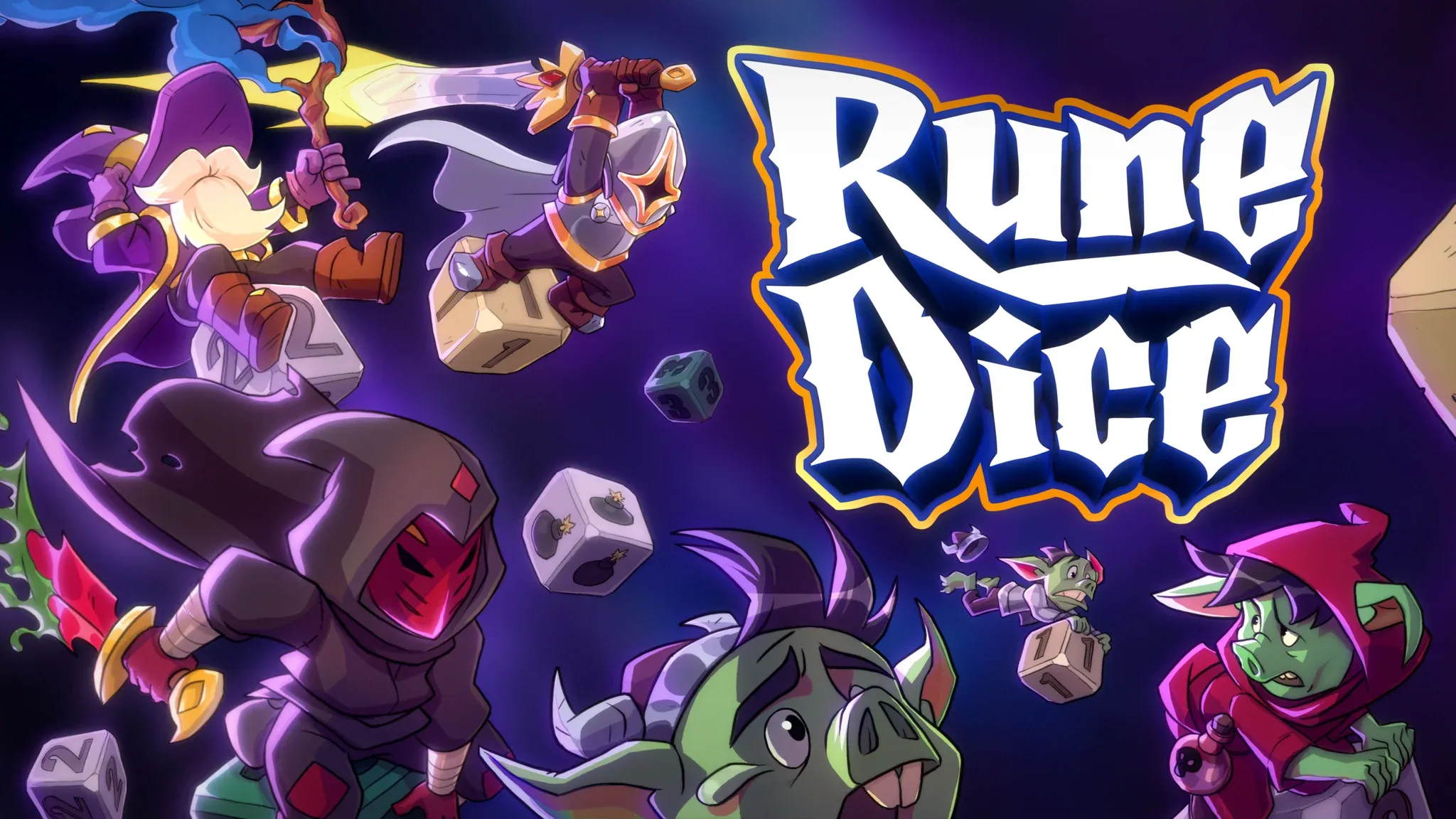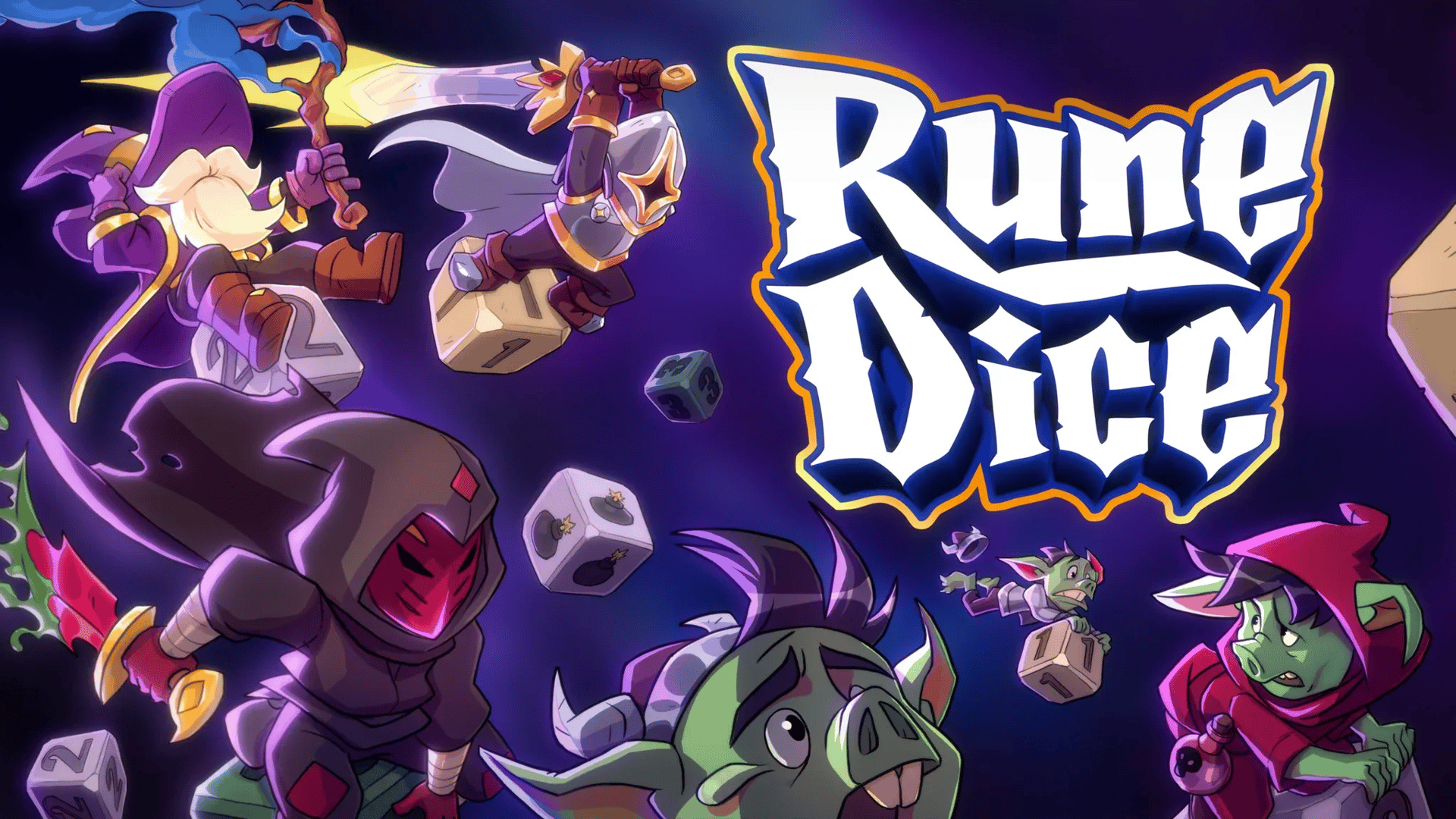

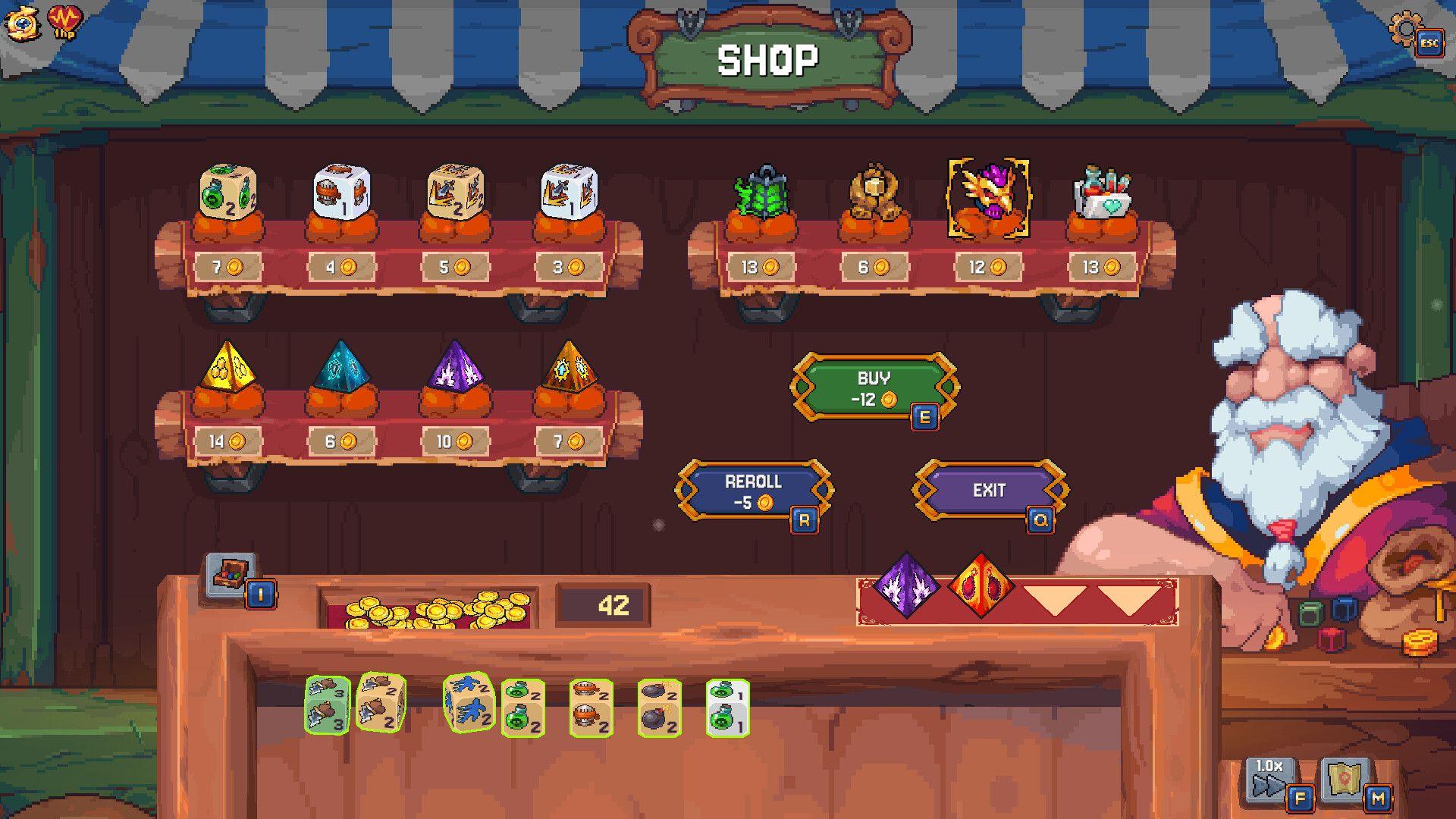
Rune Dice is a physics-based roguelite from Smart Raven Studio, published by Kwalee, that launched May 19, 2026 on PC, PS5, Xbox Series X/S, and Nintendo Switch. The hook is simple: you throw actual dice. They bounce, spin, and settle on a battle board, and where they land matters as much as what face turns up. With 8 classes, a merge system, relics, and consumable runes all layered on top of that physics throw, the first few runs can feel like controlled chaos. This guide breaks down every system so your early runs are decisions, not accidents.
How does the physics dice system work?
Most dice games stop at face values. Rune Dice adds two systems on top of that baseline.
Adjacency bonuses trigger when two or more matching dice land within a set distance of each other on the board. A Mage throwing three Lightning dice who lands two of them close together can trigger a chain lightning effect. The throw itself determines whether that happens, not just the roll result.
Merge mechanics activate when dice land on the same spot or overlap during a throw. Merged dice produce a higher-tier effect than either die alone. Builds built around merges need large dice pools, specific throw angles, and relics that widen the merge trigger window.
Throw angle is the skill most new players underestimate. Dropping dice straight down clusters them together. A lateral throw across the board spreads them into separate positions. Most early relics reward clustering, so throw toward the center of the board until your build specifically benefits from spread.

What is field refresh and why does it matter?
Field refresh resets the dice on the board after a set number of turns. This prevents any one layout from becoming permanent.
New players often ignore it until a carefully built chain disappears on the reset turn. Use the timer deliberately:
| Field refresh timer | Best decision |
|---|---|
| 3+ turns left | Set up larger merges if the board is safe |
| 2 turns left | Start converting your setup into damage or value |
| 1 turn left | Take the best immediate merge, coin, heal, or defensive play |
| Refresh just happened | Look for new chain angles before throwing |
A bad refresh can accidentally save a messy board. A good refresh can wipe a perfect setup. Track the timer before every throw.
All 8 Rune Dice classes explained
Rune Dice has 8 classes, each with multiple character variants that change the starting dice configuration. The class is the archetype. The variant is the specific starting loadout inside that archetype. Unlocking a new variant changes how a class feels without adding a completely different playstyle.
Rogue uses poison, blade, dodge, and backstab dice with position-dependent bonuses. Certain dice deal more damage when they land on specific board areas. The Rogue rewards players who learn the board layout and can consistently place dice on target tiles. Strong once those patterns are memorized, confusing until then. Rogue is the strongest beginner choice because dodge and flexible damage make mistakes less punishing.
Mage runs Lightning, fire, and ice dice with low HP and no built-in defense. The adjacency chain system is where the Mage generates its burst damage, particularly against bosses. Per GameBrief's testing, the Mage has the highest damage ceiling in the game but the lowest floor, making it a class for players who already understand throw technique.
Warrior uses heavy attack dice and blocking dice that absorb flat damage. No resource management, no special positioning requirements. GameBrief identifies Warrior as the best starting class for players still learning the physics system, though it requires an unlock before it becomes available.
Cleric generates Radiance stacks from holy dice that provide passive block at round end. Slower damage output traded for attrition survival, which makes the Cleric effective specifically against bosses with sustained attack patterns.
Necromancer runs curse and soul dice. Enemy kills generate Soul tokens that fuel bonus die throws, so the class snowballs through cleared encounters. Weak on early floors, strongest in mid-run boss corridors where the kill count has accumulated.
Ranger uses arrow and wind dice with range-based bonuses. Dice that land farther from the board center deal more damage. The lateral throw mechanic is the Ranger's primary skill expression, and learning to throw with consistent spread is the core challenge of playing it.
Paladin converts blocked damage into stored retribution that discharges as bonus damage on a later throw. Effective against enemies with predictable damage windows, which requires knowing when to intentionally tank hits.
Shadow manipulates dice values after landing. Certain relics allow re-rolls or value shifts on already-settled dice, which makes the Shadow more consistent than classes that rely entirely on physics luck.
| Playstyle | Recommended class | Reason |
|---|---|---|
| Beginner, learning physics | Rogue | Dodge and flexible damage forgive mistakes |
| Burst damage focus | Mage | Adjacency chains, highest damage ceiling |
| Survival and attrition | Cleric | Radiance block, self-healing |
| Snowball builds | Necromancer | Soul token economy compounds through the run |
| Technical throw skill | Ranger | Throw angle directly controls damage output |
| Combo and reaction play | Shadow | Post-land dice value manipulation |
| Defensive learning | Warrior | High HP, no special mechanics, forgiving |
| Stored damage builds | Paladin | Retribution system rewards intentional blocking |
How does dice merging work?
Dice merge when a thrown die hits another die of the same value. The merged die increases in value and can continue into a nearby matching die, creating a chain.
A value 1 die can merge into another 1, become a 2, then continue into a nearby 2, become a 3, and keep the chain going as long as the board allows. Crucially, your thrown die does not need to be the one that merges. You can shoot into a die and push it into a matching value, which opens up tactical angles that are not obvious on the first few runs.
Good merge habits from the sources:
- Look for chains before taking the obvious immediate match
- Use walls for ricochet angles when a direct path is blocked
- Push dice into each other when you cannot reach a match directly
- Track where the upgraded die will travel after the merge
- Do not build an elaborate setup one turn before field refresh
- Stop chasing a large combo if an enemy is about to deal lethal damage
Runes vs relics: what is the difference?
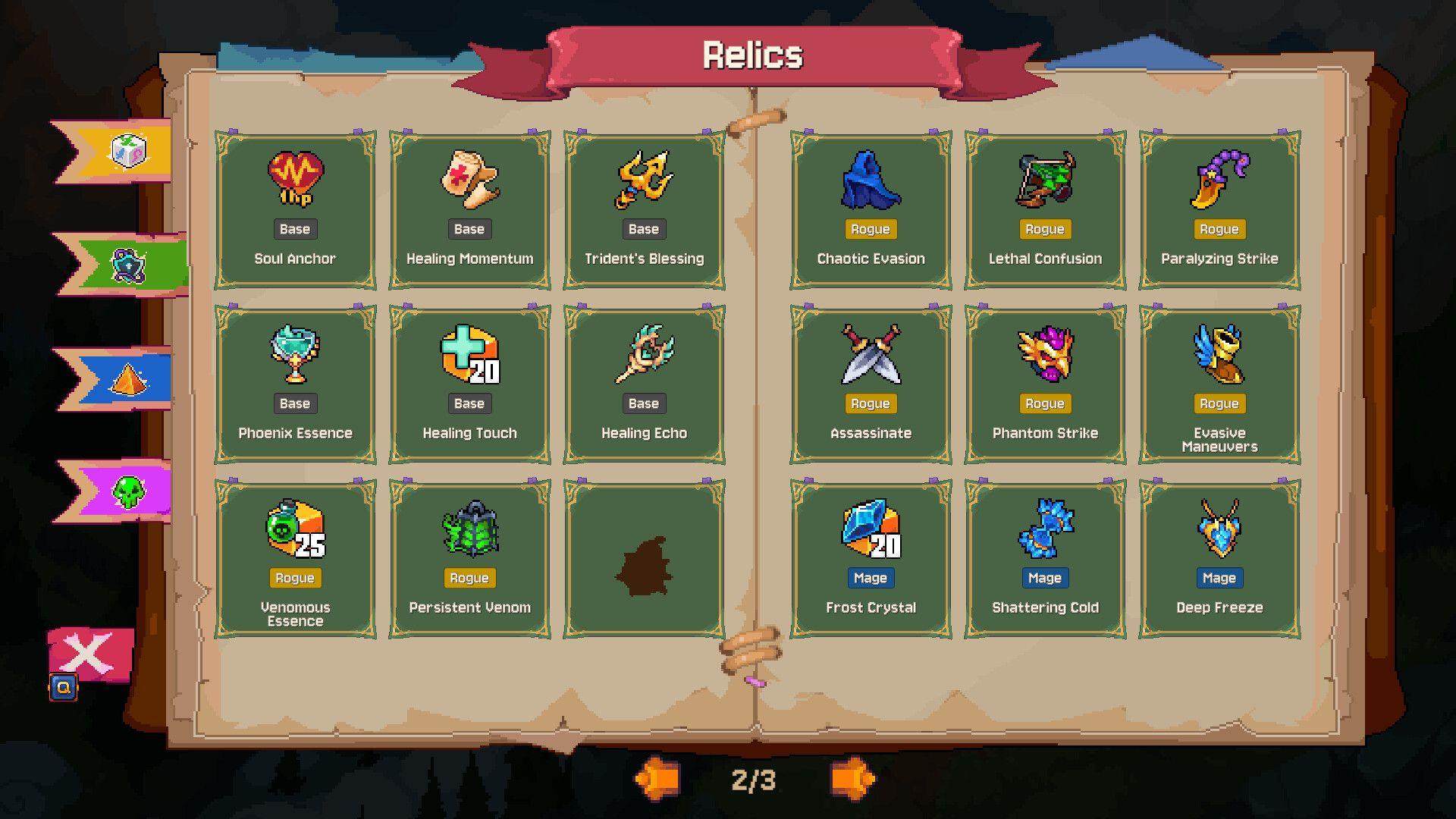
Relics are permanent run modifiers. They define what your build does across the entire run, adding passive bonuses like improved shops, extra dice, increased damage, or shields. The first three relic picks define what a run becomes
Runes are consumable single-use tools used during combat. They can duplicate a die, shift a face value up by one, redirect a throw, pull dice together, block incoming damage, or weaken an enemy. Many runes can be used without spending your normal dice throw, which makes them especially strong during boss fights.
| Rune | Best use |
|---|---|
| Gravity Rune | Pull dice together to create merges |
| Protection Rune | Block incoming damage before a dangerous turn |
| Weakness Rune | Reduce enemy attack pressure |
| Shuffle Rune | Fix a bad board by repositioning dice |
| Minor Life Rune | Recover HP before or during a hard fight |
| Redirect Rune | Change landing zones to avoid board hazards mid-combat |
The redirect rune is the one exception to the general rule of saving runes for bosses. If a boss has a board hazard that damages dice landing on specific tiles, using redirect before throwing can avoid the hazard entirely. Every other rune type has higher value on the boss kill turn itself, where damage multiplication and face-value shifts compound with your relic build.
What relics should you prioritize?
Relic priority follows one core rule: a weak relic that matches your dice type beats a strong relic that does not. A Lightning boost relic is worthless to a Warrior running physical attack dice.
After synergy, adjacency relics have the highest ceiling. A relic that triggers when two matching dice land close together compounds with every successful throw. These relics produce the biggest run-winning moments but require consistent throw technique to activate.
Defensive relics feel urgent to new players but are generally lower priority than they appear. Killing enemies faster means fewer attacks reaching you. Offensive relic picks typically produce safer runs, not riskier ones.
How to choose map routes
Rune Dice maps offer different node types each run. The right choice depends on your current HP and rune inventory, not just the potential reward.
| Node type | Take it when | Avoid it when |
|---|---|---|
| Normal battle | You need a safe reward or recovery | Your build is already strong enough for better rewards |
| Tough battle | HP is stable and build has a damage base | HP is low or you have no rune backup |
| Mini boss | You have defensive tools and strong damage | You lack healing or runes |
| Shop | You have enough coins for meaningful upgrades | You are broke |
| Magic altar | You have a die worth enhancing and can survive failure | A failed roll would leave you too weak for the boss |
| Jester | Your build can benefit from several possible outcomes | You need one specific fix |
Magic altars are powerful but not automatically safe. Only use an altar when the die you are upgrading already matters to your build. A good altar target is a die you plan to merge often, such as your main damage die or a key class die. A random low-impact die that looks tempting because the upgrade number is high is a bad altar target.
How to survive boss fights
Boss fights punish greedy play. Enemies in normal battles forgive messy throws. Bosses add extra pressure through enemy dice, summons, movement, or high-damage turns that can end a run in one bad sequence.
Before entering a boss, the sources recommend having:
- Good HP, not just acceptable HP
- At least one defensive rune
- At least one healing or shield option
- Upgraded damage dice
- A way to handle enemy dice on the board
- Enough board control to avoid dead turns
During the fight, priority shifts. Do not chase a large combo if the boss is about to deal lethal damage. Use Protection, Weakness, Shuffle, Gravity, or healing tools before the board becomes unmanageable.
Common beginner mistakes to avoid
| Mistake | Why it hurts |
|---|---|
| Taking every reward | Makes the build unfocused and harder to control |
| Ignoring coin dice | Leaves you too weak to buy key shop upgrades |
| Spending runes in easy fights | Leaves you defenseless in boss fights |
| Chasing every large merge | Causes unnecessary HP loss from ignored enemies |
| Entering mini bosses without runes | Burns the run before the build is ready |
| Healing too late | One bad turn can end the run before recovery |
| Ignoring field refresh | Wastes carefully planned combos |
| Building only damage | Fails when enemies start hitting harder |
The mindset shift that matters most: the best turn is not always the biggest number. Sometimes the best turn is a small heal, a Weakness rune, a defensive buy, or skipping a risky throw angle when an enemy is about to attack.
Unlock progression: classes and character variants
Rune Dice separates class unlocks from character variant unlocks, and mixing them up wastes runs. A class unlock adds a new archetype to your roster. A character variant unlock changes the starting dice inside a class you already have access to.
For early players, the safest progression route:
- Use Rogue to clear early boss-progress goals
- Unlock Warrior as the first defensive option
- Chase combo and hard-mode goals once board control is stronger
When chasing combo-based unlocks specifically, build the run around chain consistency rather than a normal win attempt. Take extra dice or dice-generation relics, value Gravity and Shuffle more highly, protect mid-value dice instead of spending them too early, and avoid field refresh wasting your setup.
For a full breakdown of every class and the complete Rune Dice strategy guides collection, the guides index covers builds, boss strategies, and chain merge techniques in depth.
Rune Dice sits in the same space as Balatro and Dicey Dungeons but plays distinctly from both. The physics throw is not a gimmick layered on top of a standard roguelite. It is the primary skill expression. The players who win runs consistently are the ones who treat every throw as a positioning decision, not a dice roll. If you enjoy indie games with mechanical depth that reveals itself over multiple runs, Rune Dice has more to offer than it shows in the first hour.